AI Virtual Influencers Are Now Brand Endorsers — and Liabilities
AI virtual influencers are moving from novelty to payroll. This month a Chinese AI virtual influencer known as Fang Taozi was reported charging around 250,000 yuan for a single product endorsement, including a paid spot for contact lenses in which she described wearing them all day and finding them comfortable. Legal analysts noted the first-person testimonial describes a product experience that, by definition, no synthetic persona can have had. That gap between a believable face and a non-existent experience is exactly where the endorsement liability lives.
The episode is not a China-only curiosity; it is a preview of a workflow every commercial video team now has within reach — generate a face, give it a voice, and let it sell. The pull is real. A recent Serviceplan Group CMO Barometer of 805 marketing leaders found that 68% say AI will be the defining topic of 2026, and synthetic talent is a visible part of that push. The faster teams adopt virtual influencers, the more urgent it becomes to understand what a synthetic spokesperson legally is, and is not.
The legal framing matters because it travels. Scholars have argued that although an AI digital person is not a statutory endorser, a first-person product recommendation functions as one in practice, and describing a fictional experience as real can meet the definition of false advertising. The same logic applies wherever a synthetic face sells: the medium changes, the liability does not.
For commercial video teams, the takeaway is not to avoid virtual influencers but to brief them like talent. A synthetic spokesperson deserves the same pre-flight discipline, because the brand — not the model — carries the consequence when a claim proves empty.
Why a Synthetic Spokesperson Can't Make a Real Endorsement
Advertising law has long treated endorsements as a form of evidence. Under the U.S. Federal Trade Commission's guidance, an endorser cannot talk about a product experience they have not had, cannot call a product terrific if they thought it was terrible, and cannot make claims requiring proof the advertiser does not hold. A synthetic persona fails the first test by construction: it has no experience, tried nothing, and cannot hold a genuine opinion. When it says 'I wore these all day and they were comfortable,' it is not expressing a preference — it is narrating a script the brand authored.
That distinction is what turns the risk into a liability rather than a disclosure problem. A real influencer who falsely claims to have used a product misleads consumers. A synthetic influencer who claims to have used a product misleads by design, because the experience it describes is physically impossible. The FTC rule does not carve out fictional characters; it targets deceptive claims regardless of who — or what — speaks them.
The contact-lens example shows why this is not academic. A comfortable-wear claim about a product people put in their eyes is exactly the kind of statement advertising law scrutinizes, because it speaks to everyday safety and use. When a human makes it, the brand can point to the person's actual experience. When a synthetic persona makes it, there is no experience to point to — only a script the brand wrote, which makes the brand the origin of the false claim rather than a bystander to it.
This is why the substantiation question should be asked before a single frame is generated. Removing a deceptive line after launch can mean a recall or a regulator inquiry, whereas asking it at the script stage costs one revision — the cheapest insurance a brand can buy.
Disclosure Is Not a Cure for a False Claim
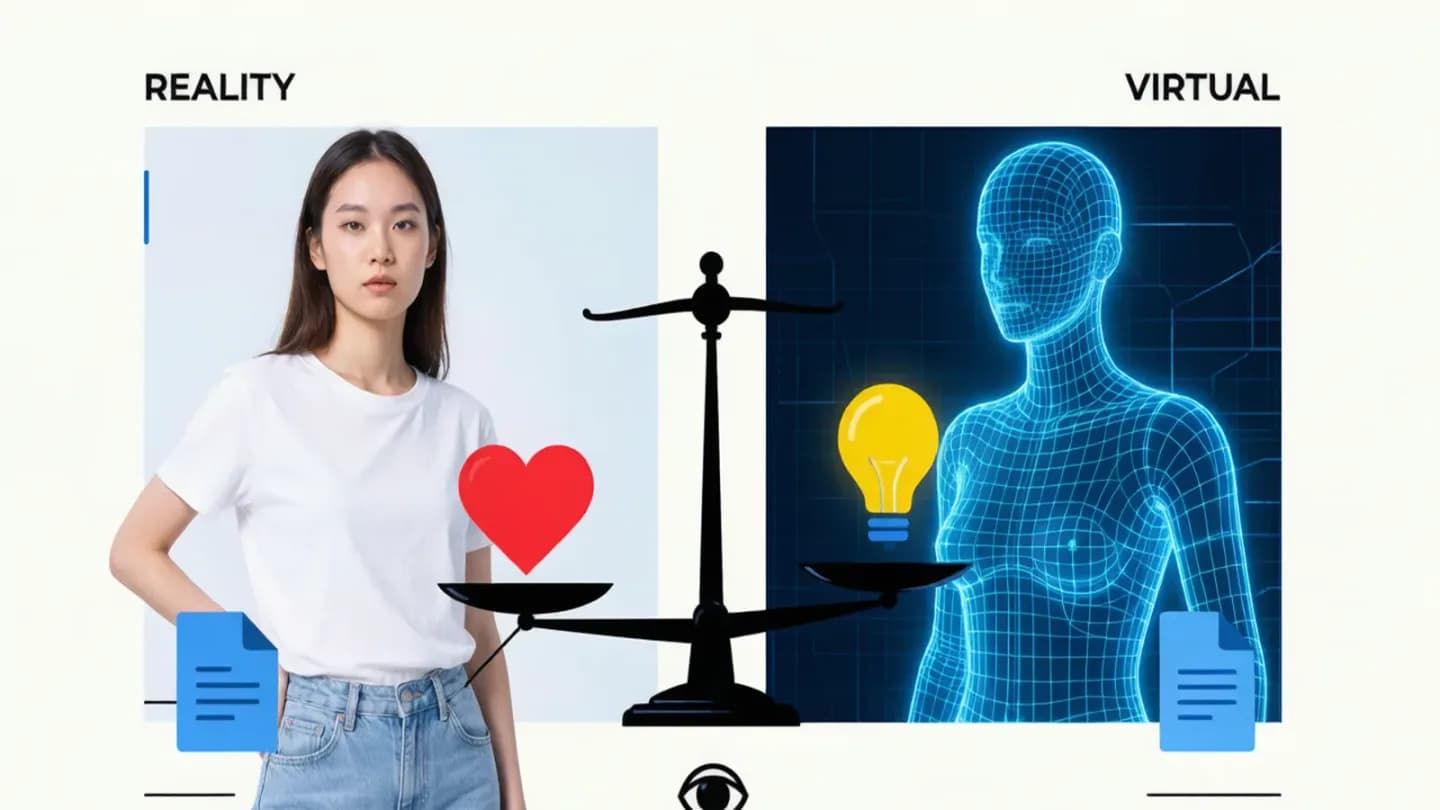
The obvious defense is transparency: just label the actor as AI-generated. Mandatory disclosure is now written into law in several markets, and many teams treat an 'AI-generated performer' badge as the end of their obligation. {{link}} But a disclosure label answers one question — 'is this real?' — and leaves a deeper one untouched: 'is the claim true?'
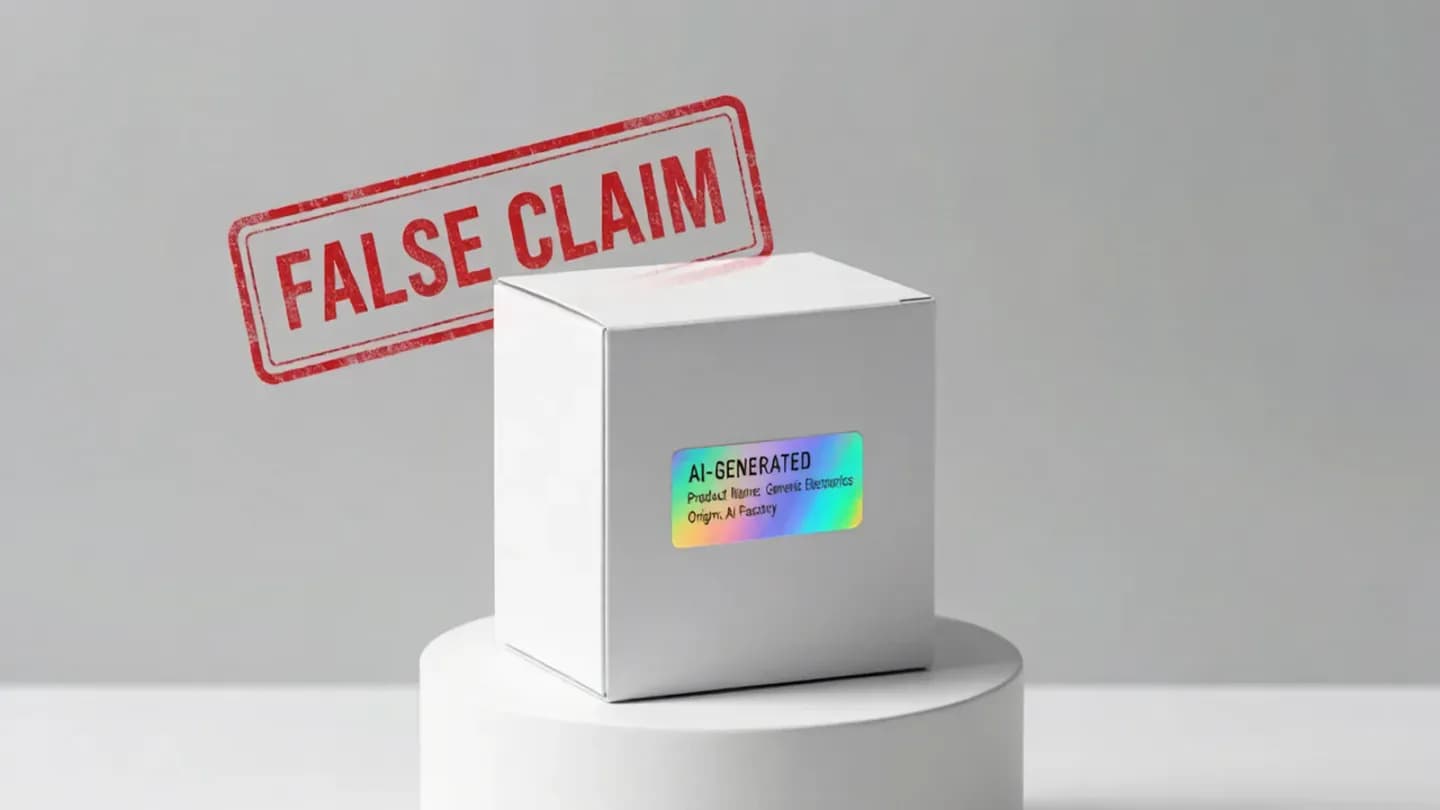
A synthetic persona that states a false experience remains false after labeling. The disclosure may satisfy a transparency statute, yet the underlying testimonial — 'I tried it and loved it' — is still a fabricated claim that advertising law prohibits. Teams that stop at disclosure have satisfied the easier regulator and ignored the one that can actually produce a false-advertising finding.
Think of the two obligations as stacked, not interchangeable. Disclosure governs the presentation: it tells the viewer that what they see was generated. Truthfulness governs the content: it requires that any claim the persona makes be accurate and substantiated. A label can sit comfortably on a video that is still legally false, which is why compliance teams should treat disclosure as table stakes and substantiation as the real test.
The practical trap is that disclosure feels like progress. Stakeholders see an 'AI-generated' badge and assume the risk is handled, but the badge documents the method and does nothing to the message. Until the message is true, the disclosure is decoration.
The obvious defense is transparency: just label the actor as AI-generated. Mandatory disclosure is now written into law in several markets, and many teams treat an 'AI-generated performer' badge as the end of their obligation. AI video disclosure compliance But a disclosure label answers one question — 'is this real?' — and leaves a deeper one untouched: 'is the claim true?'
Where a Synthetic Performer Becomes a Legal Person
The liability picture gets sharper once a synthetic face is built from a real one. If the persona derives from a real actor's likeness, voice, or performance, the brand inherits consent and rights obligations that exist independently of any AI label. {{link}} Generation does not erase the person behind the reference; it extends their image into new outputs the original deal may never have contemplated.
Even fully original synthetic personas raise the same substantive question in a different form. The brand is still putting a face in front of consumers that appears to recommend a product. Whether that face is licensed or invented, the endorsement it delivers must be truthful. Consent and truthfulness are separate gates, and skipping either one opens a different exposure.
For licensed personas, the paperwork has to travel with the asset. A voice clone or a face built from a real actor's scans carries the original deal's scope limits into every new clip; a clearance packet for one campaign rarely covers a synthetic spin-off.
For invented personas, the paperwork is lighter but the message test is identical. The absence of a real person to consent does not lower the truth bar; it removes one line of defense and leaves the brand fully exposed on substantiation. Originality is not immunity.
The liability picture gets sharper once a synthetic face is built from a real one. If the persona derives from a real actor's likeness, voice, or performance, the brand inherits consent and rights obligations that exist independently of any AI label. synthetic performer clearance Generation does not erase the person behind the reference; it extends their image into new outputs the original deal may never have contemplated.
Build the Claim-Substantiation Gate Before Generation
The fix is procedural, not technological. Before a synthetic influencer records a line, the brand should apply the same substantiation test it would to any other claim. The rule behind {{link}} — that a generated product shot is a claim the brand must prove — applies with full force when a synthetic persona describes using the product.
Practically, that means a pre-generation checklist: list every claim the persona will voice, separate experience-based claims from feature claims, and delete or re-script any line that asserts a feeling the synthetic actor cannot have had. The goal is not to make the influencer less convincing but to make it truthful — a lower bar that is still frequently missed. Treat the script as ad copy under review, because that is exactly what it is.
A useful split is to let the persona speak only about features the brand can document and to redirect experience lines to neutral description — 'designed for all-day comfort' rather than 'I wore it all day and it was comfortable.' The first is a claim with a spec behind it; the second is a feeling with no one behind it.
The checklist should also name an owner. Someone on the brand or agency side must sign off that every line is either substantiated or removed, because a synthetic influencer has no incentive to self-correct. Without a named owner, the deceptive line ships by default, and the liability lands on the brand that funded it.
The fix is procedural, not technological. Before a synthetic influencer records a line, the brand should apply the same substantiation test it would to any other claim. The rule behind AI product demo claims — that a generated product shot is a claim the brand must prove — applies with full force when a synthetic persona describes using the product.
Provenance, Human Oversight, and the Trust Math
Transparency still matters, just not as a substitute for truth. Content provenance standards such as C2PA's Content Credentials let a brand record that a face and voice were generated and attach that record to the asset wherever it travels. Pairing a synthetic influencer with verifiable provenance is how teams manage {{link}}: every deceptive-feeling AI endorsement quietly erodes the equity a brand spent years building.
The durable playbook is simple to state and easy to skip. Keep a human accountable for every claim a synthetic persona voices. Prove experience-based claims with real evidence, or do not let the persona make them. Mark generated media with provenance, and treat disclosure as the start of compliance, not the finish. Brands that rush a virtual influencer to market without this gate are not buying efficiency — they are buying a liability that wears a friendly face.
Provenance earns its keep at scale. A single hero film is easy to police; a library of dozens of synthetic variants is not. A provenance record that travels with each asset lets a reviewer confirm at a glance what was generated and what was claimed.
None of this slows a team that plans ahead. The gate is a few lines on a brief, not a new department. The teams that win with virtual influencers are the ones that treated the liability as a design constraint from the first script, not as a surprise discovered after the post drew complaints.
Transparency still matters, just not as a substitute for truth. Content provenance standards such as C2PA's Content Credentials let a brand record that a face and voice were generated and attach that record to the asset wherever it travels. Pairing a synthetic influencer with verifiable provenance is how teams manage AI video brand trust: every deceptive-feeling AI endorsement quietly erodes the equity a brand spent years building.

Put the framework into production
These related pages connect the article’s planning advice to a specific commercial scope.
References
- FTC Disclosures 101 for Social Media InfluencersFederal Trade Commission
The FTC states an endorser cannot talk about a product experience they have not had and cannot make claims requiring proof the advertiser does not hold — a synthetic persona has by definition no genuine experience to draw on.
- C2PA — Content CredentialsCoalition for Content Provenance and Authenticity
Content Credentials function like a nutrition label for digital content, recording a file's origin and edits so the provenance of AI-generated media is verifiable wherever it travels.
- CMO Barometer 2026Serviceplan Group
68% of 805 surveyed marketing leaders say AI will be the defining topic of 2026, signaling brands are rapidly deploying AI including synthetic influencers.