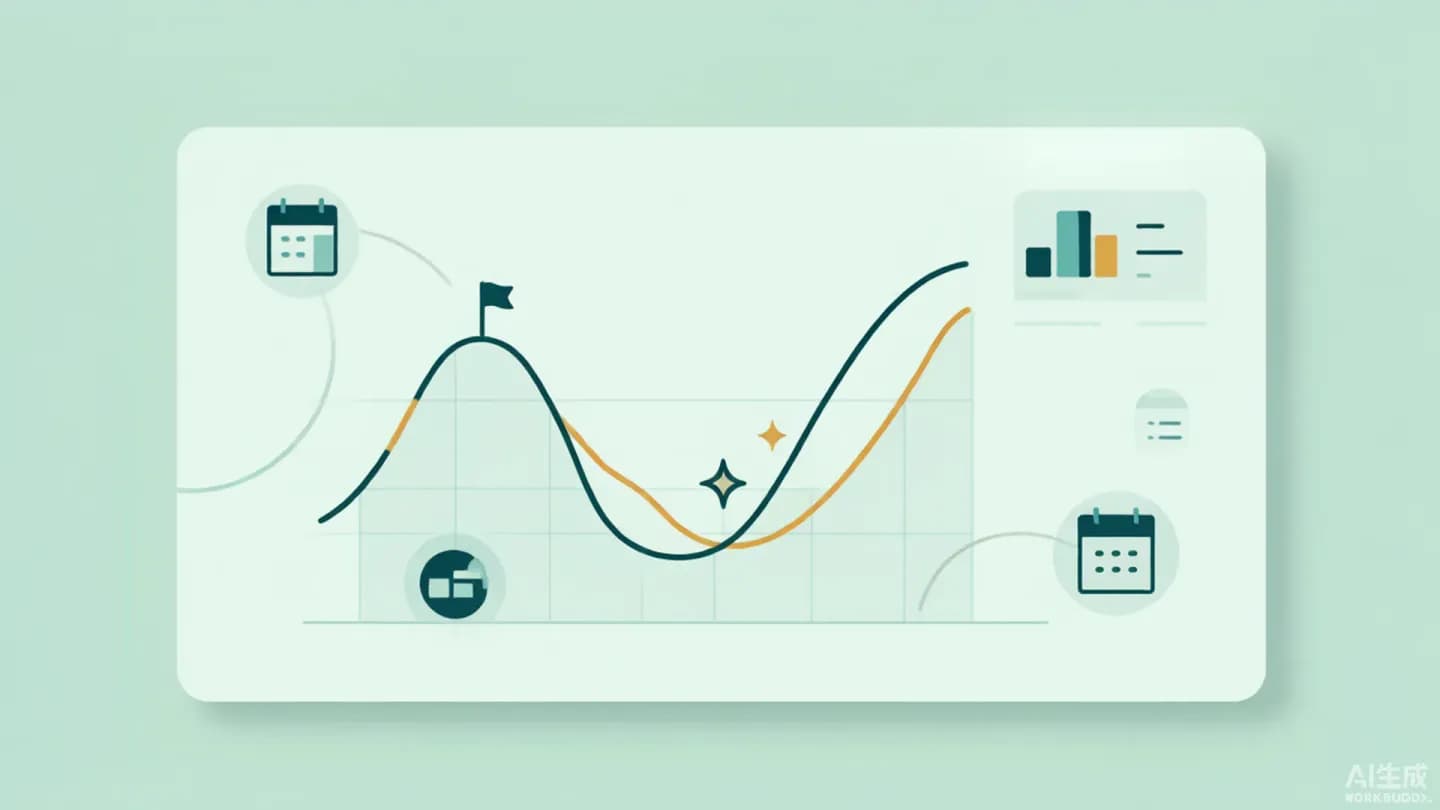
Why creative fatigue quietly drains paid social budgets
Every paid social account eventually hits the same wall. A new ad launches, performs strongly for a few days, and then the metrics slide: cost per acquisition creeps up, return on ad spend softens, and click-through rate falls. That pattern is creative fatigue, and it is the single most expensive problem most teams never put on a calendar. The trap is timing, because by the moment the finance-facing numbers move, the budget is already spent. Building a deliberate creative refresh cadence, a schedule for replacing creative before it decays, is what separates accounts that compound from accounts that quietly leak.
The stakes are rising because output demand is rising. The CMO Survey reports that generative AI now accounts for 22.4% of marketing activities in 2026, up from 15.1% in 2025, with content creation the single most common use case. More creative in market means faster audience saturation, which means fatigue arrives sooner and hits more assets at once. A refresh discipline is no longer optional housekeeping; it is the control system that keeps a growing volume of creative from turning into a growing pile of waste.
Read the signals in the right order
Fatigue announces itself in a fixed sequence, and reading the signals out of order is why teams react too late. Frequency is the leading indicator: it does not confirm fatigue on its own, but it tells you fatigue is coming. Click-through rate is the confirming indicator, dropping 20 to 30 percent from the creative's own baseline over three to seven days on Meta, faster on TikTok and slower on LinkedIn. Cost per acquisition and return on ad spend are lagging indicators, and by the time they move you have already lost budget.
A simple detection process turns this into a weekly habit rather than a fire drill. Isolate each creative variation, pull daily impressions, clicks, conversions, frequency and cost, then compute a seven-day moving average of click-through rate. Fatigue risk rises sharply once average frequency exceeds three to four, and a moving average trending down across two consecutive windows is a reliable flag to act on. Platform-native alerts, like Meta's ad-fatigue indicator, are a useful supplement, but they should never replace your own thresholds.
For video, split the read further. A declining hook rate paired with a stable hold rate means the opening has fatigued while the underlying concept is still working. That is the highest-leverage moment to swap only the first three seconds instead of rebuilding the entire asset, and it keeps a proven idea earning attention for longer.

Set a creative refresh cadence by platform and spend
A creative refresh cadence is a proactive rotation schedule, not a reaction to collapse. The right interval depends on three variables: platform, audience size, and spend. Platforms fatigue at different speeds. TikTok rewards constant freshness and wears out in days, Meta fatigues in weeks, and LinkedIn stretches to weeks or months because its audience pools are smaller and the same asset is served more slowly. The diagnostic signals are identical across all three; only the thresholds shift.
Audience size and spend set the tempo inside each platform. For audiences above one million unique users a four-week interval often holds, while smaller pools may need a two-week cycle. Spend compresses everything: if daily budget pushes frequency past three within a week, plan a refresh at the end of that week. As rough tiers, accounts under 5,000 dollars a month can refresh every two weeks, mid-tier accounts weekly, and accounts above 100,000 dollars a month need new variants almost daily because they saturate audiences fastest. During a product launch, compress every cadence by roughly 40 percent, since frequency accumulates in days rather than weeks.
It also helps to separate two jobs that teams constantly confuse. That distinction matters, because a {{link}} exists to discover what resonates, while a refresh cadence exists to keep a proven winner alive. You test to learn and you refresh to sustain, and blurring the two either starves winners of maintenance or floods production with noise instead of insight.
That distinction matters, because a AI UGC testing system for paid social exists to discover what resonates, while a refresh cadence exists to keep a proven winner alive.

Refresh in the right order: hook first, format last
When a refresh is due, the order of operations decides whether it is cheap or expensive. Start with the hook. Because the {{link}} carries most of the attention load, it also wears out first and should be the first thing you swap. It is the cheapest element to change, and on video, resetting the first three seconds often restores the whole performance curve without touching the rest of the edit.
If a hook change does not lift performance within three to seven days, move down the stack. Shift the visual style next, whether that is UGC versus polished, static versus video, or a palette change, then rotate the messaging angle, and only rebuild the format last. Swapping video for static, or the reverse, is closer to a rebuild than a refresh and should be treated as a new concept. A concept-library approach, a handful of proven concepts each with several hook and visual variations, lets you rotate for weeks without inventing ideas from scratch.
Because the high-retention opening hook carries most of the attention load, it also wears out first and should be the first thing you swap.

Solve the throughput problem
A cadence is only real if production can keep up with it, and this is where most teams stall. A two-person creative team running weekly campaigns cannot also spin up three or four fresh video variants every two weeks through a traditional shoot-and-edit pipeline; by the time the new asset lands, the old one has already decayed. The math behind {{link}} is exactly why teams turn to generative pipelines when the refresh calendar outpaces what a single shoot can deliver.
Generative video closes that throughput gap without replacing creative direction, because the use case is the variant slot rather than the hero film: a fresh treatment of the same product, with a different hook or angle, that resets the click-through curve without a reshoot. The practical moves are to change the face, the setting, or the shot type while holding logo, palette and tone constant, so novelty never costs you brand consistency. Done well, one validated concept can spawn dozens of on-brand variants at a fraction of the cost of a single creator shoot.
The math behind AI TVC versus traditional production is exactly why teams turn to generative pipelines when the refresh calendar outpaces what a single shoot can deliver.
Prove the refresh actually worked
A refresh is a hypothesis until you measure it, and day-one numbers lie. Algorithmic delivery boosts new creatives in their first 48 hours, so a variant can look like a winner on day two and fade by day ten. Compare the refreshed ad against a seven-day pre-refresh baseline for the same ad set, judge it on creative-level metrics rather than account-wide noise, and give it a three-to-seven-day learning window before you call it.
Then watch the trajectory over the following ten to fourteen days, not just the initial lift. Feeding each new variant a tight {{link}} keeps refreshed cuts on-brand rather than drifting into generic footage. If click-through rate improves and cost per result stabilises, log the change in a creative library with version numbers and launch dates, so the next refresh starts from evidence rather than instinct and creative fatigue becomes a scheduled, measurable part of keeping paid social profitable.
Feeding each new variant a tight creative brief for AI video keeps refreshed cuts on-brand rather than drifting into generic footage.
Put the framework into production
These related pages connect the article’s planning advice to a specific commercial scope.
References
- Creative Refresh Cadence: When to Refresh Your Paid Ads (2026)Superads
Once fatigue arrives, click-through rate typically drops 20-30% from the creative's own baseline over three to seven days on Meta, with frequency acting as the leading indicator.
- Detecting Creative Fatigue and Setting a Refresh Rhythm for Paid SocialApte
Fatigue risk rises sharply once average ad frequency exceeds three to four, and a seven-day moving average of click-through rate trending down across two consecutive windows is a reliable flag.
- The CMO Survey: Highlights and Insights Report, 2026The CMO Survey
Generative AI accounted for 22.4% of marketing activities in 2026, up from 15.1% in 2025, with content creation the most common use.