
Turkey Just Switched On Its First AI Ad Rules
Turkey AI advertising rules changed on 1 August 2026, when the Ministry of Trade's Regulation Amending the Regulation on Commercial Advertising and Unfair Commercial Practices (Official Gazette No. 33297, dated 1 July 2026) entered into force. The amendment is the first time Turkish advertising law sets out an explicit framework for AI-generated content rather than treating it as an edge case of existing misleading-advertising rules.
For commercial video teams, the change lands exactly as generative production moves from experiment to weekly output. A spot that uses a synthetic spokesperson, an AI-extended location, or a generated product demo now sits inside a defined legal category, and the safe path is disclosure by default rather than after-the-fact justification. The regulation also reaches influencer content, targeted media buying, discount claims, and review handling, so the obligation rarely stops at the creative file.
The practical takeaway is that compliance now belongs in the brief, not in a legal sign-off at the end of the project. Teams that already run a creative brief for AI video can extend it with three new gates: an AI-disclosure label, a synthetic-performer clearance, and a demo-claim substantiation step.

Turkey AI Advertising Rules: The Disclosure Trigger
The disclosure trigger is narrow but easy to hit. Advertisers must clearly, intelligibly and prominently disclose AI use whenever artificial intelligence or other software is used in a way that is likely to materially influence a consumer's economic behaviour, or whenever an ad features digital characters generated through AI that are indistinguishable from real persons.
The second clause is the one commercial video teams underestimate. A photorealistic AI spokesperson, a de-aged actor, or a synthetic crowd that reads as real all qualify as digital characters indistinguishable from real persons, even when no real individual was copied. The duty attaches to the visual result, not to the question of consent, so a fully original synthetic human still needs a label if it is convincing enough to be mistaken for a person.
Disclosure is also required where the AI use is likely to materially influence a buying decision. That reaches AI-optimised hooks, generated testimonial-style scripts, and synthetic product environments shown as if they were real retail or usage settings. When in doubt, label: the regulation penalises misleading omission, not an excess of transparency.
The Deepfake-Endorsement Ban
Beyond disclosure, Turkey prohibits a specific practice outright. Advertisements that create the impression a digital replica of a real person, generated through AI, has personally experienced, used, or endorsed a product or service, where that does not reflect reality, are expressly banned. This is a content prohibition, not merely a labelling obligation.
Before any synthetic face fronts a brand, the clearance questions Turkey now legislates around are the same ones a {{link}} process is built to lock down. The ban targets impersonation rather than stylisation: an original synthetic character with no real-world referent is permitted provided the disclosure duty above is met, and the line is crossed only when the replica implies a real person's genuine experience or endorsement.
For video teams this means the clearance step has to happen before generation, not after. Locking the origin classification, the consent chain, and the script limits up front prevents a finished cut from becoming a non-compliant asset that cannot be shipped into the Turkish market.
Before any synthetic face fronts a brand, the clearance questions Turkey now legislates around are the same ones a synthetic performer clearance process is built to lock down.
Targeted Ads Get a Definition — and a Child-Profiling Ban
The amendment defines targeted advertising for the first time: presenting ads tailored to individuals or groups by analysing online behaviour, past preferences, location data, demographic information, or similar personal data. Sellers, providers, and intermediaries must give consumers direct, easily accessible information on the criteria used to show them an ad and on how those criteria can be modified.
Most relevant for video teams buying programmatic or social placements, targeted advertising based on profiling with personal data is prohibited where it is known, or should reasonably be known, that the consumer is a child. That constraint reaches animated and influencer-led formats aimed at younger audiences as much as it does direct-response campaigns, because the prohibition follows the data practice, not the creative format.
The operational fix is to keep targeting logic in a documented, adjustable form and to suppress profiling-based delivery for any audience that may include minors. Creative teams rarely own the media plan, but the brief should flag the constraint so the edit and the buy stay aligned.
Influencer Tags Must Lead, Not Trail
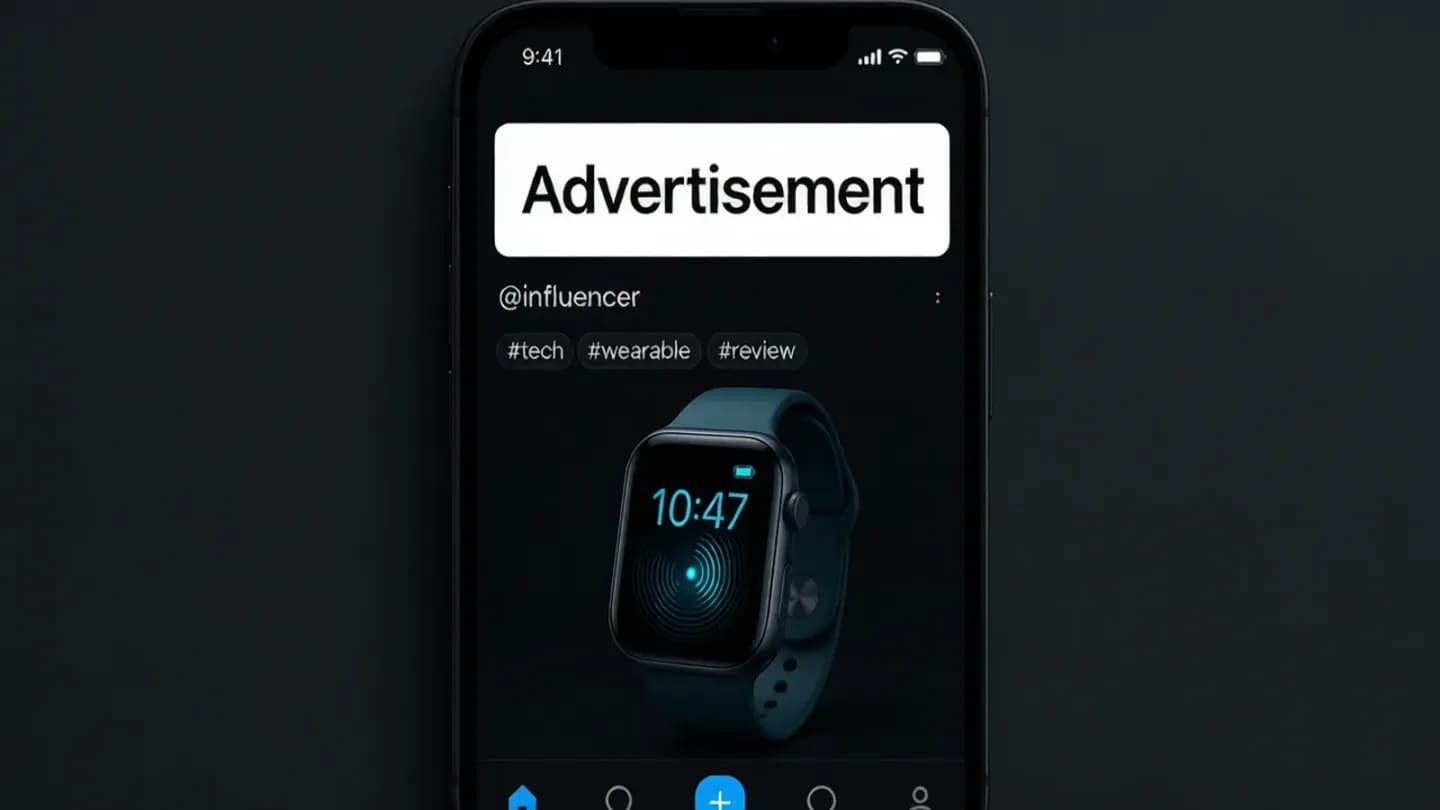
For social video, the rule is about position. Influencer posts that direct consumers to a brand's goods or services, or that involve payment, free product, or promotional participation, must carry the label Advertisement or Promotion. The label must be visible on first view without scrolling, must appear before any other tag or hashtag, and must repeat in every post when content spreads across multiple posts; for audio-only formats the disclosure leads the broadcast.
Teams that already follow a published {{link}} will recognise Turkey's first-view rule as a tightening of label position rather than a new concept. A buried hashtag that satisfied older habits is no longer enough; the disclosure has to be the first thing a viewer sees, which changes how creators structure the opening frame and the caption.
The same logic applies to brand-owned short-form posted through creator accounts. If the post involves compensation or a promotional relationship, the leading label is mandatory regardless of who operates the account, so agencies should bake the label into the deliverable template rather than leaving it to the creator.
Teams that already follow a published AI video disclosure checklist will recognise Turkey's first-view rule as a tightening of label position rather than a new concept.
How Turkey Compares to the EU and India — and What to Do Next
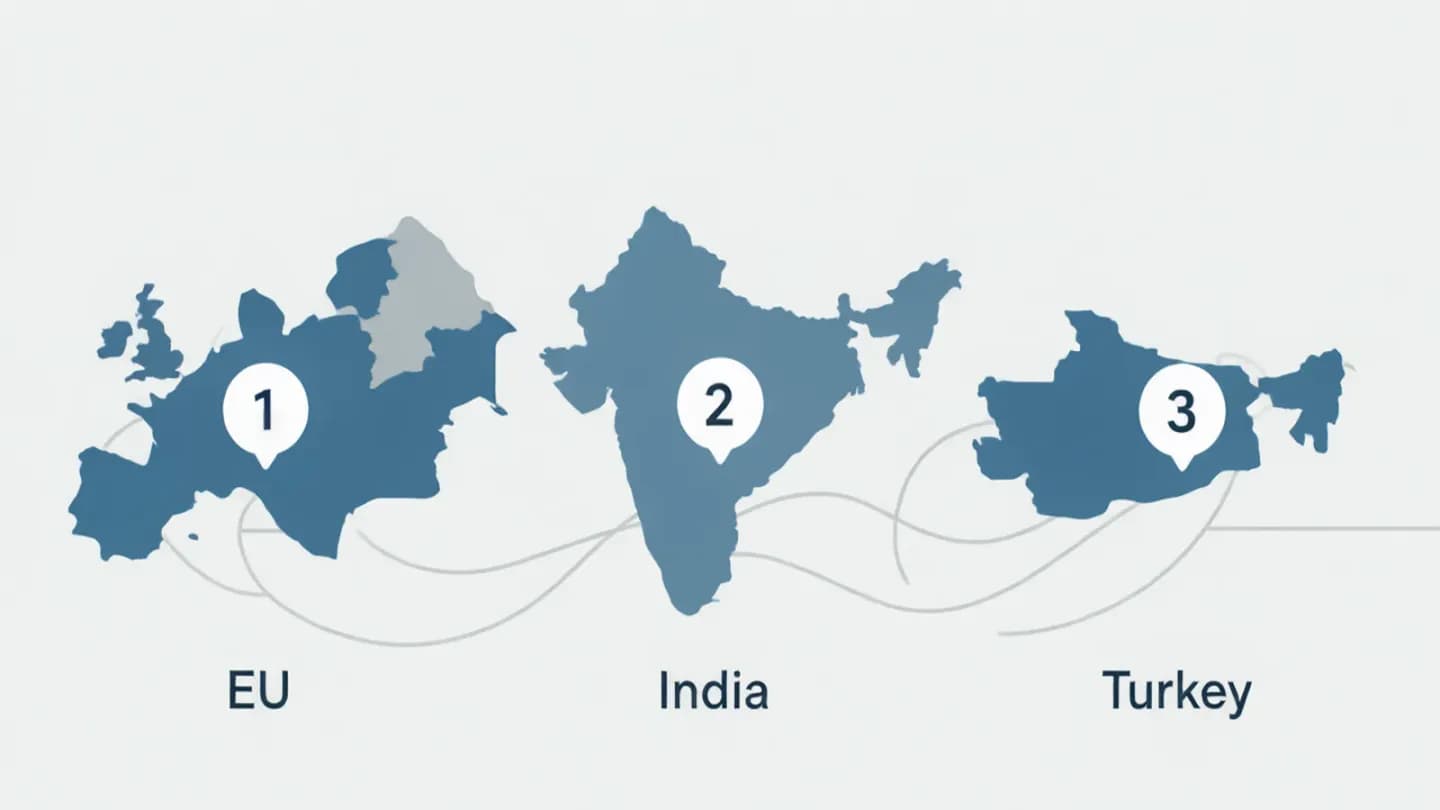
Turkey is not acting alone. The EU AI Act's Article 50 requires providers of AI that generates synthetic video to mark outputs in a machine-readable format and requires deployers of deepfakes to disclose manipulation, with obligations landing at the first point of exposure. India's advertising watchdog ASCI has meanwhile drafted risk-based labelling guidelines that ban fabricated endorsements and realistic-but-fake locations outright, and require labelling of virtual influencers and AI-generated product-performance visuals.
A {{link}} has become the default operating condition for any campaign that crosses borders, because a single asset can fall inside one regime, outside another, and into a different enforcement structure in a third. The efficient response is a master asset with a disclosure layer that satisfies the strictest applicable rule, then localised labels per market rather than a separate creative build per country.
Turkey's ban on implying a synthetic replica genuinely used a product is the same risk a disciplined approach to {{link}} is built to control before a frame ever ships. Treat the disclosure label, the synthetic-performer clearance, and the demo-claim substantiation as production-layer checks, and the Turkish market stops being a legal edge case and becomes just one more row in the launch checklist.
The immediate action for commercial video teams is concrete: add an AI-disclosure label to the brand's standard lower-third and end-card, confirm any synthetic face has a clearance record, and move the influencer Advertisement tag to the top of every caption template. None of these changes the craft of the film; they protect the film from being pulled after it ships.
A cross-market AI video disclosure has become the default operating condition for any campaign that crosses borders, because a single asset can fall inside one regime, outside another, and into a different enforcement structure in a third.
Turkey's ban on implying a synthetic replica genuinely used a product is the same risk a disciplined approach to AI product demo claims is built to control before a frame ever ships.
Put the framework into production
These related pages connect the article’s planning advice to a specific commercial scope.
References
- Advertising Rules Are Changing: A New Era for AI, Targeted Advertising and InfluencersKecoş Legal
Turkey's Regulation Amending the Regulation on Commercial Advertising and Unfair Commercial Practices (Official Gazette No. 33297, 1 July 2026) entered into force on 1 August 2026, requiring clear disclosure of AI-generated ads and digital characters indistinguishable from real persons, banning ads implying an AI replica of a real person experienced, used, or endorsed a product, defining targeted advertising, and requiring influencer Advertisement or Promotion labels visible on first view.
- Article 50: Transparency Obligations for Providers and Deployers of Certain AI SystemsEU Artificial Intelligence Act
EU AI Act Article 50 requires providers of AI that generates synthetic audio, image, video, or text to mark outputs in a machine-readable format, and requires deployers of deepfakes to disclose that content was artificially generated or manipulated, with the information provided at the latest at the time of first interaction or exposure.
- ASCI releases draft synthetic media guidelines for ads, certain uses to be prohibited entirelyMediaNama
India's ASCI draft synthetic media guidelines propose banning fabricated endorsements, deepfakes without consent, and realistic-but-fake locations, and require labelling of virtual influencers, replication of a real person's likeness or voice, and AI-generated product-performance visuals.