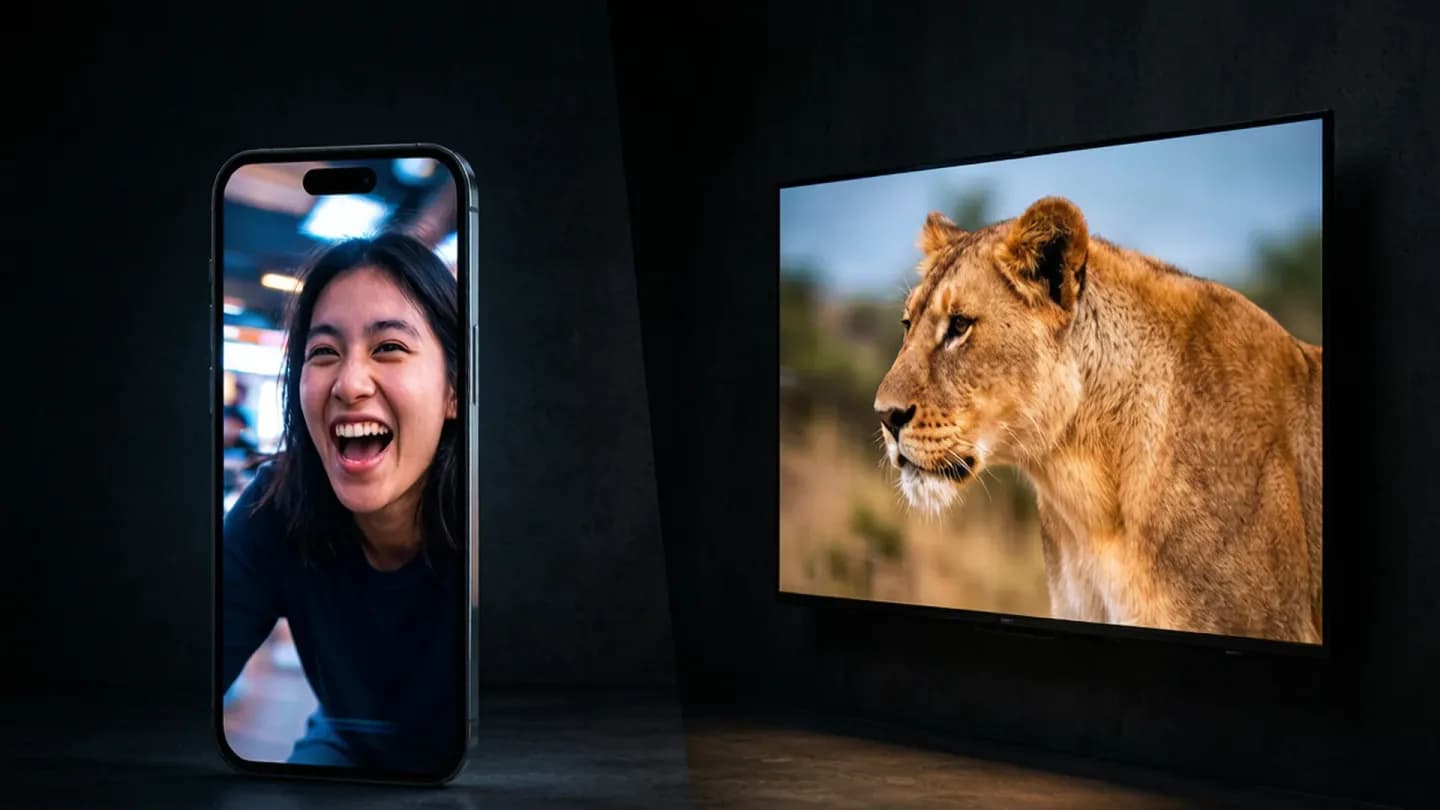
The 2026 video ad spend headline: social video passed CTV
The 2026 video ad spend numbers are in, and they mark a structural turning point. According to the IAB 2026 Digital Video Ad Spend and Strategy Report, U.S. digital video advertising is projected to surpass $80 billion this year, growing 11% year over year and roughly 20% faster than the total ad market. Social video is the headline: it is forecast to reach $31.9 billion, edging past connected TV's $29.3 billion for the first time. Online video adds another $20.7 billion, and the report notes that 54% of incremental CTV budget is shifting from linear television, with another 40% from legacy print and radio.
That crossover reverses a decade of assumption that the living-room screen would own the budget. Digital video as a whole now accounts for about 61% of total TV and video ad spend, up from 58% a year earlier, while linear television's share slips to 39%. The IAB credits social's lead to AI-powered personalization and the creator economy, the exact levers commercial video teams have been building production workflows around. For those teams the implication is direct: the master asset now has to serve a phone and a television with equal care, because the buyer is splitting the plan across both.

Spend is climbing, but buyer confidence is slipping
More money is flowing into video, yet the people placing the buys trust the inventory less. The IAB report finds that 43% of buyers have low or no confidence in the quality of the inventory they purchase, even through the most controlled channels. That figure climbs to 55% for private marketplaces and 67% for open exchange and real-time bidding. Invalid traffic and opacity about where an ad actually runs are the drivers, and the pattern holds across formats, which means a creative team's deliverable is increasingly judged on where and to whom it ran, not only on how it looks.
The trust erosion the IAB data captures is the same brand-trust risk we mapped in our AI video trust tax guide. For video teams, the practical takeaway is that a finished cut is no longer the deliverable, provenance and placement transparency are. A spot that cannot demonstrate where it ran, or whether the audience was real, loses value before a single frame is judged on craft.

GenAI is now core to video creative
Generative AI has moved from experiment to default in creative production. The IAB report shows two-thirds of video buyers now use GenAI for creative assets, up from half in 2025, and that one-third of all ad assets will involve GenAI this year, climbing toward 43% by 2027. Smaller buyers are the laggards: 96% say they are unsatisfied with their current GenAI capabilities and want harder proof of performance. The unsatisfied majority is not a rejection of the tools, it is a demand for workflow integration and proof that the output actually moved a KPI.
That gap between adopting AI and proving it pays off mirrors the 2026 AI marketing maturity gap we documented earlier, where 91% of marketers use AI but only 41% can show ROI. The lesson for production teams is to treat GenAI as a throughput tool, not a quality claim. Speed to variant matters, but the brief, the performance data, and the human direction still decide whether a cut earns the budget.

Agentic buying is live, but ungoverned
The other half of the story is who is placing the media. The IAB finds that 96% of buyers see a role for agentic AI in programmatic video, with two-thirds already live, testing, or planning activation this year. Yet there is no consensus on governance: 40% want a human in the loop, a third want an audit trail for explainability, and 31% want hard guardrails on what agents can do. The lack of consensus is itself the signal, buyers are deploying agentic systems before they agree on the rules, which puts the burden of safe defaults on the teams supplying the creative.
As we broke down in our look at agentic AI video buying, two-thirds of buyers are already running agentic systems that rewrite the media plan. For commercial video teams, that means assets have to be variant-ready and provenance-tagged by default. The machines buying the media expect to receive files they can evaluate and route without a person opening the project, so a cut shipped without metadata is a cut that cannot be bought.
Live video still commands the premium
For all the automation, live content keeps its pricing power. The IAB report shows 93% of buyers agree live is worth more than any other video format, valuing it for attention (45%) and business outcomes (38%). Sports, breaking news, and award shows top the consideration list, and a skeptical third still want proof that live delivers ROI, but the premium is holding. The premium reflects a scarcity of trustworthy, appointment-level inventory in a feed-dominated market.
The attention problem runs deeper than live formats, our analysis of the 2026 video engagement decline shows views climbing while watch time falls. Video teams should read the live premium as a signal about format mixing: short-form earns the first click, long-form and live build the trust that converts, and the same campaign needs both to satisfy a buyer who is scored on outcomes, not impressions.
What the 2026 shift means for your video team
Three moves follow directly from the data. First, build for social and CTV as one planning exercise. Social video's lead is not a reason to abandon the big screen, it is a reason to version the same master for both. Second, instrument provenance and measurement from the brief, because buyers now rank targeting and audience reach alongside business outcomes as top criteria, and they will pay for accountability they can verify. None of this requires a rebuild of the pipeline, but it does require the brief to name the destination and the proof up front.
Third, treat GenAI as a scale layer, not a creative substitute. The IAB report makes clear that adoption is table stakes and satisfaction is rare, so the teams that win pair machine throughput with human direction and hard performance data. The 2026 video ad spend shift is not just about where dollars go, it is about which teams can prove their video actually worked, and teams that treat it as a budgeting story will miss the real workflow change.
Put the framework into production
These related pages connect the article’s planning advice to a specific commercial scope.
References
- Business Outcomes Are Just the Beginning, According to IAB Digital Video Ad Spend & Strategy Full ReportInteractive Advertising Bureau (IAB)
U.S. digital video ad spend surpasses $80B in 2026; social video ($31.9B) overtakes CTV ($29.3B) for the first time; 43% of buyers lack confidence in inventory quality; two-thirds use GenAI for video creative; 96% see a role for agentic AI in programmatic.
- The Key Takeaways From Wistia's 2026 State of Video WebinarWistia
Social engagement nearly doubled as a primary video success metric, jumping from 12% to 22% in a year; 83% of companies share video on social; 62% of teams use AI in their video workflows.
- Coalition for Content Provenance and AuthenticityC2PA
Content Credentials bind provenance and edit history to a media file, the accountability mechanism buyers demand as inventory trust erodes.