
The Supor case: a few yuan of AI video, billions in lost trust
In 2026 the AI ad backlash stopped being a prediction and became a line item. Brands that shipped cheap, synthetic video with no human review watched campaigns collapse and market value slide - most visibly when Supor's AI-generated clips wiped roughly 1.6 billion yuan off its value in four trading sessions. This breakdown shows what went wrong and the controls that stop it.
In late July 2026, authorized e-commerce accounts run by Chinese cookware leader Supor (苏泊尔) began publishing batches of AI-generated short videos built around vulgar, borderline-explicit scenarios - strangers barging into bathrooms, a man entering a woman's shower - engineered to grab attention for cleaning products. The clips spread fast, drew widespread condemnation, and were pulled within days, but not before the story became a national reputation event that the brand never publicly apologized for.
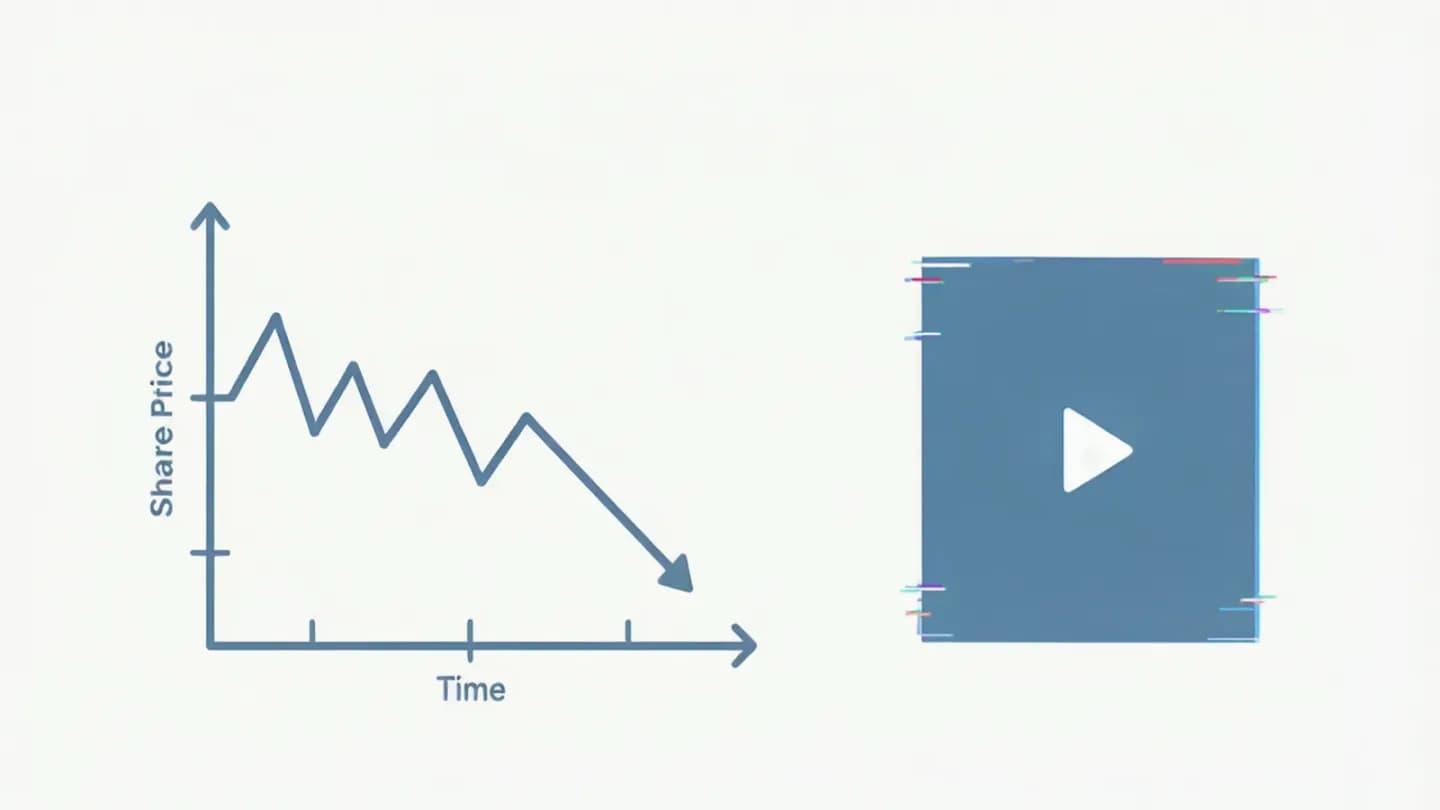
The financial echo was immediate. Supor's market capitalization slid from about 34.9 billion yuan on 31 July to roughly 33.2 billion yuan by 5 August, a drop of around 1.6 billion yuan in four sessions, as reported by CCTV Finance and Southern Finance. The titles leaned on phrases like '叔啥没见过' ('seen it all'), and industry observers noted the wider pattern: at a few yuan per clip, no one budgets for the human review step that traditional production treats as mandatory. The episode is a textbook case of the {{link}} that cheap synthetic ads can levy on equity.
The Supor episode exposed the economic logic behind the failures. At a few yuan per clip, an agency paid on volume has no incentive to add a human review pass that costs more than the asset itself, so the publish decision defaults to the algorithm. The brand absorbs the reputation risk while the vendor pockets the fee - a structure that makes a backlash not a bug but the expected output of the contract.
The episode is a textbook case of the AI video brand trust tax that cheap synthetic ads can levy on equity.
Citrawarna 2026: when 'authenticity' was the claim AI undercut
Supor's mistake was taste. Tourism Malaysia's was authenticity. In July 2026 the agency uploaded an allegedly fully AI-generated promo for Citrawarna 2026, a culture-led festival, showing Visit Malaysia mascots moving through an AI-rendered Merdeka Square alongside stylized local food and motifs. Critics flagged a missing teh tarik froth, an unnatural ketupat, and a mirrored national flag - small errors that read as disrespect toward the very heritage the campaign celebrated.
The response was swift: the video was removed two days after upload. Media-intelligence firm CARMA's social listening found 84.62% of negative conversation was driven by authenticity concerns, not a blanket rejection of AI, while creator exclusion and cultural misrepresentation each accounted for 53.85% of negative sentiment. The lesson is that in identity-led categories the medium signals who you trusted to tell the story. The clip is also a clean example of the {{link}} that brands hit the moment 'good enough' reads as careless.
The clip is also a clean example of the AI creative quality ceiling that brands hit the moment 'good enough' reads as careless.

The pattern: why the AI ad backlash peaked in 2026
These were not isolated stumbles. Chinese outlets documented more than ten brands that triggered public-opinion crises over AI ads in the first half of 2026 alone, clustering into three failure modes: vulgar clickbait, visual distortion (six-fingered models, uncanny faces), and false or misleading claims - including a virtual influencer who endorsed a medical product it could never have used, later named by prosecutors. The common cause was structural, not creative.
Generative video collapsed the cost of a single ad from hundreds of yuan to a few, and removed the human review step that traditionally sat between idea and publish. Brands outsourced production to agencies paid on volume, and algorithms optimized for the only signal they understood - click-through - which rewarded the edgiest content. When nobody owns the publish decision, the cheapest asset wins, and the brand pays later.
The market is already pricing trust back in. The 2026 IAB Digital Video Ad Spend report found 43% of buyers express low confidence in the quality of the inventory they buy, 40% want humans in the loop, and 36% want an AI agent audit trail for explainability. Buyer trust, IAB noted, is eroded both by bad actors and by uncertainty about where legitimate inventory comes from - exactly the uncertainty a hidden synthetic ad creates.
The same economics that broke Supor also explain the wave of six-fingered models and fake-endorser medical ads. When generation is nearly free, the marginal cost of a bad clip is zero, so teams ship first and discover the problem only after the audience does. Volume without a gate turns a rare miss into a frequent one, and frequency is what turns individual stumbles into an industry-wide trust deficit.
What the backlash actually measures: authenticity, not AI
The instinct after a backlash is to ban AI. The data says otherwise. Both the Supor and Citrawarna cases drew fire not because the work was synthetic but because it read as detached, careless, or exploitative - audiences inferred a brand that did not invest in the real thing. In high-context categories, viewers judge the process as much as the output, and 'who made this' becomes a proxy for respect.
That reframes the risk as a governance problem, not a technology one. A fully disclosed, human-directed AI video can build trust; a hidden, automated one erodes it. The brands pulling ahead keep a human face and a human reviewer visible in the work, turning authorship into a {{link}}. The backlash is a signal about stewardship, and stewardship is something a brand can choose to show.
Platforms have already moved the disclosure decision out of the brand's hands. YouTube now requires creators to label realistic AI-generated or altered video and automatically tags content that carries C2PA provenance metadata, so a hidden synthetic clip is flagged whether the brand discloses or not. The control is becoming infrastructural, which raises the cost of staying silent and rewards the teams that labeled early.
The brands pulling ahead keep a human face and a human reviewer visible in the work, turning authorship into a pro-human AI video playbook.
The controls that prevent an AI-ad backlash
Prevention is mostly process. The first control is a human owner for every publish decision, so a generated clip never reaches a channel without someone accountable for it. The second is a sensitivity gate matched to the category: nation-branding, healthcare, and finance carry higher penalties for near-misses and need culture- or compliance-literate reviewers, not just brand approval.
The third is provenance by default. C2PA's Content Credentials attach tamper-evident history to a file, so a viewer - and a regulator - can see exactly how a clip was made, turning disclosure into a shown asset rather than a hidden one. A clear {{link}} assigns disclosure and approval duties before generation starts, which is the single highest-leverage control a team can install. Provenance built in at generation time costs seconds; bolted on after release, it reads as a cover-up.
The fourth is a hard pre-ship QC pass covering continuity, identity, claims substantiation, and disclosure. Generated frames that show a product performing are claims someone must prove, and a synthetic spokesperson cannot testify to an experience it never had. These gates cost minutes per clip and prevent the multi-day reputation events that dominated 2026 - the difference between a controlled launch and a forced takedown. For identity-led work, the QC gate should include culture- or category-literate reviewers who catch the mismatched flag or missing froth before publication, because those errors are cheap to fix in review and expensive to fix in the news cycle.
A clear AI video governance playbook assigns disclosure and approval duties before generation starts, which is the single highest-leverage control a team can install.

A pre-launch checklist for AI video ads
Make the controls operational with a short pre-launch gate. One: name where AI touched the work and disclose it at upload, not after. Two: confirm a human owns the creative decision - the script beat, the spokesperson, the claim. Three: attach C2PA provenance so the history travels with the file. Four: match production method to the brand promise, especially in identity-led work where 'authentic' is the claim being made.
Five: run a claims and disclosure pass against the 2026 labeling rules using the {{link}} before anything ships. None of this slows a modern pipeline - AI still does the crew work of variation, localization, and rough cuts. The human stays in the cast where trust is earned. Teams that run this gate ship more video, not less, and they ship video an audience is willing to believe, which in 2026 is the only kind worth making.
The payoff is not slower output but safer output. Brands that install these controls report fewer takedowns and a steadier audience, because the clips that ship are the ones a real person stood behind. In a market where 43% of buyers already doubt inventory quality, a visible human and a provenance trail are themselves a competitive advantage that synthetic volume alone cannot buy.
Five: run a claims and disclosure pass against the 2026 labeling rules using the AI video disclosure checklist before anything ships.
Put the framework into production
These related pages connect the article’s planning advice to a specific commercial scope.
References
- Citrawarna AI backlash puts authenticity at the centerContentGrip
Tourism Malaysia removed an allegedly fully AI-generated Citrawarna 2026 promo two days after upload; CARMA social listening found 84.62% of negative conversation was driven by authenticity concerns, not a rejection of AI, with creator exclusion and cultural misrepresentation each at 53.85%.
- C2PA - Content CredentialsCoalition for Content Provenance and Authenticity
C2PA's Content Credentials attach tamper-evident provenance (origin and edit history) to media, letting a creator show - not hide - how an image, video, or audio asset was generated or edited.
- Business Outcomes Are Just the Beginning, According to IAB Digital Video Ad Spend & Strategy Full ReportIAB
The 2026 IAB report found 43% of video buyers express low confidence in inventory quality, 40% want humans in the loop, and 36% want an AI agent audit trail for explainability as buyer trust is eroded by uncertainty about content origin.
- Disclosing use of GenAI content - YouTube HelpGoogle
YouTube requires creators to disclose AI-generated or meaningfully AI-altered content that looks realistic, including generated video, and automatically labels content that carries C2PA metadata.