
Why 2026 broke the AI video trust bargain
For three years the pitch for generative video was simple: cheaper, faster, more. In 2026 that pitch hit a wall of audience skepticism, and pro-human AI video - work that discloses the machine and keeps a human in frame - became the only defensible way to use it at scale. The mood shift is not a fringe complaint; it is now the baseline expectation for commercial creative.
Gartner research found 53% of consumers lack basic trust in AI-generated content, and McKinsey reported that 80% of companies had not yet seen AI translate into material profit. At Cannes Lions 2026, a Havas study found 84% of brands now suffer from consumer indifference - recognized but not connected to. Digiday, citing influencer agency Billion Dollar Boy, reported that preference for AI-generated creator content fell from 60% in 2023 to just 26% today. Ignore the audience's trust and you pay a real price {{link}} in mockery and lost credibility. The lesson is not to stop using AI. It is to use it in a way the audience can respect.
Video attracts the harshest scrutiny because a synthetic face or voice reads as impersonation rather than assistance, so audiences police it more tightly than they police a generated blog post. The cost of a miss is rarely a downvote; it is a brand story about deception that is far harder to walk back, and once that story is live it competes with every future ad you ship.
Ignore the audience's trust and you pay a real price AI video trust tax in mockery and lost credibility.
The pro-human AI video rule: AI in the crew, humans in the cast
A useful framing comes from how any production is staffed. The cast is the human the audience came for - the voice, the face, the point of view. The crew is everyone behind the lens doing essential work the audience never notices. AI belongs in the crew: research, storyboarding, asset variation, rough cuts, localization, quality checks. It does not belong in the cast, standing in for the human judgment a brand's trust was built on.
When you reverse those roles - let AI write the actual line or deliver the actual emotional beat - you get the 2026 failure mode that Coca-Cola, McDonald's Netherlands, and Nike each stumbled into publicly. Keeping a human in the loop {{link}} is what keeps generated video on brand when volume spikes. The tool did not fail in those cases; it was miscast. Pro-human AI video is therefore a casting decision before it is a production decision, and getting the cast right protects the brand long after the render finishes.
The costliest AI failures of 2026 were not technically broken; they were socially miscast, and no amount of render quality repaired the mismatch. Casting the human correctly is therefore cheaper than cleaning up the fallout after the audience decides the brand lied, because the second conversation is always harder than the first.
Keeping a human in the loop human-core, AI-scaled creative model is what keeps generated video on brand when volume spikes.

Disclose by default - provenance is now table stakes
Transparency is no longer optional, and it is no longer just ethical - it is regulatory. The EU AI Act (Regulation (EU) 2024/1689) establishes transparency obligations that require providers to mark AI-generated text, image, audio and video with machine-readable disclosure. YouTube now requires creators to disclose realistic AI-generated or meaningfully altered content, and it automatically labels videos that carry C2PA metadata. What was a nicety in 2024 is a compliance baseline in 2026, and platforms are enforcing it with labels rather than polite requests.
The practical move is to treat provenance as a first-class asset rather than a legal afterthought. C2PA's Content Credentials attach tamper-evident history to a file, so a viewer can see exactly how a clip was made - and a brand can show it rather than hide it. A clear operating framework {{link}} tells you exactly where generative tools belong in commercial work. Provenance labeling is the seam where that framework meets the law. Build the disclosure in at generation time and it costs nothing; bolt it on after release and it reads as a cover-up.
Provenance is also a durability play. When a platform tightens its labeling rules, assets that already carry C2PA metadata need no retroactive cleanup, while unmarked libraries suddenly become liabilities overnight. The teams that labeled early spent a few seconds per clip; the teams that waited now face a manual audit of their entire back catalog.
A clear operating framework AI video governance playbook tells you exactly where generative tools belong in commercial work.

Keep a human face and voice in the work
Disclosure satisfies the regulator; it does not by itself earn affection. The brands that weathered 2026 best kept a human visibly present in the creative - a real spokesperson, a director's signature, a craftsperson's hand. Svedka's 2026 Super Bowl spot was generated with AI yet billed as created by humans in partnership with robots, and its mascot literally short-circuited at the end to signal the human was in charge. The message read as pro-human, not pro-machine, and that distinction is what defused the usual backlash.
Operationally, this starts before generation. Locking the human point of view early {{link}} prevents generic output before generation starts. The brief - not the model - fixes the voice, the audience, and the single idea the video must land. When the human creative direction is locked, AI becomes a volume engine for an already-human idea rather than a replacement for one. The face and voice you keep on screen are the difference between content the audience tolerates and content they trust.
Voice matters as much as face. A cloned or synthetic voice should be labeled and, ideally, approved by the person it represents rather than slipped in under a real name, because the ear detects a fake faster than the eye forgives one. The same standard applies to a synthetic performer: if a real person would not say it on camera, a generated one should not say it on their behalf.
Locking the human point of view early creative brief for AI video prevents generic output before generation starts.
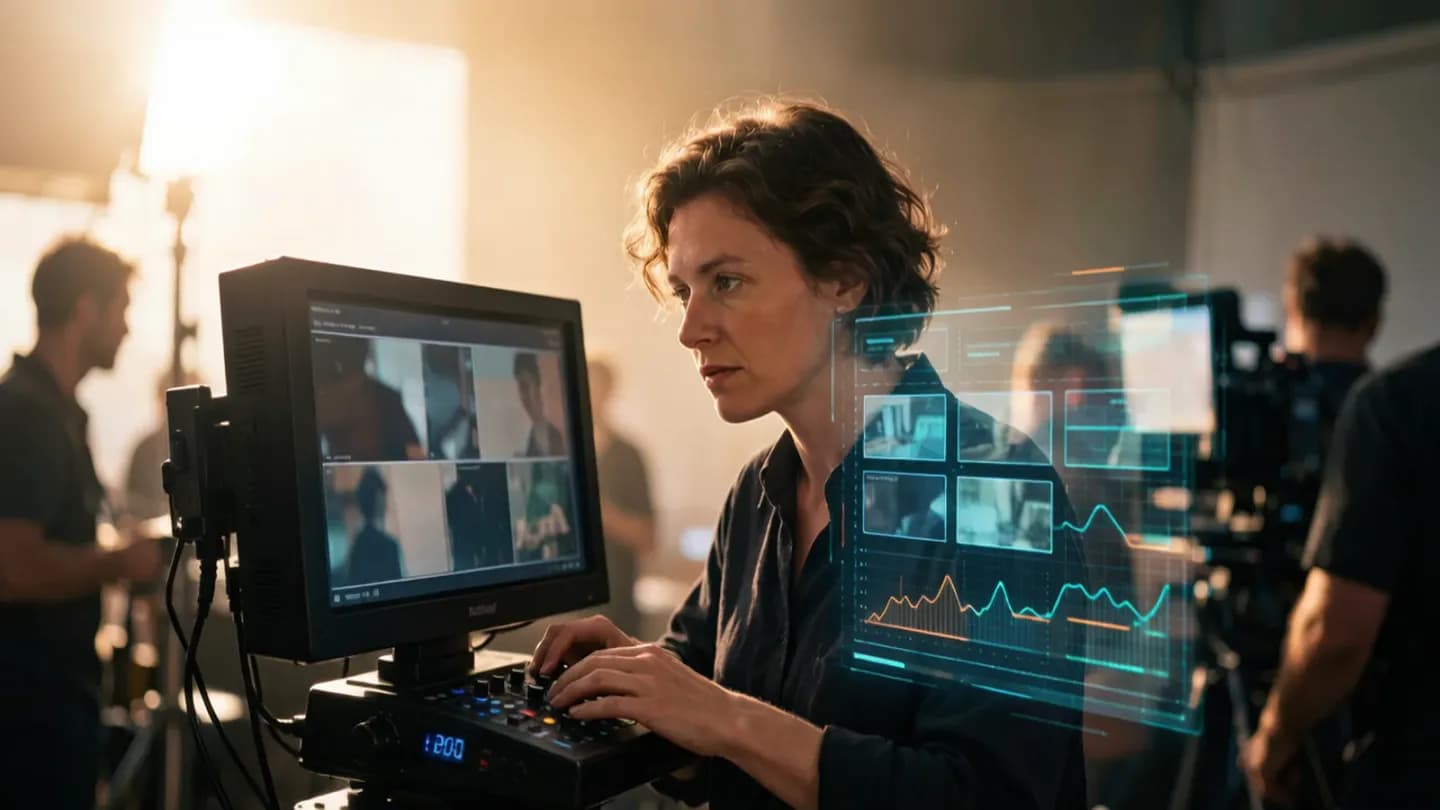
Turn transparency into a creative asset, not a disclaimer
The brands that win treat transparency as a creative feature, not a legal footnote. Anthropic's 2026 campaign reframed AI as a creative thinking partner precisely because 53% of Americans told pollsters AI worsens people's ability to think creatively - the brand met the skepticism head-on instead of hoping it would pass. Dove, Aerie, Equinox and Almond Breeze turned the visible absence of AI into a headline, not a footnote. The pattern is consistent: name the human, show the craft, and the disclosure becomes a reason to trust rather than a reason to suspect.
Contrast that with the slow erosion of undifferentiated synthetic ads. There is a hard limit {{link}} where synthetic ads stop landing and start eroding brand equity. It arrives the moment the audience senses the brand hid the machine instead of standing beside it. Provenance, a human face, and an honest message are what keep a generated video on the right side of that line. Transparency is not the tax you pay for using AI; it is the asset that lets you use AI at all.
The strongest versions make the human collaboration visible in the work itself, not only in a caption, so the disclosure is felt rather than filed. When the craft is on screen, the AI label reads as honesty instead of apology, and the audience rewards the brand for showing its hand rather than hiding it.
There is a hard limit AI creative quality ceiling where synthetic ads stop landing and start eroding brand equity.
A pre-publish checklist for pro-human AI video
Make pro-human the default with a short pre-publish gate. First, name where AI touched the work and disclose it at upload, not after. Second, confirm a human owns the creative decision - the script beat, the spokesperson, the brand point of view. Third, attach C2PA provenance so the history travels with the file. Fourth, show the human: a credit, a face, a craft moment. Fifth, test the line - would we be comfortable putting a real person's name on this? If not, regenerate before it ships.
None of this slows a modern pipeline. AI still does the crew work: variation, localization, rough cuts, QC. The human stays in the cast where trust is actually earned. Teams that run this gate ship more video, not less, and they ship video the audience is willing to believe - which in 2026 is the only kind worth making. Pro-human AI video is not a constraint on the technology; it is the operating model that makes the technology safe to use in public.
Keep the gate deliberately short; a five-question check survives a real deadline, while a twenty-question one gets skipped under pressure. The brands that win 2026 are not the ones that used the least AI or the most, but the ones whose audience never once had to wonder whether a human was behind the work.
Put the framework into production
These related pages connect the article’s planning advice to a specific commercial scope.
References
- C2PA - Content CredentialsCoalition for Content Provenance and Authenticity
C2PA's Content Credentials attach tamper-evident provenance to media, letting a creator show - not hide - how an image, video or audio asset was generated or edited.
- Disclosing use of GenAI content - YouTube HelpGoogle
YouTube requires creators to disclose AI-generated or meaningfully AI-altered content that looks realistic, including generated or altered video, and labels it for viewers.
- Regulation (EU) 2024/1689 (Artificial Intelligence Act)EUR-Lex - Official Journal of the European Union
The EU AI Act (Regulation (EU) 2024/1689) establishes transparency obligations requiring providers to mark AI-generated text, image, audio and video with machine-readable disclosure.