
The AI video activation gap is a shipping problem, not a volume problem
The AI video activation gap is the binding constraint on commercial video programmes in 2026, and it is not a shortage of models or ideas. An analysis of more than 300 brands on Bannerflow's creative platform, published in September 2026, found 78% produced video advertising while only 46% served a single impression, across 2.33 million assets. Production stopped being scarce two years ago; moving an approved asset into a live campaign did not get easier.
The gap is 32 percentage points wide, but it is not a clean measure. A brand counts toward the 78% if it produced any video this year and toward the 46% if it served any video impression, so the two groups are not necessarily nested. Read as a directional signal rather than an audit, the finding still lands: video adoption is broad and shallow, accounting for 10.5% of all assets produced against 89.5% static.
Three years of tooling improvements moved the market from raw clips to fully commissioned work. The shift from clips to commissioned work is already documented in {{link}}, and it moved the bottleneck downstream rather than removing it. A team can now generate a respectable 30-second cut in an afternoon; what it cannot guarantee is that the cut enters a campaign.
The shift from clips to commissioned work is already documented in the shift from clip generation to finished delivery, and it moved the bottleneck downstream rather than removing it.
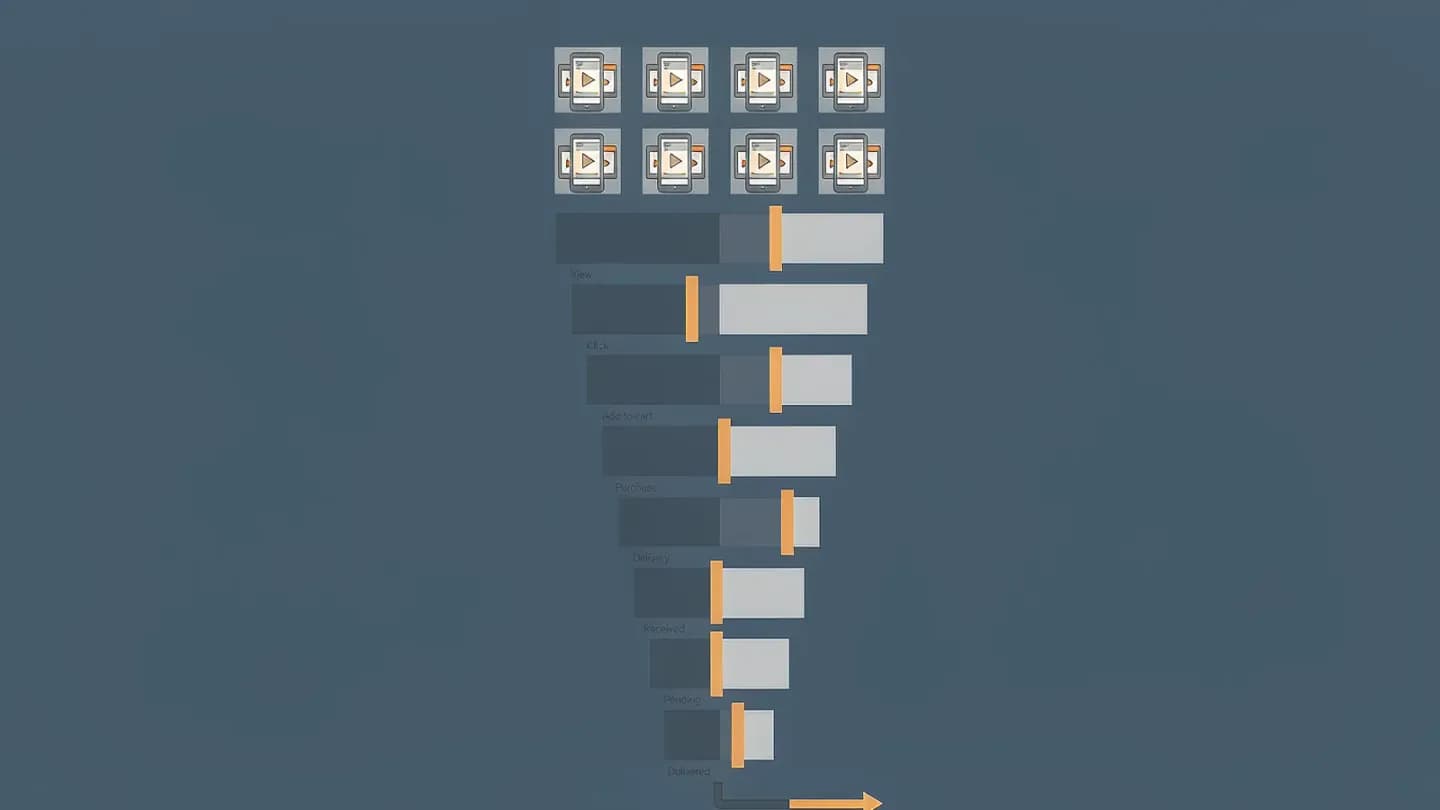
Platforms now generate the missing formats for you
The first block is geometry. A single master rarely fits every placement, and until recently the answer was a manual resize queue. Google's video enhancements, which are turned on by default, now handle much of that work: Google AI flips or extends the original video into new aspect ratios while preserving the original content, with 16:9, 1:1 and 9:16 among the outputs. Google's own documentation notes that Model 2 uses generative AI to extend the original video in new aspect ratios, and that only derived versions passing quality review get served.
Geometry discipline also changes what counts as a variant. When a platform can extend a frame, the cheapest variant is often one nobody designed: an autogenerated crop that keeps the subject and loses the composition you approved. Teams that decide in advance which ratios a concept must own, and which ones the platform may derive, stop signing off on work they will not defend later.
The practical consequence is a change of brief. If the platform can derive a vertical cut, the question is no longer whether you can export 9:16 but whether the frames you generated survive the derivation. A composition that leans on the full width of a 16:9 frame, or on supers parked at the extreme edges, degrades the moment it is flipped or extended. Generate and frame for the extraction, not for the master alone.
Buyers have already located where the leverage sits. IAB's 2026 Digital Video Ad Spend & Strategy Report puts US digital video ad spend above $80 billion this year and finds that targeting and audience reach now rank alongside business outcomes as top decision criteria for video investment. Creative quality is still contested, but it is no longer the first filter an asset has to clear.

An asset with no provenance record stalls before it ships
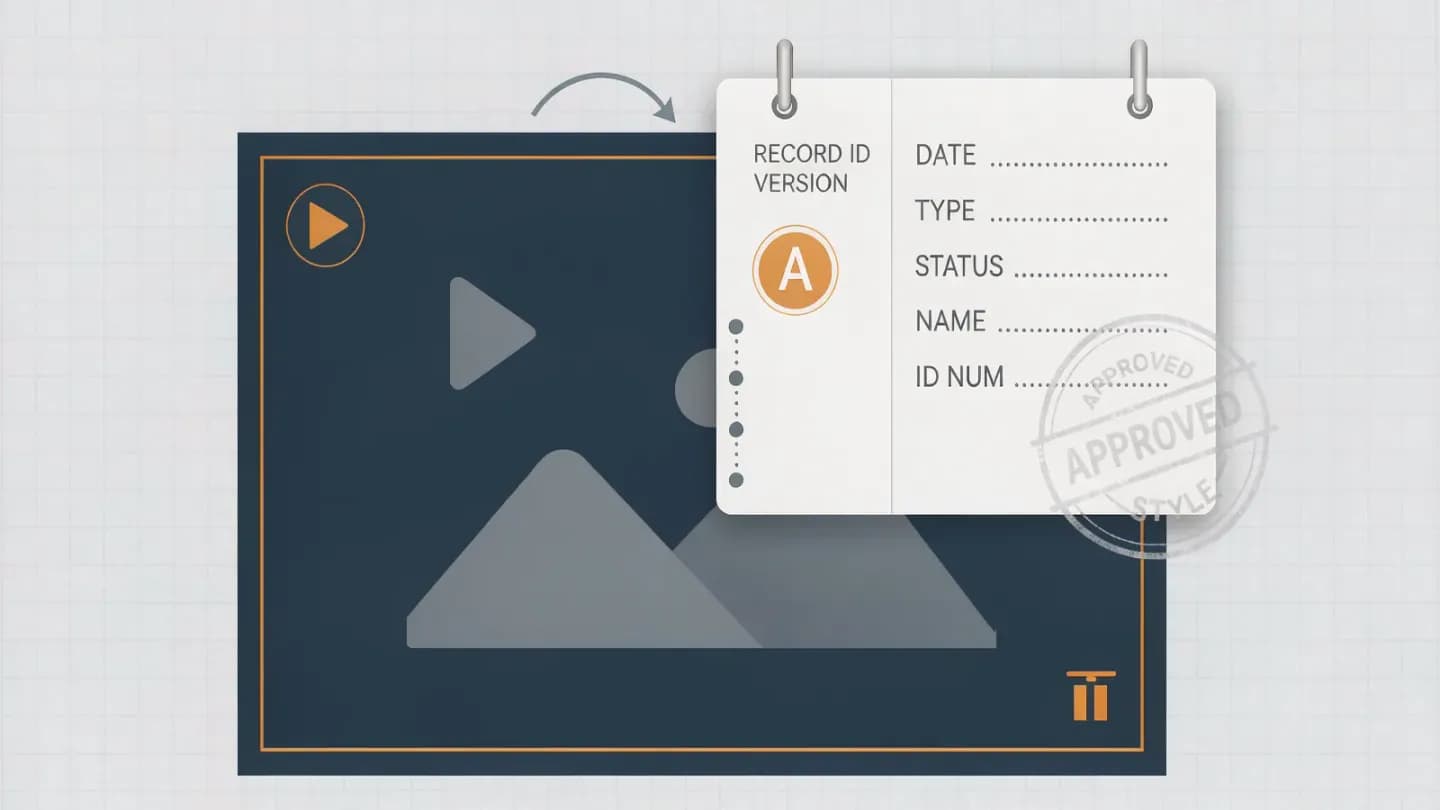
The second block is paperwork, and it is where most AI video quietly stops. A generated asset has no negative, no camera report and no shoot date. Everyone can see the file, but the record of what it is, which model produced it and which terms attach to it usually lives in someone's inbox. C2PA's Content Credentials exist for exactly this problem: an open technical standard that establishes the origin and edits of digital content and travels with the asset rather than beside it.
In practice that record decides the approval state. Reviewers, legal and media buyers all ask a version of the same question before a spot goes live: can we show what this frame is and who cleared it? An asset that cannot answer sits in a pending folder for another week. An asset that can answer moves the same day.
The record does not need to be elaborate. Four fields cover most review requests: the model and version that produced the asset, the licence terms attached to that model tier, any performer or likeness consent involved, and the person who approved the final frame. Teams that keep those four attached to the file report the same outcome: fewer round trips, and no scramble months later when a partner asks where a clip came from.
The economics of that trade-off are already argued in {{link}}, where the cost of a usable clip rather than the sticker price of a generation sets the real budget. A library that never clears review is not a creative advantage; it is an unamortised cost.
The economics of that trade-off are already argued in AI video variant economics, where the cost of a usable clip rather than the sticker price of a generation sets the real budget.
Distribution belongs inside the production calendar
The third block is scheduling. In most teams creative and media still run on separate calendars, so a cut is finished in week three and trafficked in week six, by which point the flight has moved and the concept is stale. The fix is unglamorous: name the placements and their specs before the first generation, and treat the delivery package as a production deliverable rather than an afterthought.
The volume data supports the sequencing argument from the other side. Epsilon's 2026 benchmark study of more than 250 marketing decision-makers found that all of them were using AI, 71% mainly for productivity and efficiency and only 9% for revenue, while 46% still judged the work by revenue. Tools that grow output faster than they grow attributed returns put every marginal asset on trial.
Only a fraction of what any team generates survives review at all, which is why {{link}} matters more than raw generation count. Measuring production by output rewards exactly the behaviour the activation gap punishes.
Only a fraction of what any team generates survives review at all, which is why the safe volume ceiling matters more than raw generation count.
A four-gate check before an AI video asset enters a flight
Gate one is geometry: confirm the master survives every required derivation without losing a claim, a logo or a face at the frame edge. Gate two is the record: provenance, model used, licence terms and approval status attached to the file rather than buried in a thread.
Gate three is the delivery package: master, platform variants, caption files, thumbnail and a one-line usage note, all named to a convention a media buyer can read without asking. Gate four is the flight check: who serves it, in which placement, against which objective, and what result would justify keeping it in rotation next month.
A gate is only real if it has an owner. Assign geometry to the editor, the record to the producer, the delivery package to the trafficker and the flight check to the media buyer, then write those four names into the brief. Anonymous review is how an asset ends up perfectly approved by nobody.
Queue time is the quiet failure mode behind late launches, and {{link}} is still the most under-planned stage in the chain. A delivery date that ignores render and review latency is a delivery date nobody believes.
Queue time is the quiet failure mode behind late launches, and the AI video render queue bottleneck is still the most under-planned stage in the chain.
Measure what shipped, not what was made
Output volume is the least useful number in an AI video programme, because it is the easiest to move and the least correlated with revenue. Track served impressions per approved asset, the share of assets that clear every gate on first submission, and the elapsed time from approved brief to first live impression. Those three numbers expose the activation gap directly, and they do it without another dashboard.
The second-order effect of measuring that way is cultural. When shipping is the outcome on the scoreboard, editors stop treating generation as the finish line, and briefs start naming the placement, the ratio and the approval path before a single prompt is written. That is a smaller change than it sounds, and it is the difference between an asset library and a campaign.
The reallocation that follows is usually modest. Fewer concepts built to spec, with the record attached and the placement named up front, beat a larger library that never leaves the drive. The teams closing the gap in 2026 are not generating more video; they are finishing and shipping the work they already have.
Put the framework into production
These related pages connect the article’s planning advice to a specific commercial scope.
References
- About video enhancementsGoogle Ads Help
Video enhancements are turned on by default, Google AI intelligently flips or extends video into new aspect ratios such as 16:9, 1:1 and 9:16 while preserving the original content, and Model 2 uses generative AI to extend the original video in new aspect ratios.
- 2026 IAB Digital Video Ad Spend & Strategy ReportInteractive Advertising Bureau
US digital video ad spend will surpass $80B in 2026, targeting and audience reach now rank alongside business outcomes as top video investment criteria, and GenAI adoption for video creative keeps accelerating while buyers want more proof of performance.
- Verifying media content sourcesCoalition for Content Provenance and Authenticity
C2PA provides an open technical standard called Content Credentials for publishers, creators and consumers to establish the origin and edits of digital content.
- 2026 Benchmark Study: Marketing's AI Inflection PointEpsilon
In Epsilon's 2026 benchmark study of more than 250 marketing decision-makers, 100% were using AI, 71% mainly for productivity and efficiency, only 9% for revenue, while 46% measured the work by revenue.