Why your AI video creative refresh cadence now decides ROAS
Your AI video creative refresh cadence is now the variable that decides whether paid-social spend pays back. Privacy changes flattened audience targeting, and Meta and TikTok now default to broad delivery, so the algorithm does the media-side work while creative is the one thing a performance team still controls. When that creative goes stale, the campaign quietly bleeds budget before anyone changes a setting.
The stakes are larger than most teams admit. Nielsen's 2023 analysis of nearly 450 CPG campaigns put creative at 49% of sales lift, so a fatigued asset surrenders close to half the lever you actually own. Metricool's 2026 YouTube study of 799,718 videos captures the wider inversion: long-form views rose 76% year over year while engagement fell 45%, and Shorts views climbed 127% even though viewers spent three times less time per Short. More reach is arriving with far less attention, which is exactly the condition in which fatigue compounds fastest.
The old answer was a fixed calendar: refresh every quarter, or whenever a brand cycle dictated. That cadence is now too slow for feeds where an ad can lose a third of its engagement in a single week. The fix is to drive the refresh from signals and to make AI video production fast enough to honour those signals without a fire drill.
The fatigue signals worth watching
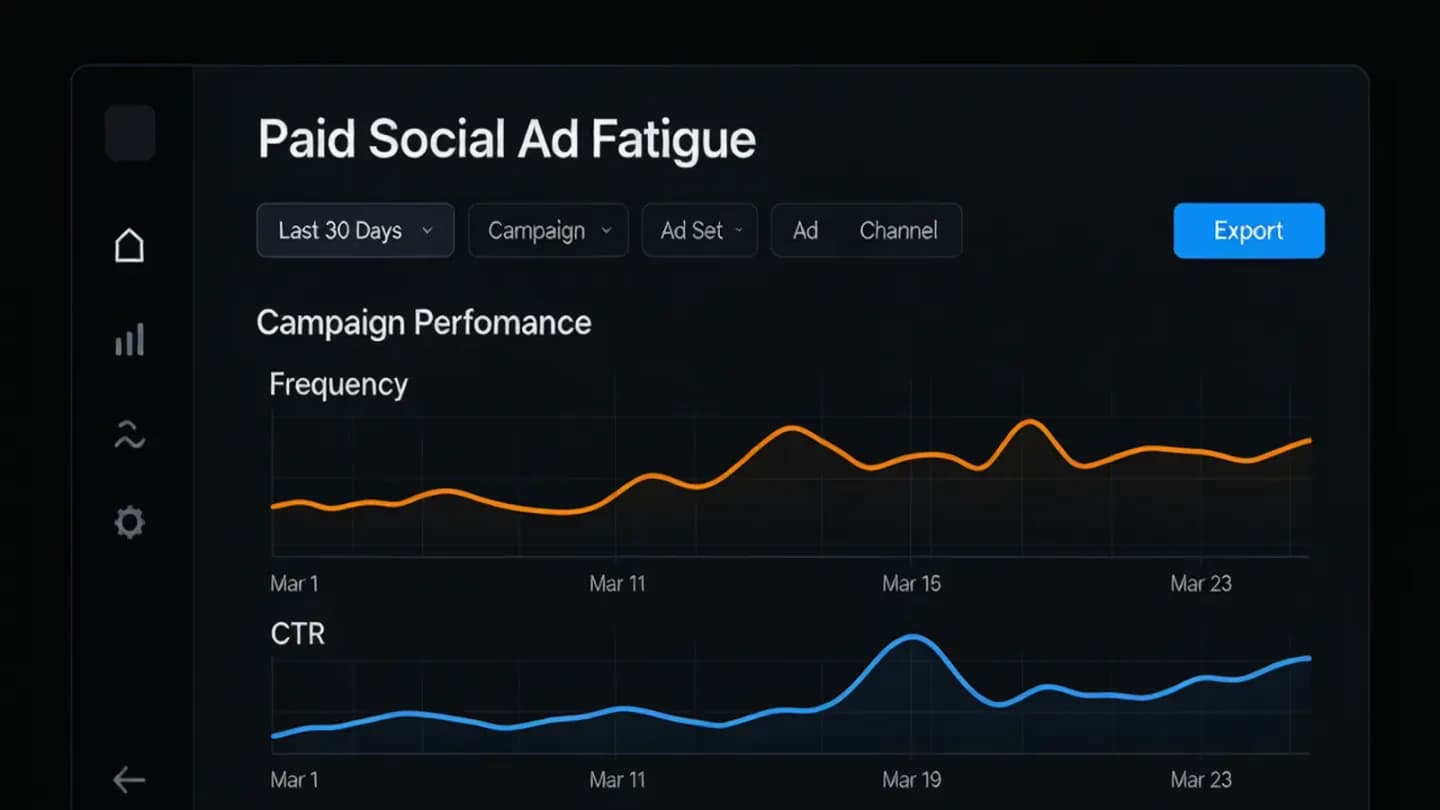
Treat fatigue as a compound signal, not a single metric. Superads' 2026 analysis puts Meta's cold-audience watch line at a seven-day frequency of 2.5, with retargeting tolerating 5.0 to 7.0 before risk sets in and anything past 6.0 deep in the danger zone. On TikTok a seven-day frequency above 2.0 already deserves attention. Frequency is a leading indicator: it tells you fatigue is coming before performance confirms it.
Click-through rate is the earliest reliable confirmation. Superads reports CTR dropping 20 to 30% from the creative's own baseline over three to seven days on Meta as the canary, with Meta's own research showing conversion likelihood falling roughly 45% after four exposures of the same ad. When CPM creeps 15 to 20% and CPC climbs 30% with no new competitor, no budget change, and no audience shift, the algorithm is telling you it is working harder to place the same creative, which is a fatigue signal rather than a bidding problem.
Watch these three together rather than any one alone. A rising frequency with a stable CTR usually points at audience saturation, not creative death. The moment frequency, CTR, and CPA drift move as a set, the asset is done and the refresh should already be queued.
Per-platform refresh cadences that hold up
Once you read the signals, the cadence itself differs by platform because scroll speed differs by platform. Superads converges on refreshing TikTok every three to seven days, Meta every one to two weeks on high-spend narrow audiences and two to four weeks on broader ones, and LinkedIn every two to four weeks. TikTok is the fastest, Meta sits in the middle, and LinkedIn is the slowest, which matches how quickly each feed trains users to skip a familiar frame.
YouTube behaves differently from the short-form trio. Long-form rewards mid-video retention and a strong payoff near the 50% mark, so a top YouTube cut can run thirty to sixty days before fatigue bites, while Shorts follow the short-form clock and demand a finish-the-frame hook. Confect.io research cited by Superads found top-performing ads lose about 38% of effectiveness after five weeks unchanged and average campaigns drop 53% by week eight, so even the slow platforms still have a wall.
The practical rule is to set the cadence to the most restrictive condition among audience size, spend, and objective, then keep a ready variant for each high-performing ad set before its window closes. Brand-awareness campaigns can drift slower, but direct-response buys that live or die on CPA need the aggressive end of each range.
Why AI video changes the production math
The reason teams used to refresh on a quarterly rhythm was simple: shooting and editing new cuts took weeks, so by the time fresh creative arrived the live ads had already fatigued. Generative production collapses that lead time, which is the only thing that makes an aggressive cadence affordable. The 2026 CMO Survey reports generative AI now touches 22.4% of marketing activities, up from 7.0% in 2024, with content creation projected to reach 73.9% within three years, so variant production is already a mainstream line item rather than an experiment.
The real constraint is cost per usable clip, and a {{link}} shows how to budget generation against traditional production so a weekly refresh does not blow the rate card. AI video also lets one approved master spawn many hook and setting variations from the same product and actor reference, which is what actually beats decay: not one better film, but a steady supply of distinct cuts that each enter the feed before the previous one saturates its audience.
Start from an {{link}} that treats generation as a repeatable production system rather than one-off prompts, because the cadence lives or dies on whether you can produce two weeks ahead of demand. When the pipeline exists, refreshing stops being a panic project and becomes a routine batch the algorithm rewards with lower frequency and steadier CTR.
The real constraint is cost per usable clip, and a AI video production cost model shows how to budget generation against traditional production so a weekly refresh does not blow the rate card.
Start from an AI-native creative pipeline that treats generation as a repeatable production system rather than one-off prompts, because the cadence lives or dies on whether you can produce two weeks ahead of demand.
Build a standing variant library
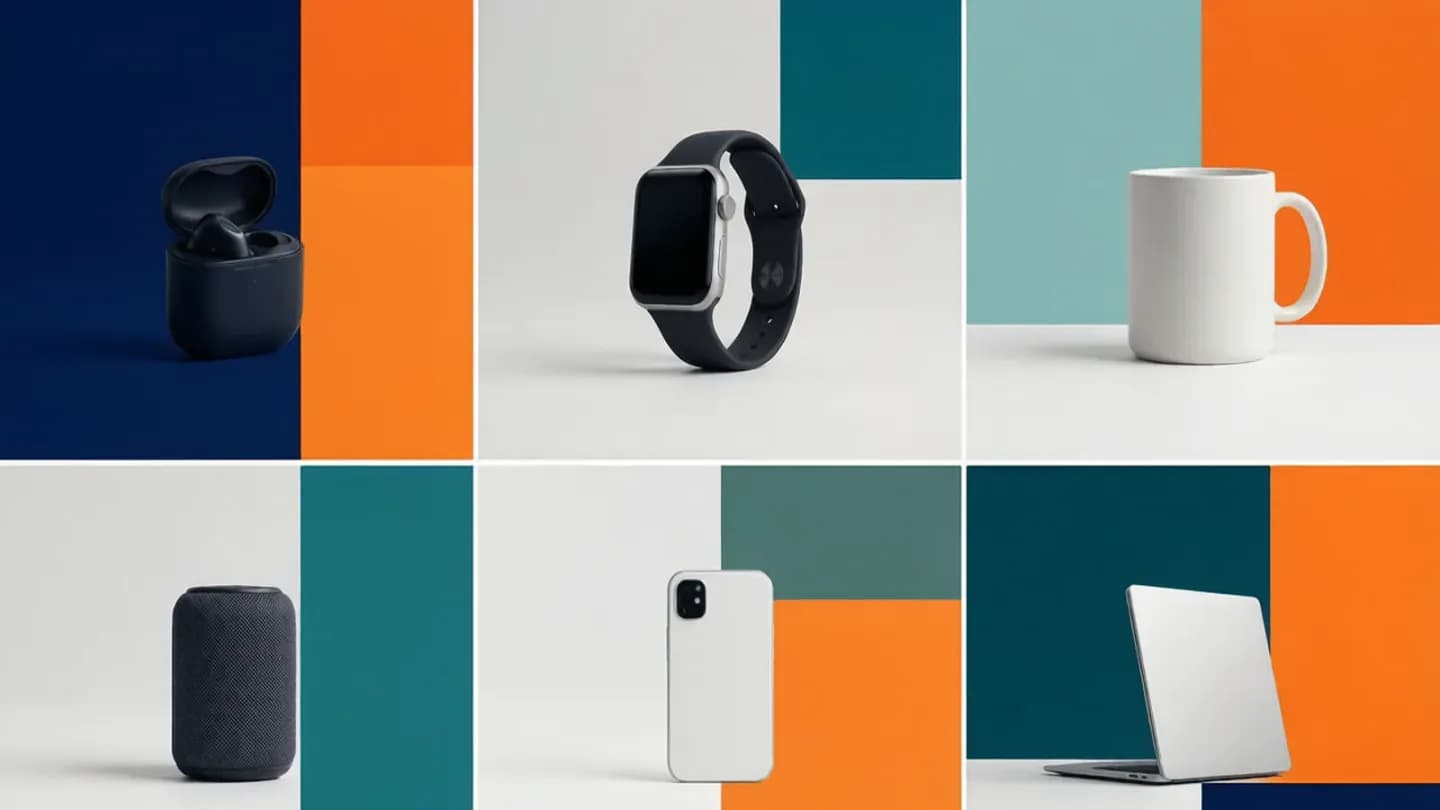
A variant library is a modular asset store, not a folder of finished ads. Keep hook recordings, headline variants, product plates, and background sets as reusable pieces you recombine per audience and per platform, so a refresh is an assembly job instead of a reshoot. The standing brief templates and rotating asset library are what let a small team ship Meta, TikTok, and LinkedIn cuts from one approved master without rebuilding the story each time.
Keep core brand elements identical across cuts by reusing a {{link}} instead of regenerating faces and products from scratch, because variant volume only helps if every cut still reads as the same brand. Lock the logo, palette, and tone as fixed blocks, swap only the hook, setting, or frame, and let the model direct the same character and product across every version you ship.
Every synthetic variant still needs a visible label, so fold an {{link}} into the export step before anything ships, especially now that New York, the EU AI Act, and India's synthetic-media rules all attach real penalties to unlabeled synthetic performers. Stamp each generated asset with provenance too: C2PA's Content Credentials act as a verifiable origin record for digital content, which keeps a growing variant library auditable as it scales across markets and platforms.
Keep core brand elements identical across cuts by reusing a brand consistency workflow instead of regenerating faces and products from scratch, because variant volume only helps if every cut still reads as the same brand.
Every synthetic variant still needs a visible label, so fold an AI video disclosure checklist into the export step before anything ships, especially now that New York, the EU AI Act, and India's synthetic-media rules all attach real penalties to unlabeled synthetic performers.
Measure whether the refresh actually worked
Most teams refresh and never prove it moved anything, which is how cadence theatre replaces cadence discipline. Pull a 14-day before-and-after window on each ad set and compare CTR, CPC, conversion rate, and cost per conversion; a positive lift confirms the rhythm matched audience tolerance, while flat or negative movement means you rotated the wrong element. Hooks fatigue first, then visual style, then angle, so isolate which layer you changed to learn what actually extended the run.
Track CTR drift and CPA drift in a 14-day window, and a {{link}} tells you which metrics actually predict revenue rather than vanity views, so you judge the refresh on pipeline impact instead of raw play count. Document the winner and the surviving hook in the library so the next retrospective knows which formats to protect, and retire the old refresh-quarterly habit entirely once the signal-driven cadence stabilises.
Automate the leading indicators so the dashboard, not a person's memory, raises the flag. CTR drift, frequency, and CPA drift week over week are enough to trigger production, and a 24-hour visual QA pass after launch catches the model artifacts that would otherwise ship a broken variant to a cold audience.
Track CTR drift and CPA drift in a 14-day window, and a video metrics framework tells you which metrics actually predict revenue rather than vanity views, so you judge the refresh on pipeline impact instead of raw play count.
A weekly operating rhythm
Turn the cadence into a calendar so it survives a busy week. Mondays, review every top performer across Meta, TikTok, LinkedIn, and YouTube and flag any variant past its refresh window. Tuesdays and Wednesdays, produce the replacements from the in-house pipeline using the standing brief templates already in the library.
Thursdays, run the brand-voice and disclosure check and batch the cuts into draft state; Fridays, launch with a 24-hour visual QA pass. Keep the winner running in parallel with the variant so you never starve the auction, and hold a quarterly retrospective on which hooks survived longest and which formats fatigued fastest to feed the next brief.
The teams that win 2026 are not the ones generating the most AI video; they are the ones whose AI video creative refresh cadence stays one step ahead of decay. Production speed is the whole game, and a standing variant library is how you make that speed routine instead of heroic.
Put the framework into production
These related pages connect the article’s planning advice to a specific commercial scope.
References
- Creative refresh cadence: When to refresh your paid ads (2026)Superads
Superads' 2026 analysis puts Meta cold-audience frequency at a 2.5 seven-day watch line, CTR falling 20-30% from baseline within 3-7 days, and converged cadences of TikTok 3-7 days, Meta 1-2 weeks, LinkedIn 2-4 weeks; Nielsen 2023 (nearly 450 CPG campaigns) put creative at 49% of sales lift.
- Metricool's 2026 YouTube Study: More Views, Less Watch TimeMetricool
Metricool's 2026 YouTube study of 799,718 videos found long-form views up 76% year over year while engagement fell 45%, and Shorts views up 127% while watch time per Short fell roughly 3x.
- The 2026 CMO Survey: Highlights and Insights ReportThe CMO Survey
The 2026 CMO Survey reports generative AI now touches 22.4% of marketing activities, up from 7.0% in 2024, with content creation projected to reach 73.9% within three years.
- C2PA: Verifying Media Content Sources (Content Credentials)C2PA
C2PA's Content Credentials provide an open standard that acts as a provenance label for digital content, letting each AI-generated asset carry a verifiable record of its origin and edits.