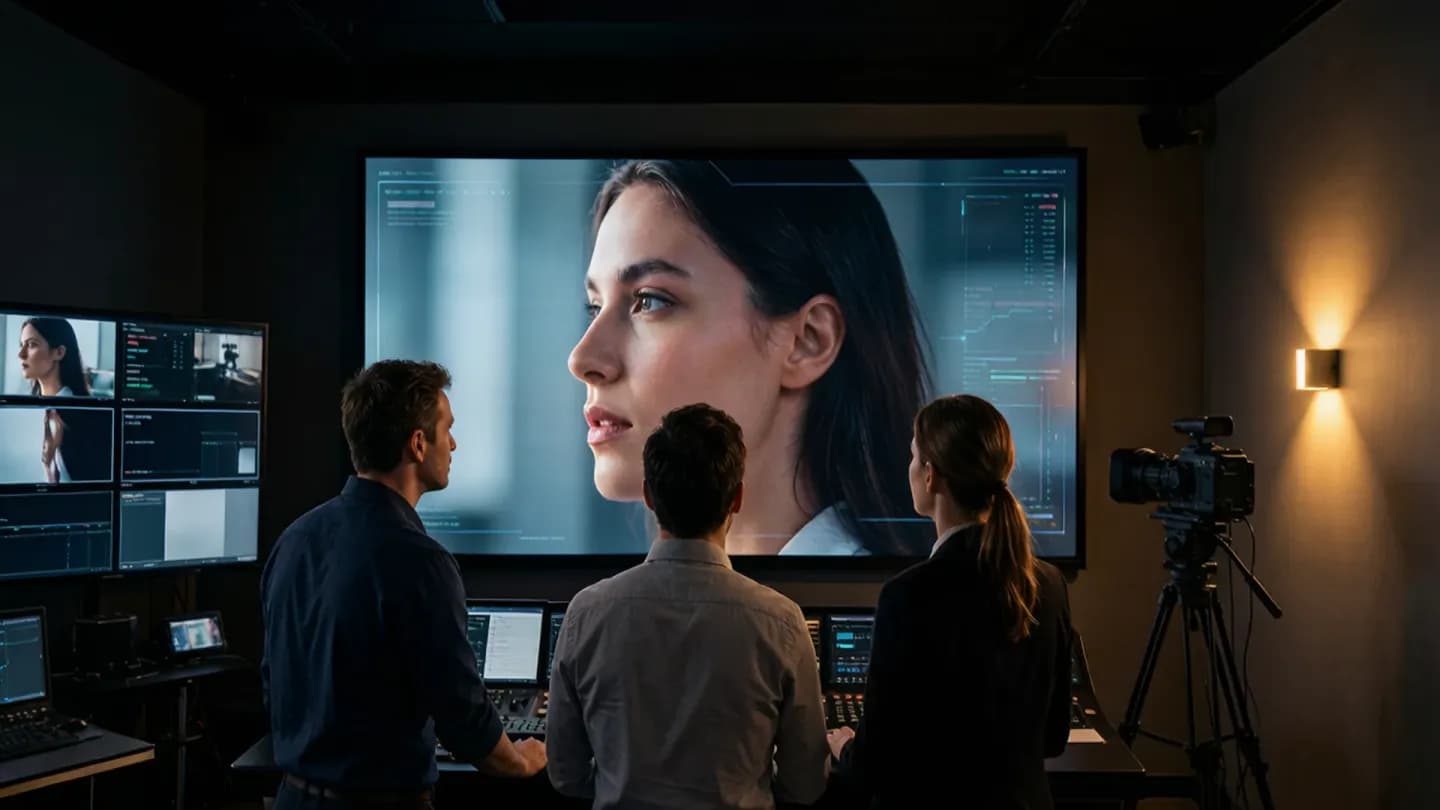
The 2026 shift from clip generators to delivery systems
For three years the story was generation. A brand team typed a prompt, waited, and downloaded a loose clip that still needed an editor, a colorist, a dubbing studio, and a rights check before it could run. The 2026 shift is that AI video delivery platforms absorb that entire tail. They generate, edit, brand, localize, and tag a finished, publish-ready asset inside one workspace, and they hand the brand a file it can actually ship.
This matters because the bottleneck was never the first frame. It was the last mile: the assembly, the compliance pass, the multilingual version, and the provenance record that buyers now require. When those steps live inside the tool instead of in five separate vendors, lead time collapses from weeks to days and the brand stops paying twice for the same creative.
A useful way to picture the difference: a clip generator gives you a 30-second master and walks away. A delivery platform gives you the 16:9 hero, the 9:16 cut, the 1:1 social version, the localized audio, and the stamped provenance, then tells you which one is beating the others. The output stops being a file and becomes a small media plan.
The move to delivery systems is the next step after teams adopt an {{link}} that already runs generation, review, and brand-safety as one process. The platform is simply the commercial wrapper around that pipeline: it enforces the brand's rules, stamps the asset, and exports every format the media plan needs.
The move to delivery systems is the next step after teams adopt an AI-native creative pipeline that already runs generation, review, and brand-safety as one process.
Provenance is now a delivery requirement, not a release label
A finished commercial in 2026 carries a question no editor used to ask: where did this footage come from, and what was synthetic? Buyers and platforms are starting to demand an answer at the file level, which means provenance has to be written at generation time, not bolted on at release.
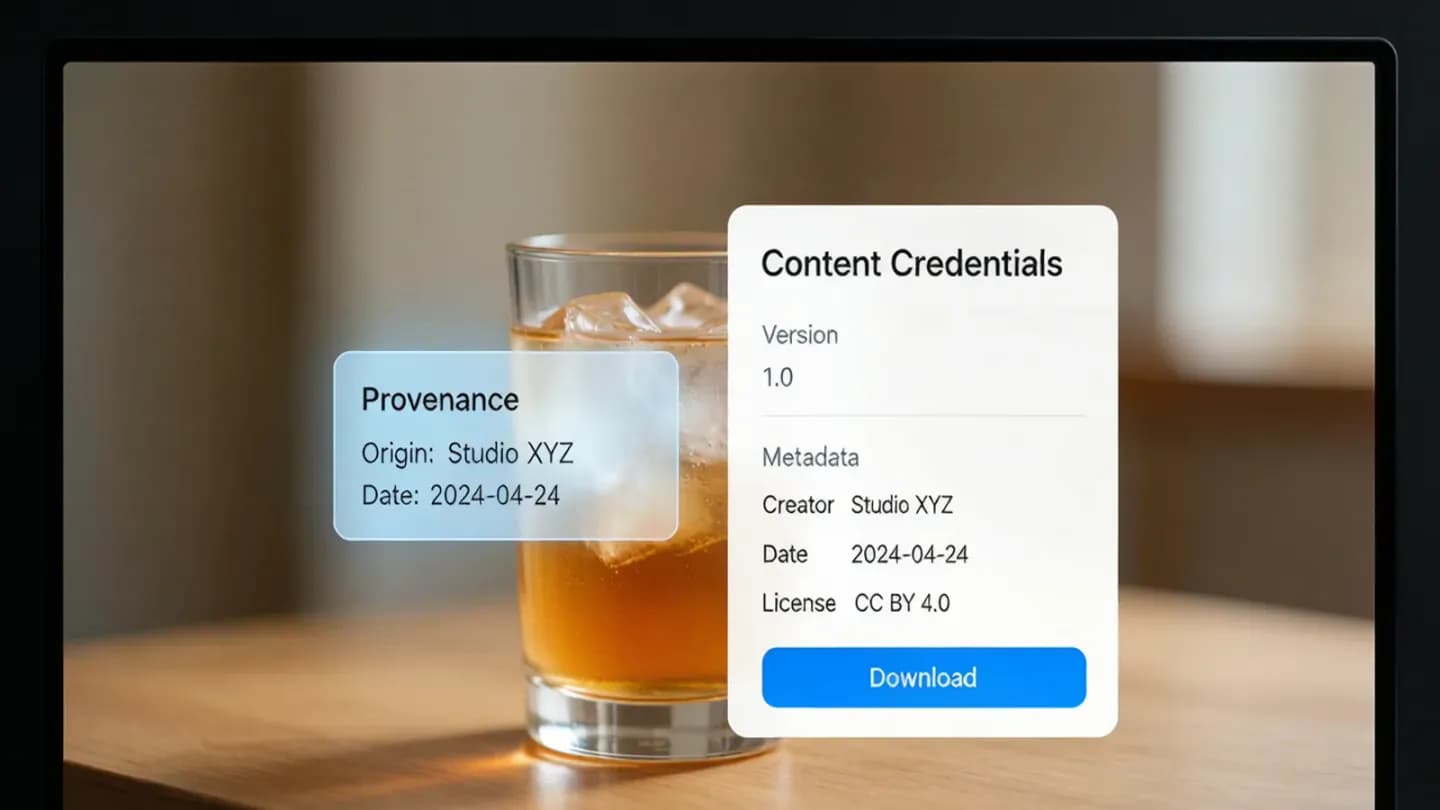
The open standard for this is Content Credentials from the Coalition for Content Provenance and Authenticity. It functions like a nutrition label for a piece of media, recording the origin and edit history of a generated clip so anyone can inspect it. A delivery platform that emits C2PA metadata on export turns provenance from a manual chore into a default output.
Without that stamp, the asset can be rejected downstream. Buyers running agentic systems increasingly treat missing provenance as a quality signal in itself, and a clip with no origin record is harder to clear for paid placement than one that arrived with its history attached.
A delivery platform cannot grant the underlying licence, which is why teams still map usage rights before a clip ships — {{link}} covers the full breakdown. Treat the licensing gate as separate from the generation step even when the tool promises an end-to-end export.
A delivery platform cannot grant the underlying licence, which is why teams still map usage rights before a clip ships — AI video commercial rights covers the full breakdown.
Disclosure compliance ships inside the platform
Disclosure used to be a legal footnote the agency added after the cut was approved. Regulators have moved it upstream. Under the EU AI Act, providers of generative AI must ensure AI-generated content is identifiable, and certain synthetic content must be clearly and visibly labelled, with the transparency rules taking effect in August 2026.
For a delivery platform that means a disclosure toggle is part of the export spec, not a post-publish risk. The same logic applies across the US, New York, and India, where label-and-provenance duties already attach to AI-made ads. A platform that bakes the label into the render saves the brand from a manual compliance sweep on every variant.
The practical rule for brand teams: require the platform to expose its disclosure state per asset, and audit it the way you would audit a caption or an end card. If the tool cannot tell you whether a given cut is labelled, it is not ready for commercial work.
Localization means real audio, not auto-dubbing
One of the loudest 2026 platform claims is one-click localization. The fine print matters. YouTube's multi-language audio feature lets creators upload their own dubbed tracks per language, but it does not auto-generate them, and the uploaded file must be audio-only and roughly the same length as the video. A platform that promises localization still needs a real dubbed track, not a synthetic voice the brand never reviewed.
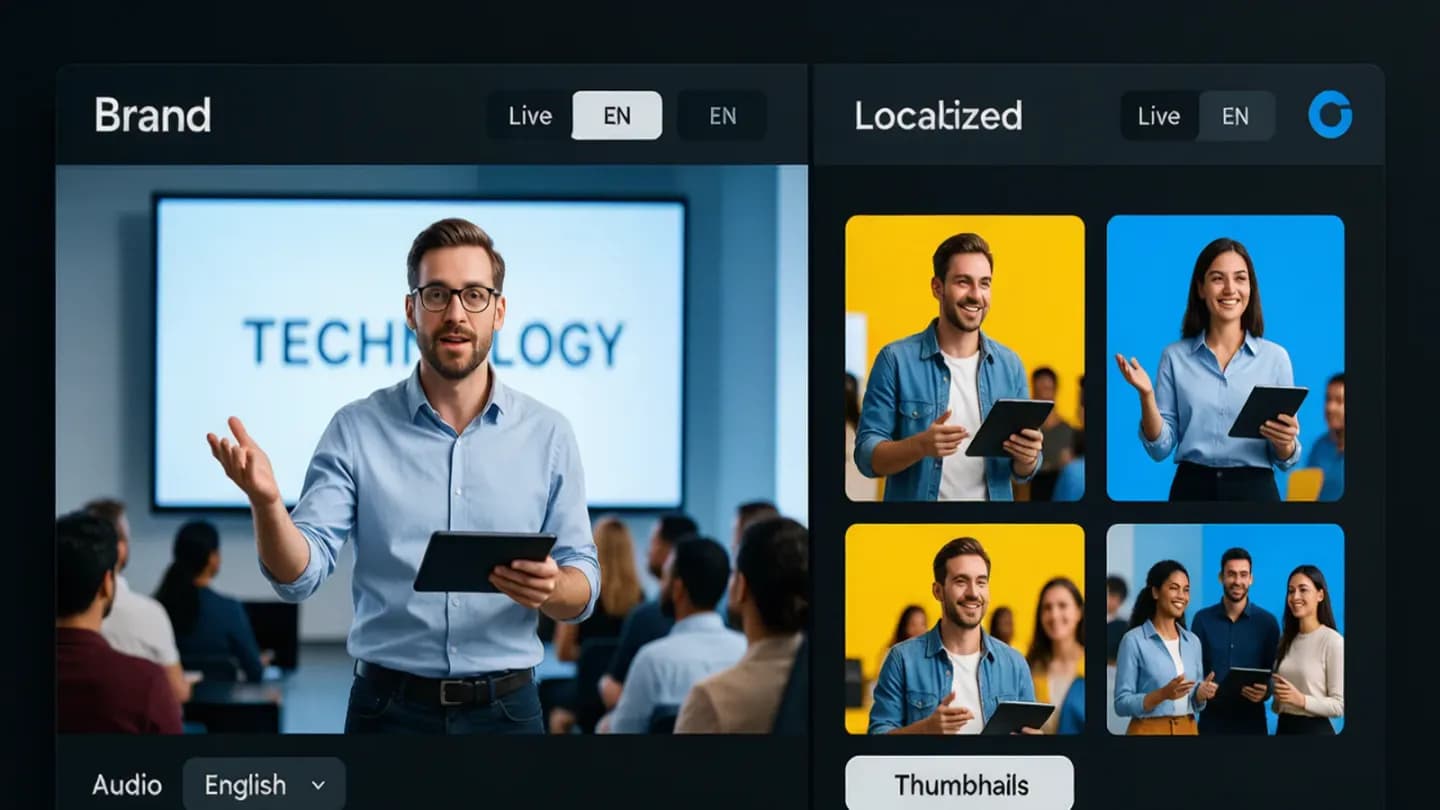
That constraint is healthy. Auto-dubbed audio that drifts from the on-screen mouth or the brand's tone does more damage than shipping one market at a time. The delivery system should manage the workflow — track which languages exist, keep thumbnails localized, and default each viewer to their preferred audio — but the brand should own the recorded voice.
For commercial teams this turns localization from a launch-afterthought into a production input. Brief the voice and the dialects at the same moment you brief the shot, and the platform becomes a coordinator of language versions rather than a translator you discover is wrong after the campaign is live.
The platform should also keep the localized thumbnail in sync with the localized audio, because a viewer who hears their language but sees an English title card loses trust in the first second. That coordination is exactly the kind of cross-track bookkeeping a delivery system is built to own.
Measurable ROAS is the bar that funds the build
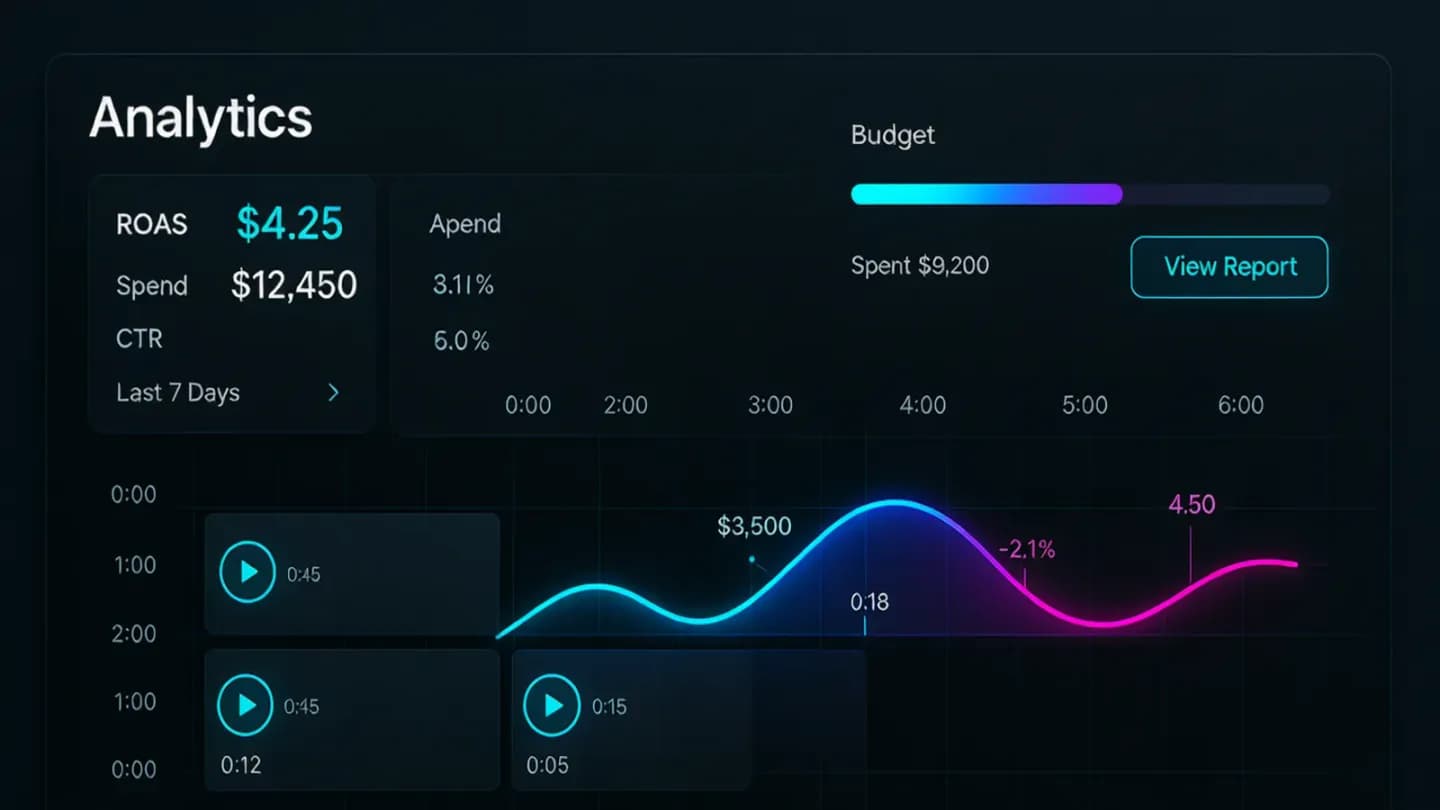
None of this gets budget unless it connects to performance. The 2026 IAB Digital Video Ad Spend and Strategy Report projects US digital video ad spend at $81.9 billion, up 11% year over year and more than 60% of total TV and video ad spend, with two in three buyers already live, testing, or planning agentic AI for digital video campaigns.
That spend is flowing to tools that prove outcome, not tools that demo nicely. A separate signal from the CMO Barometer 2026, based on 805 marketing leaders across 15 countries, found 68% call AI the defining topic of 2026 while only 12% expect agencies to lead on AI-specific skills, which means brands are building this capability in-house and will scrutinize ROAS before signing.
Budget owners still need a hard number before approving a platform build, and {{link}} shows the ranges commercial teams actually pay in 2026. Use those figures to frame the platform as a cost line with a payback, not a novelty line with a hope.
The same IAB data shows small and mid-size spenders leaning into AI for creative testing and performance analysis, which means the platforms winning budget are the ones that feed test results back into the next brief. Measurement is not a report the platform emails later; it is the input that rewrites the creative.
Budget owners still need a hard number before approving a platform build, and AI video production cost shows the ranges commercial teams actually pay in 2026.
How AI video delivery platforms clear the production gate
Pull the requirements into one Gate list a vendor must clear. Provenance: does every export carry C2PA metadata? Disclosure: can the platform show the label state per asset? Localization: does it manage real dubbed audio and localized thumbnails without faking them? Measurement: does it report performance back against the media plan?
Before a platform touches a brand's feed, lock the visual controls in {{link}} so every auto-generated cut stays on brand. The control map is the difference between a tool that scales output and one that scales inconsistency, and it belongs in the platform's defaults, not in a reviewer's memory.
Add two human gates the machine cannot own: a brand approver who signs the first cut, and a rights owner who confirms the licence before the clip ships. The platform should make those gates faster, not quietly delete them. If a vendor's demo shows a fully autonomous publish with no approver, that is a red flag, not a feature.
Before a platform touches a brand's feed, lock the visual controls in AI video brand consistency so every auto-generated cut stays on brand.
Where the human still owns the brand
The delivery platform is a force multiplier, not a creative director. The judgments that protect a brand — which claim is true, which voice fits, which market gets which edit — stay with people, and the tool's job is to make those judgments cheaper to apply at scale.
The teams winning in 2026 are not the ones with the most autonomous pipeline. They are the ones who locked the brief, the brand rules, and the approval path before they automated the tail. A delivery system earns its place when it ships more on-brand cuts per week without adding a single off-brand one to the feed.
Put the framework into production
These related pages connect the article’s planning advice to a specific commercial scope.
References
- U.S. Digital Video Ad Spend to Surpass $80B in 2026, According to IABInteractive Advertising Bureau (IAB)
US digital video ad spend projected at $81.9B in 2026, +11% YoY, >60% of total TV/video ad spend, with two in three buyers live/testing/planning agentic AI for digital video campaigns.
- CMO Barometer 2026: What Global CMOs Want in 2026Serviceplan Group / University of St. Gallen / Heidrick & Struggles
Based on 805 marketing leaders across 15 countries: 68% say AI is the defining topic of 2026, while only 12% expect agencies to lead on AI-specific skills.
- C2PA — Verifying Media Content Sources (Content Credentials)Coalition for Content Provenance and Authenticity
C2PA provides an open standard (Content Credentials) that records the origin and edit history of digital content so publishers, creators, and consumers can verify provenance.
- AI Act — Regulatory framework on artificial intelligence (European Commission)European Commission, Digital Strategy
Under the EU AI Act, providers of generative AI must ensure AI-generated content is identifiable, and certain AI-generated content must be clearly and visibly labelled; transparency rules take effect in August 2026.