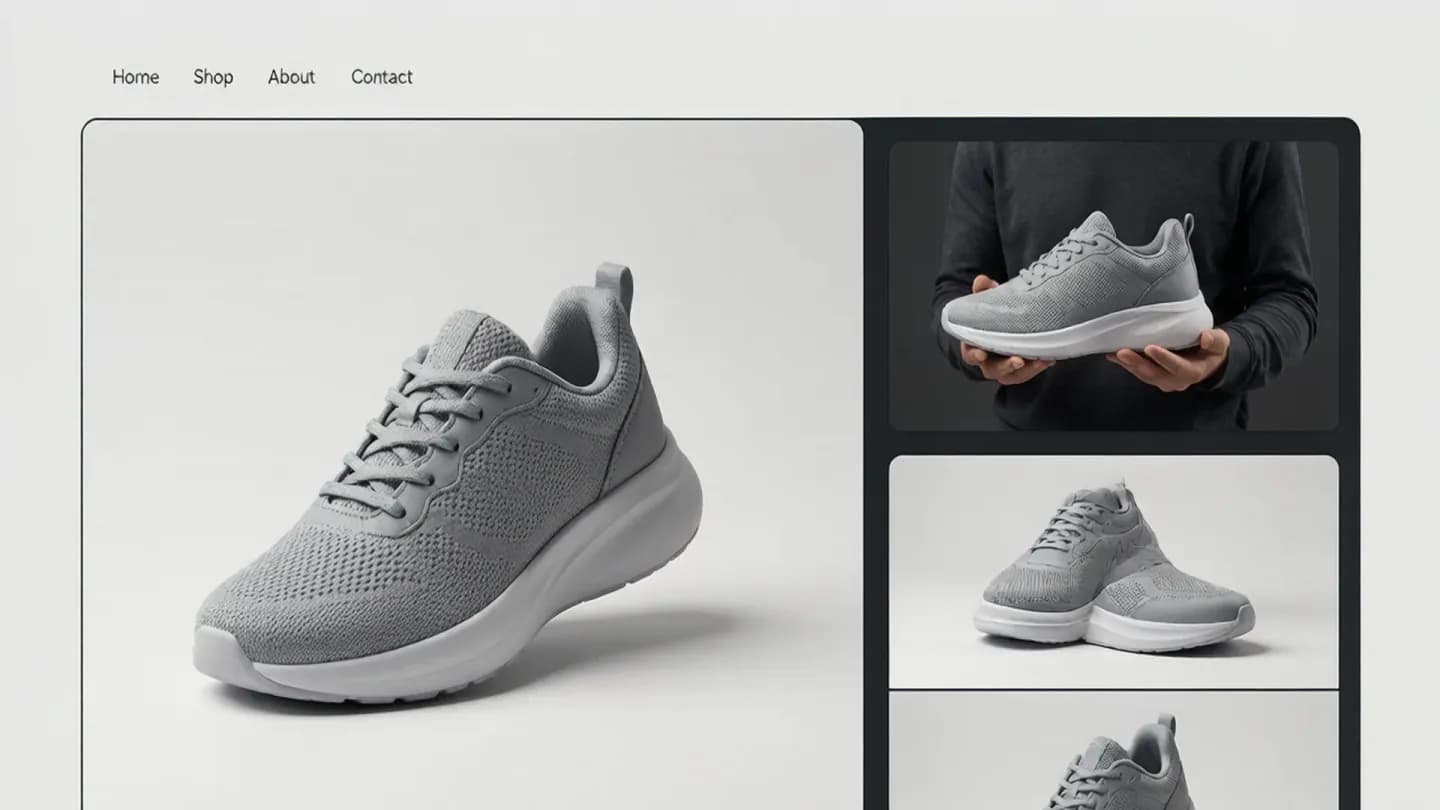
Why AI product page video is the highest-leverage surface
The product detail page is where paid traffic lands and where the purchase decision actually gets made. After a shopper clicks an ad, the PDP is the only salesperson left in the room, and AI product page video is the fastest way to upgrade it. For years that page has been a carousel of static JPEGs, but the behavioral baseline has moved under everyone's feet. Mobile shoppers in 2026 have been trained by TikTok, Reels and Shorts to expect motion as the default format, and a still image of a tote bag now reads as low-effort next to a clip that shows the strap flex and the zipper close. The brands that win the page treat video as the default merchandising asset rather than a premium extra.
The consequence is measurable. Shoppers who watch a product video are far more likely to buy, In controlled tests, pages with a product video converted about twenty-one percent higher than photo-only pages, and merchants using shoppable video reported a twenty-four percent conversion lift. On pages where a video sits in the primary media slot, add-to-cart rates climb meaningfully versus photo-only equivalents, with the lift concentrated in categories where texture, fit and real-world context actually matter.
The reshoot bottleneck that kept video off long-tail SKUs
The reason most catalogs stayed silent on video is brutally simple: traditional product video is expensive and slow. A single fifteen-second clip can run from a few hundred dollars on the low end to several thousand once you account for studio, crew, talent, editing and post. A fifty-SKU catalog therefore faced a production floor of tens of thousands of dollars before a single frame was graded, and the timeline stretched from days into weeks per collection. For a merchant already running slim margins, that floor meant video was a hero-product luxury rather than a catalog standard, and the long tail kept shipping as static images by default.
So video went on the hero products and nowhere else. The long tail of the catalog, hundreds of SKUs that each quietly drive revenue, kept shipping as five photos and a bullet list. That was tolerable when every competitor looked the same. It is no longer tolerable now that video-first stores have reset what a normal PDP feels like, and a static page reads to shoppers as incomplete information rather than a stylistic choice.

How AI video covers the catalog without a camera
Image-to-video generation removes the crew from the equation. Given one clean product photo and a short prompt, a model interpolates motion and returns a three-to-eight-second clip that shows the product rotating, draping or sitting in a light lifestyle context. There is no location scout, no reschedule when the weather turns, and no per-SKU shoot fee. At API rates the marginal cost per clip falls to cents, which changes the math from a budget decision into a workflow decision.
The production pattern that works is reference-first. Capture or reuse one decent photo per SKU, route it to the right model for the job, generate a small batch of variants, then pass everything through a single review gate. Colorway variations that used to mean a second shoot become a prompt tweak at zero marginal cost. The same source photo also keeps the product recognizable across every clip, which is the part traditional batch shoots struggle with. Model routing matters: an accuracy-focused model earns the white-background hero where the product must be exact, while a photoreal model handles the lifestyle context where mood matters more than pixel fidelity. Keeping those roles separate is what stops the catalog from looking like one inconsistent render.
Be clear about the ceiling. Today's tools produce short, structured motion, not feature films. They are excellent at showing texture, scale and use context, and poor at hands-on demonstration or cast-and-crew storytelling. The right move is to use generated video for the thousands of catalog moments that never justified a shoot, not to replace the hero brand film.

What the conversion data actually shows
The case for PDP video is not vibes. In one of the larger published A/B tests, five hundred product pages were split-tested against photo-only control over eleven months, with a single shoppable video module as the only on-page change. The median conversion lift was twenty-one percent, and the variance by category tells the real story: furniture rose thirty-eight percent, apparel twenty-four, while commodity electronics and groceries barely moved.
That gradient is the whole insight. Video wins where a shopper benefits from seeing the product move or sit in context, and it is roughly neutral where the purchase is pure specification. The same tests found that a hybrid layout, a hero photo plus one context clip, beat either format alone. The lesson is not to replace the gallery but to add one honest video that answers the question a photo cannot. The practical read is a decision rule, not a mandate: put video on considered-purchase categories where motion carries the sale, keep it as a supporting asset rather than the only asset, and reserve the production budget for the SKUs where the lift is real.
Conversion is only half the return. When a video shows the product as it truly looks and fits, return rates fall, because a large share of fashion returns happen when the item looked different in person. On merchant data from Shopify stores, shops using shoppable video reported double-digit conversion and revenue lifts, with return rates dropping sharply once video was paired with virtual try-on.

Keeping generated PDP video honest and on-brand
What the frame depicts has to be true, and that is where the risk lives. a generated product shot is still an advertising claim A generated clip that shows a jacket as more waterproof, more spacious or more durable than the real product is a claim the brand has to defend, and regulators treat synthetic media no differently from a retouched photo when the claim is false.
Before any clip reaches the gallery, it should clear a short review. a pre-publish QC gate for AI video The failure modes are specific to generated footage: a morphing face, a flickering logo, a hand that bends wrong, fabric that shifts identity between frames. On a product page these do not read as stylistic, they read as the brand does not control its own asset, which is worse than no video at all.
Brand consistency is the third guardrail. Lock the color, the logo rendering and the material finish before generation, and reuse a reference image so the same product stays recognizable across every variant and colorway. The goal is one coherent catalog, not a hundred clips that happen to feature the same SKU. This is where a reference-first workflow pays off twice: the same source photo that drives generation also anchors the brand, so the sneaker that is navy in the studio stays navy in every clip, and the logo that is small on the box stays small on the page.

A rollout that pays for itself
Prioritize by expected return, not by enthusiasm. The SKUs that benefit most from video are the ones with high average order value and high return rates, because video both lifts conversion and cuts returns on the same page. Start with the top twenty products by revenue and the top twenty by return rate, and the program pays for itself on a fraction of the catalog.
The economics are the easy part to model. the real cost of AI vs traditional video production A hundred-SKU run costs a few hundred dollars all-in at current API rates, against which the only question that matters is whether the clips move the metric on the pages they sit on. Answer that on your own traffic with a holdout set of SKUs that stay video-free, and the test costs the same few hundred dollars while producing a number that belongs to you rather than to a vendor survey. Hold the test for a full purchase cycle so seasonality does not masquerade as lift, and keep the holdout large enough that the result clears statistical noise rather than wishful thinking.
Then scale the part that actually scales. Once the review gate is tight, generation cost stops being the constraint and review throughput becomes it. The teams that win are the ones who invested early in a checklist-driven QA process, because every price drop on generation just adds volume to the queue they already know how to clear.
Where this goes next
Catalog-scale product video is now a capability question, not a budget question. The seconds got cheap; the judgment did not. Teams that treat generation as a solved commodity and review as the real work are the ones shipping video on every SKU instead of every hero. The implication for staffing is the part most teams miss: headcount should shift from camera crews toward reviewers, because the constraint has moved from making the clip to deciding whether the clip is true, on-brand and worth publishing.
The harder gap is organisational, not technical. why most teams still cannot prove video ROI Most brands can generate the clip; far fewer can prove what it did, because they never instrumented a holdout. In 2026 the bottleneck is human review hours between a rendered clip and a published one, not model access or price, and the next release cycle is closing the single-pass length gap that still caps most product clips at fifteen to thirty seconds.
Put the framework into production
These related pages connect the article’s planning advice to a specific commercial scope.
References
- Shoppable Video vs Product Photography: Conversion Data from 500 PDPsIdukki
Across 500 PDPs A/B-tested over 11 months, shoppable video produced a median +21% conversion lift over photo-only pages; furniture +38%, apparel +24%, commodity electronics +5%.
- Video-First Product Pages Are Rewriting Conversion Rules in 2026Online Store News
Shopify internal merchant benchmarks (12,000 stores) showed PDPs with an autoplay-muted video had a median 18% higher conversion rate than image-only pages; Baymard Institute found a median +23% add-to-cart lift, apparel +31%.
- Does Video on Product Pages Increase Sales? 2026 Fashion DataVideoPoint
Shopify merchants using shoppable video on PDPs reported a +24% conversion rate increase and +21% revenue lift, with return rates falling 12-40% when combined with virtual try-on.