What automotive AI video looks like when the hype settles
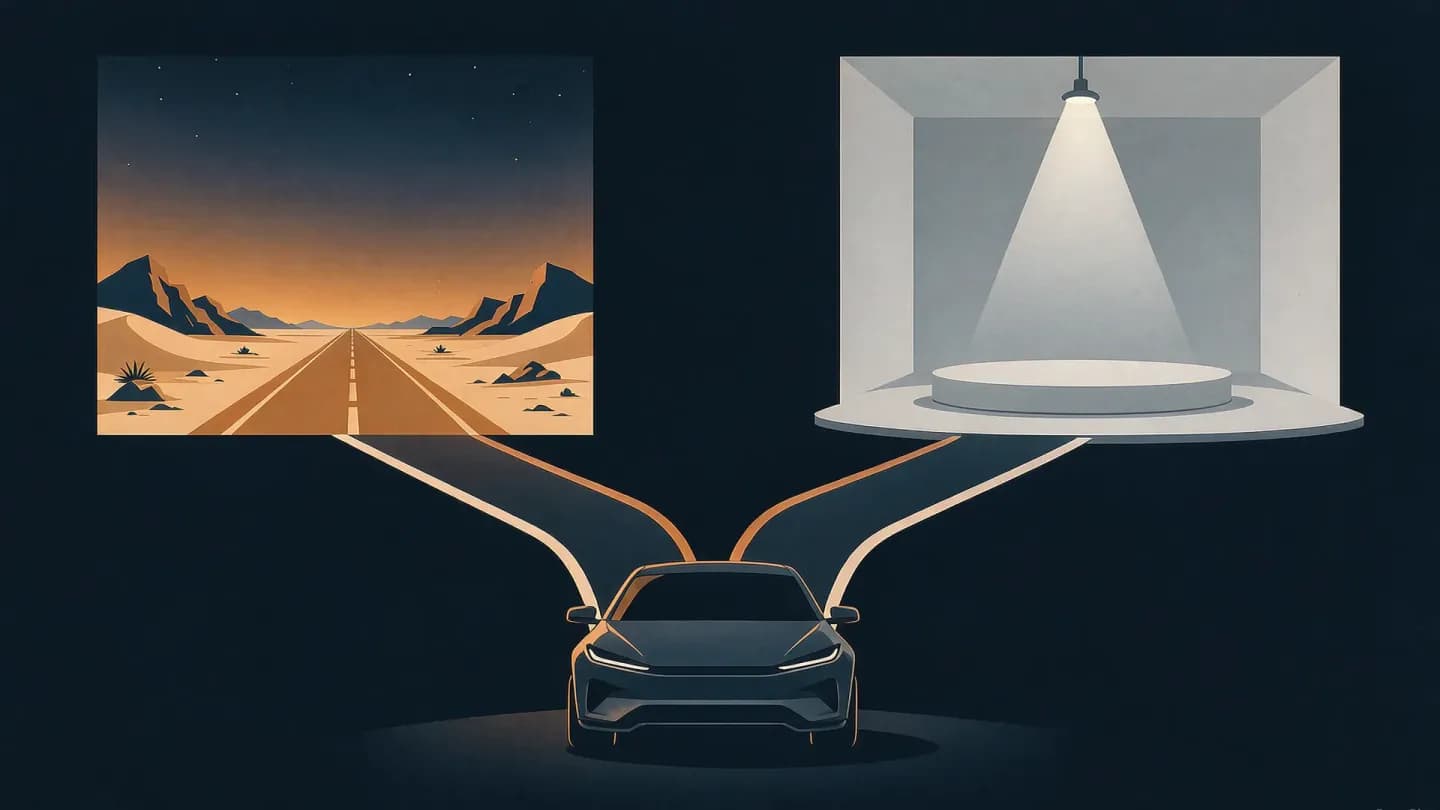
Automotive AI video in 2026 has settled into a routing pattern no other vertical has matched: BMW generated an entire iX3 ad without a camera, Hyundai India rebuilt three decades of product history, and Voyah collected 700 AI videos from outside creators in 31 days. The pattern is not about cost. Car brands give generative creative the jobs cameras cannot shoot and keep the product shot traditional.
That distinction matters because the car is the most fidelity-critical hero asset in advertising. A warped grille or a drifting panel line is not a stylistic quirk; it is a wrong claim about the product. So the question every car brand ran into this year was not whether generative video is good enough, but which jobs it is good enough for. Four cases from 2026 answer that question with unusual clarity.
BMW iX3: AI got the story because it could not get the product
In April 2026, BMW published a 30-second iX3 spot in which every frame was generated. No camera, no set, no location, no crew. A driver gets in the car and drives; his beard grows until he looks like he has been off-grid for months. The gag communicates the 805 km WLTP range without a word of voiceover: you will need a shave before you need a charge.
Bernd Koerber, BMW's senior vice president for brand and product management, framed the project as a process experiment rather than a production triumph. The question, he wrote, was when to use generative AI and when not. BMW's campaign is {{link}}: the question was never whether generation was cheaper, but whether this story needed it at all.
His answer drew a boundary the rest of the industry is now learning to draw. A film that asks viewers to feel the passage of time suits generation well. A product reveal, or a close-up of an interior where the car itself must look exactly right, does not; continuity between shots and product accuracy remain generative video's weakest skills. Koerber was equally explicit about what AI did not do here. Cost was not the driver, and the idea was not the model's. The images may be generated, he wrote, but the idea, the story and the execution still come from people. That division of labour, human judgment above and generation below, is the stack every serious production team is converging on from the other direction.
BMW's campaign is the AI necessity test in its purest form: the question was never whether generation was cheaper, but whether this story needed it at all.

Hyundai India used AI to reshoot three decades no camera could revisit
Hyundai Motor India handed AI a different job in June 2026: history. A brand film marking 30 years in the country retells the journey through a child's eyes, recreating the Santro era and the models that followed, from the Accent and Verna to the Creta, Venue and Alcazar, before closing on the Ioniq 5 and Creta Electric. No crew could re-shoot those two decades of vehicles inside their original moments. AI regenerated them from memory and archive.
Virat Khullar, the brand's head of marketing, described the goal as revisiting defining moments from the past in a way that feels fresh and immersive, blending nostalgia with a forward-looking perspective. The phrasing is worth reading literally. The film is not a demo of generation quality; it is a job that live action structurally cannot do, which is exactly why it went to a generative pipeline. A heritage film and a thirty-second social clip occupy {{link}}, and Hyundai's team treated them that way.
There is a quieter lesson in the choice of narrator. A child's perspective gives the film permission to be impressionistic: soft edges, dream logic, stylised recreations of cars the audience remembers imperfectly anyway. Generation's tendency toward the approximate becomes an asset when the material is memory rather than specification. The same model applied to a launch film with hard product claims would be a liability.
A heritage film and a thirty-second social clip occupy different slots in AI video content-type fit, and Hyundai's team treated them that way.

Voyah turned one selling point into 700 videos in 31 days
Chinese carmaker Voyah, working with the design platform Zcool, ran the Absurd Big 8 AI video co-creation contest around its Taishan X8 SUV. The brief was deliberately open: interpret the car's courtyard-grade five-seat space in any style, from traditional Chinese aesthetics to mime, animation, documentary, rap videos and literary adaptations. In 31 days the contest collected more than 700 AI video entries and crossed 300 million impressions.
The mechanics matter as much as the number. Zcool seeded the contest with six lead artists whose pilot works set the creative bar, ran weekly early-bird prizes in the tens of thousands of yuan, and pushed 37 works onto its homepage, an 81 percent recommendation rate, while creators cross-posted entries to Xiaohongshu and Douyin on their own accounts. The brand ended the month with something a single agency-produced film never becomes: a reusable library of selling-point content in dozens of registers, made by hundreds of hands at a cost no commissioning budget could touch.
Voyah's contest shows that {{link}} was not a one-off stunt but a repeatable supply model. When the asset you need is volume and variety around a fixed product claim, an open brief to skilled creators beats a production line. The trade-off, consistent control of the hero product's depiction, is exactly the trade-off the BMW experiment identified, which is why contest briefs point creators at lifestyle interpretation rather than at the car's details.
Voyah's contest shows that handing the render to the audience was not a one-off stunt but a repeatable supply model.

Falling sales made irreverent AI video a presence strategy
The most striking automotive AI video of 2026 came from brands under pressure. With Porsche, Mercedes-Benz and BMW posting first-half sales declines in China of roughly 32, 28 and 20 percent respectively, their social teams shipped a stream of self-aware AI clips: a BMW wind tunnel test conducted with mouths and household objects, a car leaping out of a browser window to drift across a desk, a Mercedes spot that reveals itself as an image being dragged inside a design tool.
These clips earned hundreds of thousands of likes each, in some cases ten to twenty times the brands' normal engagement. The wind-tunnel gag sits in the same family as {{link}}, where a fast, irreverent cut beats a polished film that misses the moment. Cheap to produce, fast to approve and impossible to mistake for a corporate ad, AI clips kept luxury brands present in a cultural conversation their shrinking budgets could no longer buy through media weight alone.
Genesis went the other way, posting images explicitly marked as not made by AI, and the audience reaction, affectionate teasing rather than rejection, shows both positions now work as brand signals. In a market where every premium badge is fighting for relevance, whether you generate or refuse to has become part of the message itself.
The wind-tunnel gag sits in the same family as AI parody ads, where a fast, irreverent cut beats a polished film that misses the moment.
The routing rule automotive hands to every other vertical
Put the four cases side by side and you get a decision table rather than a technology bet. AI took the time-passage story BMW chose not to film, the heritage Hyundai could not film at all, the volume Voyah could not commission, and the topical gags luxury approval chains could not ship in time. The product shot, the one frame where fidelity is the entire point, stayed with cameras, and where a brand stepped away from cameras entirely, it said so out loud.
For commercial video teams the transferable rule is simple. Start from the fidelity cost of the hero asset, not the production cost of the deliverable. If the asset can tolerate approximation, memory, metaphor, volume, parody, generation is usually the right line and often the only affordable one. If the asset is the product itself, generation remains a prototyping tool while the final frame stays physical. Automotive reached this pattern first because its product punishes error most visibly. Every other vertical with a fidelity-critical hero asset is on the same road, and 2026 is the year the map got drawn.
Put the framework into production
These related pages connect the article’s planning advice to a specific commercial scope.
References
- BMW Made An Entire Car Ad With AI. No Camera, No CrewBMWBlog
BMW's 30-second iX3 campaign was generated entirely by AI with no camera, set, location or crew. The spot shows a driver's beard growing to communicate the 805 km WLTP range without voiceover. Bernd Koerber, BMW's SVP for Brand and Product Management, framed it as a process experiment on when to use generative AI, named continuity between shots and product accuracy as the technology's weaknesses, said cost was not the driver, and stressed that the idea, story and execution still come from people.
- 30 Years of Trust, Pride and Progress: Hyundai Motor India Unveils AI Brand FilmHyundai Motor India
Hyundai Motor India's June 15, 2026 press release announces a fully AI-led brand film marking 30 years in India, told through a child's perspective and recreating the product journey from the Santro era through Accent, Verna, i10, i20, Creta, Venue and Alcazar to the Ioniq 5 and Creta Electric. Head of Marketing Virat Khullar said AI allowed the brand to revisit and recreate defining moments from its past in a way that feels fresh and immersive, blending nostalgia with a forward-looking perspective.
- How the Voyah Taishan X8 expanded the boundaries of AIGC marketing in the auto industryChina Daily
China Daily reports that the Zcool and Voyah Absurd Big 8 AI video co-creation contest for the Taishan X8 ran 31 days, collected over 700 AI video entries and exceeded 300 million impressions. Six lead artists seeded pilot works, weekly early-bird prizes ran in the tens of thousands of yuan, 37 works were recommended to the Zcool homepage for an 81 percent recommendation rate, and creators cross-posted entries to Xiaohongshu and Douyin.
- Traditional premium carmakers break through with irreverent AI creative videosShandong Finance News
Shandong Finance News reports that in the first half of 2026 Porsche, Mercedes-Benz and BMW posted China sales declines of 32, 28 and 20.4 percent respectively, and that the brands shipped self-aware AI creative videos: a BMW wind-tunnel parody with hundreds of thousands of Bilibili views and a cyber-drift clip with over 160,000 Douyin likes, a Mercedes illusion spot with over 400,000 likes, and Porsche AI clips with roughly 300,000 likes at ten to twenty times normal engagement, while Genesis labelled its posts as not made by AI.