The reach-collapse math B2B teams keep ignoring
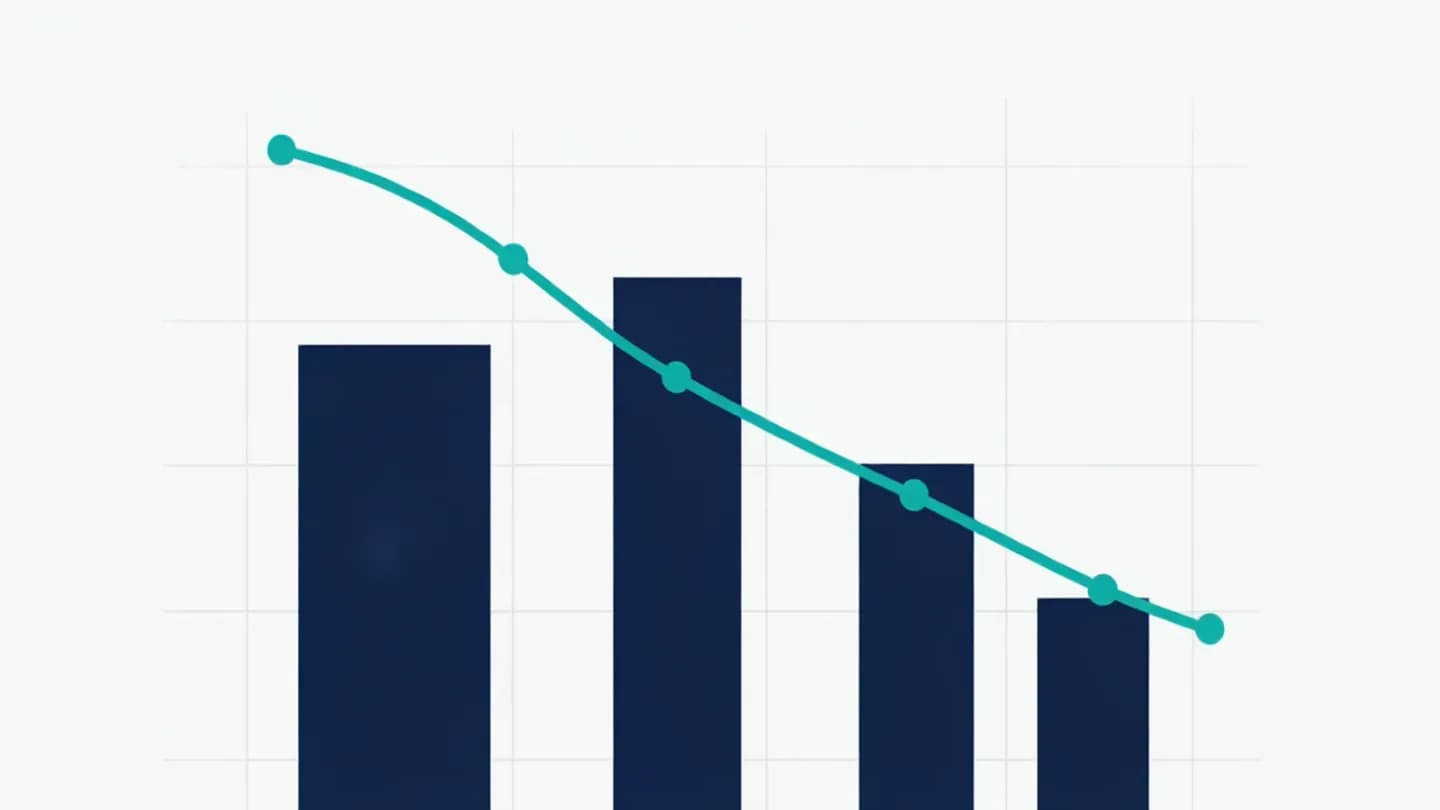
Every B2B commercial team I talk to still treats a YouTube view count as a health metric. For B2B video distribution, the 2026 numbers say that instinct is now misleading. Metricool's 2026 YouTube Study analyzed 799,718 videos from 71,177 accounts and found long-form views rose 76% year over year while engagement fell 45%. More people saw the videos; fewer people stayed. A bigger top-of-funnel that converts worse is not growth, it is noise.
Shorts tell the same story at higher speed. Shorts views climbed 127% year over year, but viewers spent three times less time on each one, and Shorts now account for 61% of all YouTube views. Meanwhile ad impressions, monetized playbacks, and estimated ad revenue all dropped more than 50%. Reach is up, attention is down, and monetization is collapsing - the worst possible combination for a team trying to prove video ROI. The platform is quietly telling you that volume without depth does not pay.
The study also found 83% of interactions happen in the first ten days after publish. For a B2B buyer with a thirty-day evaluation cycle, that means the organic window where a single upload can do real work is short and shallow. A view is not a relationship, and in 2026 a YouTube view is the shallowest it has been in years. The conclusion is not to leave YouTube - it is to stop letting YouTube be the only place your video lives.
Why 'post it on YouTube' stopped being a B2B strategy
None of this means abandon YouTube. It means stop treating one feed as the whole B2B distribution plan. The same feeds that once amplified brand video now apply an {{link}} that pushes wholly AI-generated cuts down the stack, so a film that is cheap to generate is also cheap to bury.
Layer the reach-collapse on top and the case gets stronger. Even strong content now earns less depth per impression, and B2B buying cycles are longer than any single algorithm will serve. A procurement lead does not convert off one recommended clip; they convert off a sequence that follows them from a professional feed, to an owned page, to a sales conversation. Distribution is the sequence, not the upload.
The fix is not better thumbnails. It is a distribution design that puts the right cut on the right surface: a polished long-form piece on YouTube for discovery and SEO, a native professional cut on LinkedIn for the buyer's daily scroll, and an owned destination that captures intent when someone is ready to talk.
The same feeds that once amplified brand video now apply an organic reach penalty on AI video that pushes wholly AI-generated cuts down the stack, so a film that is cheap to generate is also cheap to bury.
LinkedIn is where B2B video actually converts
If YouTube is the discovery layer, LinkedIn is the conversion layer for B2B. The CMO Barometer 2026 - a survey of 805 marketing decision-makers across 15 countries - found that 60% of CMOs get their industry updates from LinkedIn and social media, and 68% named AI the defining topic of the year. The buyers you want are already there, in a professional context where a useful video earns attention instead of fighting for it.
AI generation changes the economics of showing up there. Producing a LinkedIn-native cut used to mean a second shoot or a painful re-edit; now you can branch a master into a captioned, square-or-vertical, professionally toned variant in minutes. The teams winning on LinkedIn are not cross-posting their YouTube file - they are shipping a cut built for the feed, with on-screen text for silent viewing and a hook in the first second. Because most B2B video is watched without sound on mobile, captions are not optional; they are the delivery mechanism.
Treat LinkedIn as a first-class channel with its own spec and cadence, not a mirror of YouTube. A weekly useful video - an explainer, a customer story, a behind-the-scenes of your process - compounds far faster in a professional network than a quarterly hero film does in a discovery feed.
Agentic buying is rewriting the brief you feed the platform
The distribution shift is not only where you post; it is who optimizes the buy. IAB's 2026 Digital Video Ad Spend Report projects U.S. digital video ad spend to surpass $80B, growing 11% year over year and outpacing CTV for the first time, with social video leading. Buried in that report is the detail that matters most to producers: two in three buyers are already live, testing, or planning agentic AI for digital video campaigns.
When two-thirds of buyers run or plan {{link}}, the platform optimizes creative against performance whether your brief accounts for it or not. Agentic systems generate, test, and reallocate variants automatically, which means your master asset has to be structured, tagged, and variant-ready - not a single finished film hoping to be lucky.
That changes production priorities. Instead of polishing one hero cut, build a small library of modular AI-generated scenes with consistent characters and clean plates, then let the buying system assemble and optimize. The creative team's job shifts from 'make the ad' to 'feed the system assets it can safely permute.' The teams that resist this will watch their single hero film lose the auction to competitors whose assets were built to be remixed.
When two-thirds of buyers run or plan agentic video buying, the platform optimizes creative against performance whether your brief accounts for it or not.
Build once, branch everywhere: the AI-native distribution stack
The practical model is build-once, branch-everywhere. One mastered AI-generated film becomes a long-form YouTube piece, a LinkedIn native cut, a set of platform ad variants, and localized versions for each market - without five separate productions. The cost of a master has fallen so far that the bottleneck is no longer generation; it is the discipline to branch deliberately.
TikTok, Google, and Meta have moved generation inside the ad console, so {{link}} now render the variant from your master instead of you re-cutting it. That is genuinely good news for small teams: the platform does the heavy lifting of formatting and optimization, provided your source material is clean, consistent, and properly referenced.
Localization is the other branch that pays back fast. A single master with locked brand elements can be re-voiced and re-captioned per market, turning one production into a dozen locally relevant cuts. Keep YouTube for the long-form relationship and SEO, but accept that the highest-intent B2B moments increasingly happen on owned sites, LinkedIn, and in-platform ad experiences - the surfaces where a buyer has already raised their hand.
TikTok, Google, and Meta have moved generation inside the ad console, so platform-native AI video ads now render the variant from your master instead of you re-cutting it.
Measure your B2B video distribution, not the upload
None of this works if you keep scoring it like 2020. Views and reach are vanity when engagement is falling; the number that matters is whether a given branch moved a buyer. Judge each branch by completion, conversion assists, and lead quality - the {{link}} - not by raw upload counts.
Instrument every branch separately. A LinkedIn cut should report saved and shared counts and inbound from that network; an owned-page video should report conversion assists into your CRM; an in-platform ad variant should report cost per qualified view. The 83% first-ten-days interaction window means you should front-load publishing and then sustain, because the organic lift decays fast.
Redistribution is not a one-time reorg. Reallocate budget toward the branches with measured revenue linkage each quarter, and prune the ones that only deliver impressions. The teams that win 2026 will be the ones who treated distribution as a designed system - not the ones who uploaded once and hoped the algorithm noticed.
Judge each branch by completion, conversion assists, and lead quality - the video metrics that predict revenue - not by raw upload counts.
What to ship this quarter
If you run B2B commercial video, the move this quarter is concrete. Take your next AI-generated master and branch it into three cuts: a long-form YouTube piece for discovery, a captioned LinkedIn-native cut published weekly, and an owned-page version wired to your CRM. Stop scoring any of them by views alone.
Give each cut one job and one metric. LinkedIn owns early-stage authority and inbound; the owned page owns conversion assists; the in-platform ad owns qualified-view cost. Reallocate budget monthly toward whichever branch is actually moving pipeline, and prune the one that only delivers impressions. Distribution is a system you tune, not a file you upload.
The brands that win 2026 will not be the ones who generated the most video. They will be the ones who designed where it goes - and who treated YouTube as one node in a B2B video distribution network instead of the whole map.
Put the framework into production
These related pages connect the article’s planning advice to a specific commercial scope.
References
- U.S. Digital Video Ad Spend to Surpass $80B in 2026IAB
U.S. digital video ad spend projected to exceed $80B in 2026 (+11% YoY, about 20% faster than the total ad market); social video outpaces CTV for the first time; two in three buyers are live, testing, or planning agentic AI for digital video campaigns.
- Metricool's 2026 YouTube StudyMetricool
Analysis of 799,718 YouTube videos found long-form views +76% YoY but engagement -45%; Shorts views +127% but 3x less time per Short; Shorts = 61% of YouTube views; ad impressions, monetized playbacks and estimated ad revenue all fell more than 50%; 83% of interactions occurred in the first 10 days.
- YouTube recommended upload encoding settingsGoogle
YouTube recommends an MP4 container, H.264 video codec, and AAC-LC, Opus, or Eclipsa Audio for uploaded video.
- CMO Barometer 2026Serviceplan Group, University of St. Gallen, Heidrick & Struggles
Survey of 805 marketing decision-makers across 15 countries found 68% see AI as the defining topic of 2026, only 12% expect agencies to lead on AI-specific skills, and 60% of CMOs get industry updates from LinkedIn and social media.