
How platform-native AI video ads changed the console
Platform-native AI video ads arrived in 2026 as a feature of the ad interfaces brands already log into every day. Google integrated Veo 3.1 directly into Google Ads in April 2026, letting advertisers generate short video from a text prompt or animate a static product image without leaving the campaign builder. Meta expanded its generative video toolset inside Ads Manager at the IAB NewFronts in March 2026, adding image-to-video product ads, AI voiceovers, and catalog-scale Reels generation. For Google, Veo 3.1 produces up to eight-second clips aimed at product showcases, social ads, and short-form brand content; for Meta, the toolkit turns a batch of product photos into multi-scene video and dubs existing assets into more than ten languages. The production step that used to require a vendor, a shoot, or a separate tool is now a button in the same console where you set bids.
This is a structural shift, not a convenience upgrade. IAB projects U.S. digital video ad spend will surpass $80 billion in 2026, growing 11% year over year, and reports that two-thirds of video buyers are already live, testing, or planning agentic AI for digital video campaigns. Consumer packaged goods and retail remain the largest categories, which means the teams most exposed to high-volume video now have generation baked into the same tool they buy media in. When the creative engine sits inside the media-buying console, the line between making the asset and buying the placement starts to blur — which is exactly why teams need a deliberate operating model rather than a reflexive click.
The practical consequence is that video production capacity is no longer gated by budget or a vendor's calendar. A lean team can now prototype a spot in minutes from a single product shot. The new constraint is judgment: deciding what to generate, what to review, and what never gets shipped without a human sign-off. The tool removes the cost of attempting creative; it does not remove the need to choose well.
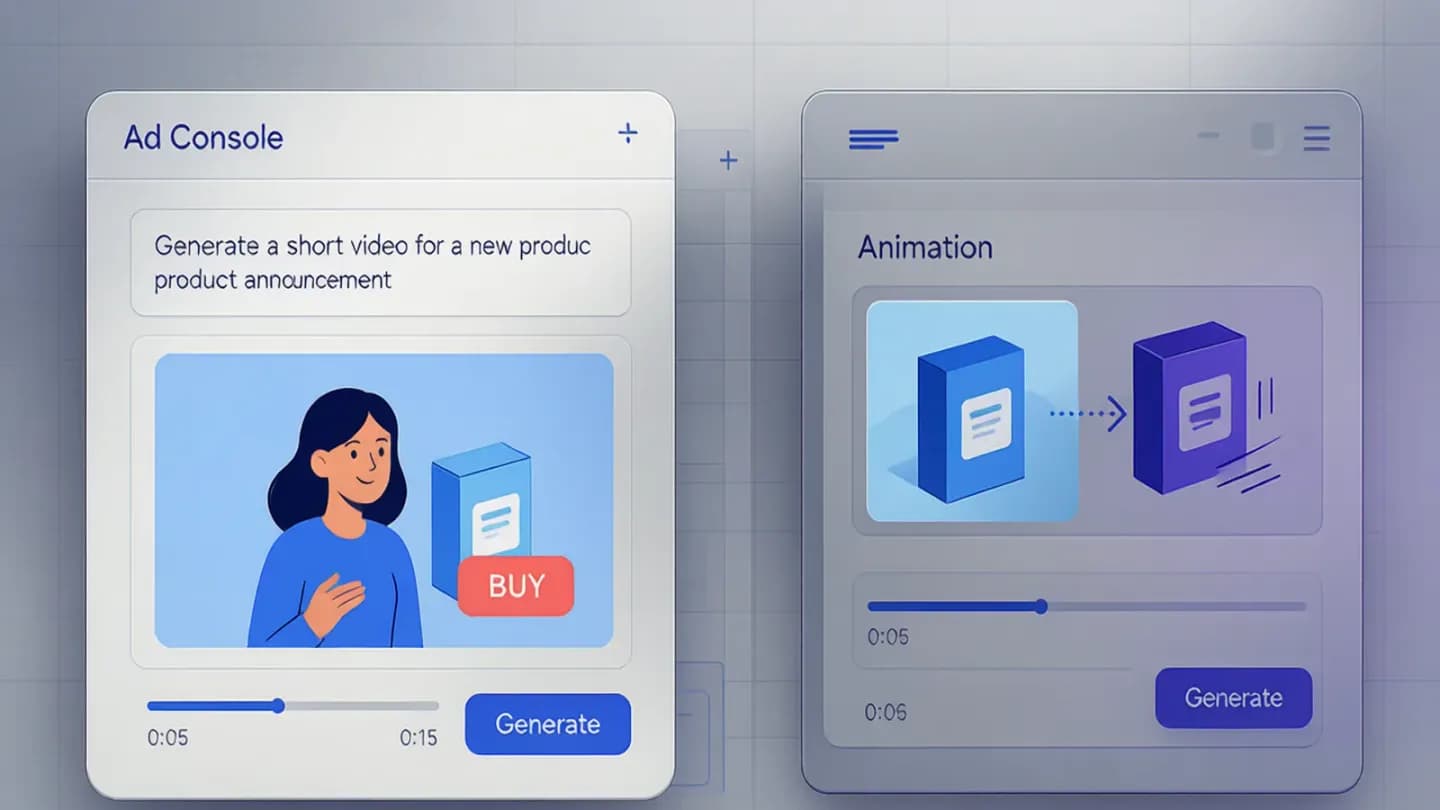
The real win is creative velocity, not polish
Treat in-platform generation as a prototyping and variant engine, not a finished-spot factory. Meta's own AdLlama study is the clearest evidence: across nearly 35,000 advertisers and 640,000 ad variations in a ten-week test, AI-generated creative lifted click-through rates by 6.7% over a supervised baseline. The lift came from volume and testing speed, not from any single beautiful frame.
For performance advertising, that velocity is the point. A team that can spin twenty hooks from one product photo and ship the three that work is operating on a different curve than one waiting two weeks for a reshoot. The mistake is shipping the first output because the barrier fell to zero — the model gives you raw material, not a reviewed asset. Velocity helps most on high-volume, low-consideration products, where a variant library compounds; for a high-consideration purchase the same audience scrutinizes authenticity harder, so a human-reviewed hero still earns its keep.
A catalog brand is the clean example. Instead of commissioning one hero film for the whole range, generate a ten-second motion clip per SKU from the existing product photo, test which angles drive add-to-cart, and let the winning motion inform the next batch. The cost per usable clip collapses, and the team learns what actually sells instead of guessing once per quarter.
Set the expectation internally that the console produces drafts. Route the promising ones into the same testing discipline you would apply to any creative, and let the losers die quietly. The tool's value is the number of cheap attempts it lets you make, not the polish of any one of them. Build a small standing library of hooks and angles, then generate against it weekly so the variant supply never runs dry.
Brand consistency is now your job, not the model's
When a platform generates the video, the same control map you would apply to any vendor still applies — see our {{link}} for the brand elements a generative model can never be trusted with. Meta ships brand-kit controls that apply your colors and fonts, but a default setting does not understand your positioning, and off-brand frames still slip through.
Lock the inputs before you generate: a tight reference set, an approved product shot, and a written list of what the model is allowed to invent and what it must never touch. The discipline that protected your brand from a freelance editor protects it just as much from an automated one. Brand consistency is a brief you write, not a toggle you flip — and the platform will happily generate something on-brand-adjacent that is still wrong for you. Keep the reference images in a controlled folder, name them by use case, and reuse them so every generated clip draws from the same visual source of truth rather than whatever the model assumes. Audit the first ten outputs against your brand book and feed the rejects back as negative examples so the next generation starts closer to spec.
When a platform generates the video, the same control map you would apply to any vendor still applies — see our AI video brand consistency control map for the brand elements a generative model can never be trusted with.

Route every asset through a human review gate
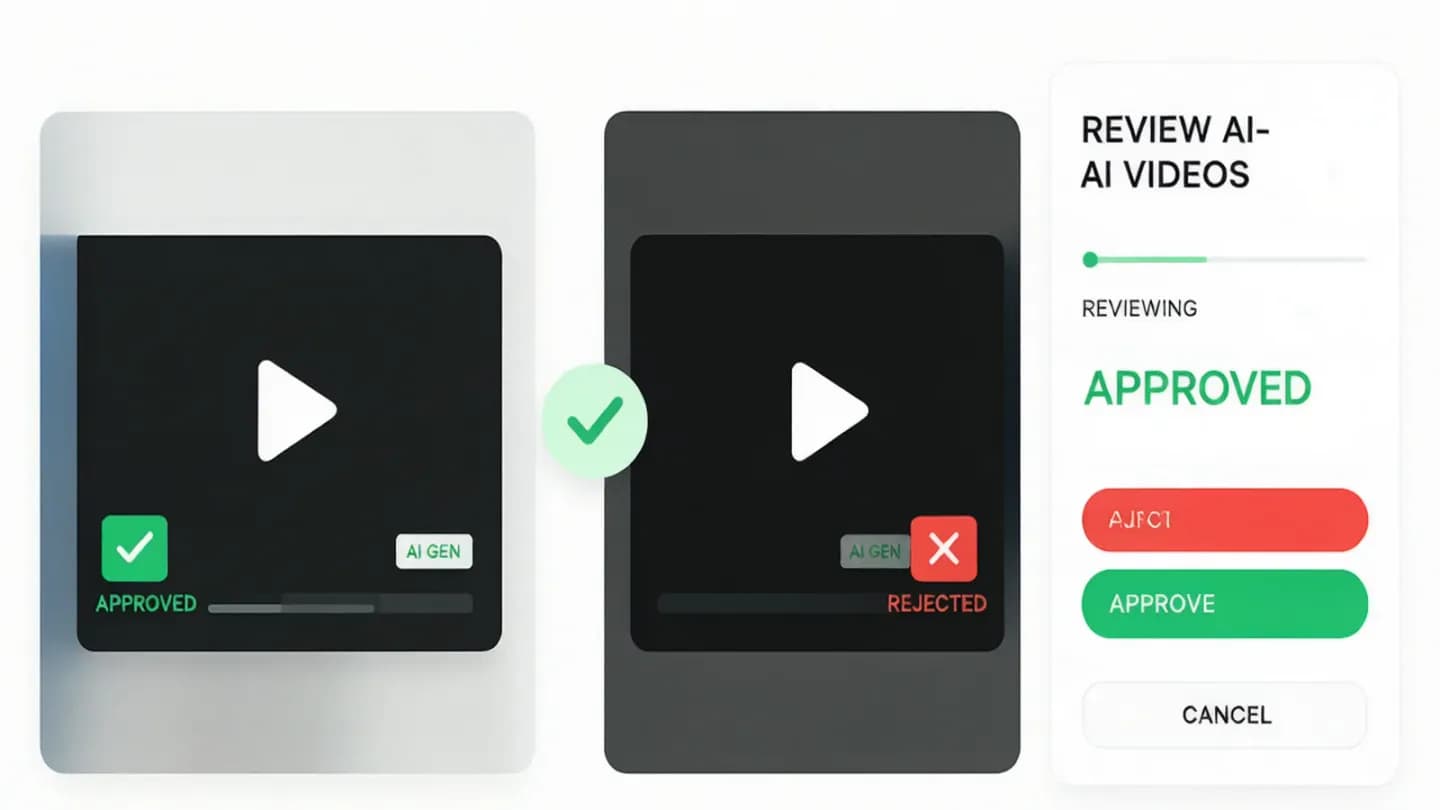
A named human reviewer running the five pre-ship gates catches the wonky motion and off-brand frames a model produces — our {{link}} lists them. In-platform tools make it trivial to push an asset live, which is precisely why the review step has to be explicit and owned, not assumed.
The governance risk is real: generative features increasingly default to opt-out, meaning generation can be active on an account unless someone turns it off. Route every AI clip through a named approver, keep auto-generation gated for any regulated claim, and treat the platform's generate button as a draft request, never a publish action. The accountability for what reaches your audience is yours, not the vendor's, and a default setting should never decide your brand for you. Write the review step into the campaign checklist so it survives busy weeks, and make the approver's name visible in the record rather than implied.
A named human reviewer running the five pre-ship gates catches the wonky motion and off-brand frames a model produces — our AI video QC checklist lists them.
Disclosure and provenance are part of the asset
Before any AI-generated cut goes live, confirm it meets the pre-ship labeling rules in our {{link}}. YouTube requires creators to disclose realistic content altered or generated with AI and automatically labels clips made by its own generative tools or carrying C2PA metadata — and ad platforms are moving the same direction as disclosure expectations harden.
Provenance is the companion to disclosure. C2PA's Content Credentials standard attaches a tamper-evident record of a digital asset's origin and edit history, which is exactly the audit trail a generated ad needs when a buyer or regulator asks how it was made. Stamp provenance at generation time, not after a problem surfaces, and treat it as a property of the file rather than a note someone remembers to write later. Pair the two: a visible disclosure tells the viewer the asset is AI-made, while the provenance record tells an auditor who made it and with what. Together they turn a compliance headache into a default you barely think about.
Before any AI-generated cut goes live, confirm it meets the pre-ship labeling rules in our AI video disclosure checklist.
Where this fits your production pipeline
In-platform generation is just one node in a wider operating model — our {{link}} shows how commercial teams structure it. Use the console tools for b-roll, product motion, and variant testing; keep the high-consideration hero films and anything carrying a claim in the hands of people who can be held accountable for it.
The agencies that thrive on this shift move upstream: they decide what to make and why, then let the platform handle the repetition. The creative brief matters more, not less, when execution is instant. Pick the shots worth a human, generate the rest, and never let a default setting decide your brand for you. The durable advantage is taste and direction, not access to a generator that your competitors have too.
In-platform generation is just one node in a wider operating model — our AI-native creative pipeline shows how commercial teams structure it.
Hold AI creative to the same measurement bar
The temptation with cheap generation is to stop measuring it. Resist that. The metrics that predict revenue for any video — completion, conversion assist, and trust signals — apply to AI clips exactly as they do to shot footage, so fold generated creative into the same reporting rather than treating it as a separate, unmeasured stream. Our {{link}} lays out the KPI stack to watch.
Set a minimum bar a generated asset must clear before it earns budget: a named owner, a disclosed origin, a brand-check pass, and a conversion hypothesis worth testing. Volume is only an advantage when each variant is accountable. The teams that win with platform-native generation are the ones that test more and measure harder, not the ones that generate and forget. Review the losers as carefully as the winners, because the reason a clip failed is usually a better brief input than the reason one succeeded. One more guardrail: keep a human in the loop on the read of the results. A dashboard will tell you which clip won, not why, and the why is what improves the next brief. Pair the quantitative read with a short qualitative note from the reviewer so the learning compounds instead of evaporating between campaigns.
The metrics that predict revenue for any video — completion, conversion assist, and trust signals — apply to AI clips exactly as they do to shot footage, so fold generated creative into the same reporting rather than treating it as a separate, unmeasured stream. Our video metrics that predict revenue lays out the KPI stack to watch.
Put the framework into production
These related pages connect the article’s planning advice to a specific commercial scope.
References
- Improving Generative Ad Text on Facebook using Reinforcement Learning (AdLlama)arXiv
Meta's AdLlama study across nearly 35,000 advertisers and 640,000 ad variations found AI-generated creative lifted click-through rates by 6.7% over a supervised baseline in a 10-week A/B test.
- U.S. Digital Video Ad Spend to Surpass $80B in 2026IAB
IAB projects U.S. digital video ad spend will surpass $80B in 2026, up 11% year over year, and reports two-thirds of video buyers are live, testing, or planning agentic AI for digital video campaigns; CPG and retail are the largest categories.
- C2PA — Verifying Media Content SourcesC2PA
C2PA's Content Credentials provide an open technical standard that records a digital asset's origin and edit history, the provenance layer AI-generated ads now require.
- Disclose generative AI contentYouTube (Google support)
YouTube requires creators to disclose realistic content altered or generated with AI and automatically labels content produced by its own generative tools or carrying C2PA metadata.