
China AI virtual influencer rules: what they actually require
China AI virtual influencer rules now decide whether a synthetic spokesperson can legally front your brand in the world's largest consumer market. In 2026, new labeling duties and platform tags mean a virtual face needs the same disclosure hygiene as any paid endorsement — before the cut ships.
China's draft Digital Virtual Person Measures, published by the cyberspace regulator on April 3, 2026, signal where the rules are going: providers and platforms must show a persistent '数字人' (digital person) label and are barred from using virtual humans for false or misleading promotion. Alongside the AI-generated content labeling rules already in force since September 2025, the direction is clear — synthetic spokespeople are permitted, but they cannot hide. For commercial video teams the stakes are concrete: China is the largest consumer market on earth, and a virtual spokesperson that mislabels can be pulled mid-flight, taking the paid campaign with it. The rules are not a ceiling on creativity; they are the floor a brand needs to keep a synthetic face on the air.
Before any synthetic face fronts a brand, the consent and provenance packet behind {{link}} is the right template to copy. The practical takeaway for production teams is to treat the virtual performer like any other talent: document who authorized it, what it is allowed to say, and how viewers will know it is not real. That single habit neutralizes most of the risk the new measures are aimed at, and it travels well across every market a brand operates in. Brands that start this paperwork early spend nothing extra; brands that discover it mid-campaign usually pay in reshots.
Before any synthetic face fronts a brand, the consent and provenance packet behind synthetic performer clearance is the right template to copy.
The dual-labeling duty: ad tag plus AI identity tag
The core mechanic is a dual label. Under China's internet advertising rules, any promoted content must carry a clear '广告' (advertising) marker, and under the AI content labeling rules, synthetic video must carry an explicit AI-generation mark at the start of the frame and around its edges. For a virtual influencer this means two obligations stack: the post is an ad, and the face is synthetic. The explicit mark is the visible badge viewers see on screen; the implicit one is the machine-readable watermark baked into the file, built for platform and regulator detection rather than the human eye. Both have to be present, because a label a person can miss is not the same as a signal a system can enforce.
Teams that want a reusable pre-ship control set should start from an {{link}} built for 2026 labeling laws. Most teams already run a brand and legal review; the gap is treating the AI-identity mark as a first-class deliverable, not a last-minute overlay. Build the label into the master, so every localized version ships with it intact rather than relying on someone to remember it at export. When the label is part of the asset, it cannot be accidentally dropped during a rushed launch, and the post house stops fielding the same 'did we tag this one?' question on every revision.
Teams that want a reusable pre-ship control set should start from an AI video disclosure checklist built for 2026 labeling laws.

Xiaohongshu's August 7 AI virtual human tag
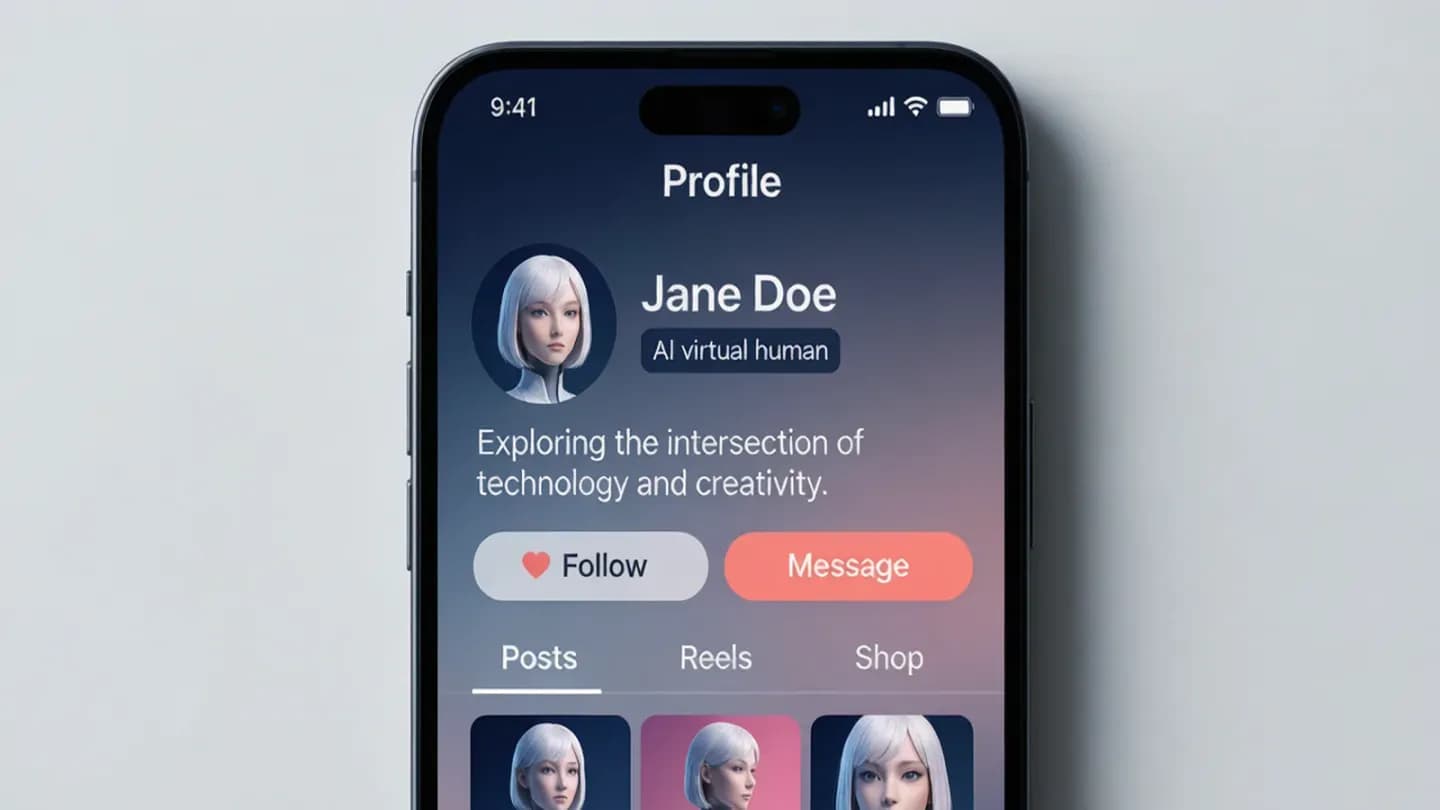
Platforms are moving faster than legislation. On August 7, 2026, Xiaohongshu (RED) began requiring accounts operated by AI virtual humans to state that fact in their profile and to switch on an 'AI virtual human' tag. That is a platform-level identity flag sitting on top of any ad or AI-label duty, and it applies whether or not the content is promotional.
For commerce teams running influencer-style campaigns on RED, the account setup is now part of the compliance package: a virtual persona cannot quietly blend into a feed of human creators. Expect other Chinese platforms to follow the same pattern, so designing the virtual identity as a disclosed asset — not a stealth one — saves rework later and keeps the brand out of the 'deceptive synthetic ad' bucket regulators are watching. Douyin and Weibo have historically mirrored RED's safety moves within weeks, so a control built for one platform usually becomes the template for the rest of the Chinese social stack. The cost of getting this wrong is not a fine alone; it is the slower erosion of audience trust that a flagged account never recovers from, because the disclosure scar stays on the profile long after the post is gone.
Why a virtual face cannot invent product experience
The hard line is experience. In a widely reported 2026 case, an AI-generated character promoted colored contact lenses by describing a full day of comfortable wear — impossible, because the character has no eyes. Regulators and legal analysts treated the first-person 'I tried it' framing as potentially fabricated product experience, which under China's Advertising Law is a false-advertising risk regardless of whether the spokesperson is human. The case also shows why special categories bite hardest: contact lenses are a regulated medical device in China, so the ordinary false-advertising exposure is compounded by category-specific rules that forbid spokespeople, synthetic or real, from making safety claims at all.
The endorsement-liability trap is real: an AI virtual influencer fronting your brand is now treated as a {{link}} rather than a harmless gimmick. The safe pattern is to let the virtual persona present product facts and brand story, never to impersonate a satisfied user or a real tester. A synthetic face can demonstrate; it cannot testify. Keep every claim verifiable by a real product specimen, not a character's imagination, and the creative team keeps its freedom to build whatever world the brief calls for without drifting into claims a regulator would flag.
The endorsement-liability trap is real: an AI virtual influencer fronting your brand is now treated as a AI virtual influencer endorsement risk rather than a harmless gimmick.
How China's rules sit inside the global disclosure shift
China is not alone. The EU AI Act's Article 50 requires providers of AI systems that generate synthetic video to mark outputs in a machine-readable format as artificially generated, and open standards like C2PA Content Credentials give teams a tamper-evident way to bind provenance to the file itself. The same provenance layer that satisfies Brussels also supports the explicit and implicit labeling Beijing expects. Machine-readable marking matters because it lets a platform or regulator verify provenance automatically at scale, instead of relying on a human to spot a small badge in a fast-scrolling feed.
China is only one of five regimes a single AI ad now has to clear, which is why a {{link}} workflow is becoming standard for global brands. The convergence is practical: build one provenance-and-label pipeline and serve every market from a single master. That turns a tangled pile of contradictory national rules into a single export setting your post house already controls, and it future-proofs the asset against the next jurisdiction that tightens its own synthetic-media marking. The teams that treat provenance as infrastructure, not paperwork, are the ones that can ship a virtual spokesperson worldwide without a separate legal review per border.
China is only one of five regimes a single AI ad now has to clear, which is why a cross-market AI video disclosure workflow is becoming standard for global brands.
A pre-launch checklist for China campaigns
Before a virtual-influencer campaign ships in China, run a short gate. Confirm the AI-generated-content mark is baked into the master and survives localization. Verify the '广告' marker is present wherever the content is promoted. Check that the platform-level virtual-human tag (RED and any follower) is enabled on the operating account. A five-minute gate at the end of the pipeline is cheap insurance against a takedown that costs a week of booked media.
Keep the authorization, script, and provenance records on file in case a regulator asks. And never let a synthetic spokesperson claim personal product experience. None of this blocks creativity — it protects the brand from the one penalty that matters: losing the right to be believed. Treat disclosure as a design constraint from the brief, and the virtual influencer becomes a scalable, defensible asset rather than a liability waiting to surface. The teams that win in 2026 are the ones that treat the label as part of the craft, not a tax on it, and brief their virtual personas with the same care they give a human spokesperson.

Put the framework into production
These related pages connect the article’s planning advice to a specific commercial scope.
References
- AI虚拟形象商业代言合规问题 (AI virtual persona commercial endorsement compliance)Taoan Law Firm (韬安律师事务所)
China's draft Digital Virtual Person Measures, published April 3, 2026, require providers and platforms to display a persistent '数字人' (digital person) label and prohibit using virtual humans for false or misleading promotion; the AI-generated content labeling rules have been in force since September 2025.
- AI虚拟人给美瞳打广告,这句'戴一天很舒服'算违法吗?(Can an AI virtual human advertise contact lenses?)Dazhong News (大众新闻)
From August 7, 2026, Xiaohongshu (RED) requires accounts operated by AI virtual humans to self-declare in their profile and enable an 'AI virtual human' tag.
- Article 50 — Transparency Obligations for Providers and Deployers of Certain AI SystemsEU AI Act
The EU AI Act Article 50 requires providers of AI systems that generate synthetic audio, image, video or text to mark outputs in a machine-readable format as artificially generated or manipulated.
- C2PA — Verifying Media Content SourcesCoalition for Content Provenance and Authenticity (C2PA)
C2PA Content Credentials provide an open technical standard that binds a media file's origin and edit history to the asset, supporting the tamper-evident provenance that disclosure rules expect.