
Disney Ad Creative Studio puts CTV production in self-serve hands
AI video ads for small businesses used to be blocked by production cost, not media cost. Disney's July 2026 Ad Creative Studio beta changes that by turning existing brand assets into CTV-ready commercials in one workflow. The new bottleneck is brand consistency, not access.
Disney began a closed beta of Disney Ad Creative Studio on July 23, 2026, opening an AI creative tool inside Disney Campaign Manager to a group of advertisers. The product converts logos, product imagery, brand guidelines, and previous creative assets into video advertisements for connected television.
According to Disney, the tool brings multiple AI models into a single workflow and emphasizes variation: it is built to generate multiple creative versions tailored for different audiences, geographies, content, and campaign goals rather than a single output. Approval routing and campaign activation sit in the same surface that already handles Disney media buying.
The target is explicit. Disney describes the studio as a way to unlock creative access to connected TV for small and mid-sized businesses — the advertisers historically priced out of streaming inventory by production cost rather than by media cost. Larger brands and agencies get a faster path to adapt and scale existing creative.
Disney is not moving alone. The same quarter saw other major platforms fold generation into their self-serve consoles, which tells you the direction of the category: the asset, not the impression, is what platforms now want to hand you. For a small brand the practical question stops being whether the tool exists and starts being whether the output is good enough to run next to premium content.

The real barrier was never the media buy
For years the on-ramp to television already looked cheap. Self-serve platforms let a business launch a streaming campaign from a low minimum, and connected TV has kept pulling ad dollars away from linear. The missing piece was never the impression — it was the asset.
Traditional video production stacks scripting, shoot, edit, voiceover, music, compliance, and platform-specific cuts into one expensive pile. For a small brand the production bill could exceed the budget available for distribution, which is why the {{link}} keeps surprising teams that finally run the numbers.
Remove that production step and the economics flip. A brand that could afford the media but not the six-figure spot can now arrive with a usable first draft, then spend the saved budget on reach and testing instead of a single expensive shoot. The constraint moves from can I afford to make a TV ad to will the ad I can now afford actually help my brand.
The shift also rewrites the agency relationship. A small brand no longer needs a full production house just to produce a first cut; it can generate the draft, then bring an agency or freelancer in for the final five percent of polish and the media strategy that actually moves revenue. Generation becomes a starting point, not a delivered product.
For a small brand the production bill could exceed the budget available for distribution, which is why the AI video production cost in 2026 keeps surprising teams that finally run the numbers.
Why 'better versions' beats 'more versions'
Disney's own framing is telling: 'Better Versions, Not Just More Versions.' The risk of self-serve generation is not too few ads — it is a flood of cheap, off-brand ones. When everyone can generate a 30-second spot in minutes, the spots that work are the ones that look unmistakably like a specific brand.
Buyers already feel this. In IAB's 2026 Digital Video Ad Spend report, 43% of video buyers expressed somewhat to no confidence in the quality of the inventory they buy, a number that climbs to 67% on open exchange and real-time bidding. Access is no longer the differentiator; brand-consistent quality is.
When a tool can generate a hundred variants overnight, the differentiator stops being volume and becomes discipline — and a clear {{link}} is what keeps a self-serve spot from looking like generic slop.
Disney pairs the generator with what it calls human-centered AI, folding approvals and brand-safety review into the same interface. That is the right instinct: a model can produce a clean-looking spot, but keeping it on-brand, claim-accurate, and recognizably yours every time is a different problem.
The adoption backdrop makes the quality point urgent. IAB's report finds nearly two-in-three buyers already use GenAI for digital video creative, yet more than four in ten smaller buyers want more proof of performance before they trust it. The tools are table stakes; disciplined execution is the open gap that separates a brand that benefits from one that drowns in its own output.
When a tool can generate a hundred variants overnight, the differentiator stops being volume and becomes discipline — and a clear AI video brand consistency is what keeps a self-serve spot from looking like generic slop.
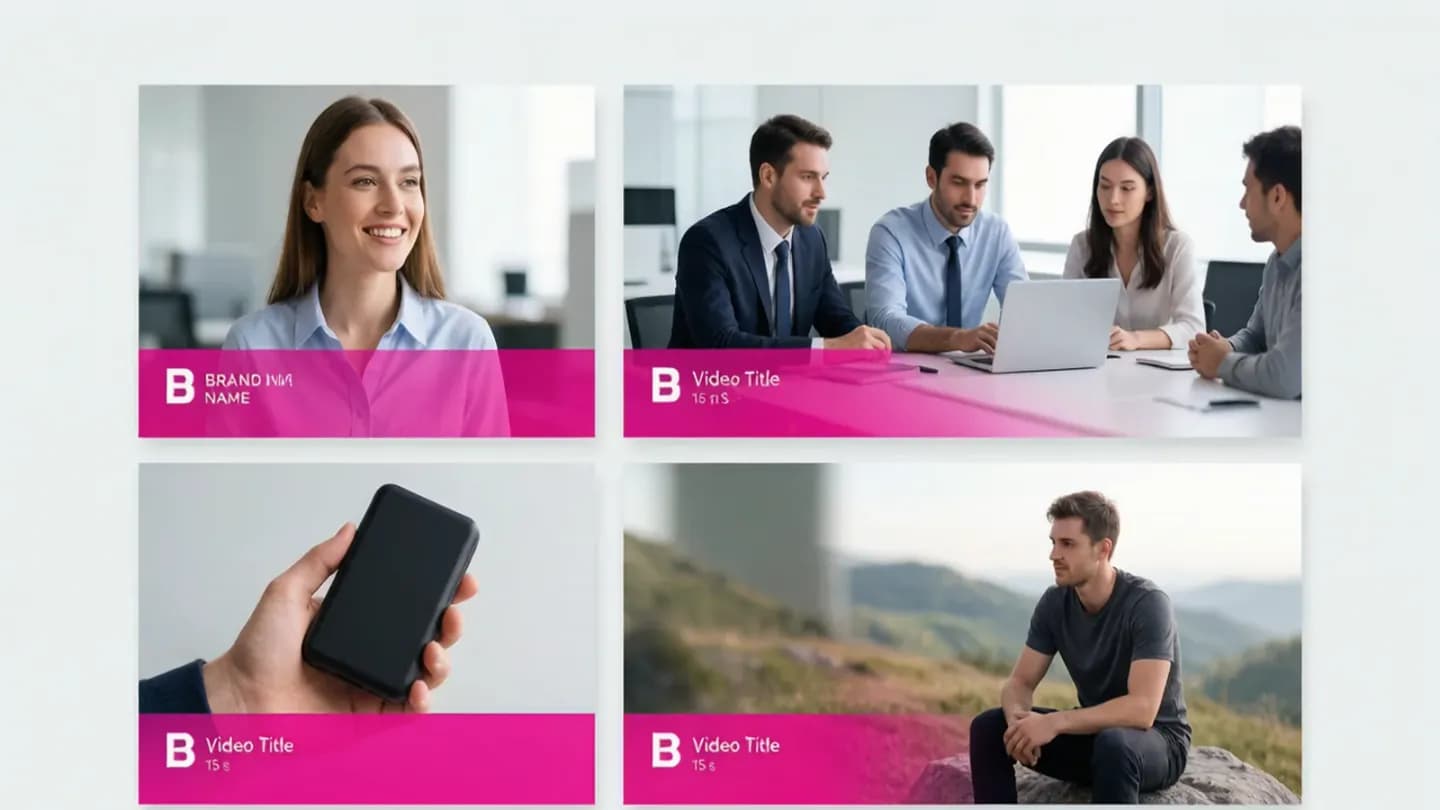
Build a variation library, not a one-off spot
The temptation with any generator is to ship the first acceptable cut. The better move is to treat the export as raw material: generate several directions — product-led, presenter-led, lifestyle, UGC-style — then let performance decide which one earns the media spend.
Small advertisers especially benefit because they can finally compare creative directions before committing budget, the way only Fortune 500 teams could when multivariate testing meant an agency retainer. Treat each version as a hypothesis about what the audience will actually watch.
Treat the first export as raw material: a documented {{link}} lets you ship the winning cut, then rotate the losers before paid-social fatigue sets in.
Versioning also pays off across channels. One approved master can become cuts for connected TV, a landing page, YouTube, paid social, and vertical video — the same message, adapted to where it runs rather than rebuilt from scratch.
Measure the library with the same discipline you would a paid-social test: watch the hook retention and the first-three-second completion, not just impressions. The variant that earns the next round of spend should be the one viewers finish, not the one that merely loads.
Treat the first export as raw material: a documented creative refresh cadence lets you ship the winning cut, then rotate the losers before paid-social fatigue sets in.
Prepare your brand inputs before you press generate
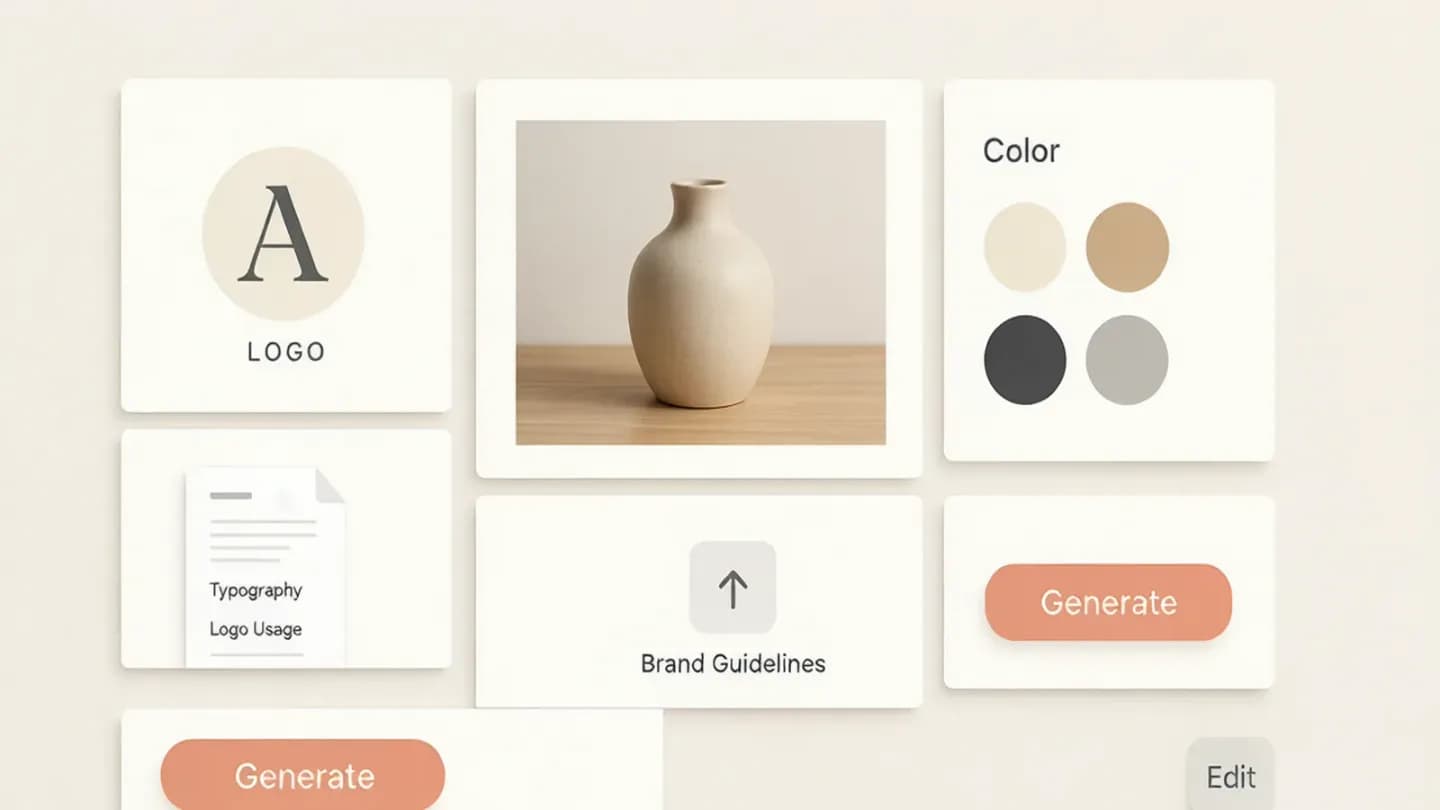
A generator cannot compensate for unclear positioning or outdated assets. The brands that get good output fast are the ones that arrived with approved product images, logos, brand colors, claims, customer profiles, and previous winning ads already organized in one place.
The generator is only as good as what you feed it, so a tight {{link}} — objective, audience, proof point, offer — should exist before the first prompt.
Define the job of each video before generating. A connected-TV awareness spot should not be written like a direct-response TikTok ad: it needs stronger brand recognition, simpler messaging, readable visual hierarchy, and a closing frame that works without an immediate click. A generator speeds execution; it does not set strategy.
Build the review step into the brief itself. Generated claims about a product — a price, a benefit, a performance figure — are advertising claims someone has to substantiate, so the approver who signs the script should be the same person who can prove the claim. Speed without a reviewer just ships the mistake faster.
The generator is only as good as what you feed it, so a tight creative brief for AI video — objective, audience, proof point, offer — should exist before the first prompt.
Provenance and disclosure travel with the asset
Mass-producing AI ads raises a compliance question that a single agency spot never did: who can tell how this was made? As generation scales, provenance — recording the model, source material, and edits behind each clip — stops being optional and becomes part of the asset itself.
Standards such as Content Credentials from the C2PA coalition let a publisher bind that provenance to the media file, so viewers and platforms can verify how an asset was created. For a small brand running dozens of variants, a provenance tag is cheaper insurance than a retroactive disclosure scramble.
Disclosure also protects the brand from the backlash that meets low-quality synthetic output. Audiences increasingly reward content that is transparent about AI use and attributable to a real decision-maker — which loops back to the same discipline that separates a winning spot from slop.
AI video ads for small businesses: the regional and multilingual upside
The biggest winner may be regional brands that were never going to brief a national agency. A regional advertiser often needs the same offer in several languages, with separate cuts for connected TV, YouTube, and commerce platforms — exactly the kind of high-variation, low-volume work that generation handles better than a traditional shoot.
Multilingual localization turns one approved master into a dozen market-ready versions without a dozen separate productions. But each localized cut still carries the same disclosure and provenance duties, so the brand-consistency and review discipline from the earlier steps has to travel with the asset into every language and market.
Put the framework into production
These related pages connect the article’s planning advice to a specific commercial scope.
References
- Disney's Tech & Data 2026 Recap — Ad Creative StudioDisney Advertising
Disney describes a new video generation tool designed for advertising that allows brands to create high-quality, CTV-ready commercials using existing brand assets and guidelines, framed as 'Better Versions, Not Just More Versions.'
- 2026 IAB Digital Video Ad Spend & Strategy Full ReportInteractive Advertising Bureau (IAB)
Nearly two-in-three buyers now use GenAI for digital video creative; 43% of video buyers expressed somewhat to no confidence in inventory quality (67% on open exchange/RTB); SMBs show higher CTV niche-targeting expectations, up 23 points year-over-year.
- C2PA — Content CredentialsCoalition for Content Provenance and Authenticity (C2PA)
Content Credentials let a publisher bind provenance — the model, source material, and edits behind a media file — so viewers and platforms can verify how an asset was created.