The episodic AI video operation nobody in advertising is watching
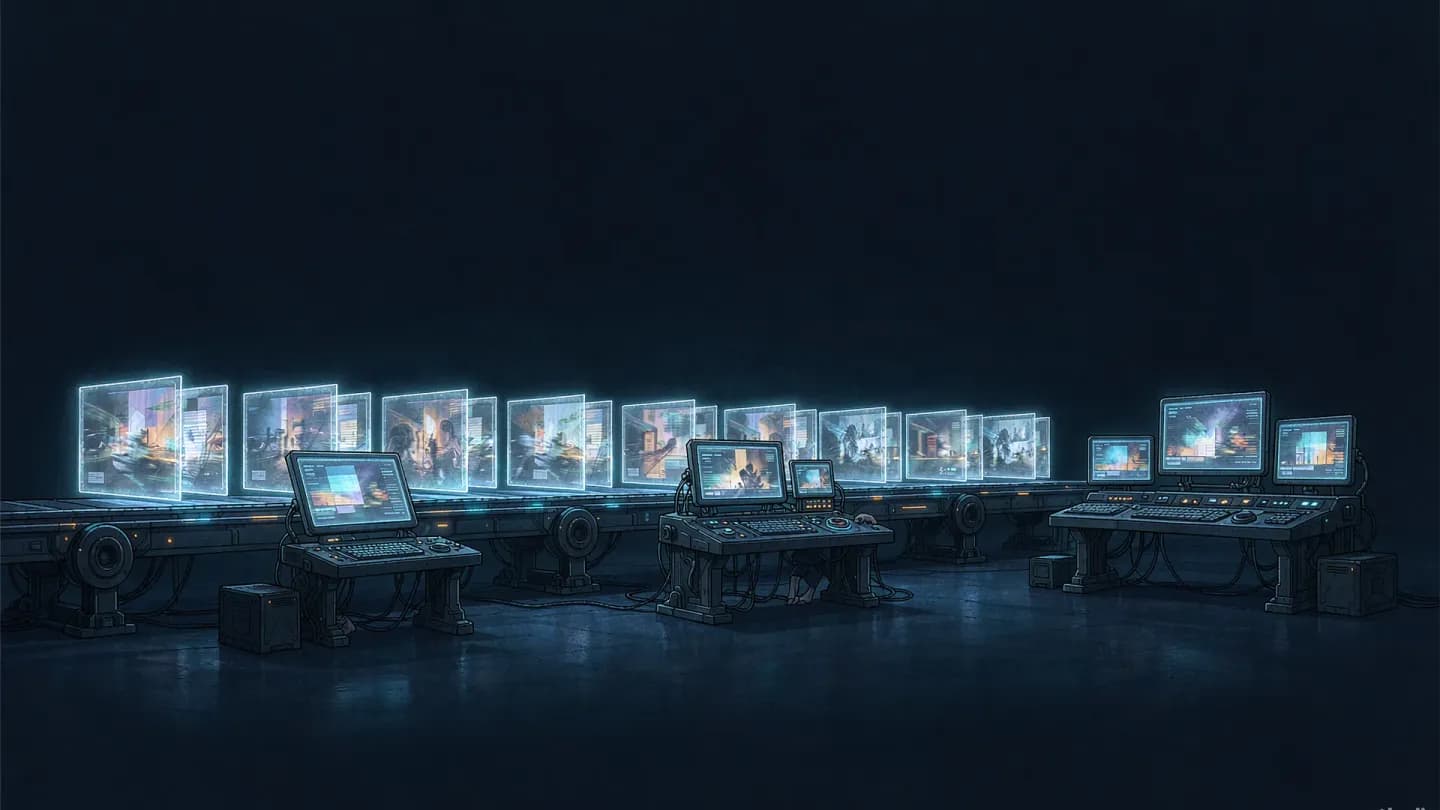
Episodic AI video already runs at assembly-line scale, just not in advertising. Pray.com's AI Bible, the franchise behind more than 250 million views, now ships roughly 150 videos a month, and in October the company productized the whole pipeline as Pray Production Studio.
The numbers behind that cadence are the story. The AI Bible team produces five flagship cinematic episodes each week plus derivative content, roughly 150 videos a month in total, after lifting monthly output from about 30 to 150 over the past twelve months - a fivefold increase. A small team completes an episode in a single afternoon, without cameras, actors or a full crew.
Advertising has spent two years arguing about whether generative video is good enough for a thirty-second spot. Faith media skipped that argument and built the reference implementation of the format brands keep being told to run next: the always-on episodic series, produced on a calendar rather than commissioned one hero film at a time.
The audience scale is the part that should make brand teams uncomfortable. More than 250 million views is a reach most brand campaigns never achieve, and the operation reaching it runs on a small content team rather than a holding-company budget.
The operating rhythm rhymes with what live-commerce teams already learned: {{link}}, and shipping 150 videos a month is a calendar with a render queue attached.
The operating rhythm rhymes with what live-commerce teams already learned: live commerce runs as a schedule, not a campaign, and shipping 150 videos a month is a calendar with a render queue attached.

Continuity is the product, not the model
Pray Production Studio's own launch announcement is candid about the failure mode it was built to fix. Most available tools, it says, either repackage existing sermons into clips or generate individual scenes that often lose character continuity and visual consistency. The studio is designed around the gap those tools leave: complete, visually consistent stories with well-defined protagonists, environments and visual styles from the first shot to the last.
The infrastructure doing that work is unglamorous. Reusable character libraries hold the cast; project-level memory holds the world and its props; automated prompting keeps the look stable from episode to episode; and a fixed stack of models - Google Veo, Kling and Seedance - does the generating. None of that is a model breakthrough. It is a production system, which is why it ships.
The distinction matters because single-scene generators optimize the shot. An assembly line optimizes the series: the unit of quality is no longer one good frame but a cast that stays recognizable across five episodes a week, plus the derivative cutdowns that follow each one. That is a different engineering problem, and it is the one brand teams running always-on content will hit next.
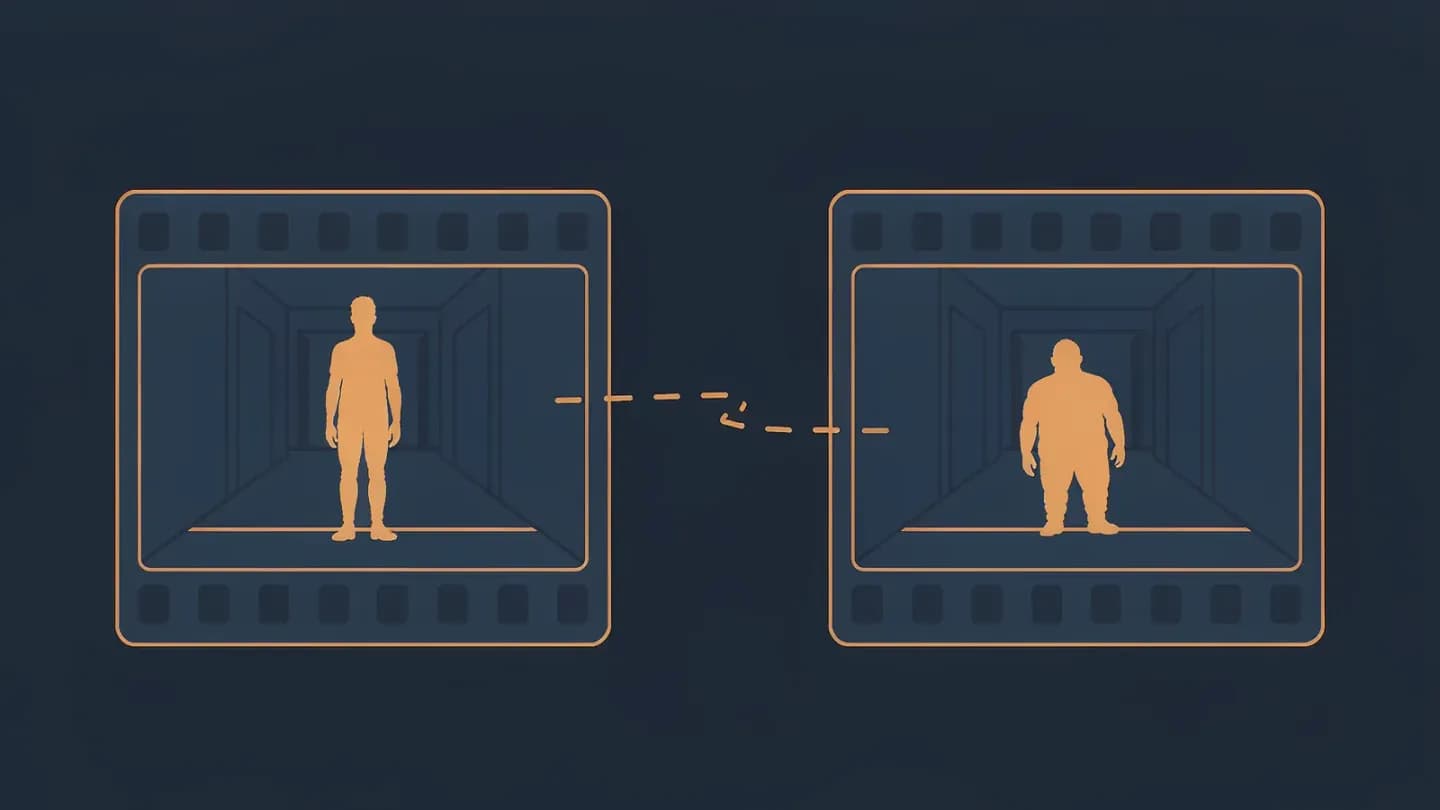
Project-level memory is the piece brand teams most often skip. A character library holds faces and wardrobe; memory holds the world around them - the same well, the same worn door, the same weather - so a location built in episode one is still the same location in episode twelve. Single-scene tools regenerate the world every prompt, which is why a series generated shot by shot reads as a montage of near-copies.
The honest counter-evidence sits in the output. Critics who watched the AI Bible's music videos kept asking why Noah looks different in every shot, and documented anachronisms that no continuity system caught. Infrastructure narrows drift; it does not repeal it.
The technique literature reached the same conclusion earlier this year: {{link}}, and an assembly line is simply what that insight looks like once it is industrialized.
The technique literature reached the same conclusion earlier this year: character consistency is a reference problem, not a prompt problem, and an assembly line is simply what that insight looks like once it is industrialized.

The human gates inside the machine
NPR's look inside the operation describes a method that is mostly human. The team uses ChatGPT to develop concepts and still images of what each story should look like, then records video on a phone in the office mimicking the action and feeds that footage into the video generator - which, as the content lead described it, will turn you into Elijah or one of the prophets. The voices are real actors. The music is composed for each episode. A pastor reads the scripts.
Generation was never the expensive layer. What the six-week timeline used to buy - concept, blocking, voice, score and script approval - still exists; it has moved upstream of the generator and become cheap to iterate. The assembly line did not delete the crew. It re-described the crew as gates, and kept the three that carry meaning: the story gate, the performance gate and the approval gate.
Automated prompting is the quiet part of that stack. Once the concept, motion reference and look are locked, the prompt that reproduces them becomes a versioned production asset - closer to a style guide than to a creative act. That is the opposite of how most brand teams still work, where the prompt is retyped per shot and the look is renegotiated every Friday.
The founder's biography reads like the thesis. Steve Gatena built REP Interactive into what Inc. Magazine listed as the fastest-growing video agency in the United States, winning more than 100 awards for brands including Coldwell Banker, the Los Angeles Dodgers and Marriott Hotels. The person who productized episodic AI video is a former agency owner, not a research lab - which is why the pipeline ships with editor-ready exports for Adobe Premiere Pro and Final Cut Pro instead of pretending the NLE is dead.
What the pricing ladder says about unit economics
The commercial tell is the price. Pray Production Studio starts at $19 a month, with the entry plan including 1,000 credits, against a production model the company describes as having removed the crew, the cameras and the six-week timeline. When a month of episodic output costs less than a single afternoon of crew time, the comparison stops being cost per video and becomes cost per slot filled on the calendar - and calendars are what episodic actually sells.
The credit model also reveals what the pipeline treats as scarce. A thousand credits a month is not a rendering budget; it is a slot budget, priced so that a church preaching every Sunday can fill fifty-two slots a year for less than the cost of one crewed shoot day. The upper tiers exist for multi-campus, multi-language operations, which is the same segmentation a brand would use for always-on regional content.
The rollout channel is just as telling. PRAY.COM is taking the pipeline to SALT 2026 in Dallas with live demo workshops on October 14-16, putting the assembly line in front of the audience most likely to clone it. Faith media is becoming the distribution channel for an episodic production playbook, the same way it distributed broadcast craft for decades.
One input the assembly line gets for free is the one commercial episodic shows still pay for, because the underlying stories are public domain - which removes the rights layer that {{link}} otherwise puts in front of every generated frame.
One input the assembly line gets for free is the one commercial episodic shows still pay for, because the underlying stories are public domain - which removes the rights layer that the AI video chain of title otherwise puts in front of every generated frame.
Why brands cannot copy the tolerance
The reason this assembly line has not shown up in brand guidelines yet is audience math. As one scholar told 404 Media, the metrics for success are totally different: the goal is spreading the word, and the more AI accelerates that, the more the work is doing its job. Faith audiences watched through visible continuity breaks. Brand audiences do not - when an AI-generated proof-of-concept short circulated, fandom audiences picked it apart frame by frame.
So the transferable lesson is not ship rough work at scale. It is the order of operations. Lock the character library before the first render. Pin the model stack instead of chasing each release. Gate every episode on references rather than on prompt prose. Keep humans on concept, voice and script - the three gates the assembly line kept.
And choose the format honestly, because {{link}} is still the first question, and episodic only pays when the series itself is the reason the audience comes back.
Advertising keeps waiting for a model good enough to make the episodic bet safe. The first assembly line says the bet was never about the model. It was about who built the continuity infrastructure first - and this quarter, that was a ministry, not an agency.
And choose the format honestly, because which content types actually fit AI video is still the first question, and episodic only pays when the series itself is the reason the audience comes back.
Put the framework into production
These related pages connect the article’s planning advice to a specific commercial scope.
References
- Churches Can Now Turn a Sunday Sermon into a Cinematic Film by Monday: PRAY.COM Opens the AI Studio Behind AI Bible to Every MinistryNewsfile (PRAY.COM press release)
PRAY.COM's October 6, 2026 announcement says the AI Bible has generated more than 250 million views and produces about 150 videos a month - five flagship cinematic episodes each week plus derivative content - after monthly output rose from approximately 30 to 150 over the past 12 months, and that Pray Production Studio maintains continuity with reusable character libraries, project-level memory, automated prompting and combined AI models including Google Veo, Kling and Seedance, with plans starting at $19 a month and demo workshops at SALT 2026 in Dallas on October 14-16.
- Fantasy or faith? One company's AI-generated Bible content stirs controversyNPR
NPR's report on the AI Bible describes the production method: the team uses ChatGPT to develop concepts and still images, then records video on a phone mimicking the action and feeds it into the video generator as a motion reference, while voices are performed by real actors, music is composed for each episode and a pastor reads the scripts; the franchise had over two million followers across YouTube, Instagram and TikTok, drawing viewers under 30 who skew male.