
Character consistency became a workflow, not a wish
Character consistency has quietly become a production gate rather than a model feature. Across 2026, the teams shipping multi-shot AI commercials converged on the same answer: identity lives in a reference image, and the prompt's job shrank to motion. That reversal - call it reference-first production - is why consistency finally stopped being a per-clip gamble and started behaving like repeatable craft.
The economics explain the urgency. US digital video ad spend is projected to surpass $80 billion in 2026, growing roughly 20 percent faster than the total ad market, and social video is outpacing CTV for the first time on the strength of AI-powered personalization. More of that budget is flowing toward multi-shot narrative formats, and a multi-shot ad only works when the same person persists across every cut.
The craft answer did not come from a better text generator. It came from moving the anchor out of language altogether. A prompt can describe a character, but a description matches thousands of faces, and each render samples a new one. An image of the character matches exactly one. That asymmetry is the whole architecture, and every major tool shipped around it in 2026.
Runway's Gen-4 research page states it plainly: consistent characters, locations and objects across scenes, generated from visual references combined with instructions, all without fine-tuning or additional training, with 'infinite character consistency with a single reference image' as the headline capability. Luma's Ray3 evaluation report makes the same bet from the measurement side, treating image-to-video adherence as a first-class evaluation axis.
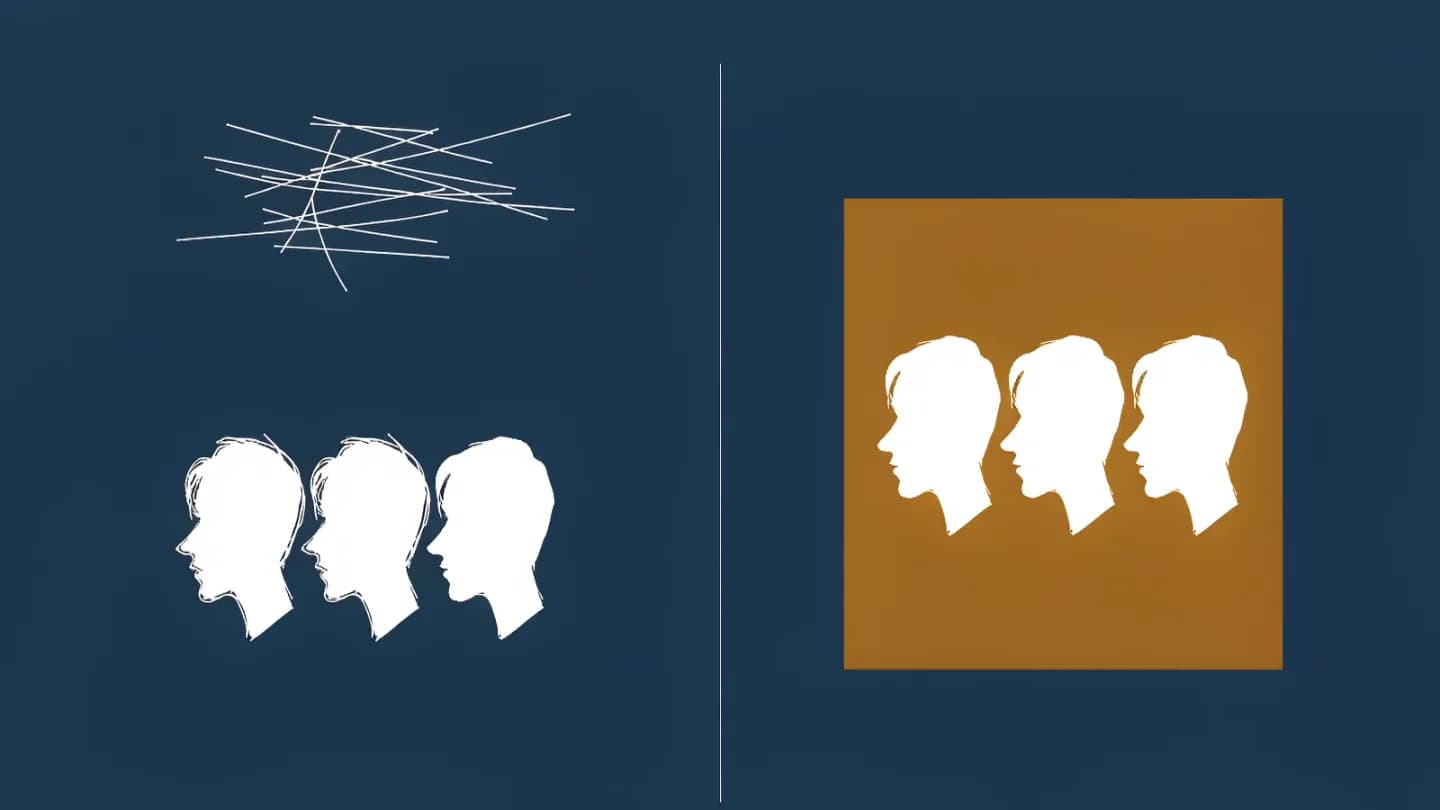
Text describes; only an image holds identity
The failure mode is easy to reconstruct. Generate a presenter from the sentence 'a woman in her thirties with short dark hair and a green jacket' and the first clip looks fine. Generate the next shot from the same sentence and the jacket shade shifts, the jaw changes, the age drifts. Nothing was inconsistent in the prompt; the prompt was simply never an identity.
Luma's evaluation framework is blunt about why this needed its own metric. Its image-to-video adherence measure captures how faithfully a generated video maintains alignment with its reference image or start frame, 'preserving identity, layout, color palette, style, and structure.' The existence of the metric tells you the industry now treats reference fidelity as a measurable production property, not a lucky draw.
Camera language was the first prompt variable to lose its throne - {{link}} made the case that the shot, not the prose, decides the cut - and identity has now followed the same path out of the prompt. Both demotions share one logic: whatever must stay stable should be fixed upstream of generation, in an artifact a human can inspect and approve.
The practical translation for a commercial team: stop writing longer character descriptions. The description belongs to the still, where iteration is cheap, and the video prompt should never compete with it. When text and reference fight, the model remixes - and a remix breaks the recognition a serialized campaign depends on.
Camera language was the first prompt variable to lose its throne - our shot-direction deep dive made the case that the shot, not the prose, decides the cut - and identity has now followed the same path out of the prompt.
The 2026 default: prompt to image to video
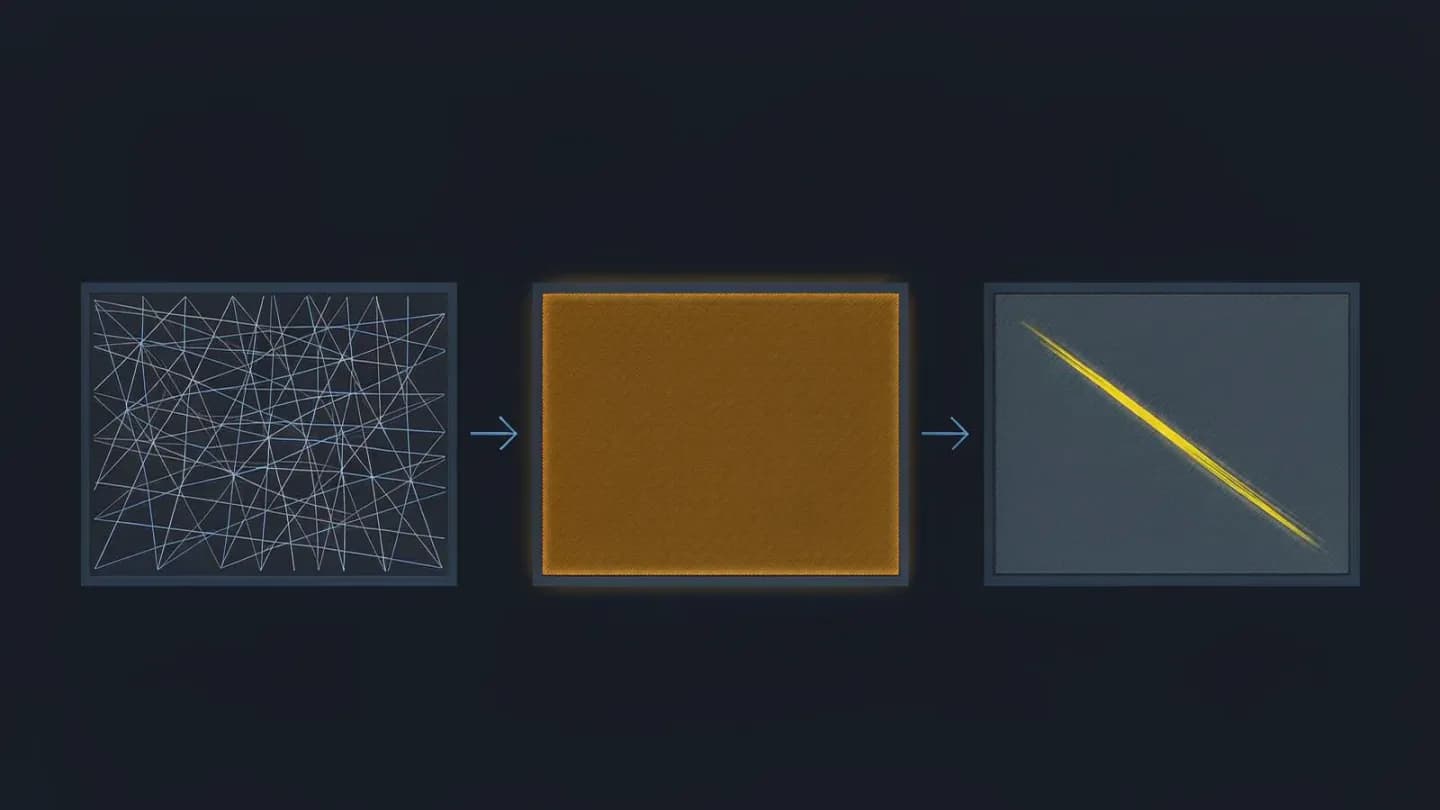
The workflow that won is a three-stage chain. You generate a hero still with an image model, approve it as the canonical likeness, then hand it to a video model as a start frame or reference, prompting only for motion. First-frame and last-frame control, now common across major models, pins both ends of a shot and lets the model interpolate what happens between them.
The pattern rhymes with {{link}}, which replaced open-ended prompting as the input discipline, and it extends that logic from style and assets to identity itself. A locked brand palette and a locked face are the same kind of decision: fix the invariant before generating the variable.
Luma's Ray3 Modify documentation shows how far the anchor travels: a character reference can lock likeness, costume and identity continuity across an entire modified clip, including video-to-video passes that change wardrobe or environment while keeping the performance. The reference is no longer an input at the start of the pipeline; it is a constraint that survives post.
Skeptics should note the boundary conditions. Reference anchoring holds identity well under gentle motion and breaks under extreme action, heavy occlusion or conflicting multi-reference instructions. Multi-character scenes remain harder than single-character ones. The workflow raises the floor; it does not repeal the review pass.
The pattern rhymes with constraint-led generation, which replaced open-ended prompting as the input discipline, and it extends that logic from style and assets to identity itself.
Reference propagation: the still is the production asset
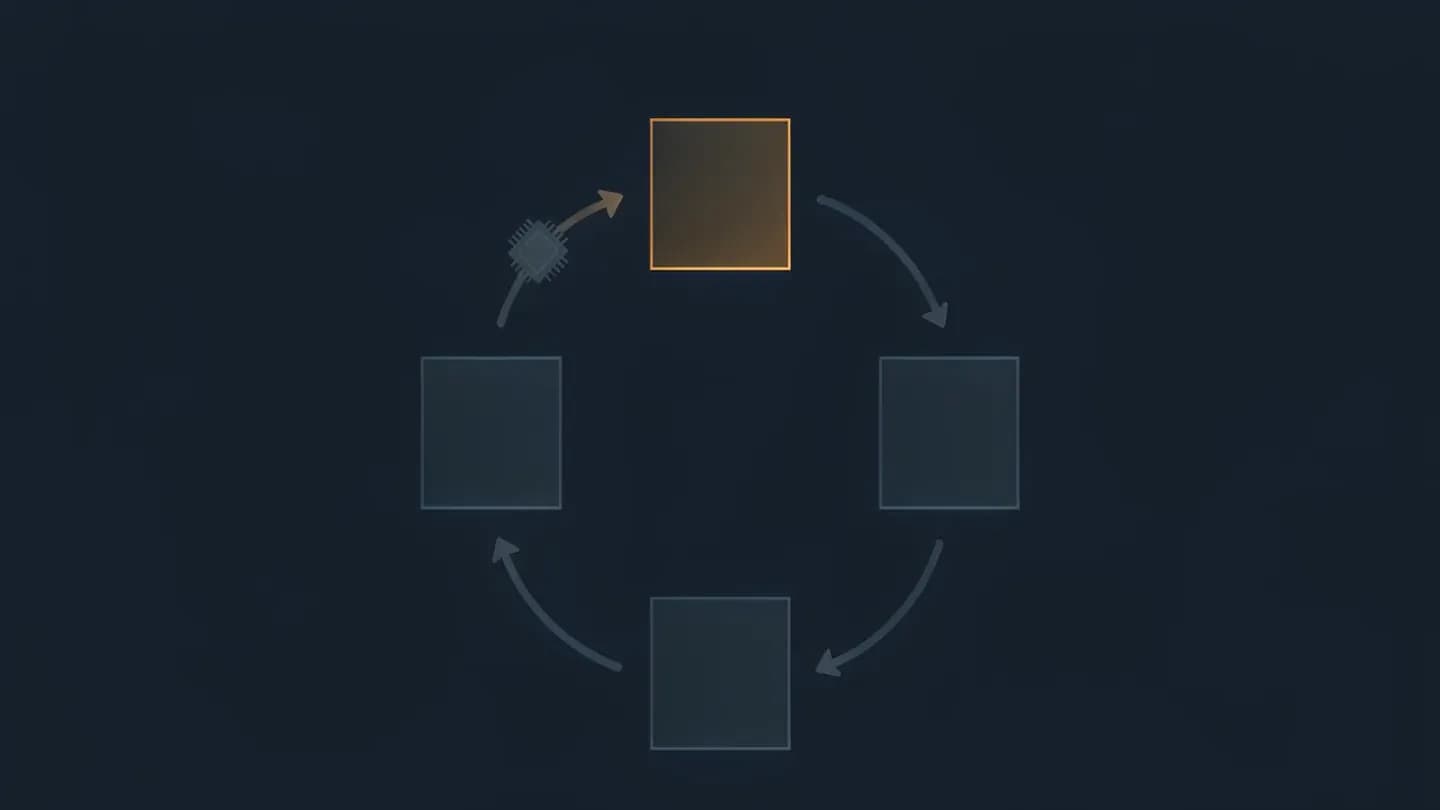
Inside the chain, the most important artifact is no longer the prompt log - it is the canonical portrait. Teams version-control it, name it, and treat every downstream shot as a derivative. Animate the hero image into the first clip, export a clean frame from that clip, and feed that frame forward as the reference or the explicit end frame for the next shot.
This loop - reference propagation - is why a face or a product carries forward without being re-described each time. It also quietly restructures roles: someone on the team now owns identity the way a colorist owns the grade, maintaining the character sheet, the approved angles and the wardrobe baseline as living production assets.
The discipline is unforgiving in one specific way: never fix a drifting shot by averaging its bad frames into the next reference. Reset to the canonical portrait, repair the still, and re-animate. A reference set is a source of truth, and sources of truth degrade the moment you let approximations back into them.
The reference set now travels with the edit, too - {{link}} documented the assistant editor handing over a native project file, and the canonical portrait belongs in that handoff beside the bins and sequences.
The reference set now travels with the edit, too - the editorial handoff shift documented the assistant editor handing over a native project file, and the canonical portrait belongs in that handoff beside the bins and sequences.
What reference-first production changes for commercial teams
First, budget lines move. If identity is locked in stills, the expensive iterations happen where frames are cheap, and the video passes get shorter and more deterministic. The cost center shifts from re-rolling video to maintaining a disciplined image layer - character sheets, product references, location plates - which is labor, but small-batch and reviewable.
Second, approval changes shape. A stakeholder can sign off a face, a product and a room as stills before a single second of video is generated, which converts the vaguest creative risk - whether it looks like the brand - into a checkpoint with a yes or no answer. The video review then judges motion, not resemblance.
None of this overrides judgment about whether AI belongs in a given concept: {{link}} still applies, because a reference-locked presenter only earns its place if the idea actually needs one.
Third, the pipeline becomes durable in a way model choices are not. Vendors ship, leapfrog and occasionally exit; a pipeline built on swappable stages - an image slot and a video slot - survives every reshuffle, because the reference assets carry the identity regardless of which engine animates them next quarter.
None of this overrides judgment about whether AI belongs in a given concept: the AI necessity test still applies, because a reference-locked presenter only earns its place if the idea actually needs one.
How to run the reference-first gate before any render
Operationalize it as a short gate. One: build the reference set - five or six images covering front, three-quarter, profile, full body and one imperfect-light condition, with matched wardrobe and resolution. Two: pick one canonical portrait and name it. Three: approve the set at thumbnail size; if a stranger cannot say it is one person, fix the stills, not the prompt.
Four: generate keyframes per shot from the set and review them as a group before any animation. Five: animate from approved stills only, describing motion as stage direction. Six: check the first and last frames of every clip for drift and route repairs back to the reference layer, never into longer prompts.
Draft-versus-master economics complete the ladder - {{link}} already argued that delivery tiers deserve explicit specs - and reference-first production adds an identity tier beneath them: drafts prove the idea, masters inherit the approved likeness.
Consistency is no longer the thing AI video promises and misses. It is the thing a team builds first - an image, held still, until it is true - and the prompt finally gets to do the easy part: move.
Draft-versus-master economics complete the ladder - the delivery-spec argument already argued that delivery tiers deserve explicit specs - and reference-first production adds an identity tier beneath them: drafts prove the idea, masters inherit the approved likeness.
Put the framework into production
These related pages connect the article’s planning advice to a specific commercial scope.
References
- Runway Gen-4: AI Video Generation with World ConsistencyRunway
Runway's official Gen-4 announcement states the model can 'precisely generate consistent characters, locations and objects across scenes' using 'visual references, combined with instructions', 'all without the need for fine-tuning or additional training', and headlines 'Infinite character consistency with a single reference image' across 'any lighting condition, location or treatment'.
- Ray3 Evaluation Report - State-of-the-Art Performance for Pro Video GenerationLuma AI
Luma's Ray3 evaluation report states that 'Image reference is a dominant workflow in professional generative video pipelines' and defines Image-to-Video Adherence as measuring 'how faithfully a generated video maintains alignment with its reference image or start frame - preserving identity, layout, color palette, style, and structure'. Independent evaluations cited by Luma place Ray3 at the highest temporal consistency scores across all measured competitors, sustaining character identity, spatial layout and style at high precision.
- The AI creative pipeline: how the prompt-to-image-to-video workflow became the default in 2026Kompozy
Kompozy's 2026 production guide states 'The single biggest shift in AI content production in 2026 is not a better model - it is the pipeline', describing the three-stage prompt-to-image-to-video chain as the reliable default. On consistency it is categorical: text can describe a character but 'cannot hold the model to the same face across shots', so the 2026 answer is to anchor on an image and propagate clean frames forward as each next shot's reference.
- U.S. Digital Video Ad Spend to Surpass $80B in 2026IAB
IAB's 2026 Digital Video Ad Spend & Strategy Report (May 5, 2026, with Advertiser Perceptions and Guideline) projects US digital video ad spend surpassing $80 billion, growing 11 percent year-over-year - nearly 20 percent faster than the total ad market - with social video (+13 percent) outpacing CTV (+11 percent) for the first time, powered by AI personalization and creator-economy investment.