
Why a Pilot Beats a Blanket Adoption
A text-to-video model is no longer a novelty you demo on a Friday. It is a production dependency that sits inside client deliverables, brand films, and paid social cuts. The teams that get burned are not the ones experimenting; they are the ones who adopted a model on a demo reel and discovered its limits only after a campaign was already in market. A structured proof-of-concept pilot is the cheapest place to learn those limits. IAB's 2026 Digital Video Ad Spend report puts U.S. digital video ad spending above 80 billion dollars this year, and notes that two-thirds of video buyers are already live, testing, or planning agentic AI for digital video. When a text-to-video model becomes part of how a team ships work, the cost of choosing wrong is measured in re-shoots, not curiosity.
A pilot is not a longer free trial. It is a small, scored experiment with a stop condition: a defined set of jobs, a fixed metric set, and a go or no-go decision written down before generation begins. This article lays out the pilot we run before committing a client or an internal team to a specific text-to-video model, the metrics that actually move the decision, and the spec checks that separate a demo from a dependency.
The pressure to skip the pilot is real. A convincing reel lands on a Monday, a stakeholder asks why you are not using it by Friday, and the path of least resistance is a quiet adoption that never gets scored. The pilot is the antidote precisely because it is cheap and written down. It converts an emotional yes into a measured one, and it gives you the artifact to show why a model was chosen or rejected.
Scope the pilot to a single team and a single quarter. A pilot spread across five departments becomes a committee with no decision owner. One team, one set of recurring jobs, one scorecard reviewer, and a calendar date for the go or no-go keeps the experiment honest and fast.
Define the Jobs Before You Test the Model
The most common pilot failure is testing a model against the brief you wish you had instead of the one you actually run. List the recurring deliverable formats first: social cuts under twenty seconds, product hero films, localized variants, explaining-motion shots, or avatar-led explainers. Each format stresses a different capability, and a model that is excellent at one can be unusable at another.
Before any generation starts, settle the question of {{link}} so the pilot tests the right engine against the right brief. If your real volume is short social cuts, measure take rate and iteration speed; if it is hero film, measure continuity and lighting. A pilot that scores a model on the wrong job produces a confident wrong answer.
Keep the job list short and ranked. Three formats cover most teams, and a pilot that tries to validate eight use cases at once produces eight shallow results. Rank by revenue impact and by how often the format actually ships, then build the test assets from real briefs rather than invented prompts.
Before any generation starts, settle the question of choosing the right model for each job so the pilot tests the right engine against the right brief.
The Metrics That Actually Decide Adoption
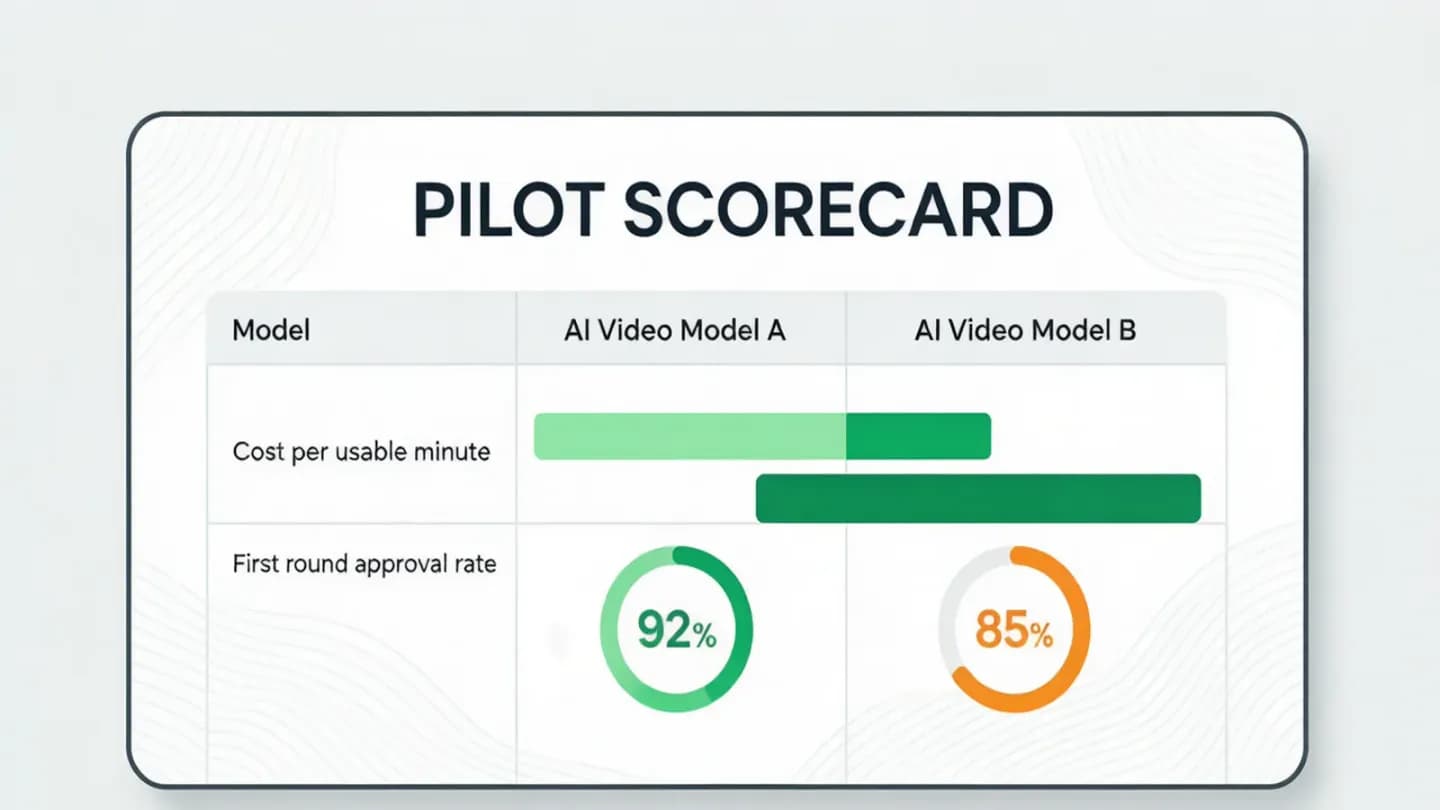
Vendors report progress in cherry-picked stills. Your pilot should report in numbers that map to a rate card. The first is cost per usable minute: the fully loaded spend, including failed generations, divided by the minutes you would actually ship. A model that needs twelve attempts to land one usable shot is more expensive than a pricier model that lands it on the second try.
Benchmark every candidate against the {{link}} rather than vendor marketing sheets. Real 2026 figures put traditional production at a fraction of generative cost per finished minute, but the gap only matters once you account for your own failure rate and revision rounds. The pilot is where that number becomes yours, not a benchmark's.
The second metric is first-round approval rate: the share of generated assets a creative director accepts without a regeneration. A high cost-per-minute score means little if every clip needs three more passes. The third is throughput under your real review load, because a model that floods editors with options can slow a team more than it speeds them.
The pilot should also force a decision on {{link}}, because that choice changes latency, data residency, and per-minute cost. A self-hosted weight gives you control and privacy but demands GPU ops; an API trades that for speed and zero infrastructure. Write the deployment decision into the pilot scorecard so it is not made implicitly later.
Consistency across a batch matters more than a single hero clip. Generate ten assets for the same job and measure how often the look, motion, and text rendering hold, not just whether one frame is pretty. A model that delivers one stunning clip and nine unusable ones is a demo, not a dependency.
Benchmark every candidate against the real production cost numbers for 2026 rather than vendor marketing sheets.
The pilot should also force a decision on self-hosted versus API deployment, because that choice changes latency, data residency, and per-minute cost.
Test the Text-to-Video Model Against Delivery and Provenance Specs
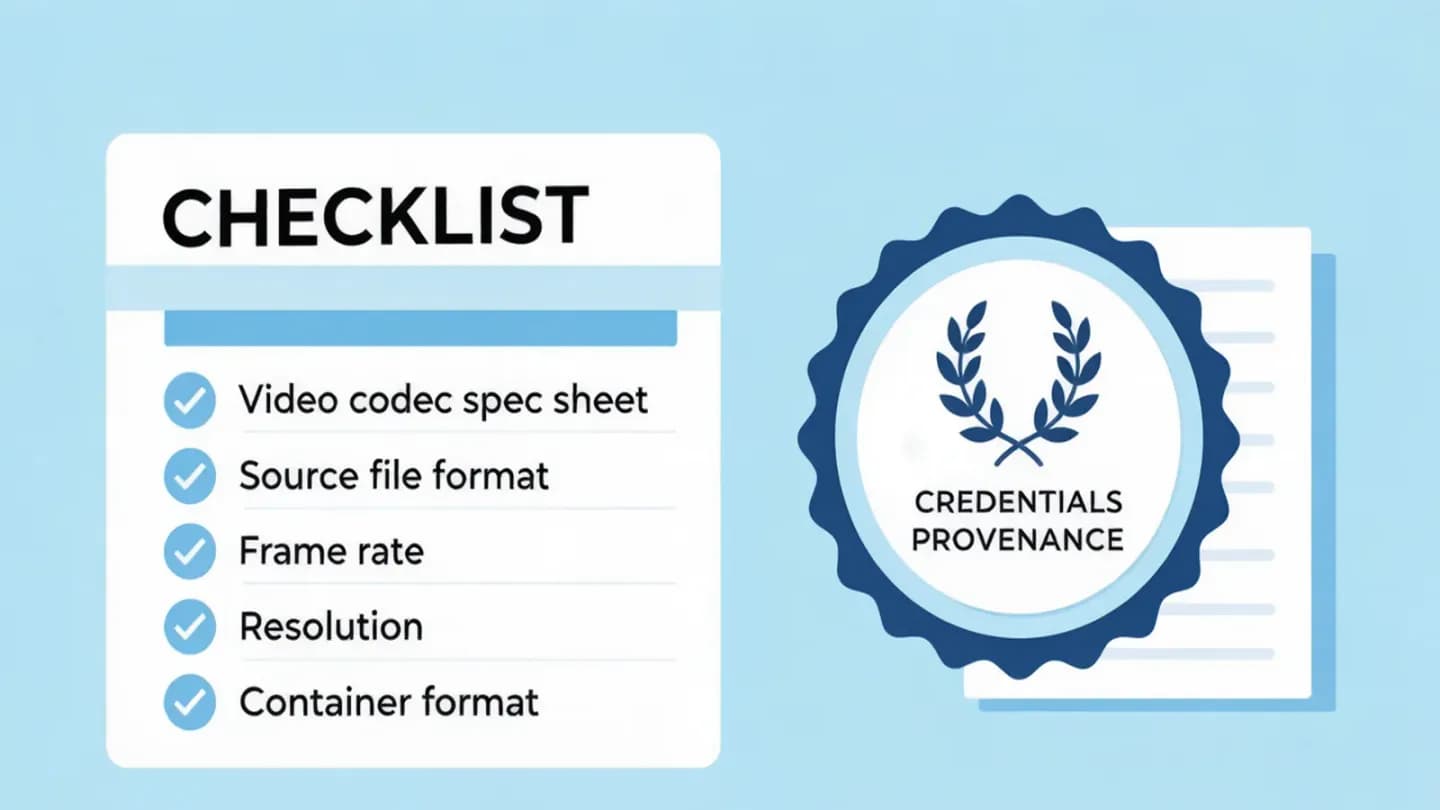
A generation that looks good in a player can still fail at the edge. Run every pilot asset through the same acceptance checks a client delivery would face. YouTube's recommended upload spec calls for an MP4 container, H.264 video, and AAC-LC, Opus, or Eclipsa audio; assets that drift from that spec get re-encoded or rejected at ingest, and on connected TV the fidelity floor is stricter still.
Provenance is the other spec that now decides whether work ships. The C2PA open standard, implemented as Content Credentials, records the origin and edit history of digital content so platforms and viewers can verify what was generated and what was edited. A text-to-video model that cannot emit or attach provenance forces a manual disclosure step on every asset, which is exactly the kind of tax that kills a pipeline at scale.
Accessibility belongs in the pilot too. On-screen text and supers must hold WCAG 2.2 contrast minimums: at least 4.5 to 1 for normal text and 3 to 1 for large text, where large means roughly 18 point or 14 point bold. Generative pipelines break captions and supers in ways traditional production rarely does, so measure it before you depend on the model for compliant delivery. Do not forget audio: native-audio generation changes the deliverable, but it also changes what you must verify, from lip-sync stability to whether the model bakes sound in or leaves a silent clip that needs a post pass.
Connected TV is the unforgiving end of the delivery chain. The same asset that looks fine on a phone can fail big-screen ingest on encoding, chroma, or caption legibility, so include at least one CTV-targeted export in the pilot and verify it survives the platform's delivery gate rather than assuming phone-ready means ship-ready.
Lock Versioning and a Regression Set Before You Scale
The trap after a good pilot is assuming the model stays good. Engines are updated or withdrawn without warning, and a tuned prompt that worked last month can silently degrade. A pilot that ignores this ships a dependency with no seatbelt.
Treat the pilot as the moment to plan for {{link}}, because a model update after launch can silently break a shipped prompt. Pin the model version, keep a small regression set of known-good prompts, and define a migration gate: any engine change must re-pass the pilot's acceptance checks before it touches a live brief.
Document the version lock in the same scorecard as the metrics. When the vendor rotates the model, you replay the regression set, diff the outputs, and decide deliberately instead of discovering the break in a client review. This is the difference between a pilot that informed one decision and one that protected every decision after it.
Treat the pilot as the moment to plan for model drift and version pinning, because a model update after launch can silently break a shipped prompt.
A 30-Day Pilot Plan You Can Hand to a Client
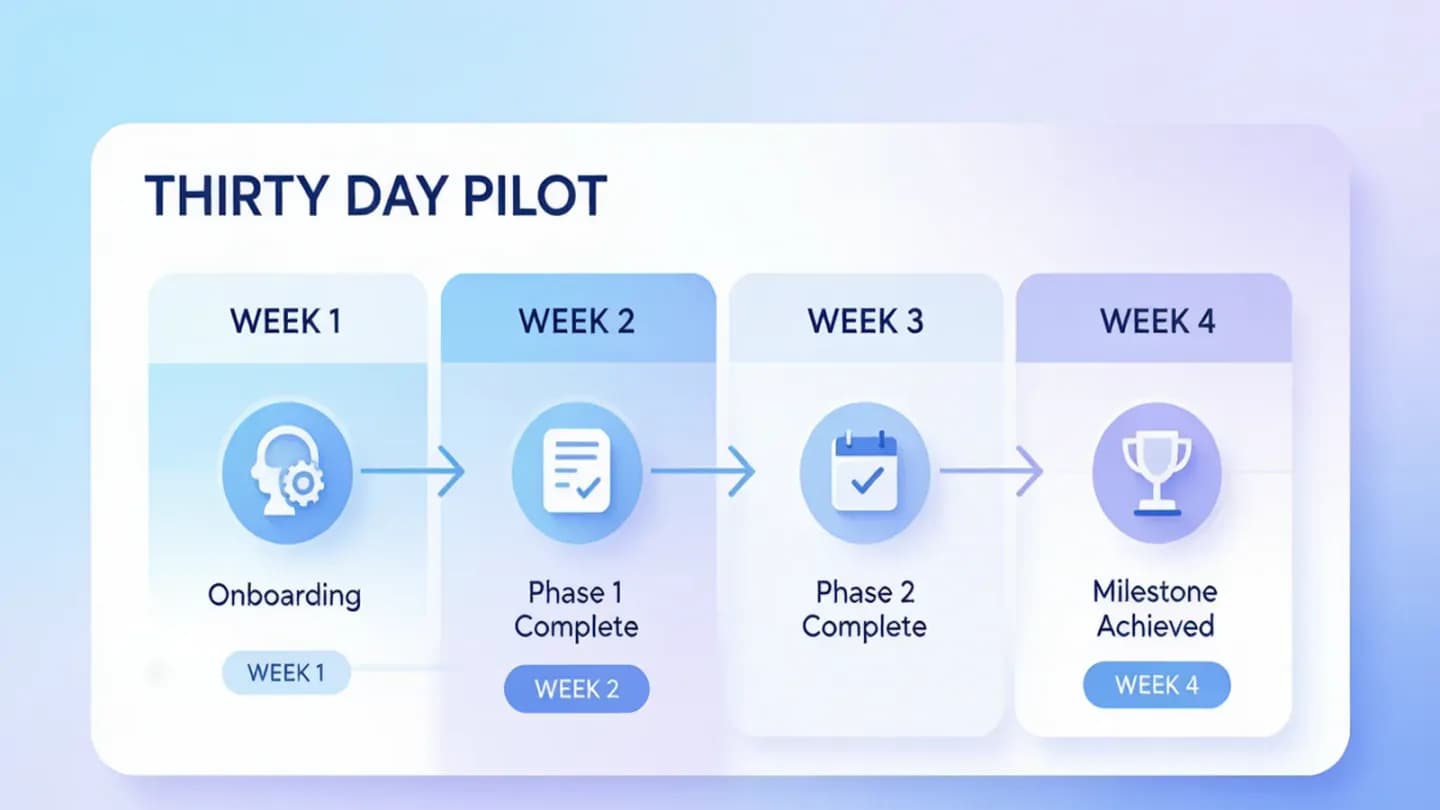
A pilot you cannot hand to a client is a hobby. Package it as a thirty-day plan: week one maps the jobs and builds the regression set, week two runs the side-by-side with the metric scorecard, week three stresses delivery and provenance specs, week four writes the go or no-go with a versioning policy attached.
Close the pilot with the same discipline you would apply at a {{link}} before a cut ships. If the model fails the spec checks, the cost math, or the versioning plan, the answer is no-go and a different candidate, not a hope that production will fix it. A pilot earns its keep precisely when it says no.
Done well, the pilot turns a fashionable question into a documented decision: this text-to-video model is ready for these jobs, at this cost, under this version lock. That is the only basis on which a team should let a model inside a client deliverable.
Hand the client the scorecard, not the impression. The deliverable of a pilot is a one-page decision record: the jobs tested, the metric results per candidate, the spec pass or fail, the version lock, and the explicit go or no-go with the conditions attached. That document is what protects you when the next model launch tempts a quiet switch.
Close the pilot with the same discipline you would apply at a pre-delivery QC gate before a cut ships.
Put the framework into production
These related pages connect the article’s planning advice to a specific commercial scope.
References
- IAB 2026 Digital Video Ad Spend & Strategy ReportIAB
U.S. digital video ad spend will surpass $80B in 2026 (+11% YoY, over 60% of TV/video spend), and two-thirds of video buyers are live, testing, or planning agentic AI for digital video.
- C2PA - Content Credentials open standardC2PA
C2PA is an open technical standard (Content Credentials) that records the origin and edit history of digital content so origin and edits can be verified.
- YouTube recommended upload encoding settingsGoogle
YouTube recommends an MP4 container, H.264 video codec, and AAC-LC, Opus, or Eclipsa Audio for uploaded video.
- WCAG 2.2 Success Criterion 1.4.3 Contrast (Minimum)W3C
WCAG 2.2 requires text contrast of at least 4.5:1 for normal text and 3:1 for large text (at least 18 point or 14 point bold).