
The 2026 Gen Z AI ad backlash, measured
The Gen Z AI ad backlash is no longer a vibe — it is measured. A July 2026 Rival Technologies survey of 901 Gen Z consumers found 74% react negatively to AI-made ads and 43% have stopped buying from a brand over it. For commerce video teams, that means briefing, targeting, and disclosure all need to change before the next campaign ships.
The Rival Technologies study, conducted in July 2026 across 901 Gen Z consumers in the US and Canada, is the clearest read we have on reception rather than production. Three in four respondents said they react negatively when they realize a brand's content was made with AI, and only 8% react positively. This is not a polite discomfort — it is a stated, measurable aversion that travels straight into behavior.
Behavior is where it gets expensive. In the same study, 50% of respondents had unfollowed a brand on social media after spotting AI-made marketing, 49% had complained to friends or online, 48% had unsubscribed from emails or texts, and 43% said they had stopped buying from the brand altogether. Nearly three in four (72%) had taken at least one concrete action. For a commerce team, those are not vanity metrics — they are churn, list decay, and lost repeat purchase.
Three details decide how you act on the number. The backlash intensifies with age: within the Gen Z sample, the share reacting 'very negatively' climbs from 44% among 18-to-20-year-olds to 54% among 25-to-29-year-olds, the cohort entering the workforce as AI-driven layoffs became headline news. Geography widens it further — 84% of Canadian respondents reacted negatively versus 65% in the US, and 48% of Canadians said they stopped buying versus 38% of Americans. One North American treatment will not clear both markets, so pressure-test AI-involved work market by market rather than rolling a single cut across the continent.

Why the backlash is a revenue problem
Marketers tend to treat AI as a production efficiency: faster drafts, cheaper variants, more volume. Gen Z reads it as a statement about the brand, not the pipeline. When the work looks AI-made, they infer the brand is cutting corners, displacing real creators, or signaling that their attention is worth less than the savings. That inference is what moves spend away.
The risk concentrates in the expressive work — the art, the storytelling, the voice — not the functional plumbing. AI that speeds up tagging, resizing, or QA barely registers. AI that stands in for a human presenter, a scripted joke, or a brand film gets punished. Teams that pour brand-defining creative through a generator are the ones most exposed to the {{link}}.
The Rival verbatims point to the line Gen Z actually draws. AI earns a pass when it assists a human or does functional work — resizing, translating, tagging, first-draft ideation. It gets punished when it stands in for art, storytelling, or voice. That is why a disclosed 'AI-assisted, human-approved' workflow reads differently than an end-to-end generated campaign: the audience is reacting to replacement, not to the tool itself.
Savvy teams already treat this as a governance question rather than a moral one. The useful split is functional versus expressive: use AI where it removes repetitive work, keep humans visibly accountable for anything a customer would call 'the brand.' That line is easy to state and hard to hold under deadline pressure, which is exactly why it belongs in the brief, not the retrospective.
Teams that pour brand-defining creative through a generator are the ones most exposed to the cheap synthetic ads erode brand equity.
Discovery and reach take the first hit
Backlash and reach compound. Platforms have been demoting wholly AI-generated video on organic surfaces while ad systems subsidize it, so the content most likely to trigger a negative reaction is also the content losing unpaid distribution. A cut that tests fine on a paid social auction can quietly disappear from the feed it was meant to seed.
That changes how you should read performance. If organic reach on an AI-heavy push is collapsing while paid holds, the problem is not the targeting — it is the asset. The {{link}} is a signal to rebalance the mix toward human-led or clearly disclosed creative rather than simply raising budget.
Exposure is no longer hypothetical, which matters for planning. In IAB's research, 71% of Gen Z and Millennial consumers said they believe they have already seen an AI-generated ad, up from 54% in 2024. Audiences are forming opinions from the work brands are publishing right now, so the reception test is happening on live campaigns rather than in some future rollout you can prepare for later.
The practical move is to plan two versions of hero content: a human-led cut for organic and community surfaces, and a variant for paid where disclosure and performance tracking are built in from the start. Shipping one 'AI-made' asset everywhere is the most common way teams discover the penalty after the spend is already committed.
The organic surfaces now demote fully AI-generated video is a signal to rebalance the mix toward human-led or clearly disclosed creative rather than simply raising budget.
The execution gap brands keep missing
The data also exposes a planning failure inside marketing organizations. Brands are adopting AI faster than they are measuring it. While 83% of ad executives in IAB's 2026 research say their company has deployed AI in the creative process, only a minority can show what that deployment changed for the customer. The teams moving quickest on generation are often the slowest on evaluation.
IAB's 'AI Ad Gap' research, run with Sonata Insights between October 2025 and January 2026 across 505 consumers and 104 ad executives, shows the perception gap widening: 82% of executives believed Gen Z and Millennial consumers felt positive about AI ads, yet only 45% of consumers actually did. The gap grew from 32 points in 2024 to 37 in 2026. Executives are optimizing for their own enthusiasm while the audience drifts the other way.
The reputational cost shows up in how Gen Z describes AI-using brands. In the same IAB study, 30% called such brands 'inauthentic,' 26% 'disconnected,' and 24% 'unethical' — roughly double the rates among Millennials. Those are not aesthetic complaints; they are character judgments about the company, and they travel into the purchase decision the next time the category is shopped.
This is the same pattern behind the {{link}}. Adoption without measurement turns a strategic tool into a cost line with a morale problem attached. Set the success metric before the prompt, not after the render, and make 'did it change perception' a tracked KPI alongside completion and conversion.
This is the same pattern behind the most teams still can't prove AI video ROI.
Keep a human in the loop
None of this argues for banning AI. The Gen Z respondents who were most accepting shared one consistent condition: a human was still visibly in charge. AI as an assistant earned a pass; AI as the finished product did not. The backlash is about replacement, not the technology.
For commerce video, that translates into a concrete operating model. Keep a named human accountable for every brand-defining cut. Use AI to extend the team's capacity — more variants, faster localization, faster testing — but route the expressive decisions through people. The {{link}} is the structural reason this holds up under scrutiny.
The disclosure story supports the same point. IAB found 73% of Gen Z and Millennial consumers said that knowing an ad was created with AI would either increase or make no difference to their purchase likelihood. Transparency is not a tax on creativity — it is a trust builder, provided the human role is real and not a fig leaf. iHeartMedia's 2026 'Guaranteed Human' research frames the consumer side of the same instinct: 70% of consumers use AI, yet 90% want the media they consume made by humans.
The hybrid human-led models beat fully automated production is the structural reason this holds up under scrutiny.

What commerce video teams should change Monday
Turning the data into process is straightforward if you start before the next brief. Five moves cover most of the exposure: audit where AI currently touches brand-defining creative, set a human sign-off rule for expressive work, build disclosure into the asset spec rather than bolting it on, measure perception not just production volume, and test AI-heavy cuts against human-led cuts head to head.
Briefing is the highest-leverage change. A brief that specifies 'AI-assisted, human-approved' tells the model and the maker the same thing the audience needs to believe: a person is accountable for what ships. It also protects the team when a cut is challenged, because the governance decision was made upstream, not in the comments.
The 2026 consumer is not asking brands to swear off AI. They are asking not to be handed the finished product and told a person made it. Close that gap with disclosure, human accountability, and measurement, and the efficiency AI promises finally shows up on the brand's side of the ledger instead of just the cost report.
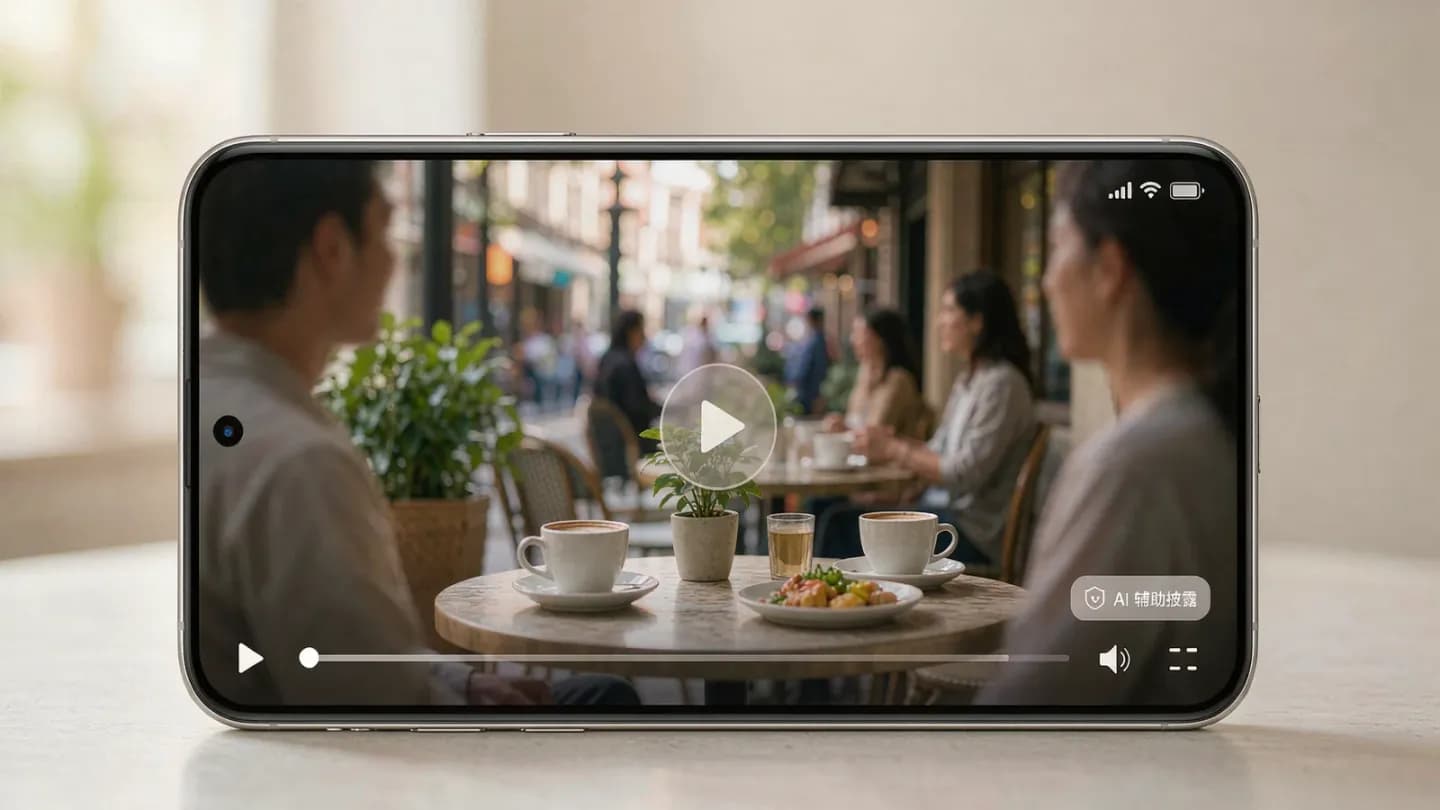
Put the framework into production
These related pages connect the article’s planning advice to a specific commercial scope.
References
- The Gen Z AI Backlash: How Young Consumers Really Feel About AI in MarketingRival Technologies
A July 2026 survey of 901 Gen Z consumers (US and Canada) found 74% react negatively to AI-made marketing, 50% have unfollowed a brand, 49% complained, 48% unsubscribed, and 43% stopped buying.
- The AI Ad Gap WidensIAB
IAB/Sonata Insights research (Oct 2025-Jan 2026, 505 consumers + 104 executives) found 82% of ad executives believe Gen Z/Millennial consumers feel positive about AI ads vs only 45% of consumers; 39% of Gen Z feel negative vs 20% of Millennials; 73% say disclosure would increase or not change purchase likelihood.
- Guaranteed Human at CES 2026: Real Voices Drive Real OutcomesiHeartMedia
iHeartMedia's 2026 'Guaranteed Human' research found 70% of consumers use AI but 90% want media created by humans, framing human-made content as a trust signal.