A feature film built by seven people
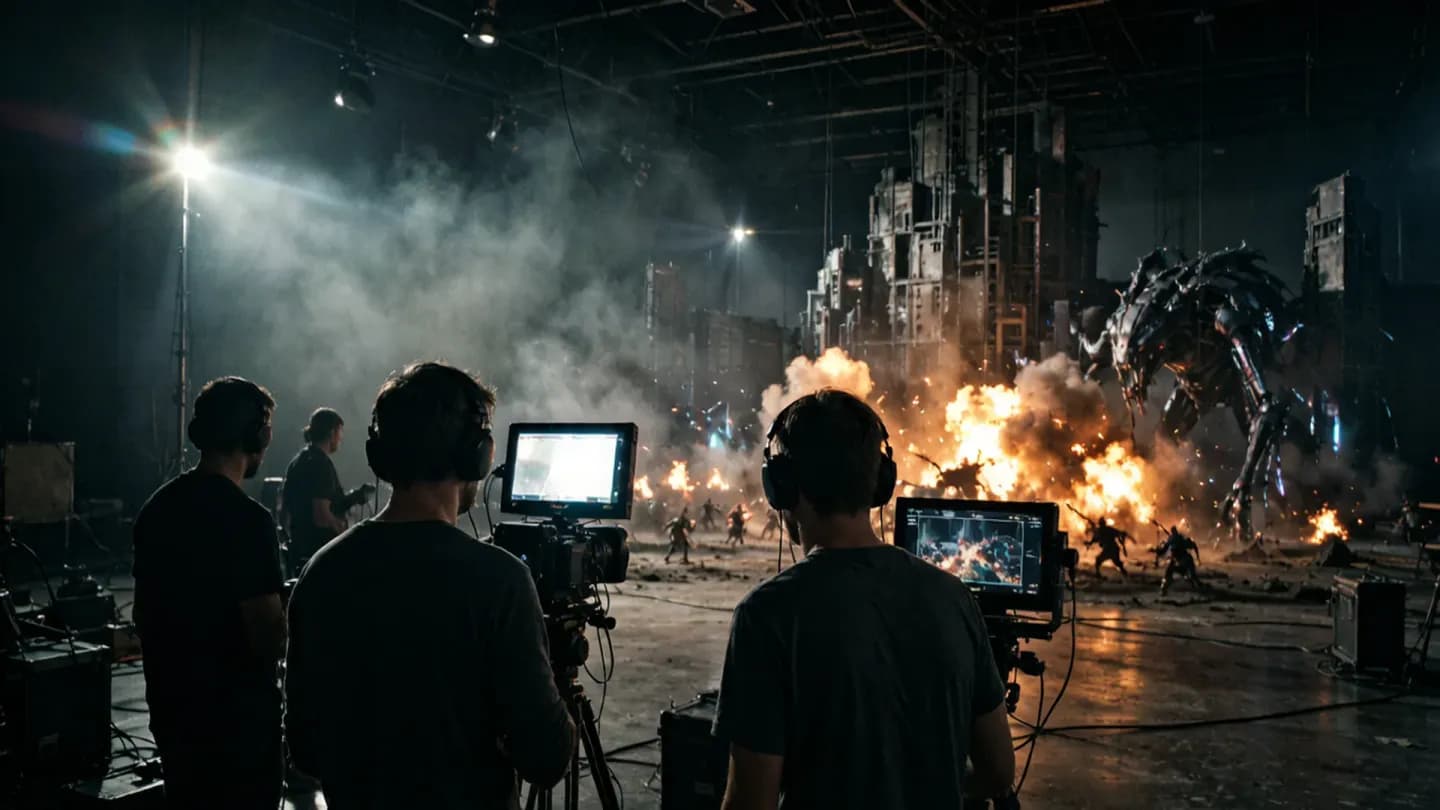
In May 2026, Raphael became the first full AI feature film from South Korea to debut at the Cannes Marché du Film. The project was co-directed by Yang Ik-june, Moon Sin-woo, and Jung Ju-won and produced by a team of just seven people through their studio, Mateo AI Studio, with a co-production structure alongside MBC C&I. Had the same film been shot as conventional live action, the producers estimated it would have required a crew of hundreds and a budget approaching two million US dollars. Full production ran for roughly nine months from August 2025, drawing on Kling AI's video generation platform and supplementing output with Photoshop work to hold character and tone.
The economics are the part commercial teams should note. A conventional feature at that scope implies a seven-figure budget and a crew measured in hundreds, spent mostly on the logistics of putting people, cameras, and sets in the same place. Raphael compressed that into a nine-month cycle run by a handful of specialists, with compute purchased at industry rates through partnerships with Volcano Engine and local AI platforms. The result is not 'free video'; it is a different cost curve, where the expensive line item becomes model tokens and human review time rather than trucks, locations, and overtime. A seven-person team can now attempt a feature that once needed a hundred-person crew, and {{link}} is the commercial-side version of the same idea.
A seven-person team can now attempt a feature that once needed a hundred-person crew, and human-core, AI-scaled creative model is the commercial-side version of the same idea.
Why the crew-size math matters for commercial teams
The Raphael numbers are useful because they reframe what a 'small team' can ship, not just how cheap a single clip becomes. A seven-person crew clearing the barriers to feature-length production mirrors what brand and agency teams face when a brief demands a hero film plus a library of cutdowns. The conventional cost ceiling drops, but the work does not get simpler; it moves from set logistics into pipeline design, model management, and review. Teams that treat AI as a way to remove the crew entirely usually rediscover that human direction is the part clients still pay for. The lesson is not 'replace the studio' but 'rebuild the org chart around a smaller core'.
For an agency, the Raphael model suggests a staffing question more than a tooling one. If a hero film plus its cutdown library can be produced by a small pod instead of a full production company, the competitive unit becomes the team that can both direct and operate the pipeline. Clients still expect a finished, on-brand asset, so the human roles do not vanish; they consolidate. The producer who can brief the model, judge the output, and own the brand call becomes the scarce resource, not the camera operator.
There is also a cadence benefit. A small team that controls its own generation can iterate a film the way performance teams iterate a social cut: test a few directions, keep the winner, expand it. That is the opposite of the traditional lock-and-shoot cycle, and it is why AI feature work and paid-social production are starting to share the same operating model. The studios winning this shift are the ones that promote a producer to own the AI pipeline the way they once owned the shoot.
Consistency was the real engineering problem
For a feature, the hardest problem was never generating one beautiful shot; it was keeping the same characters, locations, and visual tone coherent across an entire runtime. Raphael's team used Kling AI to generate footage and then turned to Photoshop to maintain consistent character appearance and a stable look scene to scene. When a model rebuilds the face every cut, a feature becomes unwatchable long before the story fails. The fix is the same at any length: character sheets, locked reference images, and a defined identity block that every generation inherits.
Raphael's supplementing of generated footage with Photoshop work is the tell. The team did not trust the model alone to hold a character across a feature, so a human step was added wherever continuity broke. That is a normal production reality, not a failure: the model produces the raw material, and a controlled human layer enforces the look. Keeping one face stable across a feature is the same problem the reference-first workflow for {{link}} solves for short-form series. The technique scales down cleanly; a six-clip campaign needs the same discipline a ninety-minute film does, just fewer frames to police. Most generative failures in commercial work trace back to skipping this step, not to the model being weak.
Keeping one face stable across a feature is the same problem the reference-first workflow for AI video character consistency solves for short-form series.

What Raphael's AI feature film says about model choice
Raphael leaned on a single video generation platform for the bulk of its footage rather than stitching many models together. That choice trades some stylistic range for a coherent output that holds together as a film, which is harder to achieve when every scene comes from a different engine. In commercial work the same logic applies: pick the engine that matches the job, document why, and resist the temptation to swap models mid-campaign once a look is locked.
The risk of multi-model stitching is subtle. Each engine has its own tendency for hands, faces, text, and motion, and those tendencies fight each other when scenes are cut together. A single platform with a known behaviour profile lets the team build a reference set and a correction routine once, then reuse it for the whole project. Raphael leans on a single engine for the whole film, which is why a disciplined {{link}} process matters before any prompt is written. Teams that pick first and justify later usually pay for it in a reshoot they thought AI had eliminated.
Raphael leans on a single engine for the whole film, which is why a disciplined AI video model selection process matters before any prompt is written.
Long-form narrative changes how you plan shots
A thirty-second ad can survive a few disconnected generated clips because the edit hides the seams. A feature cannot; the audience watches the same world for ninety minutes and notices every inconsistency. Raphael's directors treated shot planning as a storytelling discipline, not a post-production cleanup, because the cost of a broken continuity error compounds over a full runtime. Teams moving from social cutdowns to longer narrative formats should expect the planning burden to shift upstream, into the brief and the reference set.
The practical consequence is a heavier front end. Before a single frame is generated, the team needs a shot list, a continuity bible, and a reference library, because regenerating to fix a continuity error costs more the deeper it sits in the timeline. A feature runs on scenes that hold for minutes, so {{link}} now happens in the prompt instead of the edit bay. Social cutdowns can fake coherence in the cut; a feature cannot, and the planning discipline is what separates a demo reel from a film a distributor will screen. Teams that skip this step tend to generate beautifully and assemble poorly, which is the most common failure mode in generative filmmaking.
A feature runs on scenes that hold for minutes, so AI video shot planning now happens in the prompt instead of the edit bay.
Provenance and disclosure now travel with the film
An AI feature film is also a provenance object: every frame carries a question of where it came from and whether a viewer was told. For commercial teams, disclosure is no longer a release-step checkbox but a property of the asset itself, embedded at generation and carried through delivery. A festival cut and a paid-social clip are the same file with the same obligation, so the marker has to survive the export.
The regulatory clock makes this urgent. From 2 August 2026, the EU AI Act requires deepfakes and AI-generated or manipulated content to be clearly labelled, with machine-readable markers so platforms and regulators can detect it. A feature film shown at a festival and then clipped for social promotion now carries the same labelling duty as a brand ad, and the marker should travel with the asset from generation to delivery rather than being added by legal at launch.
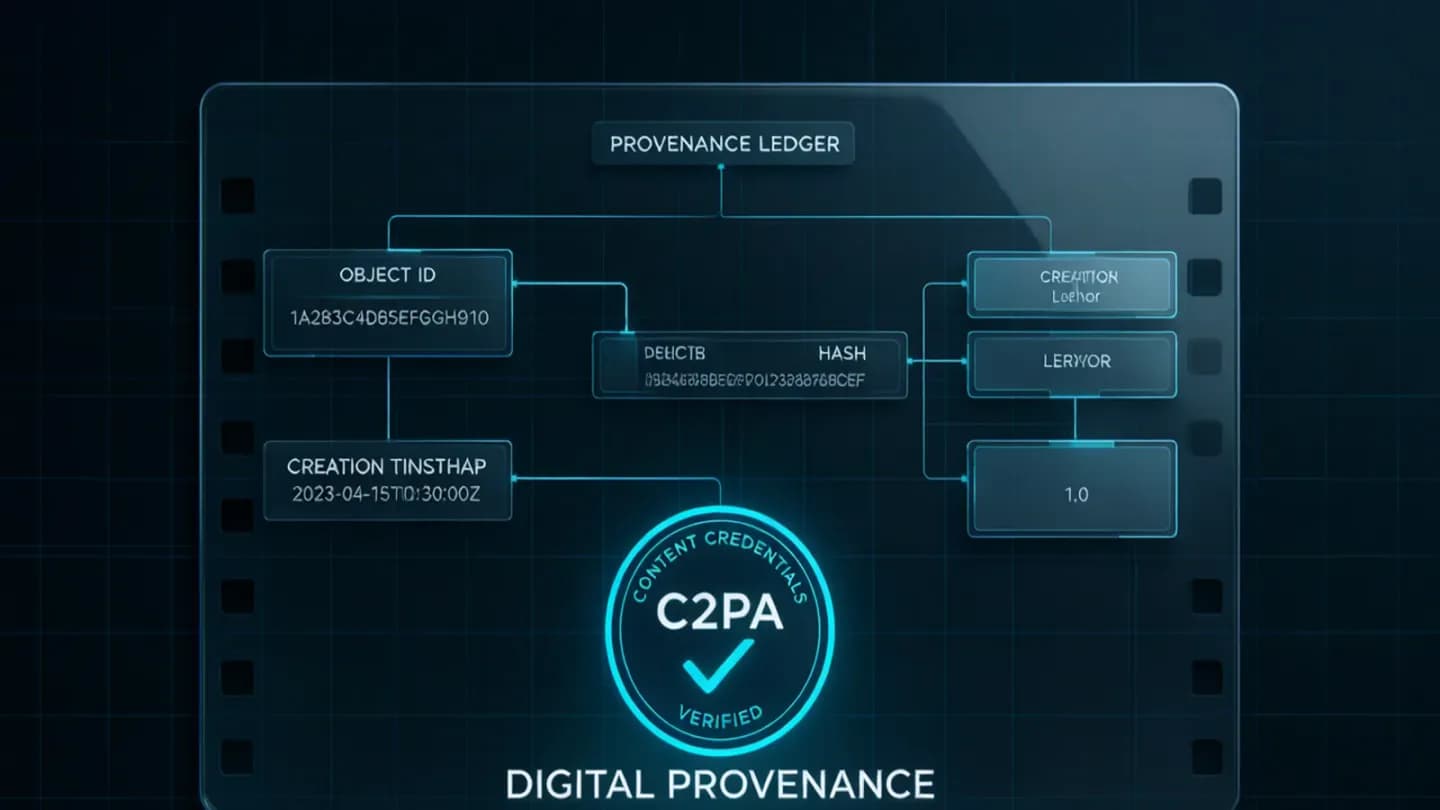
C2PA's Content Credentials provide an open standard for recording the origin and edit history of digital content, functioning like a nutrition label that any viewer or platform can inspect. Building that record at generation time means the asset and its paperwork ship as one object, which is the only workflow that survives both festival screening and paid-social distribution. The teams that treat provenance as metadata, not paperwork, are the ones ready for the next compliance audit.
The producer-led workflow that actually scales
None of this works without ownership. Raphael's seven people were not seven generalists; they were directors, a production entity, and a co-production partner with defined responsibilities, born out of a government creative-technology lab run by Korea's Ministry of Culture and KOCCA. The scalable unit is not 'the AI' but the producer who decides what the model makes, what a human reviews, and where the brand signs off. That role is the difference between a one-off viral short and a repeatable production system.
Raphael's origin story reinforces this. The directors met inside a government creative-technology lab, then stood up a production entity and a co-production with MBC C&I. A seven-person feature still needs clear ownership, which is the case for a {{link}} even at micro budget. The producer who owns the AI pipeline the way they once owned the shoot is the scarce, durable role in this model. Everything else, from generation to cleanup, is a capability the producer directs rather than a department they manage.
A seven-person feature still needs clear ownership, which is the case for a producer-led AI video workflow even at micro budget.
Put the framework into production
These related pages connect the article’s planning advice to a specific commercial scope.
References
- YouTube: disclosing altered or synthetic (AI-generated) contentYouTube Help (Google)
YouTube requires creators to disclose realistic content made with altered or synthetic media including generative AI, and may apply labels automatically when C2PA metadata or its own AI tools detect such content.
- C2PA Content Credentials: an open standard for content provenanceCoalition for Content Provenance and Authenticity (C2PA)
Content Credentials provide an open technical standard for recording the origin and edit history of digital content, functioning like a nutrition label that any viewer or platform can inspect.
- European Commission begins enforcing AI Act transparency rules from 2 August 2026European Commission, DG CONNECT (digital-strategy.ec.europa.eu)
From 2 August 2026 the EU AI Act requires deepfakes and AI-generated or manipulated content to be clearly labelled, with machine-readable markers so the material can be detected.