
From 'AI-Powered' to 'Made by Humans'
In early 2026 a strange inversion happened in brand advertising. For three years the badge 'AI-powered' was a selling point; now a growing set of brands treats a 'made by humans' claim as worth putting in the headline. Aerie, Equinox, and Almond Breeze ran campaigns that named 'AI slop' directly. iHeartMedia launched a 'guaranteed human' promise. Apple TV's Pluribus added 'This show was made by humans' to its end credits. The message is not subtle: we did not use the machine, and that is precisely why you should trust us.
This is not a niche protest. It is a positioning move with real budget behind it, and it follows a pattern the food industry already proved. 'Organic' did not mean every other product was poison; it meant a segment of buyers would pay more for something they perceived as authentic. 'Made by humans' is traveling the same path, and the brands committing early are trying to own a category that AI-first competitors cannot enter by definition.
For video teams the inversion is especially sharp because generative video is the most visible form of AI in advertising. A quiet 'we use AI' note on a blog post is easy to ignore; a synthetic actor in a brand film is impossible to miss. That visibility is exactly why video is where the human-made claim is both hardest to make and most valuable once an audience believes it. The frame a viewer sees is the trust boundary, whether the team planned it that way or not.

The Consumer Data Behind the Backlash
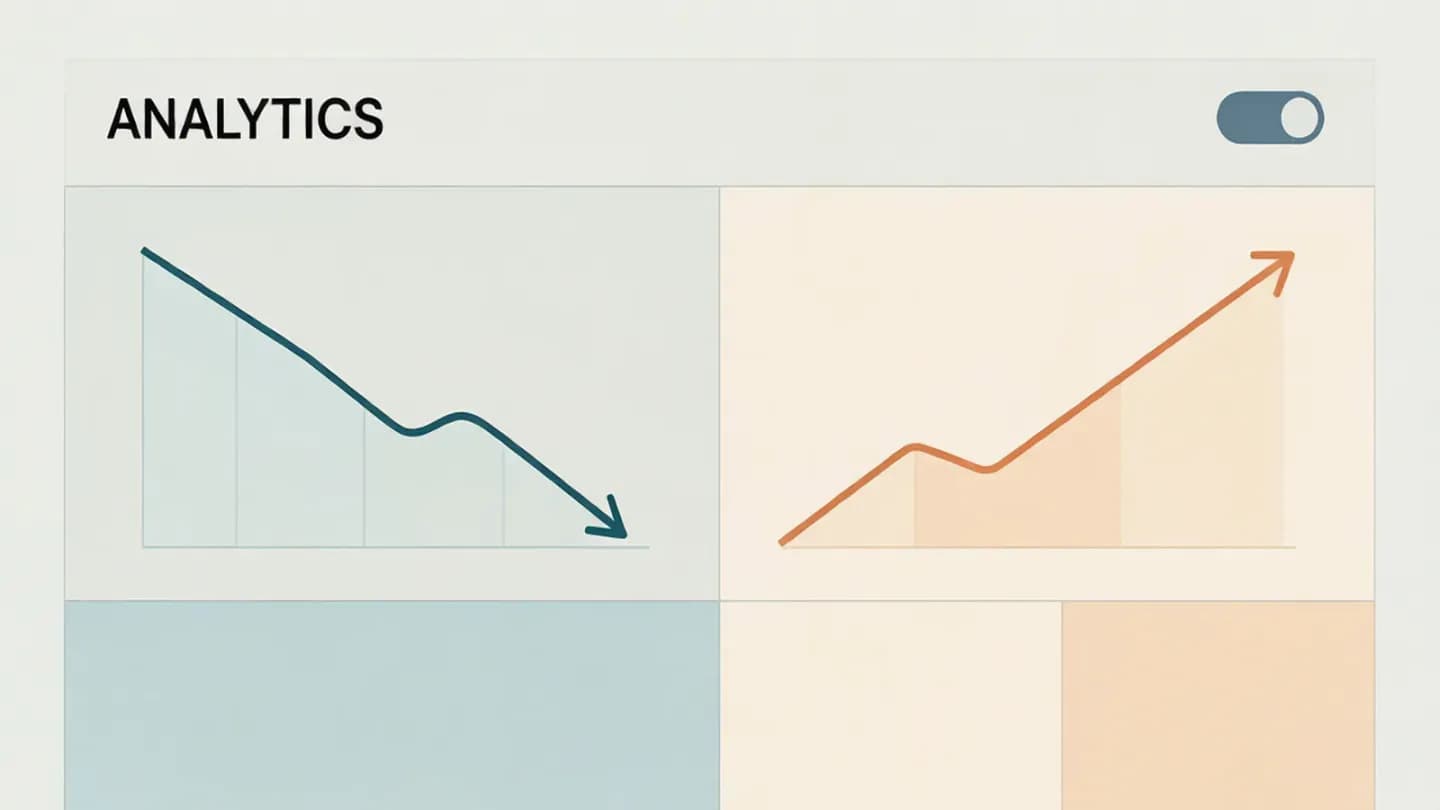
The sentiment shift is measurable, and it is moving faster than most marketing teams expected. State of Brand's 2026 research puts excitement about AI at just 19% of users, down from 50% two years earlier, while 54% of Americans now report AI fatigue. More than half of consumers doubt the authenticity of online content, and 52% cut their engagement the moment they suspect a piece was machine-generated. The strategic read is not that AI is unpopular; it is that AI in customer-facing creative has become a liability signal. Brands that substitute a synthetic asset for beloved human craft pay a measurable {{link}} that compounds with every exposure.
The same survey ties the backlash to a loss of voice. When every brand routes its writing through the same models, output flattens into a median that no one remembers. Rising reach paired with falling attention is the same {{link}} that is reshaping how teams plan brand video. The brands winning in 2026 are not the ones generating the most content; they are the ones whose content still sounds like a person with a point of view.
Brands that substitute a synthetic asset for beloved human craft pay a measurable AI video trust tax that compounds with every exposure.
Rising reach paired with falling attention is the same video engagement decline that is reshaping how teams plan brand video.
Why 'Human-Made' Is Becoming a Premium
MindStudio frames the mechanism as a 'human-made premium': the extra willingness to pay and trust that consumers assign to work they know a person made. The parallel to organic food is exact. 'Organic' never claimed every conventional product was dangerous; it carved out a tier where perceived authenticity commanded a higher price. Human-made content is doing the same in a feed saturated with smooth, frictionless, obviously algorithmic media. Rough edges and real voices become trust signals precisely because they are rare.
For commercial video teams this changes the brief. The goal is no longer 'produce at volume' but 'produce something that reads as crafted.' That does not mean abandoning generative tools; it means keeping them off the surfaces the audience can see. The premium is earned by the gap between what the machine can do backstage and what the human delivers on screen.
The risk for teams that misread this is producing 'human-made' as a style rather than a fact. Audiences can feel the difference between work that was actually crafted and work that was generated and then dressed up to look hand-made. The premium survives only as long as the claim is true, which is why provenance and process matter as much as the final frame. Treat the label as a report on method, not a coat of paint.
The Operational Trap: Perform or Commit
The danger is a half-commitment. A brand that runs an 'anti-AI' tagline for a quarter and then quietly reverts to generative tools for everything will be exposed, and the credibility damage is worse than never making the claim. Consumers read the gap between the promise and the output, and a broken authenticity claim is harder to recover from than an honest AI-assisted one. The positioning only holds if it is built into how the company actually operates.
The smart play is not to reject AI but to seat it correctly. AI runs the decisions: targeting, personalization, analysis, timing, optimization. Humans own the craft the customer sees: the script, the performance, the edit, the judgment. The audience never sees the machinery; they only see the result. That split is easier to state than to enforce, which is why most brands falter at the operational layer rather than the strategy layer.
A useful test is the disclosure principle: if you would be uncomfortable stating exactly where AI was used in a given asset, that asset probably belongs backstage rather than in the cast. The brands that hold this line treat the customer-facing surface as a trust boundary, not a production convenience. Everything past that boundary is human-owned by default, and the discipline is what keeps the positioning intact when a deadline arrives.
Proving the Claim: Provenance Over Assertion
A 'made by humans' claim is only as strong as your ability to substantiate it. As platforms begin requiring labels for synthetic content, the unlabeled asset becomes a positive signal, but asserting origin is not the same as proving it. Content Credentials, built on the C2PA standard, let a creator cryptographically bind the history of a file so a viewer can verify whether it was human-authored or machine-generated. In a market where authenticity is the differentiator, provenance is the receipt.
The practical implication for brand video is a documentation discipline. Every customer-facing asset should carry a verifiable trail: who made it, what was generated, what was edited by hand. Teams that treat provenance as a release gate, not an afterthought, turn a vague sentiment claim into a checkable fact. The brands that invest in this now will be the ones consumers believe later, when the rest of the market is still arguing about whether its 'human-made' label means anything.
Where AI Belongs in the Anti-AI Brand
None of this requires abandoning generative video. The useful frame is crew versus cast. AI belongs in the crew: storyboarding, variant testing, B-roll gaps, localization, cleanup. It does not belong in the cast: the face, the voice, the judgment the audience came for. The practical answer is a {{link}} where algorithms run targeting and analysis while people own every customer-facing frame. The line is not about capability; it is about where trust lives.
That line needs to be written down. A clear {{link}} decides which surfaces are machine-safe and which must stay unmistakably human, and it gives reviewers a default when a new format appears. Without that rule, the pressure to ship faster quietly pushes generative output onto customer-facing surfaces, and the positioning erodes one asset at a time. Governance is what keeps the commitment from decaying.
The practical answer is a human-core, AI-scaled creative model where algorithms run targeting and analysis while people own every customer-facing frame.
A clear AI video governance playbook decides which surfaces are machine-safe and which must stay unmistakably human, and it gives reviewers a default when a new format appears.
A Positioning Checklist for 2026
If you are considering an anti-AI or human-made position this year, treat it as an operating decision, not a campaign. First, audit every customer-facing surface and label it human, machine, or mixed. Second, decide commit or perform, and do not blur the two. Third, stand up a provenance trail so the claim is verifiable. Fourth, keep humans in the cast on the assets that carry the brand's voice.
Claiming human-made only works if a {{link}} keeps every brand element coherent across the work, because an inconsistent execution undercuts the authenticity story faster than any single generated clip. Measure the position the way you would measure a product line: track recall, trust, and conversion, not just impressions. The brands that own this segment will be the ones that made the claim real before the rest of the market noticed the shift.
Claiming human-made only works if a AI video brand consistency keeps every brand element coherent across the work, because an inconsistent execution undercuts the authenticity story faster than any single generated clip.
Put the framework into production
These related pages connect the article’s planning advice to a specific commercial scope.
References
- The Anti-AI Brand Is Becoming a Real Market PositionState of Brand
Only 19% of users in 2026 say they feel excited about AI, down from 50% two years prior; 54% of Americans report AI fatigue; 59.9% doubt the authenticity of online content; and human-written work pulls roughly 5.44x more organic traffic than AI-generated equivalents.
- C2PA - Verifying Media Content SourcesC2PA Coalition
Content Credentials provide an open standard that establishes the origin and edit history of digital content like a 'nutrition label', letting creators certify whether a file was human-authored or AI-generated.
- Disclosing use of altered or synthetic contentYouTube Help
YouTube requires creators to disclose realistic altered or synthetic content, including AI-generated or modified footage, which makes an unlabeled asset a legible signal of human-made origin.