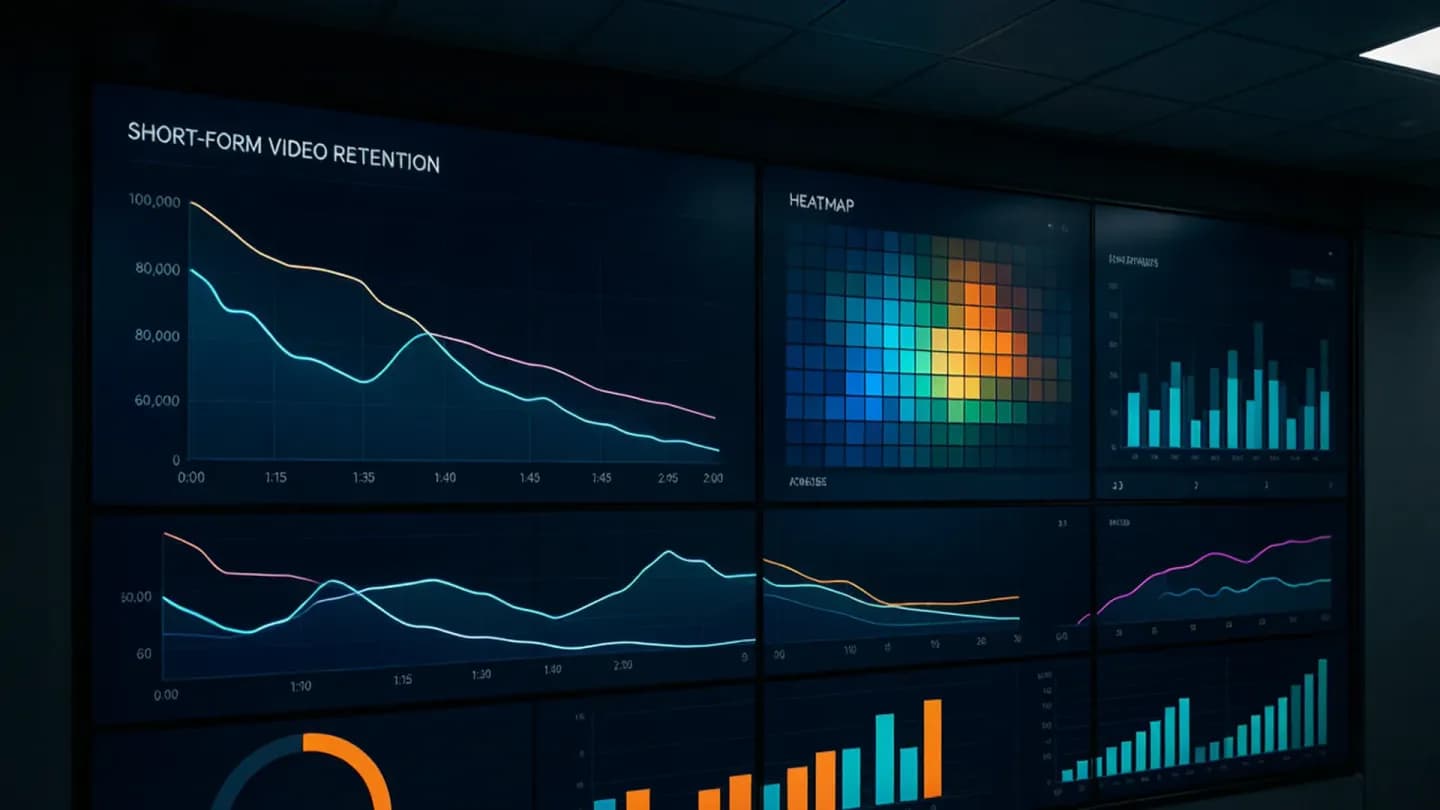
The 2026 Retention Paradox: More Views, Less Attention
In late July 2026 Metricool published a YouTube study built on 799,718 videos from 71,177 accounts, comparing February 2025 with February 2026. The headline was a paradox: long-form views rose 76% year over year while engagement fell 45%, and Shorts views climbed 127% even though viewers spent three times less time on each Short. The Shorts feed alone now drives 61% of all YouTube views, yet ad impressions, monetized playbacks, and estimated ad revenue all dropped more than 50%. Reach is up; the time anyone spends with any single video is down, which is exactly why short-form video retention benchmarks have moved from a reporting afterthought to a production input.
Metricool's 2026 YouTube study is one sharp expression of {{link}} that commercial teams have been watching build for more than a year. The pattern is not that video is dying. Reach and attention have decoupled, and the discovery engine now runs almost entirely on short-form. The same study found 83% of interactions happen within the first ten days of a video's life, which means the opening window does almost all of the work and the long tail does very little. A cut that does not earn the first few seconds simply never gets the rest of its run.
Metricool's 2026 YouTube study is one sharp expression of the broader watch-time decline that commercial teams have been watching build for more than a year.
Short-Form Video Retention Benchmarks by Platform
A separate RetentionRail study of 50,000 videos published across YouTube, TikTok, and Instagram between January and March 2026 puts hard numbers on the gap. Average retention for a TikTok video under 60 seconds was 72%, for a YouTube video five to ten minutes long it was 58%, and for an Instagram Reel it was 45%. Those are averages normalized for length, category, and creator size, so they describe platform behavior more than any one creator's skill. The 72% TikTok figure is flattered by the short format, but even adjusted for length it stays ahead of the other two feeds.
Retensis published complementary 2026 benchmarks broken out by length, and they confirm the same slope. On TikTok, average retention runs 50 to 60% at 15 to 30 seconds and 40 to 50% at 30 to 60 seconds; a sub-15-second TikTok jumps to 60 to 70%. YouTube Shorts sit at 40 to 50% for the 30 to 60 second band, and Instagram Reels land in the same 40 to 50% range once a clip passes 30 seconds. The takeaway for production is blunt: shorter retains better, and the distance between a 15-second TikTok and a 60-second Reel is the difference between a strong cut and a weak one that the algorithm quietly stops serving.
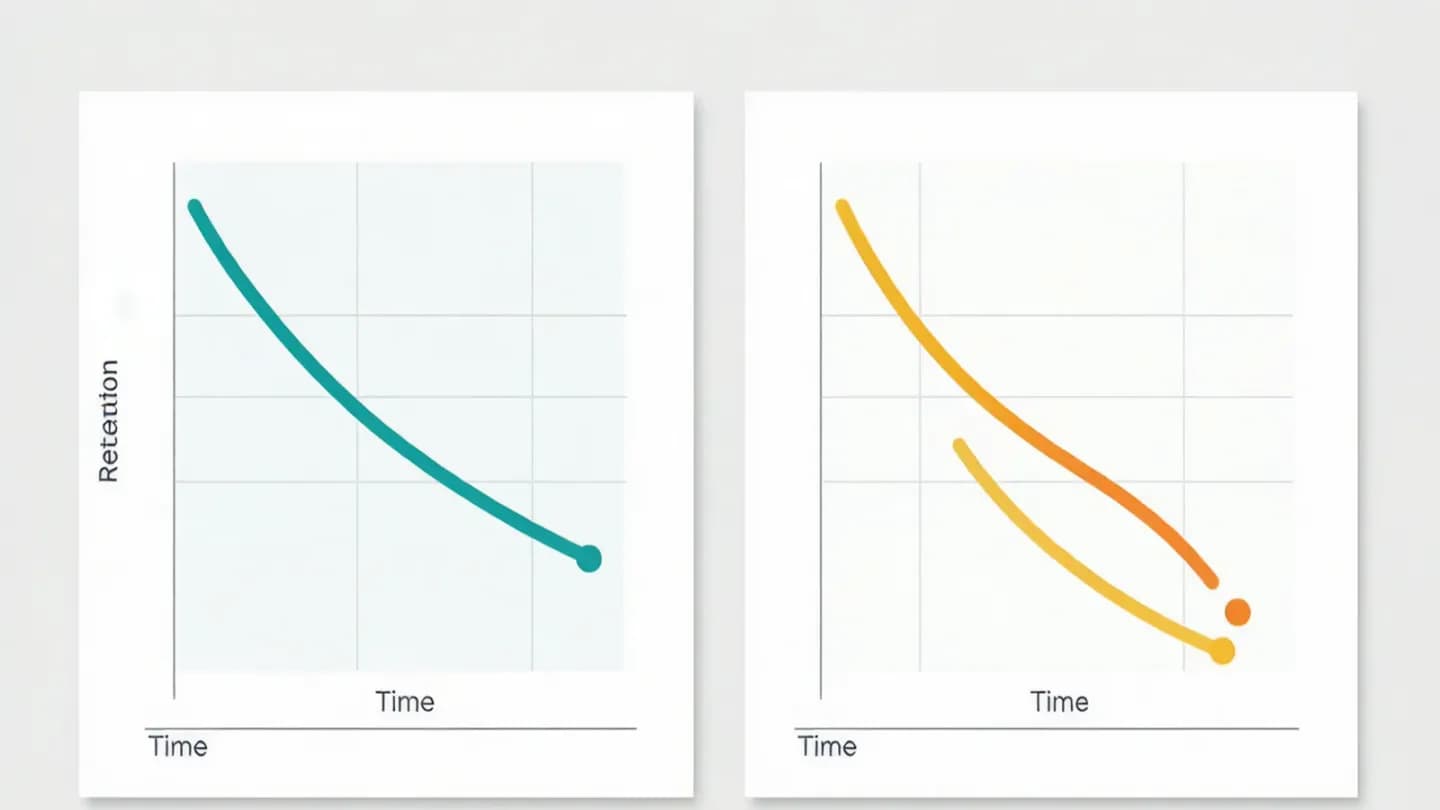
What the Numbers Dictate: Length by Platform
The retention curves point to one operating rule that overrides most creative instinct: keep short-form under 30 seconds wherever the format allows, and treat anything past 60 seconds as a long-form play with a different measurement model. A clip that earns 70% retention at 15 seconds on TikTok is doing the job; the same clip at 90 seconds is fighting gravity the whole way down. Plan the generation budget around the length ceiling, not around the idea, because the ceiling is where the retention math actually lives.
These length sweet spots also line up with {{link}}, which is why most short-form cuts are generated as standalone segments and stitched rather than prompted as one continuous take. Generation windows cap a single shot at roughly thirty seconds, so the retention-optimal length and the model's quality sweet spot happen to meet in the same place. Teams that generate one long clip and hope it holds are working against both the data and the engine, and they pay for it in completion rate rather than in render cost.
These length sweet spots also line up with how generation windows now cap a single shot at thirty seconds, which is why most short-form cuts are generated as standalone segments and stitched rather than prompted as one continuous take.
The Hook, the Payoff, and Where Each Platform Bleeds Viewers
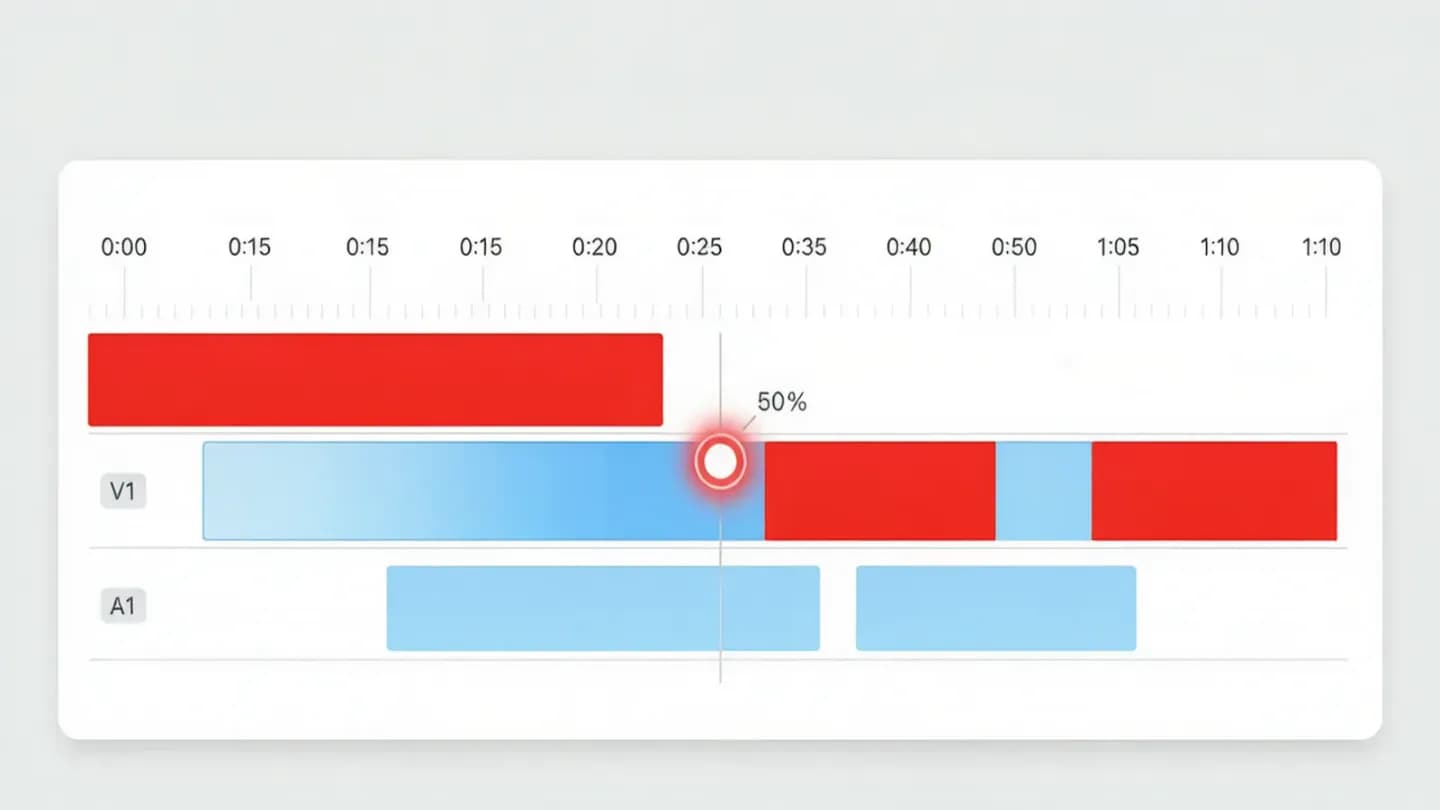
Retention is not only about length; it is about where the curve drops. On TikTok the two danger zones are the first two seconds, before the hook lands, and the final 10% of the video, where post-call-to-action drift kills the finish. On YouTube the sharpest drop-offs are the first thirty seconds and the 40 to 60% band, which is exactly where sponsorship reads and B-roll transitions tend to cluster; creators who drop a real payoff at the 50% mark consistently flatten that mid-video fall. Instagram Reels score lowest on raw retention but reward saves and shares, so a save-worthy moment outperforms a perfectly completed view.
The discipline that short-form demands is the inverse of {{link}}, where a cut is judged on encode spec, loudness, and supers legibility long before a viewer ever scrolls past it. On the big screen the technical gate is the risk; in the feed the attention gate is the risk. The same team shipping both should keep two separate scorecards, because optimizing a short for television delivery tells you nothing about whether it survives the first two seconds of a scroll, and the two failure modes never show up on the same dashboard.
The discipline that short-form demands is the inverse of the big-screen delivery gate that long-form and CTV spots have to clear, where a cut is judged on encode spec, loudness, and supers legibility long before a viewer ever scrolls past it.
The 5-Second Attention Window Changes the Brief
Adobe's 2026 AI and Digital Trends report, drawn from 3,000 executives and 4,000 customers surveyed by Oxford Economics, found that 69% of customers say a promotion has at most five seconds to capture their attention. The same research shows 78% of CMOs cite data integration and quality as the top barrier to scaling AI, which is a reminder that the attention problem and the data problem are the same workflow problem: you cannot tune a hook you cannot measure. Human-in-the-loop oversight was the single biggest trust factor customers named, ahead of any model capability, so the brief itself should specify who reviews the opening frame.
For an AI video team that number rewrites the brief. The opening generation is the highest-leverage asset in the whole cut, so it deserves the most variants, not the fewest. Generate three hook frames for every one hero body, and let the retention data decide which opening ships. A beautiful middle section is worthless if the first two seconds never earn the view, and the 2026 benchmarks make that cost visible instead of theoretical. The five-second window is not a guideline; it is the only window that counts before the algorithm decides whether anyone else sees the work.
From Benchmark to Production Spec
The practical output of all this is a one-page spec, not a philosophy. Set a length ceiling per platform: roughly 15 to 30 seconds on TikTok, 7 to 30 on Reels, 30 to 60 on YouTube Shorts, with anything longer treated as long-form. Mandate a hook variation test on every cut, place the payoff at the 50% mark for long-form, and judge Reels on saves and shares rather than completion. Write the spec once and let it govern the next dozen videos instead of re-litigating length in every review, because consistency is what the retention curve rewards.
The only way to prove a refresh or a new cut actually worked is to track {{link}} instead of the vanity view counts that the 2026 data shows are decoupling from attention. Watch frequency and completion by platform, hold the winning variant in rotation, and kill the fatigued asset the moment its curve bends. Retention is a measurable production input now, which means it belongs in the brief, the render queue, and the post-flight report alike, and the teams that treat it that way will out-retain teams that still optimize for raw reach.
The only way to prove a refresh or a new cut actually worked is to track the video metrics that actually predict revenue instead of the vanity view counts that the 2026 data shows are decoupling from attention.

Put the framework into production
These related pages connect the article’s planning advice to a specific commercial scope.
References
- Metricool 2026 YouTube Study: More Views, Less Watch TimeMetricool
Analysis of 799,718 videos from 71,177 accounts (Feb 2025 vs Feb 2026): long-form views up 76% YoY while engagement fell 45%; Shorts views up 127% YoY but viewers spent 3x less time per Short; Shorts feed generated 61% of YouTube views; monetization metrics fell more than 50%.
- TikTok vs YouTube: Which Platform Retains Viewers Better in 2026RetentionRail
Study of 50,000 videos across YouTube, TikTok, and Instagram (Jan-Mar 2026): average retention TikTok under 60s 72%, YouTube 5-10 min 58%, Instagram Reels 45%; TikTok drop-off concentrated in first 2 seconds and final 10%.
- Audience Retention Benchmarks 2026 by PlatformRetensis
2026 retention benchmarks by length: TikTok 15-30s 50-60% and 30-60s 40-50%; YouTube Shorts 30-60s 40-50%; Instagram Reels 30-60s 40-50%; sub-15s TikTok reaches 60-70%.