
Adoption is solved. Value is not.
Agentic AI data readiness is the unglamorous bottleneck of 2026: nearly every marketing team is adopting autonomous AI workflows, yet most cannot prove they create value. The constraint is not model quality — it is the data foundation those agents run on.
The adoption numbers are no longer in doubt. The 2026 IAB Digital Video Ad Spend and Strategy Report projects U.S. digital video ad spend to surpass $80 billion this year, and finds that nearly all buyers see a role for agentic AI, even as the industry lacks consensus on governance, explainability, and human oversight. A separate benchmark from Epsilon puts AI usage at 100 percent of surveyed marketers — but only 9 percent use it primarily for revenue generation, while 71 percent point it at productivity and efficiency. The scale of adoption shows up clearly in the latest {{link}}, which tracks usage, spend, and AI benchmarks across commercial video.
That gap between enthusiasm and outcome is the same pattern behind the {{link}}: adoption keeps climbing while reported returns fall. CMOs say they want measurable outcomes, yet confidence is beginning to outpace the foundations beneath it. The next section explains where the loop actually breaks.
The scale of adoption shows up clearly in the latest video marketing statistics, which tracks usage, spend, and AI benchmarks across commercial video.
That gap between enthusiasm and outcome is the same pattern behind the AI video ROI reversal: adoption keeps climbing while reported returns fall.
Where agentic AI actually breaks: the data layer
An agentic loop is only as smart as the signal it can read. The promised loop — brief, generate, media-buy, measure, re-brief — requires the agent to learn from its own results. In commercial video that results data is fractured across platform silos: performance lives inside Meta, TikTok, YouTube, and connected TV, creative provenance is rarely documented, and audience identity is split across cookies, email, and device graphs. The agent optimizes against a partial, contradictory picture.
This is why creative is no longer the constraint. {{link}} now match human-made work on click-through, so the quality ceiling is not where campaigns stall. What stalls them is the inability to feed a closed, trustworthy measurement loop back into the system. You can generate a hundred variants a day; if you cannot tell which one moved pipeline, the agent has nothing to learn from.
The failure mode is quiet. Nobody declares the data layer broken — the dashboards just get noisier, the attribution fuzzier, and the agent's recommendations less reliable month over month. By the time a team notices, it has already spent a quarter optimizing toward a signal that was never whole.
Consider a typical autonomous media test. The agent launches fifty creative variants, shifts budget toward the apparent winner, and reports a lift. But that lift is measured inside one platform's last-click window, while the brand's own analytics attributes the same conversion to a different touch. The agent learns from a number no human would trust if they read the footnote.
This is why creative is no longer the constraint. AI video creative parity now match human-made work on click-through, so the quality ceiling is not where campaigns stall.
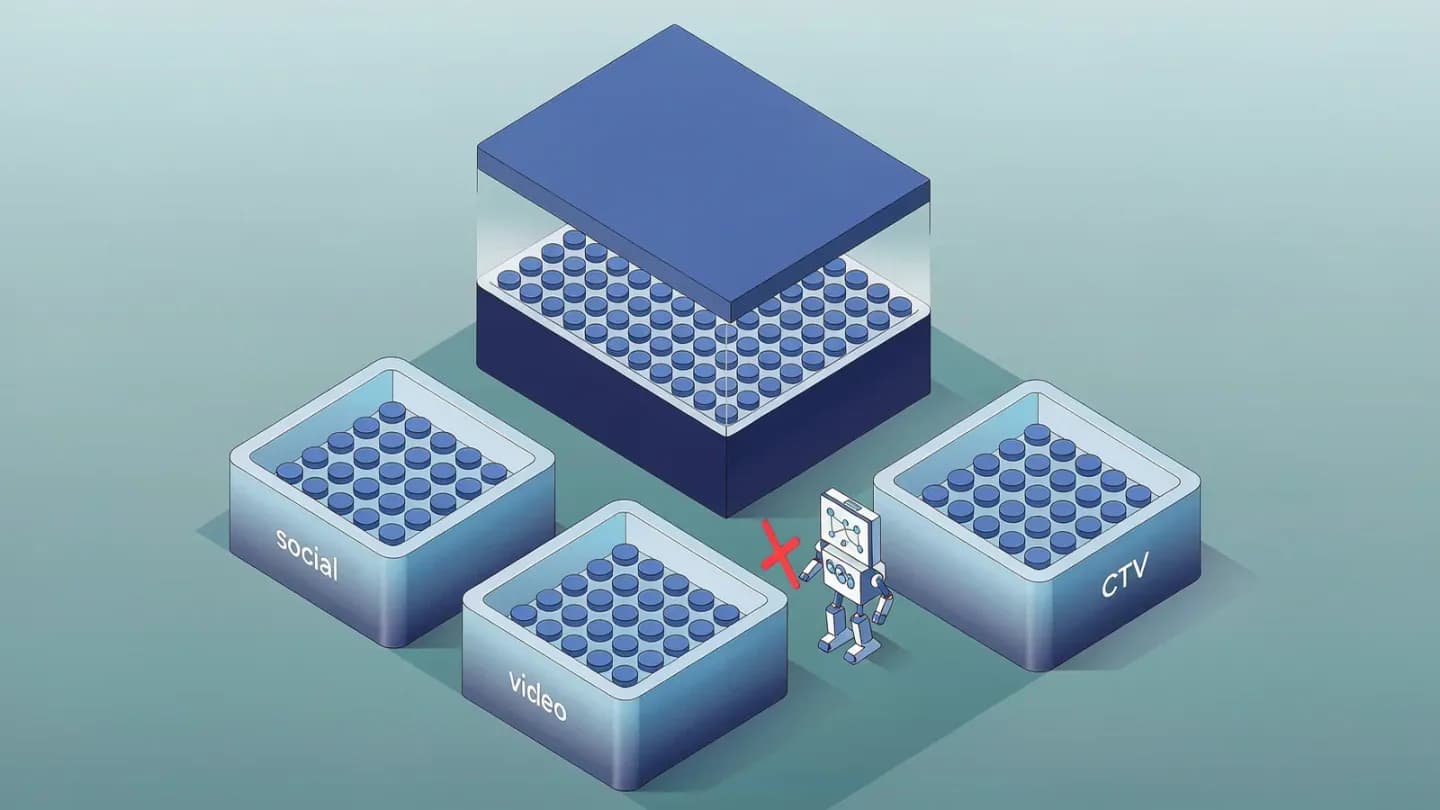
Data quality is the foundation CMOs keep naming
The Epsilon 2026 benchmark makes the problem explicit: 45 percent of marketers cite data quality — incomplete, inconsistent, or unreliable data feeding their models — as their top technical challenge. The report frames it plainly as garbage in, garbage out. A model can only be as good as the data behind it, and a mature AI program built on shaky data is not actually mature.
There is a maturity paradox underneath the headline. Half of marketers rate their organization as extremely mature in AI use, yet data quality is simultaneously their most-cited challenge. Confidence has outpaced the foundation. For video teams this shows up as agents trained on thin, unlabeled creative-performance history: a handful of past cuts, no consistent experiment IDs, and no record of which thumbnail, hook, or audience each result belonged to.
Fixing data quality is not glamorous and it does not ship a reel, which is exactly why it gets deferred. But it is the precondition for every agentic claim that follows. An agent asked to optimize spend on top of contradictory source data will confidently optimize the wrong thing.
The cost surfaces as wasted spend rather than a visible failure. An agent optimizing toward a noisy signal quietly drains budget into the variants a broken measurement happens to favor, and the team blames the creative when the fault sits upstream. Data quality is far cheaper to fix before the agent goes live than after it has optimized the wrong objective for a quarter.
Provenance and identity: the missing links for video
Generative video multiplies the provenance problem. Every AI-generated clip should carry where it came from, which model produced it, and what rights were cleared — the kind of metadata that Content Credentials and the C2PA standard exist to capture. At production scale, a team that cannot answer those questions cannot safely let an agent remix, repurpose, or redeploy its own library.
Identity resolution is the second missing link. An agentic media loop needs to recognize the same viewer across platforms to close the measurement loop and avoid paying to reach the same person twice. Without a unified identity layer, cross-platform agentic buying flies blind on attribution and frequency, and the proof-of-performance advertisers keep asking for stays out of reach.
These two capabilities — provenance and identity — are rarely owned by the creative team that is being told to adopt agentic tools. They sit with data engineering and legal. That organizational gap is why readiness is a cross-functional project, not a prompt-engineering one.
For commercial video the stakes exceed static creative because clips are reusable and remixable. A single hero film can spawn dozens of cut-downs, localized versions, and platform edits, each inheriting or losing its provenance. Without provenance captured at the source, a year of agentic remixing produces a library no one can fully license or audit.

Agentic AI data readiness: the checklist for video teams
Treat readiness as a five-item gate before any agent is switched on. First, consolidate performance data into one schema so the agent reads a single source of truth instead of platform exports. Second, tag every asset with provenance and rights metadata at creation, not after a takedown request. Third, stand up a unified identity layer so cross-platform measurement actually closes.
Fourth, instrument generative creative with consistent experiment IDs so each variant is attributable. Fifth, define the value metric — pipeline, assisted conversion, or verified reach — before deployment, so the agent optimizes something the business agrees matters. Teams that can prove spend works are already building the measurement spine described in {{link}}, and they are the ones agentic loops can actually serve.
None of these are new ideas. What is new is the cost of skipping them: an autonomous system amplifies whatever foundation you give it. A clean data layer becomes compound interest; a fragmented one becomes a self-reinforcing blind spot.
On sequencing, do not build all five at once. Most teams can consolidate performance data and instrument creative within a quarter, then layer provenance and identity as the agent's scope grows. The common mistake is granting autonomy before the first two exist, which is precisely when the agent starts optimizing a signal it cannot see.
Teams that can prove spend works are already building the measurement spine described in AI video budget proof, and they are the ones agentic loops can actually serve.
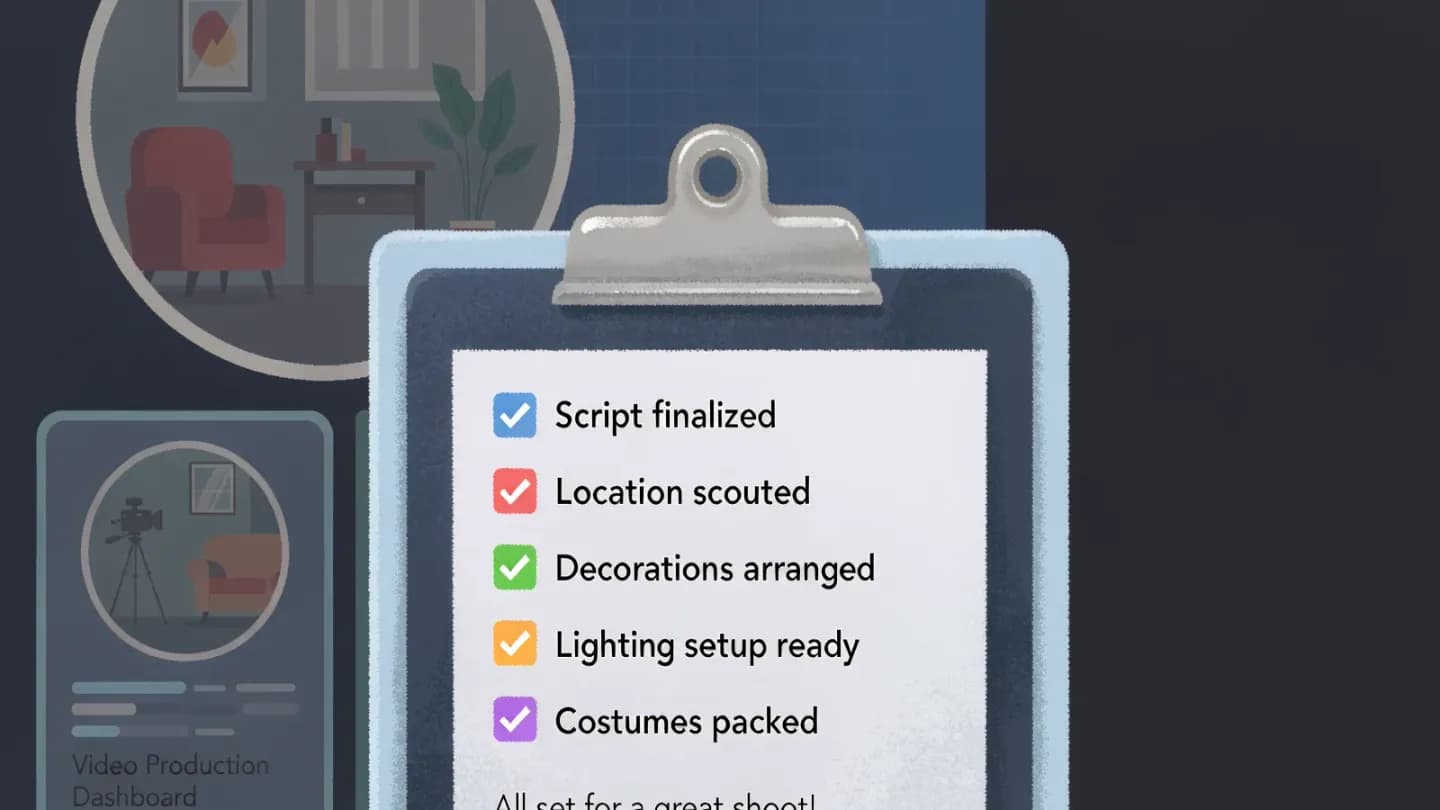
A readiness scorecard before you switch agents on
Score yourself honestly against the gate above. Most commercial video teams in 2026 sit at stage one: enthusiastic about agents, silent on provenance, and unsure which platform ID is the same person. That is a normal place to be, and it is also why so many agentic pilots quietly stall after the demo.
Agentic AI rewards prepared data and punishes fragmented data. The teams that capture value this year will be the ones that treated data readiness as the project rather than the afterthought — consolidating sources, tagging assets, and agreeing on a value metric before they handed the loop any autonomy. The model was never the bottleneck. The data layer was.
Put the framework into production
These related pages connect the article’s planning advice to a specific commercial scope.
References
- 2026 IAB Digital Video Ad Spend & Strategy ReportIAB
U.S. digital video ad spend will surpass $80B in 2026; nearly all buyers see a role for agentic AI but the industry lacks consensus on governance, explainability, and human oversight, and many advertisers want more proof of performance and easier workflow integration.
- 2026 benchmark study: Marketing's AI inflection pointEpsilon
100% of surveyed marketers use AI; 71% use it primarily for productivity and efficiency while only 9% use it for revenue generation; 45% cite data quality as their top technical challenge.
- CMO Barometer 2026Serviceplan Group / House of Communication
The study surveyed 805 CMOs across 15 countries and found AI remains a top priority, with CMOs prioritizing efficiency, technological advancement, and measurable outcomes; creativity and content expertise have slightly declined in importance.