The AI video ROI paradox: more adoption, lower reported returns
AI video ROI is declining in 2026 even as adoption climbs: Wyzowl finds 82% of video marketers report a good return, down from 93% a year earlier, while AI tool use jumped from 51% to 63%. The two lines moving in opposite directions are the headline story of the year for commercial video teams.
This is not a small wobble. A double-digit drop in reported ROI across an annual survey that previously sat at an all-time high signals a structural shift, not a seasonal dip. The same marketers who say video works are quietly reporting that it works less well than it did, even as they make more of it.
The obvious explanation — that generative video is somehow worse — does not hold up. Video itself still delivers; what changed is the denominator. When production gets cheap enough that every team can ship, the average quality of what reaches the feed falls, and the weaker half drags the reported number down. That trust gap is the same force behind {{link}} as brands rethink how much generative video they actually ship.
The quality signal shows up elsewhere in the same survey. Wyzowl reports 89% of consumers say video quality affects their trust in a brand, a figure that has slipped from 91% a year earlier. As more low-effort AI clips reach audiences, that trust premium erodes exactly when brands need it, which helps explain why reported ROI and perceived quality are sliding together.
For practitioners the takeaway is uncomfortable but actionable: the ROI number is a symptom. The cause lives in how the new capacity is being spent, which is exactly where the 2026 data points next.
That trust gap is the same force behind why CMOs are pulling back on AI video creative as brands rethink how much generative video they actually ship.
Why adoption and ROI moved in opposite directions
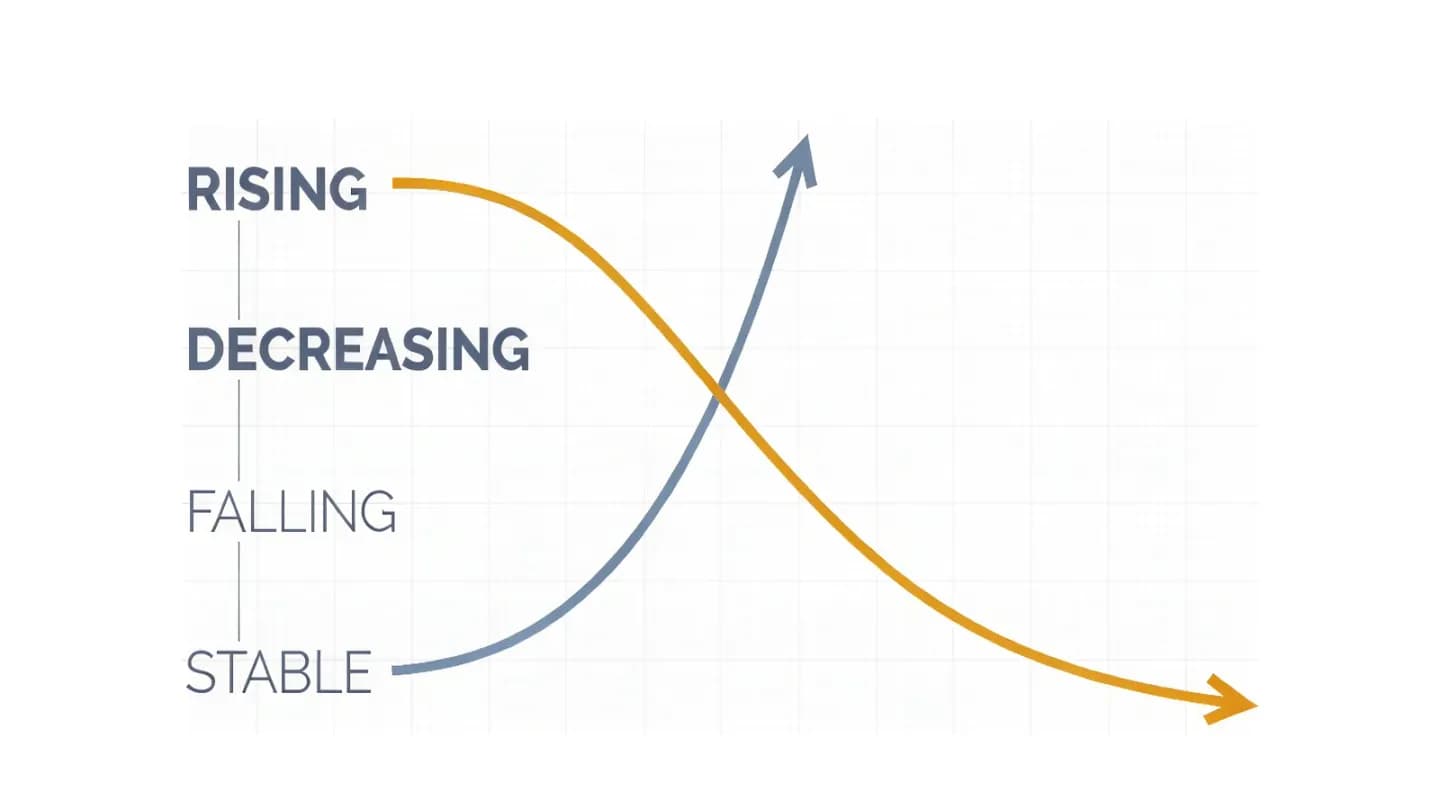
The mechanism is what operators call the volume trap. AI generation collapsed the marginal cost of a clip to near zero, so teams produced far more variants, cuts, and markets than they ever could with a camera crew. Cheaper per asset was supposed to free budget. Instead it bought volume.
Wyzowl's 2026 data shows 92% of marketers plan to spend the same or more on video this year, and reporting on cost splits three ways with 38% saying costs actually rose. NeverFrame's analysis puts it plainly: cheaper per asset has mostly meant more assets, not smaller budgets. The savings were reinvested into quantity, and quantity without a quality gate dilutes return.
The budget math shifted rather than shrank. Traditional production spent 30-45% on crew and equipment and 10-20% on talent; AI-first work pushes 20-35% into generation and compute and 10-15% into quality control and review that simply did not exist before. The money moved, but the output multiplied faster than the oversight did.
The revision economy makes the trap worse. Traditional changes meant a reshoot and a new budget line; AI changes mean a new prompt and near-zero marginal cost, so teams iterate without cost pressure and ship the result of the hundredth attempt rather than the controlled tenth. Without a gate, the cheaper loop produces more drafts, not better ones.
The remedy is to stop counting assets and start tracking {{link}} — total compute divided by clips you actually ship. A team that generates fifty variants and uses three has a different economics lesson than one that generates five and uses four, even if both 'made video cheaper.' Yield, not volume, is the metric that protects AI video ROI.
The remedy is to stop counting assets and start tracking cost per usable clip — total compute divided by clips you actually ship.

Budgets kept flooding in anyway
None of this slowed the money. The IAB's 2026 Digital Video Ad Spend & Strategy Report projects US digital video ad spend past $80 billion this year, up 11% year over year and nearly 20% faster than the total ad market. Social video is outpacing CTV for the first time, and digital video now takes more than 60% of TV and video spend.
Buyers also reordered their priorities. Targeting and audience reach overtook content quality as a top criterion for video investment, a direct response to signal loss and non-human traffic eroding confidence in raw reach. And agentic AI moved from experiment to operations: two in three buyers are live, testing, or planning agentic AI for digital video campaigns in 2026.
Category mix underlines the point. IAB flags CPG as the largest single source of digital video ad dollars at $16.9 billion, up 13% year over year, with retail second at $9.4 billion. The brands pouring the most into video are exactly the ones running the highest-volume, most templated creative programs, so their yield discipline matters most for the aggregate return.
That combination — more spend, more AI, and a buyer base that ranks targeting above creative — is precisely why the volume trap persists. When the market rewards pouring budget into video and agents handle the generation, the constraint is no longer production. It is judgment about what is worth making, which is the one input AI does not supply.
The fix: a yield gate, not a volume spigot
Escaping the trap does not mean making less video. It means installing a gate between generation and publication. The teams that kept ROI healthy in 2026 treated creative testing as a manufacturing process with a defined winner bar, not a creative free-for-all.
The numbers are blunt. Paid-social benchmarks put the scalable winner rate at roughly 4-8%, and only a small share of accounts test enough volume to find those winners. The discipline that separates teams is treating testing as a volume game, because the {{link}} means most variants never scale, so you need enough attempts and a fast kill rule to surface the few that do.
A practical gate has four parts: decide the variable before you generate, produce enough variants to reach a conclusion, retire losers on a fixed threshold rather than opinion, and feed the loser list straight into the next brief. The last step is the compounding mechanic — every week's verdict changes the next round of concepts, so the library gets smarter instead of larger.
The gate also resets the refresh clock. When a winner fatigues, the loser list from the last cycle already contains the next concept to test, so teams replace a declining cut in days rather than brainstorming from zero. That cadence is what keeps AI video ROI from decaying as the feed's tolerance for repetitive creative tightens.
Crucially, the gate protects budget rather than consuming it. Killing a weak variant at $50 of spend beats discovering it after a $5,000 production cycle, and it keeps the AI video ROI math honest by counting only what actually ran.
The discipline that separates teams is treating testing as a volume game, because the 5% creative winner rate means most variants never scale, so you need enough attempts and a fast kill rule to surface the few that do.

Measure what the money actually buys
The final lever is measurement. Reported ROI falls when teams count views and engagement as proof, because those are easy to inflate and weak proxies for revenue. Wyzowl's own respondents lean on views (67%) and engagement (63%) to quantify return, while far fewer tie it to leads, sales, or retention — the numbers that survive a CFO conversation.
In 2026 the winning posture is {{link}}, because signal loss and non-human traffic make raw reach a misleading scoreboard. Verification, provenance, and independent attribution decide which AI video budgets survive, not the volume of clips shipped. A view that came from a bot is a liability, not a result.
Attribution discipline matters as much as the metric choice. A clip credited with a view it did not earn, or a conversion claimed by the last touch when an earlier video did the work, corrupts the entire scoreboard. Tagging generated assets end to end and using independent attribution closes that gap and turns the measurement gate from a report into a control.
For commercial teams this means closing the loop from asset to outcome: tag every generated clip, attribute it to a real conversion event, and retire the metrics that cannot be defended. The brands holding ROI steady through the adoption surge are the ones that treated measurement as the gate's audit trail, not an afterthought report pulled at quarter end.
In 2026 the winning posture is verification over volume, because signal loss and non-human traffic make raw reach a misleading scoreboard.
Put the framework into production
These related pages connect the article’s planning advice to a specific commercial scope.
References
- Video Marketing Statistics 2026Wyzowl
82% of video marketers report a good ROI in 2026, down from 93% the prior year; 63% have used AI video tools to create or edit video, up from 51%; 92% plan to spend the same or more on video in 2026.
- 2026 IAB Digital Video Ad Spend & Strategy Report: Part OneIAB
US digital video ad spend surpasses $80B in 2026, up 11% YoY and nearly 20% faster than the total ad market; social video outpaces CTV for the first time; targeting overtook content quality as the top video buy criterion; nearly all buyers see a role for agentic AI, with two in three live, testing, or planning it.
- AI vs Traditional Video Production 2026NeverFrame
Cheaper per-asset AI video has meant more assets rather than smaller budgets; AI production costs 50-80% less than traditional for equivalent output; Wyzowl's 2026 data shows 92% of marketers plan to spend the same or more on video in 2026.