
Adoption is universal, confidence is slipping
The 2026 AI creative quality gap is no longer a forecast — it is sitting in the survey data. Censuswide published its 2026 Voice of the US CMO report on August 24, 2026, and the headline is not adoption but doubt: 99 percent of marketing leaders now use AI in some form, and 91 percent use generative AI specifically, yet the share who say generative AI cleared their quality bar fell across every major channel.
The decline is broad and year over year. Use of AI for advertising and campaign creative generation dropped from 62 percent in 2025 to 56 percent in 2026. Video content generation fell from 55 to 48 percent. Email marketing automation slid from 55 to 47 percent. Even the share of CMOs who said AI exceeded their expectations dropped from 63 to 54 percent. Beneath near universal adoption, confidence in the output is quietly eroding.
The sample behind the numbers is large enough to trust the direction. Censuswide surveyed 500 US CMOs aged 25 and older between March 3 and 10, 2026, alongside 1,000 US consumers aged 16 and older. The fall in 'exceeded expectations' from 63 to 54 percent is the clearest signal: teams are not abandoning AI, they are recalibrating what good looks like after the first wave of experimentation wore off.
The volume-quality split the data keeps showing
A second 2026 study makes the same point from the other side. WARC, in partnership with TikTok, released The New Creative Advantage on July 14, 2026, drawing on 400 marketers across the UK, US, Australia, and Brazil. Eighty-eight percent reported higher creative volume since adopting generative AI. Only 45 percent reported a significant improvement in quality. The {{link}} shows most AI output never becomes shippable, which is why volume numbers overstate real creative capacity.
The mismatch shows up in self-perception too. In the same WARC study, 90 percent of marketers agreed generative AI is now a key creative tool, 72 percent used it frequently in production, and 87 percent believed their organization used it effectively. An independent MiQ survey from late 2025 told a different story, with only 45 percent of marketers feeling confident about AI's impact. When 88 percent produce more but barely half see better work, the constraint is not the generator — it is what feeds it.
The gap is not proof that AI cannot make good work. System1 testing cited in the WARC study found AI-generated ads scoring above the global advertising average, and a 2026 Columbia Business School analysis found AI-generated display ads performed competitively in market. A Taboola study across roughly 600 million daily active users found AI creatives held click-through rates without hurting conversions. The difference is whether the asset was well briefed and reviewed, not whether a model produced it.
The creative yield gap shows most AI output never becomes shippable, which is why volume numbers overstate real creative capacity.

Why the gap opened: intelligence, not technology
WARC's own framing is that the gap opening in AI-assisted creativity is an intelligence gap, not a technology gap. Andy Yang, TikTok's Global Head of Creative and Brand Ads, put it directly: brands are briefing powerful tools with static demographics and legacy assumptions. The numbers back him up. Fifty-nine percent of marketers agree traditional demographic segmentation no longer works, yet 67 percent still rely on demographics to brief AI, and only 17 percent always bring in community or audience insight beyond demographics.
The input problem shows up as output problems. When agency brand-safety audits reviewed AI-generated assets in 2026, 22 to 31 percent required human revision or rejection before meeting brand standards — an improvement from roughly 45 percent in early 2025, but still operationally significant. Gartner's Q2 2026 CMO Survey found 58 percent of brands reporting creative differentiation concerns with AI assets. Enterprise advertisers now test an average of 340 AI creative variants per campaign, up from 47 in 2024, and several brands described a creeping creative convergence as models trained on overlapping data drift toward the same look.
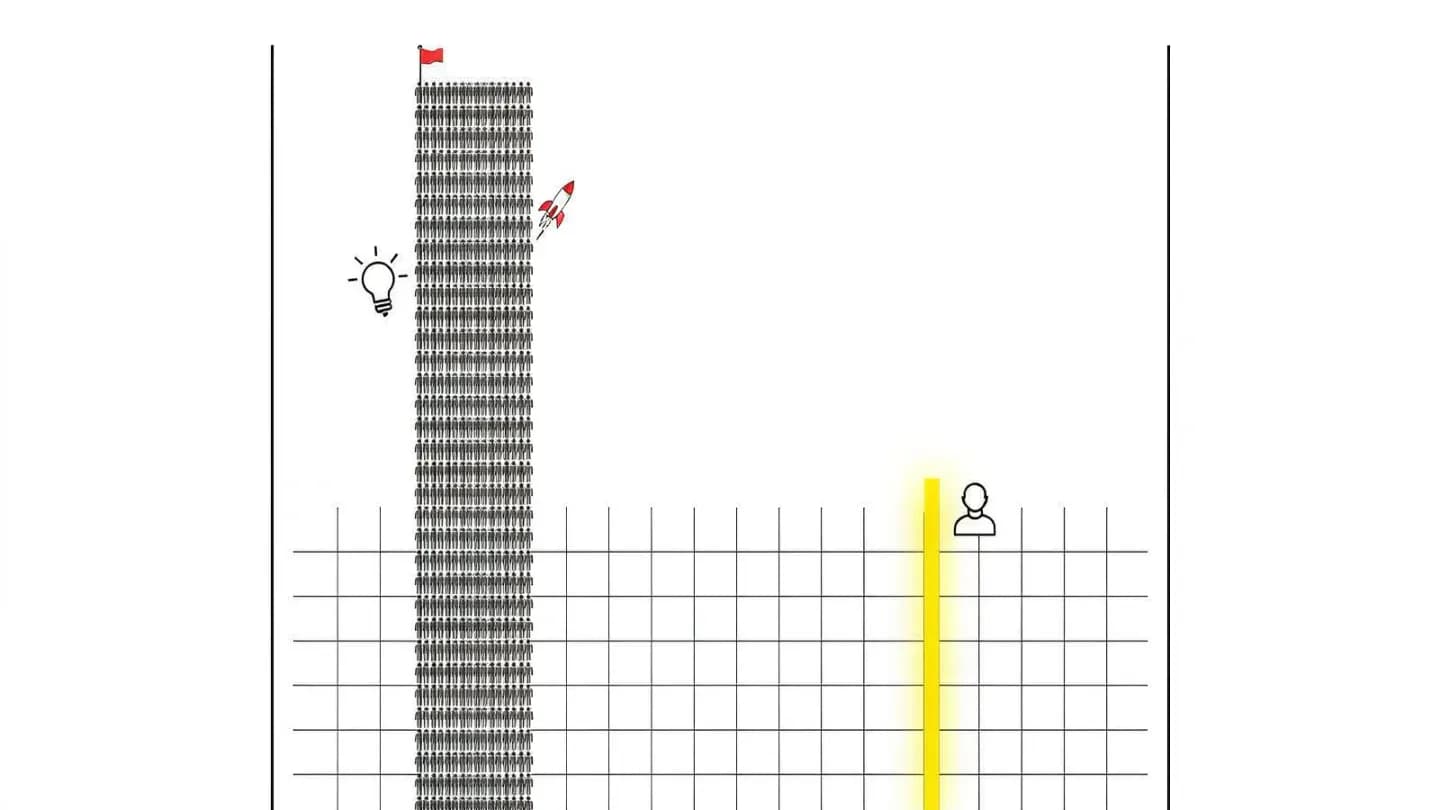
Creative convergence is the quiet risk underneath the volume. When several brands optimize toward the same engagement signals on the same platforms using overlapping foundation models, their outputs drift toward a shared visual and verbal default. The 340-variant average means more shots at the target, but also more chances to land on the same tired trope. Differentiation, not volume, is what the next review step has to protect, and most teams are not staffed to catch it at scale.
The AI creative quality gap meets consumer trust
The internal numbers matter less than the external ones. Censuswide found 59 percent of CMOs use generative AI for social content, but only 34 percent of consumers are comfortable with brands doing so — a 25 point gap between what marketers ship and what audiences accept. A {{link}} keeps the brand recognizable without faking footage real customers can spot, which is one reason some teams are moving away from synthetic realism entirely.
Consumer skepticism is measurable and rising. Gartner found 49 percent of US consumers believe generative AI has made content quality worse, climbing to 57 percent among Gen Z and millennials. Publisher research cited in the WARC study found suspected AI content cut reader trust by 50 percent and degraded brand ad performance by 14 percent. The audience experience is not 'AI assisted' — it is an ad, a post, or an email, and they judge it on whether it feels authentic, not on whether it saved the team time.
The trust gap also splits by generation in ways that should shape briefs. Censuswide found Gen Z, 58 percent, and Millennials, 48 percent, discover brands primarily through social media, while Gen X, 44 percent, and Baby Boomers, 43 percent, still lean on word of mouth. Younger audiences live where AI creative is densest, so they are also the most practiced at spotting and penalizing the synthetic. The comfort gap is not uniform, and treating it as one number hides the segments where it is widest.
A metaphor over fabrication strategy keeps the brand recognizable without faking footage real customers can spot, which is one reason some teams are moving away from synthetic realism entirely.
What closes the gap: provenance, disclosure, and review
The fix is not to use less AI but to make AI output accountable. Platforms already {{link}}, and distribution penalties hit low quality AI hardest, which is why provenance and disclosure have become part of the creative spec rather than an afterthought. The EU AI Act requires machine readable marking of AI-generated content, and YouTube's policy asks creators to disclose synthetic or altered material that is indistinguishable from real. Content Credentials, built on the C2PA standard, let a brand attach provenance to a file so a viewer can see how and where it was made.
Disclosure alone does not repair weak creative, but it resets the trust equation. When audiences know what they are looking at, the gap between CMO confidence and consumer comfort narrows, because the complaint is usually concealment rather than the technology itself. The brands making this work treat provenance as a default per-clip line item, not a manual post-production cost, and they keep a human in the review loop on anything brand sensitive.
The review loop is where the intelligence gap actually closes. A human editor catches the off-brand metaphor, the misread cultural signal, and the generic look that no model flags on its own. Provenance and disclosure handle the transparency half; editorial judgment handles the quality half. Teams that bolt both onto the existing pipeline — rather than treating either as someone else's problem — are the ones whose AI creative stops getting quietly down-ranked and starts earning the placement it was built for.
Platforms already separate synthetic from authentic, and distribution penalties hit low quality AI hardest, which is why provenance and disclosure have become part of the creative spec rather than an afterthought.

The rebalancing: AI where it works, humans where it matters
Censuswide CEO Nicky Marks described the trend as a rebalancing between AI and human involvement, with comfort varying by context. That reading fits the data: this looks less like disappointment and more like CMOs getting choosy about where AI earns its place. Gartner's 2026 CMO Spend Survey found 70 percent of CMOs say their processes are not mature enough to scale AI, and labor's share of marketing budgets actually rose from 21.9 percent in 2025 to 24.5 percent in 2026 — organizations are hiring judgment, not removing it.
Buyers now {{link}}, which is the other half of the rebalancing story, and it reframes the entire debate. The 2026 IAB report shows targeting overtook content quality as the top TV and video buy criterion, with two-thirds of buyers live, testing, or planning agentic AI. The winning move is not more variants for their own sake but fewer, better-briefed assets placed where they convert. The quality gap closes when teams stop measuring AI by how much it produces and start measuring it by what it improves.
Getting choosy in practice means scoring AI output against the same brand and performance bar as human work, then routing only the winner to media. It means briefing with behavioral and cultural signal instead of static demographics, and keeping a person on the approve button for anything brand sensitive. The 2026 story is not AI versus humans — it is organizations learning to assign each the work it does best, and measuring success by improvement rather than by raw output volume.
Buyers now weight targeting over raw creative volume, which is the other half of the rebalancing story, and it reframes the entire debate.
Put the framework into production
These related pages connect the article’s planning advice to a specific commercial scope.
References
- C2PA — What is C2PA?Coalition for Content Provenance and Authenticity (C2PA)
Content Credentials, built on the C2PA standard, let a creator attach tamper-evident provenance to a file so viewers can see how and where content was made, making disclosure a default per-clip step rather than manual post-production.
- YouTube help: Altered or synthetic contentGoogle / YouTube
YouTube's policy requires creators to disclose synthetic or altered content that is indistinguishable from real, including generated humans, places, or events, supporting transparency for AI-generated creative.
- U.S. Digital Video Ad Spend to Surpass $80B in 2026IAB
IAB projects U.S. digital video ad spend past $80B in 2026 with AI present in every stage of the value chain, and two-thirds of buyers live, testing, or planning agentic AI for digital video, evidence that AI is now standard marketing infrastructure.
- Regulation (EU) 2024/1689 (AI Act) — full textEuropean Commission (EUR-Lex)
The EU AI Act requires providers to ensure AI-generated content is marked in a machine-readable format and declared as artificially generated, making provenance handling a default compliance step for synthetic creative.