
What Actually Changed in Late August 2026
AI long-form video is video generated end to end at serial or feature length — 40-minute episodes, 120-minute films — and in late August 2026 it reached broadcast television for the first time. The practical change is not cost. It is the release model: episodes can now be generated fast enough to react to what has already aired, so production and distribution run at the same time.
Three Chinese productions define the moment. On 31 August 2026, an AI-generated retelling of Journey to the West began airing in prime time on Mango TV and Hunan TV — the first fully generated long-form drama to reach satellite television. Season one runs 30 episodes at roughly 40 minutes each with no human performers, and it went from regulatory filing to broadcast in about five months, against the one to two years a traditional mythological serial takes.
Two features landed in the same window. A 120-minute AI feature about the Dachen Island reclamation was delivered by five core crew members in 48 days for under 500,000 yuan, against a traditional production estimate near 30 million yuan; it cleared online distribution licensing in July 2026 and went to iQIYI, Youku and Tencent Video on 9 August. On 1 September, Bona Film Group confirmed that its Sanxingdui-themed animated feature had received a theatrical release permit, making it the first AI-produced animated feature headed to Chinese cinemas.
Read the numbers with the usual caution. Reported cost savings come from producers and brokerage research rather than audited accounts, and at least one analyst note flagged that commercial returns on AI long-form remain unproven. What is not in dispute is the regulatory fact: every one of these projects cleared an existing content approval route, and none was approved through an AI-specific channel.
AI Long-Form Video's Real Shift: Concurrency, Not Cost
Cost compression is the headline everyone repeats, and it is the least interesting part. A production budget falling 80 to 90 percent changes who can afford to make something. It does not change how release works. The model change does.
Traditional serial production is batch production. You lock a season, finish it, submit it, then air it, and feedback arrives after the last episode is already in the can — which is why scripted television has always been a forecasting business. The Journey to the West production instead ran under a produce-review-broadcast-concurrently model permitted after China's 2026 broadcasting reforms, with episodes still being finished while earlier ones aired and review compressed from months to weeks.
That only works because generation is fast enough to close the loop inside a release window. It also means the thing you are managing is no longer a finished season but a live pipeline with a publication schedule attached. For commercial teams the transferable version is not a 30-episode fantasy series. It is any programme where the next unit ships before the previous unit's data is in: a serialized brand series, a seasonal launch run, a market-by-market rollout.
Continuity Becomes a Ledger Problem
Concurrency breaks the assumption that a series is one continuous production block. Episodes get generated days or weeks apart, sometimes on different model versions, sometimes by different operators. Continuity failures that a single shoot day would have caught now surface three episodes later, after the audience has already seen them.
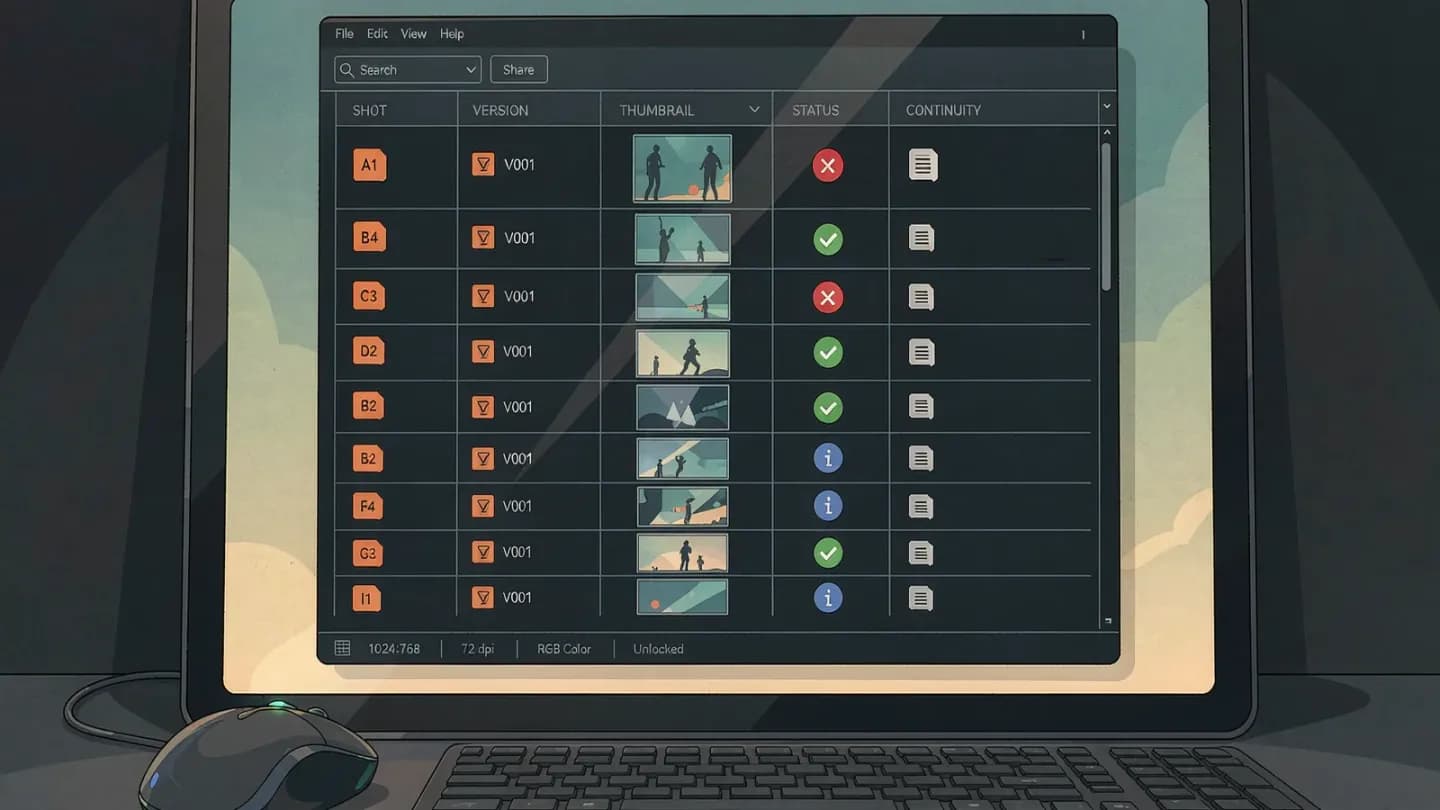
The control is a shot ledger rather than a better prompt. For every shot, record the engine and version, the reference set, the prompt, the take status, and the continuity attributes that shot has to hold — the character's face and wardrobe, the spatial relationship between objects, the lighting direction, and the physics of the environment. A {{link}} is what turns a continuity rule from a sentence in a document into something a generator can obey.
Record the version, not just the model. Because the ledger records which engine produced each shot, {{link}} stops being a policy and becomes a column you can sort by. When an engine updates mid-run you know exactly which episodes hold shots that need regeneration, instead of finding out from a viewer complaint. The Dachen Island feature ran to 2,429 shots, and its team has described correcting output frame by frame to converge the model — that is what a missing ledger column costs.
Two disciplines matter more than prompt skill here. Reference-driven control, locking identity, wardrobe and location from approved stills before generating, does most of the consistency work. A named owner per continuity attribute does the rest, because a ledger nobody owns stops being updated by episode four.
A reusable brand-block library is what turns a continuity rule from a sentence in a document into something a generator can obey.
Because the ledger records which engine produced each shot, version pinning stops being a policy and becomes a column you can sort by.
Disclosure Scales Per Episode, Not Per Campaign
Serial production turns disclosure into a recurring operation. Under Article 50 of the EU AI Act, a deployer of an AI system that generates or manipulates image, audio or video content constituting a deep fake must disclose that the content has been artificially generated or manipulated. That duty attaches to the content, not to the campaign or the season, so a 30-episode run is 30 disclosure events and a mid-run regeneration is a thirty-first.
The rule that survives contact with this model is simple: {{link}}, because an episode that airs is a published asset with its own duty. In practice the disclosure decision gets made at shot or episode level and recorded in the same ledger as everything else, with the outcome stored as a controlled value rather than free text.
The IPTC Digital Source Type vocabulary gives you those controlled values. It distinguishes trainedAlgorithmicMedia, defined as digital media created algorithmically using an artificial intelligence model trained on captured content, from compositeWithTrainedAlgorithmicMedia, which covers augmentation or correction using a generative model such as inpainting or outpainting. A partially generated episode and a fully generated episode are therefore different values, and the vocabulary is designed to travel inside the file rather than live in a brief.
Note what this means for the concurrent model specifically. If episode 12 is regenerated after episode 11 airs, the disclosure record for episode 12 has to be regenerated with it. Disclosure that lives in a campaign document will drift out of sync by the second revision.
The rule that survives contact with this model is simple: tag the asset, not the campaign, because an episode that airs is a published asset with its own duty.
Provenance Has to Survive Re-encoding
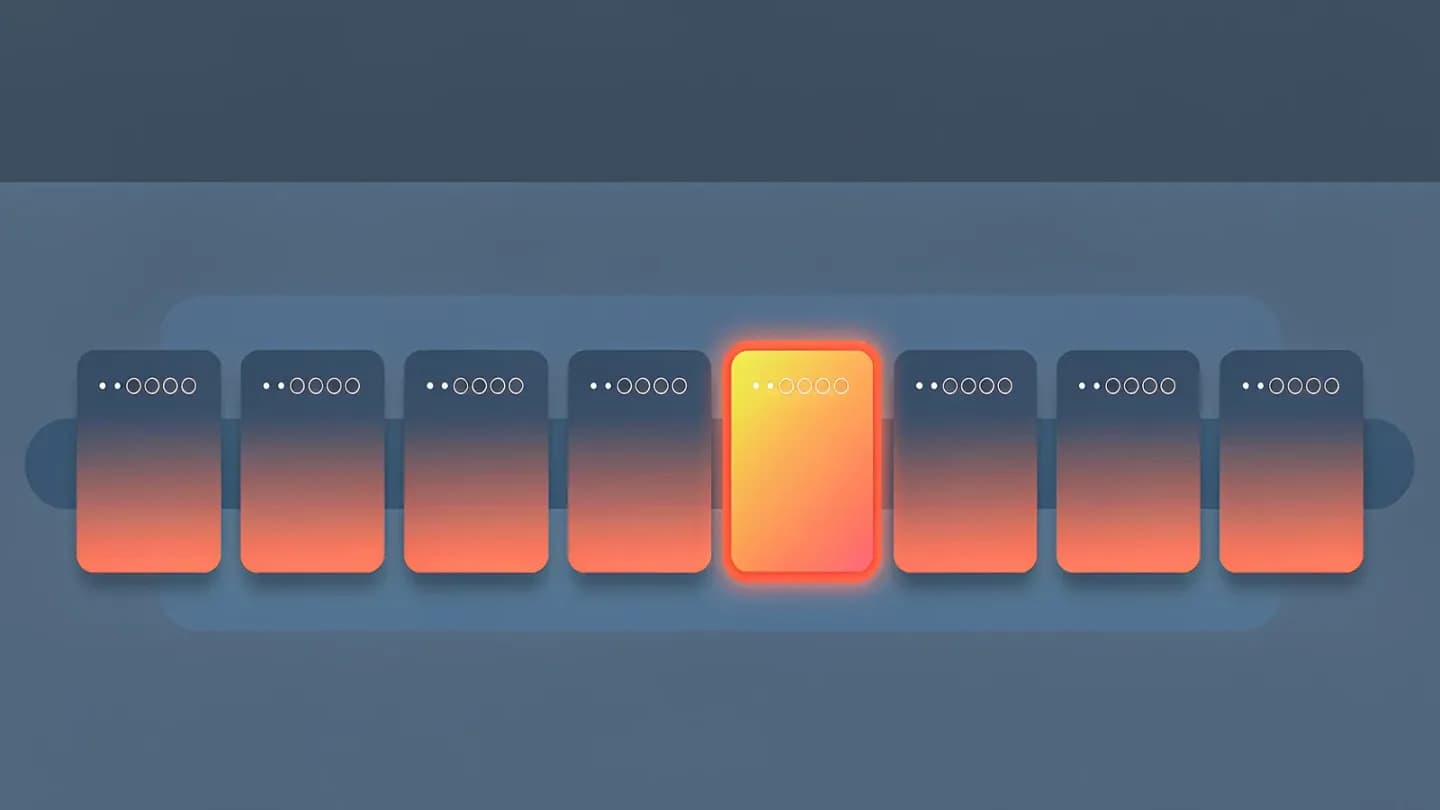
The second failure mode is subtler. Serial content gets re-encoded constantly — per platform, per market, per delivery window — and provenance that only binds to the master file does not travel with it.
The C2PA specification is explicit about why. A hard binding is one or more cryptographic hashes that uniquely identify an entire asset or a portion of it; it matches that asset and no other, and even a derived or transcoded version will not match. A soft binding is a content identifier that is either not statistically unique, such as a fingerprint, or embedded as an invisible watermark in the identified content. Soft bindings are what identify derived assets and asset renditions, where a rendition is a representation that has had a non-editorial transformation applied, such as re-encoding or scaling.
So a delivery encode is a rendition, not a derived asset, and the manifest that survives it is the soft-bound one. A {{link}} that stores the manifest reference per master, not per delivery file, is what keeps a buyer's check from failing on episode nine. Provenance strategy that assumes a byte-level hash will survive a distribution pipeline will fail silently, on exactly the files a buyer inspects.
A creative audit trail that stores the manifest reference per master, not per delivery file, is what keeps a buyer's check from failing on episode nine.
Localization Is Still Not Auto-Dubbing
Theatrical and broadcast ambition brings multi-market release with it, and the assumption that generation solves localization is wrong. YouTube's multi-language audio feature is a useful reality check: it is not automatic dubbing. Google's help documentation states plainly that the feature lets you upload your own dubbing audio tracks and that, unlike auto-dubbing, it does not generate them, so the tracks have to be recorded before they can be uploaded.
The constraints are operational rather than technical. Uploaded files must use a supported audio-only format and must be roughly the same duration as the video. Localized thumbnails are available for long-form videos. Playback defaults to the viewer's preferred language as derived from watch history, and where an auto-dubbed track already exists for a language it must be removed before your own version can be uploaded.
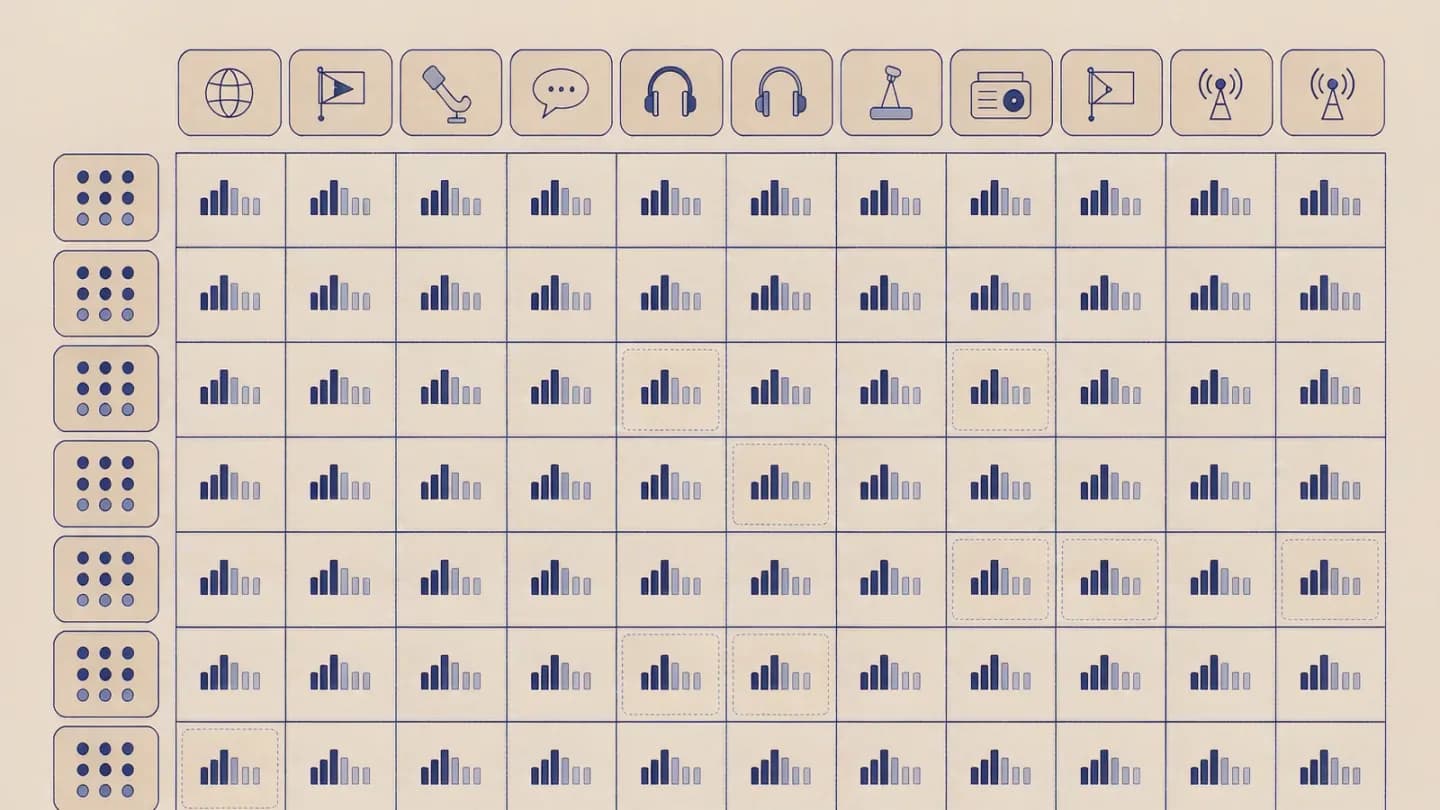
For a serial programme that makes localization a scheduled production task per episode per market, not a toggle. Budget the recording, budget the duration matching, and put it in the same ledger as continuity and disclosure. The concurrent model genuinely gives you room to adjust later episodes based on how earlier ones travelled — but only if that adjustment work was planned for in the schedule.
Put the framework into production
These related pages connect the article’s planning advice to a specific commercial scope.
References
- Article 50: Transparency Obligations for Providers and Deployers of Certain AI SystemsEU Artificial Intelligence Act
Deployers of an AI system that generates or manipulates image, audio or video content constituting a deep fake must disclose that the content has been artificially generated or manipulated, and the information must be provided clearly and distinguishably at the latest at the time of first exposure.
- Digital Source Type NewsCodesIPTC
The controlled vocabulary distinguishes trainedAlgorithmicMedia, defined as digital media created algorithmically using an AI model trained on captured content, from compositeWithTrainedAlgorithmicMedia, which covers augmentation or correction using a generative model such as inpainting or outpainting.
- C2PA Specification 2.1 — Glossary and Content BindingsC2PA
A hard binding is one or more cryptographic hashes that uniquely identify an asset or part of it and will not match even a derived or transcoded version, while a soft binding is a fingerprint or invisible watermark and is what identifies derived assets and asset renditions such as re-encodes.
- Add multi-language audio tracks to your videosGoogle (YouTube Help)
YouTube's multi-language audio feature is not automatic dubbing: creators must record and upload their own dubbing tracks, which must be in a supported audio-only format and roughly the same duration as the video.