
Why one-off AI video doesn't scale
Most teams still treat AI video like a vending machine: type a prompt, get a clip, repeat. The brand-block library approach reframes the unit of work from a one-shot clip to a reusable component, and the cost you save hides in the re-rolls you no longer need. Generation is cheap, but usable output is scarce — the creative yield gap is why most teams ship only a fraction of what they generate {{link}}. Every fresh prompt is a fresh dice roll on identity, lighting, and product accuracy, so the failure mode is not the compute bill, it is the iteration loop.
When a campaign needs thirty variant cuts for an auction, one-off generation means thirty independent attempts to recreate the same bottle, the same spokesperson, the same store. Identity drifts between cuts, the label on the package morphs, the spokesperson's face subtly changes, and the location's palette shifts. Fixing those drift errors by regenerating whole scenes is the most expensive way to do art direction, and it is also where brand equity quietly leaks.
The fix is not a better model. It is a better unit of work. Instead of prompting the entire video from scratch each time, you build a brand-block library — defining the recurring pieces as named, reusable components — then direct them. This is the shift from generation as a one-shot act to generation as a system with memory, and it is the foundation the rest of this playbook builds on.
Generation is cheap, but usable output is scarce — the creative yield gap is why most teams ship only a fraction of what they generate AI video creative yield gap.
What a brand-block library actually contains
A brand block is a persistent, named definition of a recurring visual element you will reuse across many videos. The three you reach for first are products, characters, and locations. A product block locks the exact SKU, its packaging, color, and hero angle. A character block locks a person or mascot's face, build, wardrobe, and defining accessory. A location block locks a set — a store interior, a kitchen, a city street — with its palette and lighting so every cut that visits that place looks like the same place.
A character block is the production-side form of the reference-first workflow that keeps one face recognizable across a series {{link}}. The difference is direction of travel. The reference-first workflow is a technique you re-apply per shot, while a character block is the asset you defined once and the pipeline reuses without a human re-applying it. Both solve identity drift, but the block removes the person from the re-application loop and makes consistency a property of the library rather than of the operator's discipline.
Think of blocks as the visual DNA of your brand's video output. A feed built from a consistent block library looks like one brand instead of a pile of experiments, which is exactly what buyers and platforms reward as volume scales. The blocks are small contracts the rest of the pipeline can rely on, and the discipline of maintaining them is what separates a scalable video operation from a prompt graveyard.
A character block is the production-side form of the reference-first workflow that keeps one face recognizable across a series reference-first character consistency.
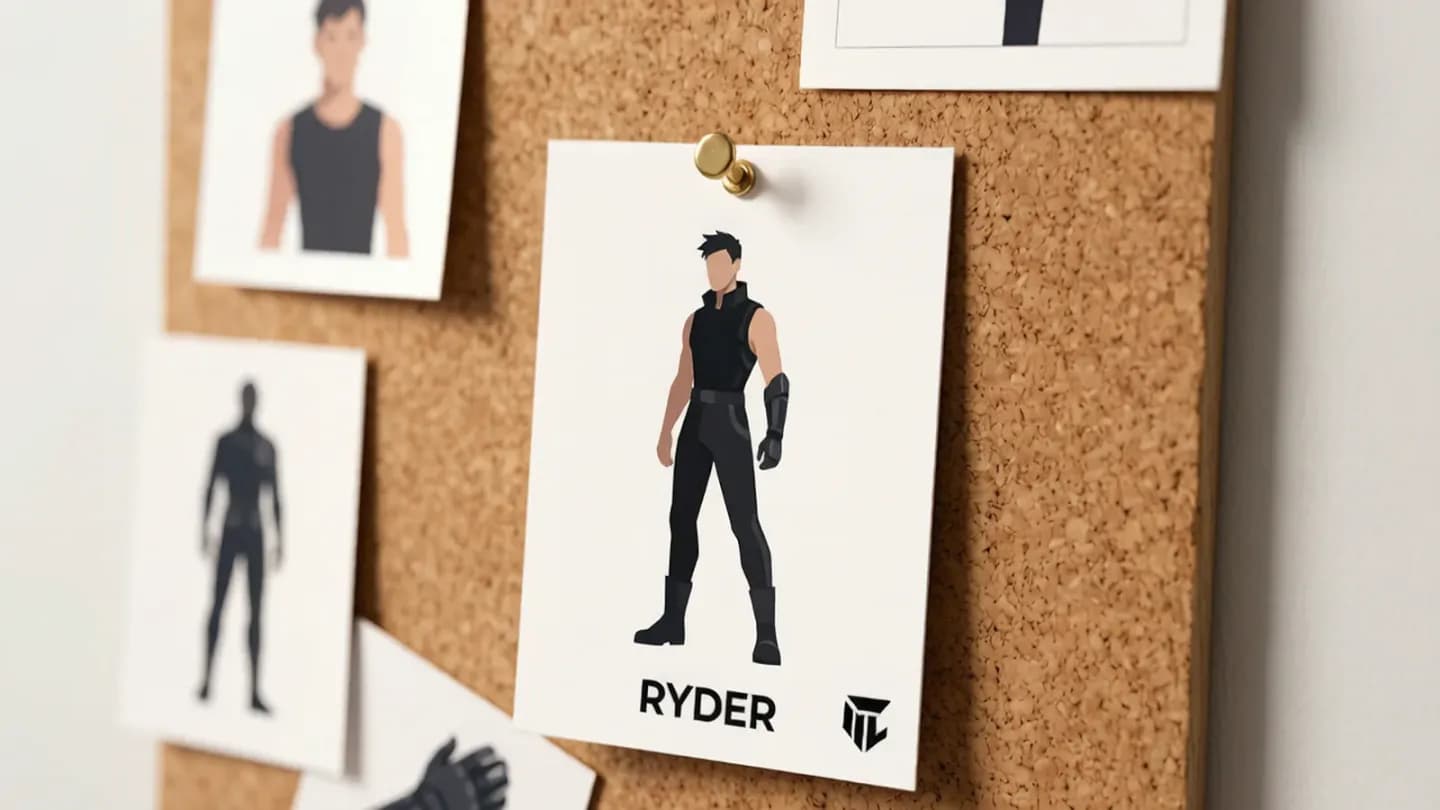
Write the spec sheet once
For every block, write one spec sheet and never rewrite it inline. The spec sheet is the reusable form of the structured prompt formulas your team should reuse on every cut {{link}}. It is a fixed block of attributes — age, build, hair, clothing, palette, lens, lighting — that you paste verbatim into every prompt that touches that block. The verbatim rule is not pedantry: changing one adjective is a different input, and a different input drifts, so the sheet has to be treated as code, not prose.
Keep the spec sheet in a shared library, not in someone's notes, and version it. When the product redesigns or the spokesperson changes wardrobe, you update the block in one place and every future cut inherits the correction. This is also where you decide what does not belong in the block. Anything the model cannot be trusted to hold — fine print, exact hex values, legally loaded claims, on-screen prices — stays out of the generative prompt and gets solved downstream in post or in the brief, not by hoping the model renders it.
A good spec sheet reads like a casting and art-direction document. It names the defining accessory, the lighting mood, and the camera language once, then every prompt that uses the block opens by appending that sheet. Over a few weeks this compounds: new team members produce on-brand cuts on day one, and the block becomes a reusable asset the whole org can spend against instead of a trick one person remembers.
The spec sheet is the reusable form of the structured prompt formulas your team should reuse on every cut prompt engineering for AI video.

Direct the block, don't regenerate it
Once a block exists, the job changes from "make the bottle" to "place the bottle." Director-level control is the practice of steering a reused block inside the frame: where the product sits, how the character moves, what tone the scene holds, which shot the camera takes. You are not regenerating to find the right composition, you are directing the asset you already have, and that single change is the biggest leverage point for both cost and consistency.
A block that is placed, not re-rolled, cannot surprise you with a new face or a wrong label, because the asset is fixed and only its position and performance vary. It also makes iteration honest: you change one variable — camera left, slower pace, warmer light — and you know exactly what moved, which turns debugging from a guessing game into a tuning exercise. Teams that skip this step burn compute re-rolling whole scenes just to nudge a product three inches, which is the most expensive way to do art direction.
Director-level control also protects legal and brand safety. Because the block is a known asset, you can pre-clear its disclosure status once and reuse that decision everywhere, instead of re-litigating whether each new generation needs an AI label. That pre-clearance is what lets high-volume teams move fast without re-opening the same compliance questions on every cut.
Let an orchestration layer reuse your blocks
A block library is only useful if something coordinates the models around it. The orchestration layer is what finally enforces the brand control map that lists which elements a model can never be trusted with {{link}}. It reads your blocks, picks the right engine per shot, and keeps spatial and narrative context — who is where, what they are holding, what happened in the previous beat — consistent across the cut instead of treating each shot as an island.
Think of it as a stage manager, not a generator. It does not invent the bottle; it makes sure the bottle from block A appears in shot three the same way it appeared in shot one, and that the character from block B finishes a movement it started two beats earlier. Smaller teams lean on this layer for creative testing and pre-planning, while larger ones use it to hold many deal types and partners in line — the same pattern the IAB sees across video buyers adopting AI operationally rather than experimentally.
The orchestration layer is also where reuse pays for itself in buying. As agentic systems take over more of the video plan, the assets they purchase and place need to be variant-ready and provenance-tagged, which a disciplined block library already provides. A block that carries its spec, its disclosure status, and its source record is exactly the kind of component a machine buyer can ingest without a human re-explaining it each time.
The orchestration layer is what finally enforces the brand control map that lists which elements a model can never be trusted with AI video brand consistency.
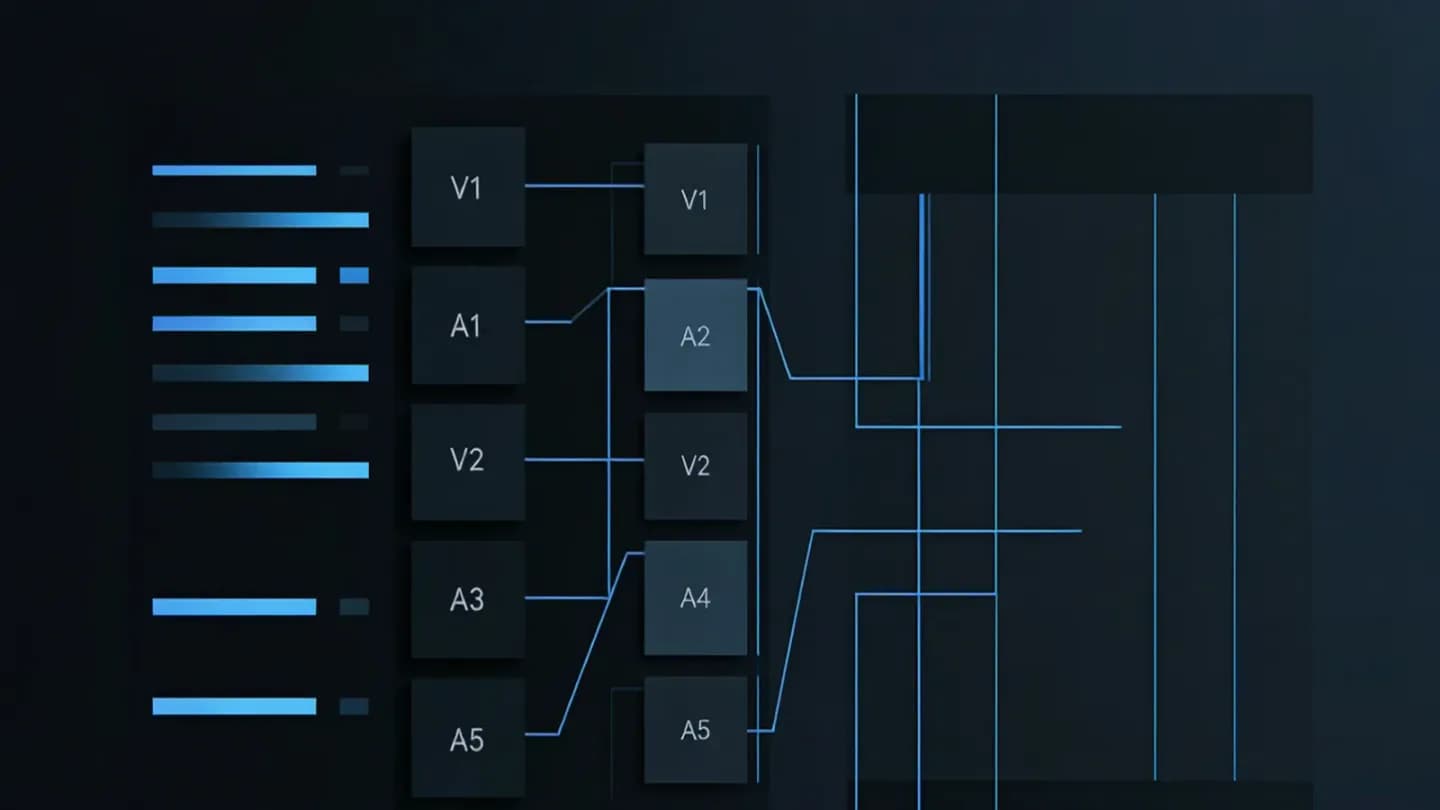
Tag, version, and retire blocks like real assets
A block is an asset, so treat it like one. Every reused block should enter the same five-field catalog that records which model and prompt produced each asset {{link}}. That catalog is what lets you answer "which version of the spokesperson is in this live campaign?" without digging through chat logs, and it is what survives a model update or a team change because the knowledge lives in the system, not in a person's memory.
Attach provenance to each block from day one. Content Credentials, the open C2PA standard, function like a nutrition label for media: a tamper-evident record of where an asset came from and what touched it, so a derivative cut inherits traceability the moment it is generated. When a block carries that record, buyers and platforms can verify origin automatically, which matters more as synthetic media rules tighten across markets and the cost of an untraceable asset rises.
Disclosure travels with the tag. YouTube auto-labels videos that contain C2PA metadata or realistic AI-generated content, so a tagged product or location block arrives in the cut with the disclosure already attached instead of relying on someone to remember to flip a setting at upload. That turns compliance from a manual step into a property of the asset, which is the only version that holds up at auction volume.
Retire blocks on a cadence, not on a whim. A location tied to a seasonal campaign, a character tied to a discontinued spokeswoman, a product tied to a recalled SKU — these have an expiry. Keep a standing review so stale blocks leave the library before they slip into a cut that is already in market, and archive rather than delete so you keep the provenance trail for anything still in flight.
Every reused block should enter the same five-field catalog that records which model and prompt produced each asset AI video asset management.
Put the framework into production
These related pages connect the article’s planning advice to a specific commercial scope.
References
- U.S. Digital Video Ad Spend to Surpass $80B in 2026IAB
Two in three video buyers are live, testing, or planning agentic AI for digital video in 2026, and U.S. digital video spend is projected to top $80B, up 11% year over year.
- C2PA — Verifying Media Content SourcesC2PA
Content Credentials are an open standard that attaches a tamper-evident provenance record — origin and edits — to digital media, like a nutrition label for content.
- Disclosing use of GenAI contentYouTube Help
YouTube auto-labels videos that contain C2PA metadata or realistic AI-generated or altered content, so tagged assets travel with disclosure attached.