
What AI video avatars are (and aren't)
AI video avatars let a brand put a consistent, on-demand presenter on screen without a camera, a studio, or a human talent booking. They work best for explainer and FAQ content, localization, and high-volume social cuts where the same face must appear across dozens of videos. They fail when the audience needs real human credibility, visible emotion, or a person they can actually trust.
Technically, an avatar is a locked identity — a reference face, voice, and sometimes a body — driven by a script through a text-to-video or lip-sync pipeline. Platforms such as HeyGen and D-ID take a short sample, generate the performance, and sync the mouth to a voice clone. That makes the avatar closer to a teleprompter reader than to an actor: it delivers your words on cue, but it does not improvise, emote on its own, or recover from a bad line the way a human would. The practical ceiling is the voice: a clone can read any script, but it inherits the sample's accent, pacing, and emotional range, so a global rollout still needs per-market voice prints rather than one universal track.
This is also different from a virtual influencer. A virtual influencer is a character with a persona, a backstory, and a feed of its own; an avatar is a face you rent to read your script. The production questions are the same — identity, consistency, disclosure — but the creative intent is not. This guide covers the presenter case: when a synthetic face is the right call, how to hold one identity across a series, and what it now forces you to disclose.
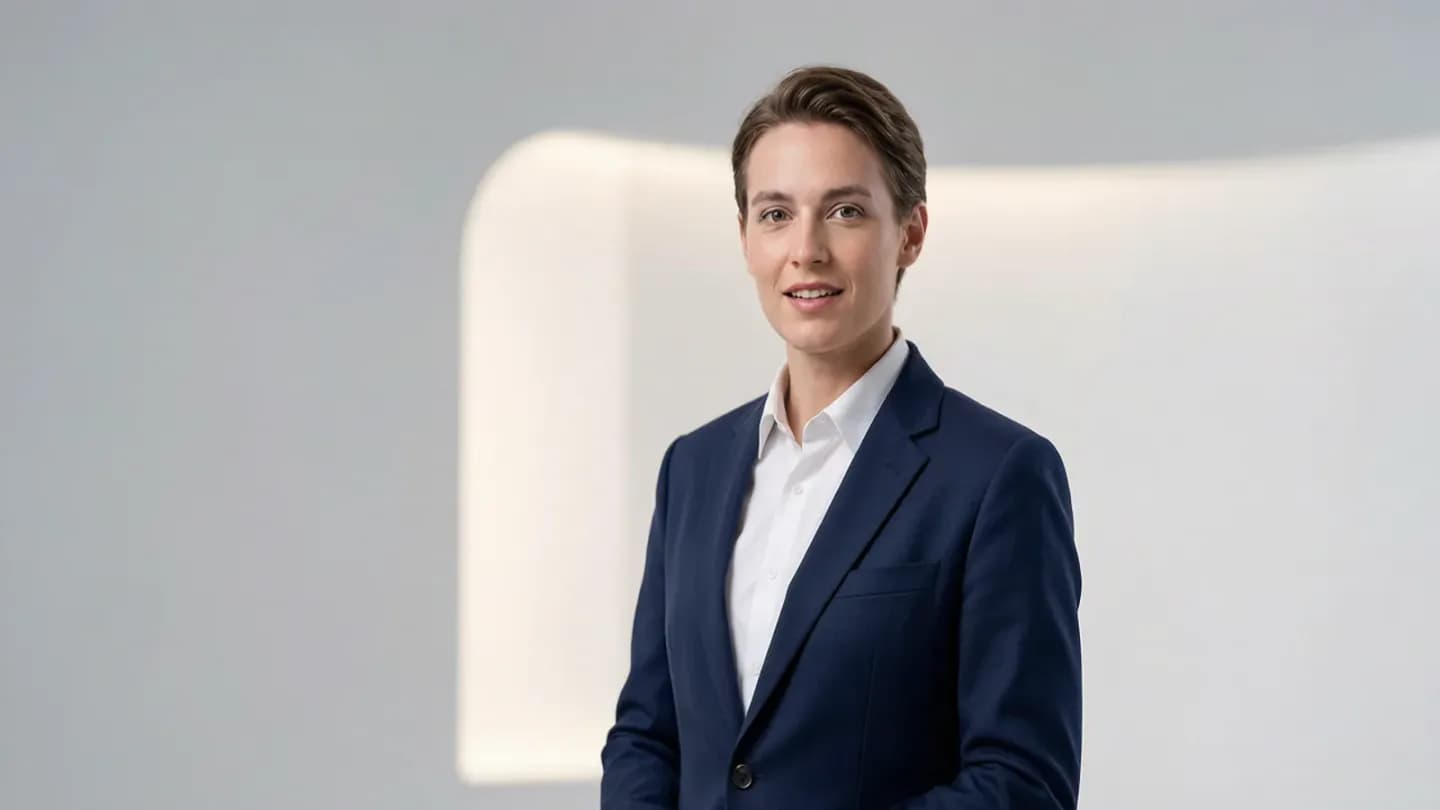
Why brands are reaching for synthetic presenters in 2026
The pull is strategic, not just cost. In the CMO Barometer 2026, based on responses from 805 marketing decision-makers across 15 countries and regions, 68% say AI will be the defining topic of 2026 — yet only 12% expect agencies to lead on AI skills. Brands increasingly see synthetic video as something they must own in-house rather than hand off, and a presenter who never books, never reschedules, and speaks thirty languages is an obvious first project to bring under their own roof.
Avatars shine in repeatable, low-drama formats: product walkthroughs, onboarding clips, FAQ answers, market-by-market localization, and the endless A/B variants a paid-social team needs. The upside only pays off when the work follows a {{link}}. In those jobs a single locked face across hundreds of cuts is a feature, not a limitation, and the marginal cost of the next video trends toward zero.
The risk of ignoring this is a library of near-miss clips that no one trusts. When the face drifts between videos, the brand reads as unstable; when the disclosure is missing, the brand reads as deceptive. Both are cheaper to prevent than to repair, which is why the in-house model only pays when the same guardrails travel with every render.
A useful test before committing: take one real explainer you already ship and price the avatar version against the live-action version, including reshoots for each language. If the avatar wins on the second or third market rather than the first, that is the moment it becomes the default, not a one-off experiment — and the brief you wrote for market one is what keeps the later markets consistent.
The upside only pays off when the work follows a brand consistency playbook for AI video.
The consistency problem: keeping one face across every shot
The first failure mode is drift. Generate an avatar ten times and the face subtly morphs — age shifts, wardrobe changes, lighting wanders, the jawline softens. Viewers may not name it, but they feel that something is off, and trust leaks. The fix is the same one used in {{link}}, where a master character sheet governs every generated shot rather than letting the model reinterpret the person each time. Drift is not only visual: the voice print can also slide between sessions, so a presenter who sounds warmer in episode one and flatter in episode nine reads as two different people, and the brand pays for the inconsistency twice.
Treat the identity as a versioned asset, not a prompt. Lock one reference image and one voice print, store them, and feed that anchor into every render so the model has a fixed target instead of a vague description. For brand work, also freeze wardrobe, hair, and the on-screen title so the presenter reads as the same employee across a whole series. Reference-driven control is what keeps a campaign coherent when a single clip becomes fifty, and it is far cheaper to enforce up front than to regenerate a library of near-identical but subtly wrong faces.
The fix is the same one used in AI video prompt engineering for character consistency, where a master character sheet governs every generated shot rather than letting the model reinterpret the person each time.

The disclosure it forces — and the standards behind it
A synthetic presenter is a legal and platform signal, not a cosmetic choice. Marketplaces already require it: Amazon Ads instructs advertisers to disclose creative that depicts a 'synthetic performer' — a person who does not exist, generated by AI. Most teams start by tagging assets the way {{link}} recommends before a cut ever ships, so the label travels with the file instead of being bolted on at the end.
Two open standards make that label machine-readable. IPTC defines the digital source type 'trainedAlgorithmicMedia' as media 'Created using Generative AI', a controlled vocabulary you can stamp onto the file itself. C2PA's Content Credentials work like a nutrition label for digital content, recording the origin and edit history anyone can inspect. Together they let a brand prove a clip is synthetic at the file level — which matters the moment a platform, retailer, or regulator asks what is real, and which survives re-uploads that would strip a caption from the description. For a brand, the payoff is redistribution: a clip stamped with Content Credentials keeps its label when a partner re-uploads it, so the disclosure no longer depends on whoever posted the file last.
Most teams start by tagging assets the way AI disclosure metadata for marketplaces recommends before a cut ever ships, so the label travels with the file instead of being bolted on at the end.

Where avatars backfire: the trust risk
Audiences punish synthetic humans they believed were real. The cautionary side is documented in {{link}}, where synthetic ads eroded brand trust overnight once viewers felt deceived. An avatar that pretends to be a customer, a founder, or a satisfied buyer crosses that line fast, and the correction rarely reaches everyone who saw the first version before it was pulled.
Three guardrails keep the format honest. Never imply the avatar is a real person, customer, or testimonial; state plainly that it is generated. Keep every claim the avatar makes verifiable and sourced, the same as any other ad. And pair avatar-led scale with human-made hero content where genuine emotion carries the brand, so the synthetic face never has to do a job that needs a real one to land.
The honesty bar is also higher for presenters than for abstract generative B-roll. A swirling AI background is clearly synthetic; a talking face is not, so the audience's default assumption is that a real person is speaking. That gap between assumption and reality is exactly where backlash lives, and disclosure is the only safe bridge across it.
The cautionary side is documented in AI ad backlash case studies, where synthetic ads eroded brand trust overnight once viewers felt deceived.
A production checklist for shipping avatar-led video
Lock the identity asset first: one reference face, one voice print, one wardrobe, stored and versioned. Write a tight brief so the script stays on-message, cap runtime at the format's native length, and render a master you can localize by swapping language and lower-thirds rather than regenerating the person. Disclose at the file level using IPTC and C2PA fields before the cut leaves the building. Version the master so a copy edit or a new market is a branch, not a rebuild; that is what keeps a fifty-video series from becoming fifty one-off renders nobody can audit.
QA the render for the usual AI artifacts — face morphing, flicker, broken hands, drifting text — and confirm the disclosure survives the export. Treat the human sign-off as the gate described in {{link}} before any avatar spot goes live. Done well, an avatar is a dependable utility: the same trusted face, on demand, in every market, with the paperwork to prove what it is.
Treat the human sign-off as the gate described in AI video governance playbook before any avatar spot goes live.
Put the framework into production
These related pages connect the article’s planning advice to a specific commercial scope.
References
- IPTC Digital Source Type — trainedAlgorithmicMediaIPTC
The controlled vocabulary defines 'trainedAlgorithmicMedia' as digital media 'Created using Generative AI' (an AI model trained on captured content), giving a machine-readable label for synthetic media at the file level.
- C2PA — Content CredentialsCoalition for Content Provenance and Authenticity
C2PA provides an open standard (Content Credentials) that records the origin and edit history of digital content, described as functioning 'like a nutrition label for digital content' that anyone can inspect.
- Amazon Ads — synthetic performer disclosureAmazon Ads
Amazon Ads requires advertisers to disclose creative that depicts a 'synthetic performer' — a person who does not exist, generated by AI — making synthetic presenters a labeled, not hidden, element of the ad.
- CMO Barometer 2026 — Serviceplan GroupServiceplan Group / University of St. Gallen / Heidrick & Struggles
The CMO Barometer 2026, based on 805 marketing decision-makers across 15 countries and regions, finds 68% view AI as the defining topic of 2026, while only 12% expect agencies to lead on AI skills — pushing brands to build AI video in-house.