
What AI Video Brand Lift Measures
AI video brand lift is the only measurement that tells you whether a generative campaign changed how people think about your brand, not just whether they clicked. It works by splitting your audience into an exposed group that saw the video and a control group that did not, then surveying both about awareness, consideration, favorability, and purchase intent. The difference between the two groups is the lift your creative actually earned, a number that no click or view metric can produce on its own. In practice this is the difference between knowing a video was watched and knowing it was believed. Most teams can quote their CPAs to the decimal but cannot answer the one question a CFO actually asks: did this campaign make us more memorable?
That distinction matters because AI video has made lower-funnel production cheap. Teams can now ship dozens of variants and optimize toward click-through and ROAS in days, often treating the creative as disposable. But none of those signals say whether the brand is more memorable, more considered, or more trusted after the campaign. Brand lift is the missing layer, and it is also the layer most commercial teams skip entirely because the tooling hides behind a budget wall.

The 10-Day Budget Threshold That Blocks Most Teams
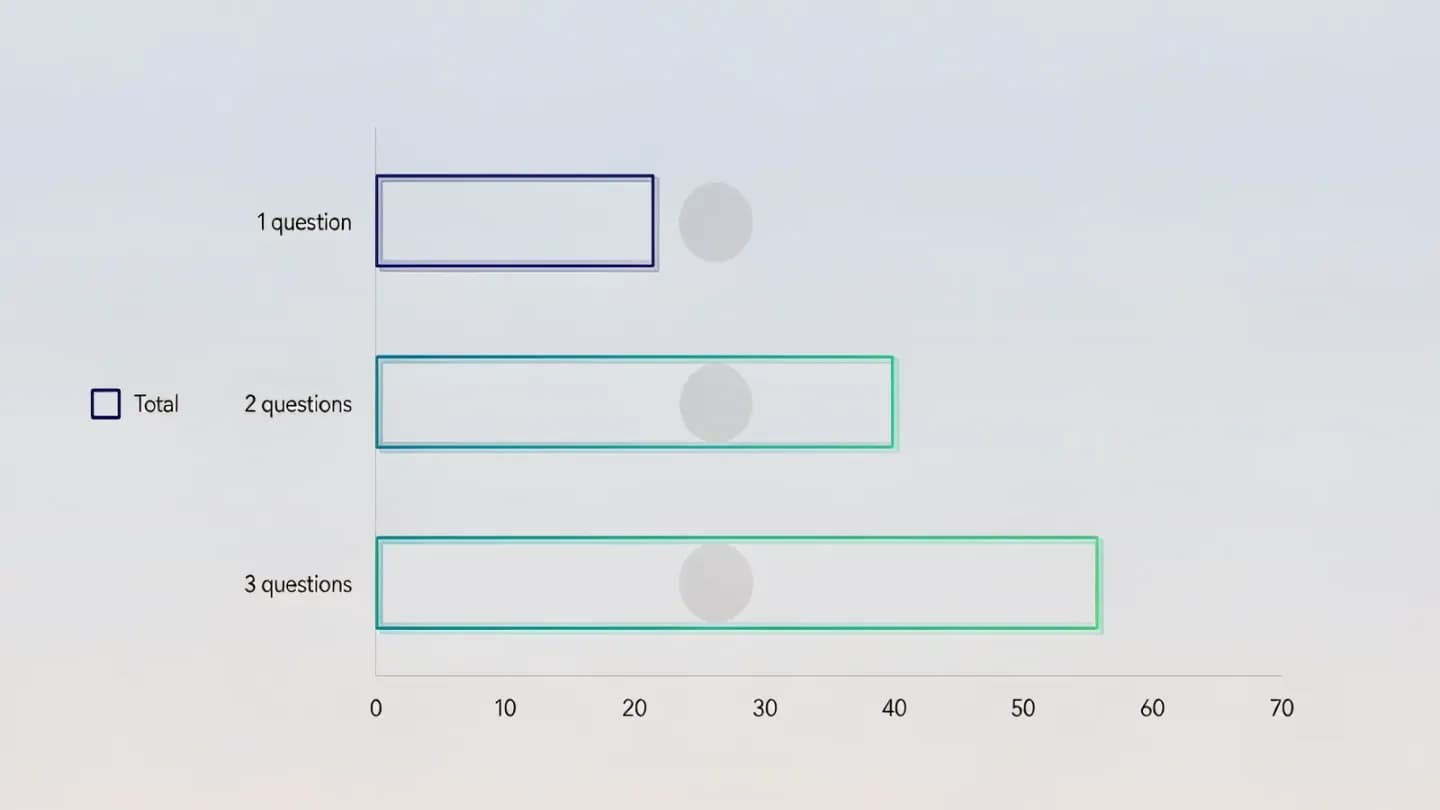
Google's Brand Lift tool, the most accessible option for YouTube video, does not turn on for small campaigns. Eligibility is calculated from your total campaign budget over a rolling 10-day window, and the minimum scales with the number of survey questions you run (up to three) and the country you target. Google publishes three market tiers: one question costs about $5,000, $10,000, or $15,000 over those 10 days; two questions $10,000, $20,000, or $30,000; three questions $20,000 up to $60,000. The United States sits in the higher-cost tier, so a three-question US study can require close to $60,000. Campaigns that pause or end early reset the clock and forfeit the eligibility, and the threshold exists because a survey needs enough exposed and control responses to be statistically meaningful. Treat the threshold as a design constraint from the brief, not a surprise at launch, and the eligibility math becomes a planning input rather than a blocker.
Country tiers push the bar higher. The lowest tier starts at $5,000, $10,000, and $15,000 for one, two, and three questions; the highest tier reaches $15,000, $30,000, and $60,000. If your 10-day spend does not clear the line, the eligibility calculator simply flags the study as Not Eligible and you get no survey at all. This is the same pressure that makes {{link}} before a campaign ever reaches the media plan. The calculator is transparent about this; it literally displays 'Brand Lift: Not Eligible' until the budget clears, which is a useful early warning if you read it before launch. Reading the eligibility status before launch is the cheapest research a commercial team can do.
This is the same pressure that makes AI video has to prove it works before a campaign ever reaches the media plan.
Why AI Video Makes the Gap Worse
Generative workflows intensify the problem rather than solve it. Because spinning up a new cut costs almost nothing, AI video is typically deployed as a burst of short variants tested against performance signals, then retired. Each burst is too small and too short to ever cross the 10-day spend floor on its own, so the measurement opportunity evaporates the moment the campaign ends. The economics reward volume and speed, which is precisely what brand lift cannot accommodate on a per-burst basis. Speed to variant is real leverage, but it should be aimed at a campaign long enough to also clear the measurement bar.
The {{link}} shows reach collapses after the first 10 days, the exact window Brand Lift needs to accumulate enough survey responses. So the way most teams run AI video, a fast fragmentary burst, is structurally incompatible with the slow, sustained exposure a brand-lift study requires. You end up measuring the click and flying blind on the brand. Reach and measurement are fighting over the same ten days, and in most AI video plans reach wins by default. The result is a structural blind spot: the cheaper and faster AI video gets, the less likely any single flight is big enough to be measured.
The short-form video length paradox shows reach collapses after the first 10 days, the exact window Brand Lift needs to accumulate enough survey responses.
How to Qualify Without a Mega-Budget
You do not need a single hero campaign to earn a read. The cheapest path is to consolidate your variant bursts into one measured push that sustains spend across the full 10 days, then trim to a single survey question to hit the lowest budget tier. Running on YouTube in-stream and bumper formats keeps you inside the eligible inventory, and holding the campaign live for the full window prevents an early pause from voiding eligibility. The point is to stop treating each variant as a separate campaign and start treating the whole flight as one measurable object. If a single burst cannot clear the bar, the answer is to stop fragmenting spend and let one continuous flight carry the measurement.
Pair it with {{link}} discipline so the same assets also earn discovery, not just measurement. You can also combine Brand Lift with Search Lift in the same study at no extra budget, because Google treats the eligibility as already met once one question qualifies. For campaigns that still return 'not enough data,' Enhanced Lift roughly triples the survey volume and the minimum spend to surface smaller effects.
Pair it with generative engine optimization discipline so the same assets also earn discovery, not just measurement.

Reading the Results: What Good Looks Like
A brand-lift study is only useful if you know what the numbers mean. Across YouTube brand campaigns, the top quartile of advertisers reach roughly 15 to 20 percent ad-recall lift, while awareness lift averages 3 to 8 percent and purchase-intent lift typically lands at 2 to 5 percent. A result near or above those ranges means your creative moved perception; a flat or low result is a real signal that the asset entertained without building equity, not a measurement glitch. Without a benchmark, a lone lift number is easy to misread as either a triumph or a failure. Benchmarks turn a confusing percentage into a decision: ship, re-cut, or retire the creative with evidence behind the call.
Watch the pattern, not just the headline. High ad recall with low consideration means the video was memorable but not persuasive. Strong awareness with weak purchase intent means you introduced the brand but failed to create motivation. Those splits tell you whether to rewrite the message, change the audience, or re-cut the creative, long before you scale spend, and they are exactly the read a pure performance dashboard will never surface. This is the read that tells you whether scaling spend will compound a win or amplify a dud.
Make Brand Lift a Standard Gate, Not a Luxury
When {{link}} even as adoption climbs, brand lift is the missing half of the story, and the budget floor is the reason most teams never see it. The fix is procedural, not technological. Set a simple rule: any AI video campaign above a modest spend threshold gets a brand-lift read before renewal, the same way you would not ship a site without analytics. The teams that win with generative video are not the ones that produce the most cuts; they are the ones that can prove which cuts mattered.
Treat the 10-day eligibility bar as a planning input, not a surprise at launch. Build the sustained spend into the campaign from day one, pick one question you actually care about, and read the result against the benchmarks above. Commercial teams that measure both the click and the brand will be the ones who can prove generative video was worth the budget, instead of guessing from a dashboard that only counts the cheap half. Measurement maturity is what separates teams that scale AI video confidently from those that quietly pull it back. Make the brand-lift read part of the campaign definition, and the budget floor stops being an excuse and starts being a discipline.
When AI video ROI is slipping even as adoption climbs, brand lift is the missing half of the story, and the budget floor is the reason most teams never see it.
Put the framework into production
These related pages connect the article’s planning advice to a specific commercial scope.
References
- Set up Brand LiftGoogle Ads Help
Brand Lift eligibility is based on total campaign budget over a 10-day window, scaled to three country tiers: one question $5,000/$10,000/$15,000, two $10,000/$20,000/$30,000, three $20,000/$30,000/$60,000 (up to 3 questions). The US sits in the higher tier, so three questions can require close to $60,000.
- TikTok Study 2026: Reach Concentrates in the First 10 DaysMetricool
A 2026 analysis of 2.31 million TikTok posts found that 96% of a video's total reach occurs within the first 10 days of posting.
- How to Measure Whether a Brand Video Influenced SalesThe Minneapolis Egotist
Google reports that top-quartile YouTube brand campaigns achieve 15-20% ad-recall lift; awareness lift averages 3-8% and purchase-intent lift typically 2-5%.
- What Is a Brand Lift Study (And When It's Worth Running One)Creative Milkshake
Google's Enhanced Lift collects roughly 3x the survey responses of Standard Lift and requires about 3x the minimum budget; a study may need around 4,100 responses per lift metric to report reliably.