
The budget math changed, but the risk didn't disappear
An AI video budget in 2026 behaves nothing like the production budget most teams still carry in their heads. Generation has cut the cost of a single clip by half to four-fifths versus a traditional shoot, and per-asset pricing keeps falling as more models open commercial APIs. Yet finance teams keep approving AI video work that lands over budget, and the overruns are not small rounding errors.
The mistake is treating cheaper per clip as cheaper project. A finished, on-brand video still needs concept, script, art direction, consistency, sound, and editing — the same craft as any production, minus the set. The line items moved; the total did not disappear, and neither did the risk. What changed is where that risk lives. The pattern repeats across brands that adopted generation expecting linear savings and got exponential volume instead. Understanding the new risk profile is the difference between a budget that scales and one that silently doubles.
Traditional budgets concentrate risk in a short, expensive window
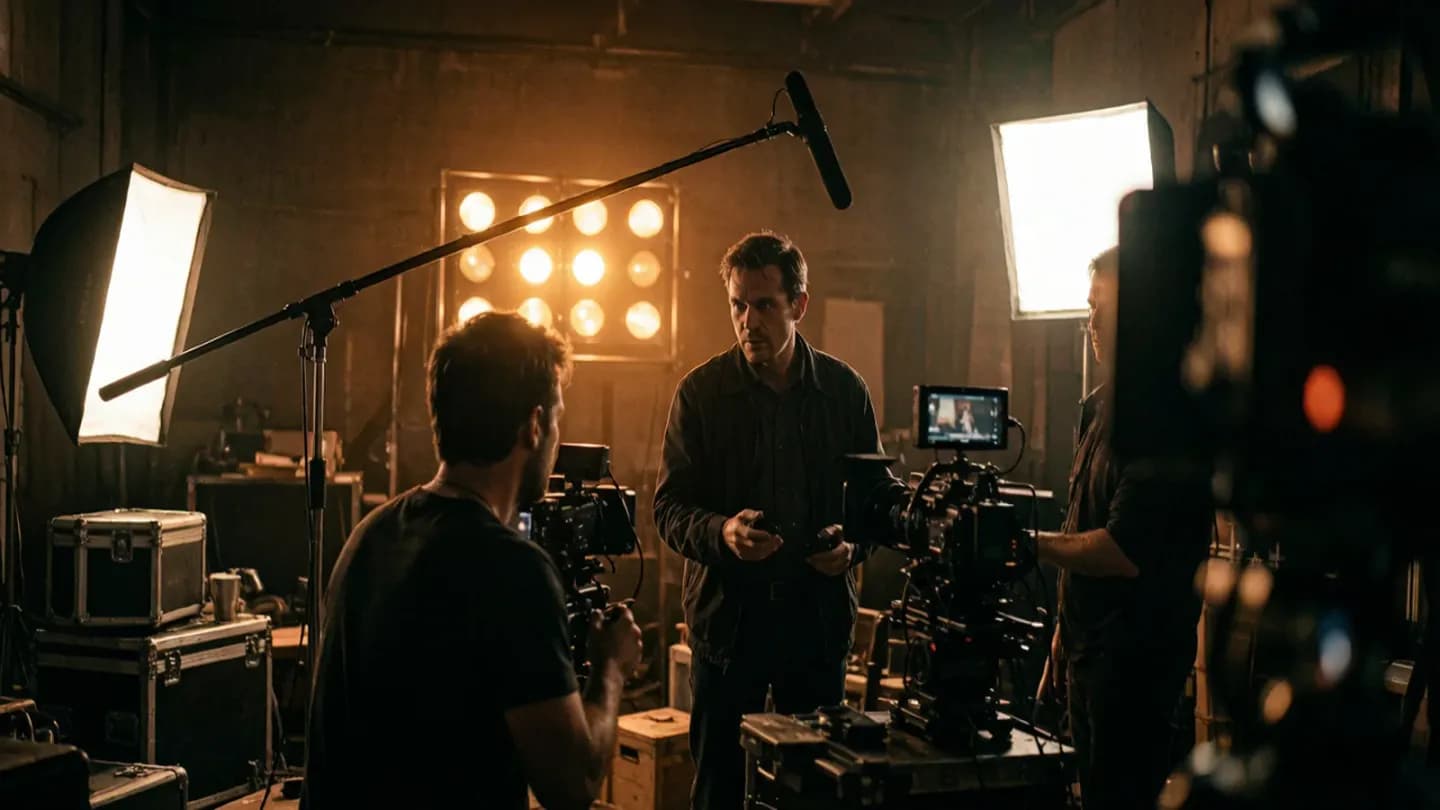
A traditional budget is assembled from resources multiplied by time. Crew positions times day rates, equipment packages times rental days, location fees, insurance, permits, catering, travel. Post-production is estimated in hours of editor, colorist, and sound time. Because time is the multiplier, the budget is exposed to anything that consumes time: weather, a location that falls through, a performance that needs another half day, a client note that arrives after the crew has wrapped.
A side-by-side cost breakdown {{link}} shows why the line items move, not just the totals, once generation replaces the shoot. The failure mode is a disaster in a narrow, expensive window — a shoot day that runs long, a reshoot nobody budgeted for, a permit that falls through the week before air. A 10 to 15 percent contingency is standard precisely because that window is where money is lost, and once a shoot day slips, every downstream line moves with it.
A side-by-side cost breakdown AI video production cost in 2026 shows why the line items move, not just the totals, once generation replaces the shoot.
AI-first budgets spread risk across a long, cheap iteration loop
An AI-first budget is built the other way: creative development plus generation plus review. Creative development is largely fixed, because concept, script, and visual direction take roughly the same effort regardless of output volume. Generation cost scales with compute and iteration count. Review scales with how much output a human has to inspect.
The gap is stark once you compare the two approaches {{link}} at comparable ambition. The exposure is different: an AI budget rarely blows up on a shoot day, but it can bleed on iteration if the creative direction was never nailed down, because generating is cheap enough that undisciplined teams generate forever. The risk moved from a short, expensive window to a long, cheap one, and long, cheap problems are easier to ignore until the invoice arrives. Compute is metered and predictable per clip, which lulls teams into thinking the total is bounded — until the count of clips quietly triples.
The gap is stark once you compare the two approaches what an AI-generated commercial costs versus a traditional one at comparable ambition.

The new failure mode is indecision, not disaster
In traditional production, a stalled decision is visible immediately: the crew is on hold and the day rate is running. In AI-first work, a stalled decision is invisible — the model keeps producing variants while nobody owns the call on which one is finished. The symptom is a folder full of almost-right clips and a calendar with no ship date.
A short pilot {{link}} is far cheaper than discovering the wrong fit after the budget is already set. The teams that stay on budget are the ones that picked a decision-maker and a definition of done before the first prompt, not the ones with the best model. Indecision is now the most expensive line item, and it is the one most budgets forget to schedule. This is why a one-week AI project and a one-month AI project can carry the same sticker price and wildly different outcomes: only one of them scheduled the decision.
A short pilot a team pilot before committing to a model is far cheaper than discovering the wrong fit after the budget is already set.
Where the AI video budget actually leaks
Look at the budget as a risk profile, not just percentages. Traditional production concentrates 30 to 45 percent of spend in crew and equipment and 10 to 20 percent in location, travel, and logistics — the lines that vanish in an AI-first plan. In exchange, generation and compute climb to 20 to 35 percent and quality-control and review rise to 10 to 15 percent, because artifact hunting, brand compliance, and human inspection do not disappear when the set does.
Read a vendor quote {{link}} with the iteration line in mind before it silently inflates. The trap is not the generation fee — it is the open-ended revision and review loop that no one capped. When a quote bundles unlimited generations, read it as uncapped iteration risk, and price a decision milestone into the contract instead. Budget the review hours explicitly, because the human inspection step is where most AI budgets find their surprise line item.
Read a vendor quote how agencies price AI video in 2026 with the iteration line in mind before it silently inflates.
Three controls that keep an AI video budget from bleeding
First, name a decision-maker before generation starts. The single most reliable predictor of an on-budget AI video project is a human who can approve or halt a cut without escalating. Second, set a hard iteration cap per concept — a fixed number of generation rounds after which the team reviews and decides, rather than generating until something feels right.
Third, fund each concept at a multiple of target cost and review at milestones, because the average AI asset lands well above its target before selection. A lightweight operating framework {{link}} gives the team a named owner and a hard stop before the loop runs dry. These three controls cost nothing to add and remove the failure mode that cheaper tooling introduced. None of these require new software. They require a sentence in the brief that says who decides and when the loop stops.
A lightweight operating framework an AI video governance playbook gives the team a named owner and a hard stop before the loop runs dry.

What this means for 2026 planning
The 2026 IAB Digital Video Ad Spend report projects U.S. digital video ad spend to surpass 80 billion dollars, growing 11 percent year over year and accounting for more than 60 percent of total TV and video ad spend — with AI called out as moving from experimental to operational across planning, buying, creative, and measurement. Budgets are flowing into AI video precisely as the risk profile shifts underneath them.
Serviceplan Group's CMO Barometer 2026, based on 805 marketing decision-makers across 15 markets, finds 68 percent view AI as the defining topic of the year, yet only 12 percent expect agencies to lead on AI skills — implying brands must own the capability internally. Owning it means owning the budget controls too: a named decision-maker, a capped iteration loop, and a definition of done. Cheaper generation did not remove the risk. It moved it, and the teams that plan for the new location will out-execute the ones still budgeting for the old one. Plan the budget for the risk you actually carry, not the one the demo implied.
Put the framework into production
These related pages connect the article’s planning advice to a specific commercial scope.
References
- 2026 IAB Digital Video Ad Spend & Strategy ReportIAB
U.S. digital video ad spend is projected to surpass 80 billion dollars in 2026, growing 11 percent year over year and accounting for more than 60 percent of total TV and video ad spend; the report states AI is moving from experimental to operational across planning, buying, creative, and measurement.
- CMO Barometer 2026Serviceplan Group / University of St. Gallen
Based on 805 marketing decision-makers across 15 markets, 68 percent view AI as the defining topic of 2026, yet only 12 percent expect agencies to lead on AI skills, implying brands must own AI capability internally.