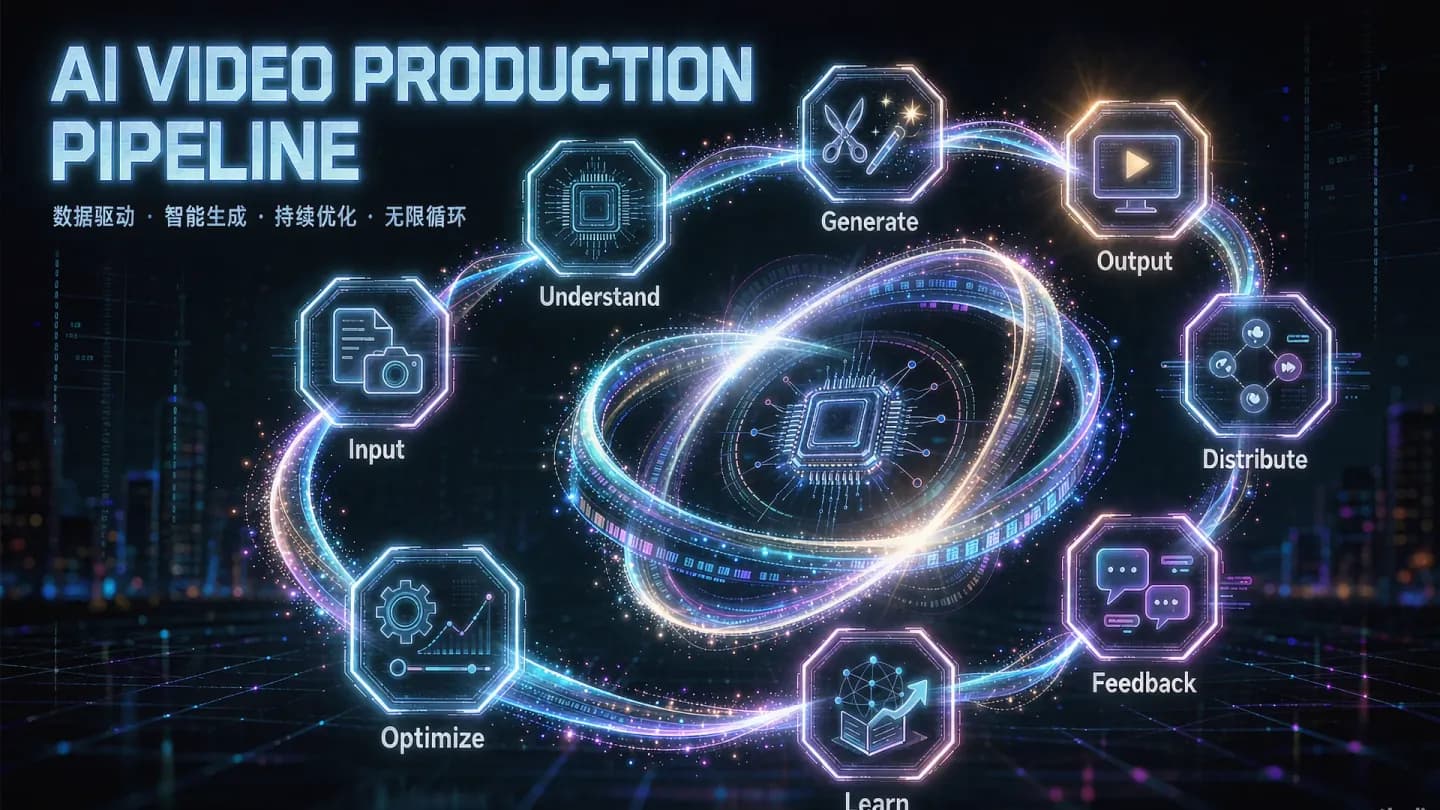
From point tools to one system
A creative-media loop is the 2026 operating model that fuses AI video generation, media buying, performance diagnosis and re-generation into a single system instead of a chain of disconnected tools. Brand teams that close the loop stop shipping one-off clips and start feeding performance signal straight back into the next cut.
For three years the story of AI video was a story of tools. A brand team picked a generator for scripts, another for images, a third for lip-sync, and a fourth for editing, then handed the finished cut to a media buyer who lived in a different console. Each tool was evaluated on its own benchmark and bought on its own line item, which kept the work legible to the way agencies are staffed and budgets are approved.
That separation is now the bottleneck. The platforms shipping in 2026 — Baidu Marketing's September launch of its 擎舵 3.0 creative agent, Google's iteration-first Gemini video models, and Meta's Andromeda-driven retrieval — are not selling a better generator. They are selling one system that generates, ships, reads performance, and generates again without a human copying files between tabs. The point-tool era matched an org chart; the loop breaks that accounting, and the team that owns both stages has to learn a new operating discipline most organizations have not built yet.
What the creative-media loop actually does
A working loop has four stages that feed each other. Generation turns a brief into a batch of cuts. Shipping pushes those cuts into live auctions across Meta, TikTok, YouTube and connected TV. Measurement reads which cut earned the spend and why. Re-generation takes that read and produces the next batch — new hooks, new angles, new aspect ratios — without restarting the brief from scratch.
The difference from a traditional workflow is not speed, though the loop is faster. It is that the output of media buying becomes the input of creative. When a cut underperforms, the system does not file a postmortem; it mints a replacement. Volume stops being a campaign event and becomes the steady state of the operation, and the constraint moves from how fast you can make a clip to how fast you can judge one.
Operators who have run this at scale describe the healthiest accounts as portfolios, not pipelines. A small share of cuts absorbs most of the budget because the loop has proven them out; a larger share keeps performance stable; and a deliberate slice of losers is the tuition the system pays to keep discovering. The loop's job is to keep that portfolio balanced automatically, promoting winners and retiring fatigue before a human notices the decay in the numbers.
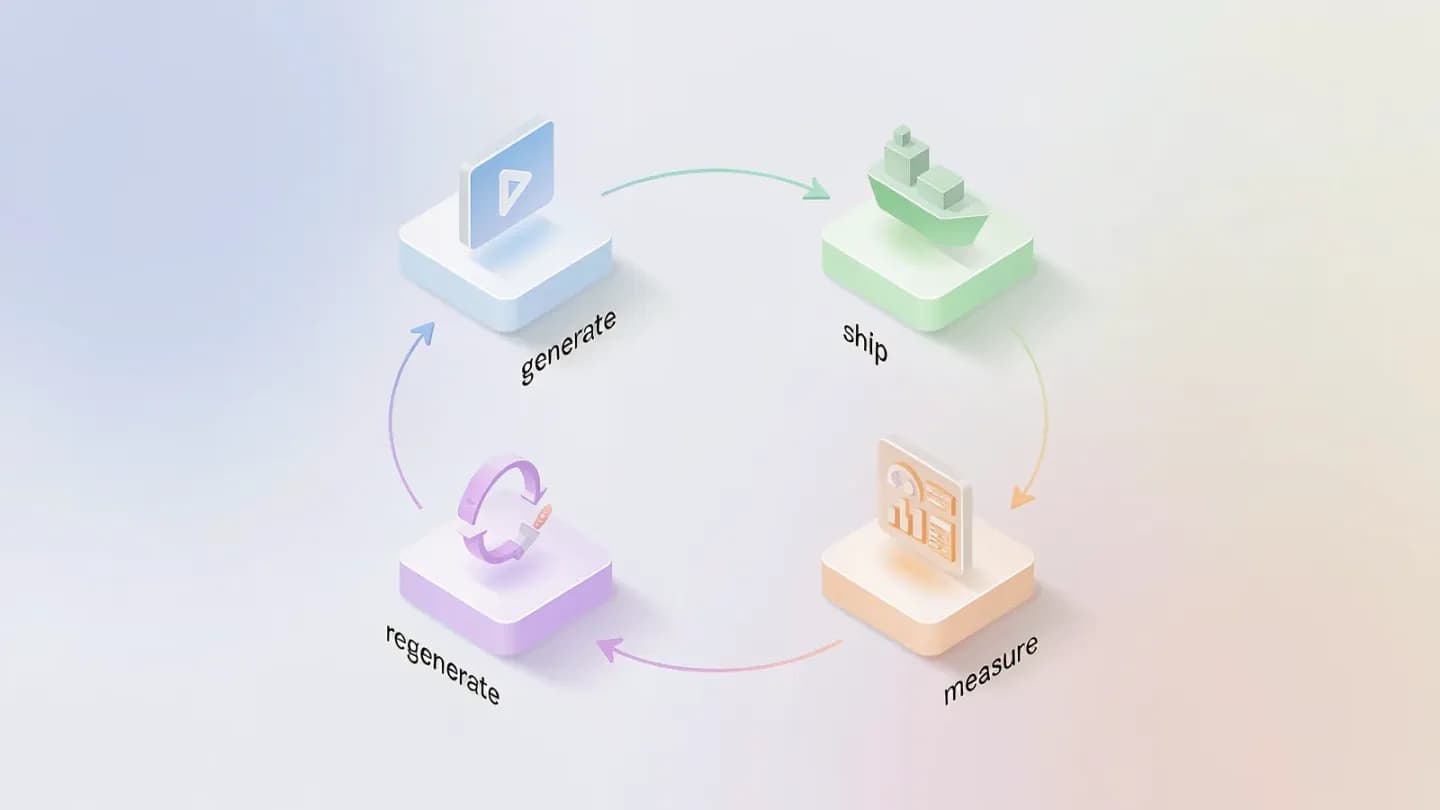
Why brand-video teams are the ones who feel it first
Video is the most expensive asset a brand produces, so it has the most to gain from a loop and the most to lose from a broken one. A single hero film used to absorb weeks of scheduling; now the same brief can spawn dozens of variants in an afternoon, each one a fresh experiment the auction can judge on its own merits rather than on the strength of the brief that spawned it.
The bottleneck has already moved off the model and onto throughput, which is why the {{link}} now gates campaign-scale production more than any single generator. Teams that treat generation as the hard part are optimizing the wrong stage — the loop moves the constraint to approvals, versioning and the handoffs between creative and media, which is where most campaigns actually stall today.
The practical consequence is that creative direction moves earlier, not later. Because the loop will produce the variants, the human's leverage shifts to the brief, the brand block, and the kill threshold — the rules that decide what the system is allowed to try. A weak brief multiplied by a fast loop is just fast slop, which is why the loop raises the value of judgment rather than replacing it.
The bottleneck has already moved off the model and onto throughput, which is why the AI video render queue now gates campaign-scale production more than any single generator.

The measurement gap the loop is supposed to close
The loop is seductive because it promises to close a gap brands have been unable to close by hand. Epsilon's 2026 benchmark of 250-plus marketing decision-makers found that 100% of surveyed marketers now use AI, yet only 9% use it primarily for revenue generation while 71% use it for productivity, and 45% name data quality as their top challenge. A loop that reports per-cut performance turns that vague productivity into attributable outcomes a finance team can read.
This is the same pressure behind the finding that {{link}} even as adoption climbs — the loop is the structural answer to proving spend works. IAB's 2026 digital video report puts U.S. spend above $80B and finds nearly all buyers see a role for agentic AI, while advertisers still want more proof that generative creative actually performs before they hand it the budget.
When {{link}} and buyers rank measurement over creative, a loop that reports per-cut performance becomes the only defensible way to keep funding. Without that reporting layer, more cuts just mean more unmeasured activity, and the loop quietly reproduces the exact problem it was meant to solve.
None of this requires the loop to be fully autonomous on day one. The same IAB data shows buyers want governance and explainability before they hand creative fully to agents. A proof-seeking brand can run a semi-closed loop — a human approves the refresh, the system proposes it — and still capture most of the measurement benefit while keeping a person accountable for what ships into a live auction.
This is the same pressure behind the finding that AI video ROI is falling even as adoption climbs — the loop is the structural answer to proving spend works.
When AI video budget is tightening and buyers rank measurement over creative, a loop that reports per-cut performance becomes the only defensible way to keep funding.
Provenance is the loop's missing layer
A loop that generates, ships and re-generates without a human in the seat creates an accountability problem the first version of these systems ignore. If a cut is edited five times by an agent and then flagged by a platform for disclosure, who can show what changed and when? The answer has to travel with the file, not live in a separate log that nobody opens until there is a problem.
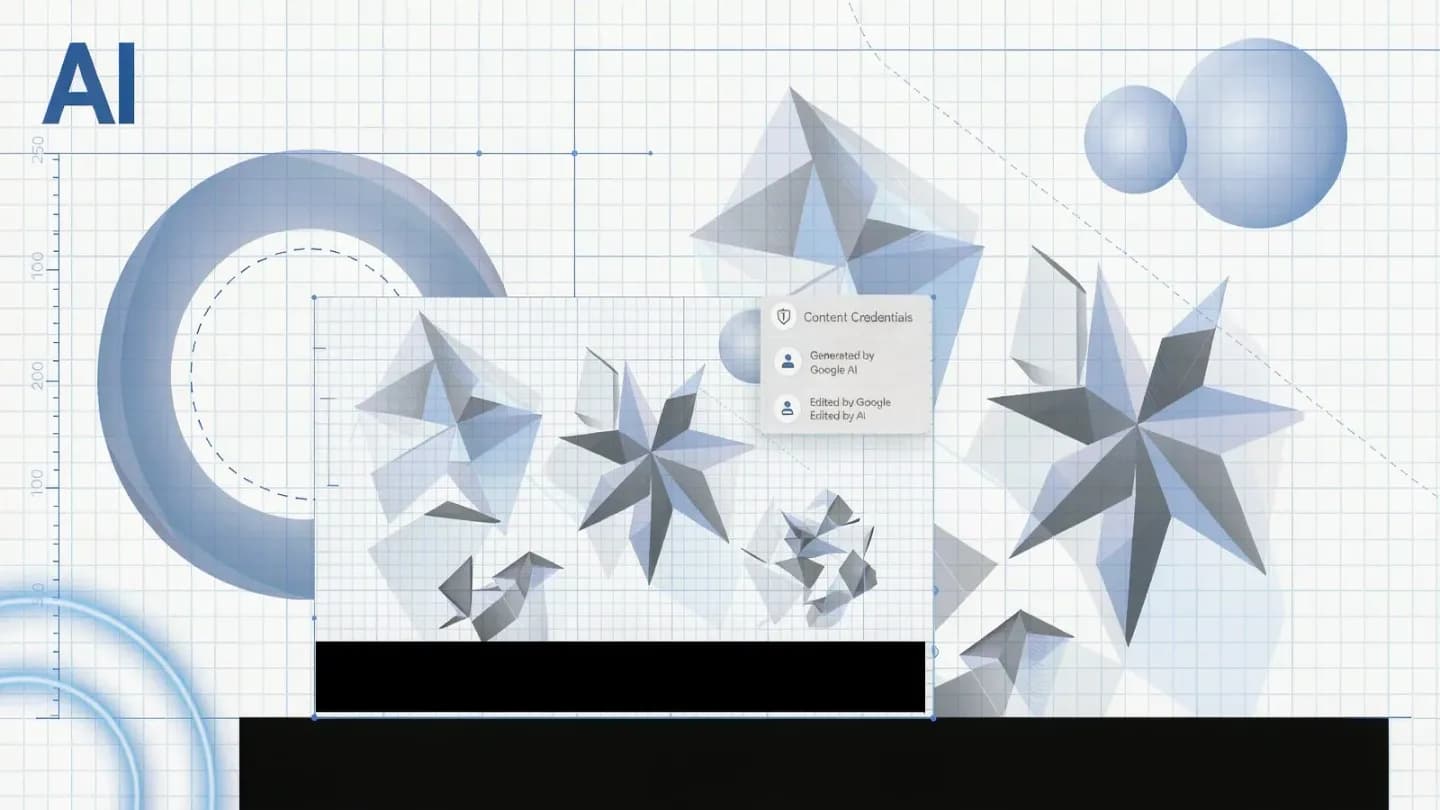
That is the job of a provenance standard. C2PA's open Content Credentials bind a media file's origin and edit history to the file itself, functioning like a nutrition label for digital content that anyone can inspect. A loop that stamps every generated and edited frame at export is the only one a brand can defend in front of a regulator or a publisher, because the trail survives every handoff the system makes.
Provenance also protects the loop from its own success. As generated and edited frames multiply, the only way to trust any single cut is a trail that survives every re-generation. Stamping at export, when the file is still under the brand's control, is far cheaper than reconstructing the history after a platform or a regulator asks for it, and it keeps the loop eligible for the inventory buyers still treat as accountable.
What to build before you plug in
Before a brand wires its generator into a buying platform, three things have to exist. A measurement schema that ties each cut to a business event, not just a view. A provenance record stamped at export. And a human review gate that decides which directions the loop is allowed to explore without asking, so speed never outruns the brand's risk tolerance.
The organizational shift is already underway: teams that treat the loop as a system, not a tool, look a lot like the {{link}} reshaping ad agencies in 2026. The winners will not be the teams with the best generator. They will be the teams that built the governance the loop needs before they switched it on, because the loop only compounds whatever discipline you give it.
Start small. Pick one campaign, one platform, and one business event. Close the loop there, prove the per-cut number, and only then expand. A loop you cannot audit is worse than the point tools it replaced, because it fails faster and at higher volume while looking like progress.
The trap to avoid is treating the loop as a productivity hack. A loop that only makes more cuts faster solves the problem nobody had in 2023 and worsens the one brands have in 2026: too much content, too little proof. The loop earns its keep only when every turn of it answers a measurement question the business actually asked, not when it simply raises the count of clips in the account.
The organizational shift is already underway: teams that treat the loop as a system, not a tool, look a lot like the AI-native agency restructure reshaping ad agencies in 2026.
Put the framework into production
These related pages connect the article’s planning advice to a specific commercial scope.
References
- C2PA Content CredentialsC2PA (Coalition for Content Provenance and Authenticity)
C2PA's open Content Credentials standard binds a media file's origin and edit history to the file itself, functioning like a 'nutrition label' for digital content that anyone can inspect.
- 2026 Benchmark Study: Marketing's AI Inflection PointEpsilon
Epsilon's 2026 study of 250-plus marketing decision-makers found 100% of surveyed marketers use AI, but only 9% use it primarily for revenue generation while 71% use it for productivity, and 45% cite data quality as their top challenge.
- 2026 IAB Digital Video Ad Spend & Strategy ReportIAB
IAB's 2026 report puts U.S. digital video ad spend above $80B and finds nearly all buyers see a role for agentic AI in video buying, while advertisers still want more proof of generative creative performance.