
Full-duplex AI video turned the deliverable into a live endpoint
Full-duplex AI video crossed a threshold in October 2026: Tavus's Griffin model held a one-minute video call that 48% of participants believed was with a real person. For commercial teams the implication is not a better avatar. It is that the AI video deliverable stops being a file you review and ship, and becomes a live endpoint you have to govern while it is speaking.
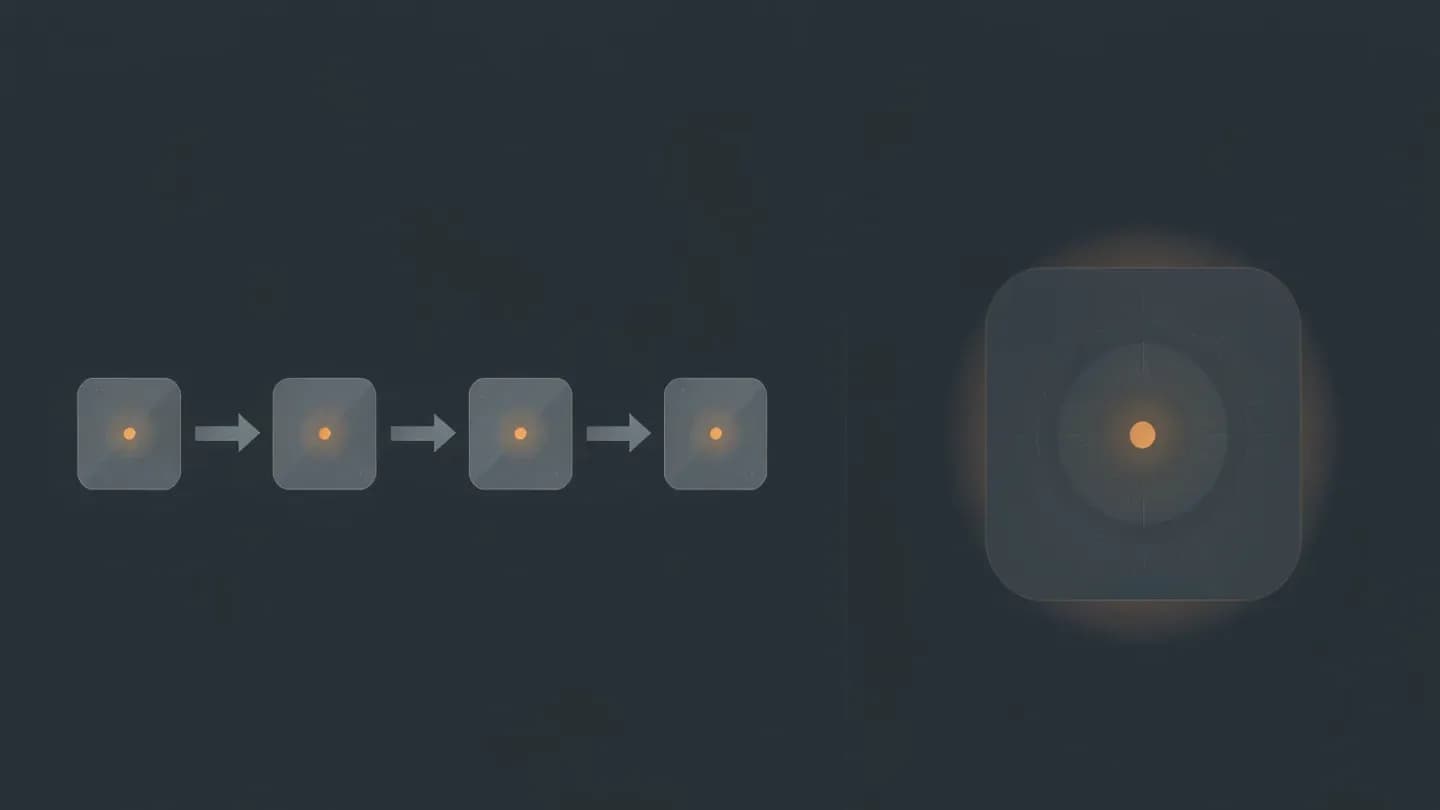
The architectural shift matters more than the headline. Tavus describes its earlier stack as a relay: one model transcribes speech, a language model writes the reply, other systems turn that reply into a voice and a face, and every handoff adds delay while discarding information the next system never sees, including tone and what is on camera. Griffin folds perception, conversation and expressive video generation into a single video-to-video system that listens while it talks and reads expressions and pauses rather than words alone. That is why the commercial question changes shape. In September 2026 the demand side moved when Google, OpenAI and Amazon each turned the ad unit into a destination, which we covered as {{link}}. The supply side is now answering it. A model that both listens and generates face-to-face conversation removes the pre-recorded presenter from the process, and with it removes the assumption that a brand asset is finished the moment it renders.
In September 2026 the demand side moved when Google, OpenAI and Amazon each turned the ad unit into a destination, which we covered as conversational video ad units.
What the Turing test claim actually measures
Read the claim precisely before planning around it. Tavus ran the study through an independent research platform: 54 participants had a one-minute video call on Griffin-Lite about what they were looking forward to that year, and were told the partner was AI only at the end. 48% believed they had spoken with a real human. On the previous stack, powered by Phoenix 4.5, Sparrow-2 and Raven-1, the same protocol produced 2.4% across 41 participants. Confidence was not meaningfully different between the two groups, averaging 79% for those who said real and 81% for those who said AI. Doubts, where they came, surfaced inside the first twenty seconds, so the uncanny valley in this test was shallow and fast rather than something viewers learn to detect over a longer conversation.
NVIDIA's VideoFDB benchmark gives an independent read on the same capability, and it is more sober than a single Turing pass rate. On the perception track Griffin-Lite scores 3.73 overall against a human reference of 4.20, with conversational flow at 3.67 and visual grounding at 3.92. On generation the same model scores 3.83 against a human reference of 3.92, leaving a gap of 0.09 where the previous best system trailed by more than a full point. Turnover-rate alignment, which measures how closely the model's timing tracks a human conversation, is 62.8% on generation and 73.8% on perception, the highest of any system on both tracks. For comparison, Gemini 2.5 Flash Native scores 3.17 on perception at a 3160 ms median latency, OpenAI's gpt-realtime scores 2.75 at 5400 ms, and the open-source MiniCPM-o 4.5 scores 3.40 at 720 ms. Human conversation sits at 90% alignment and 1400 ms. Nobody is at human parity: the best full-duplex systems are close on generation and visibly behind on perception.

Why cascaded pipelines structurally cannot reach this
The benchmark's most useful finding for a production team is not a score at all. VideoFDB evaluates cascaded speech-to-avatar pipelines and finds their limitation architectural rather than a matter of tuning. Audio-driven avatars are effectively turn-based: motion follows produced speech, so they cannot insert a nonverbal cue during the user's turn, which is precisely the moment when real conversation signals that the floor is still yours. The measured cost is severe. Nonverbal cue appropriateness falls from 3.18 for human ground truth to between 1.13 and 1.71 for cascaded avatars, and cascade latency runs 2.8 to 3.5 seconds behind human reference. That is not a latency you can hide with a faster GPU, because the missing behaviour is a missing capability in the pipeline shape.
A second limit is worth planning around even when a single system does the talking. VideoFDB reports that audio is processed at millisecond resolution while these models typically take video at 1 frame per second, which misses dynamics that unfold inside one to two seconds. Nonverbal interruption requires yielding within 1.5 seconds, and the leading systems miss that window: Gemini 3.1 Flash Live lands 1.7 seconds late. Raising the user-controllable frame rate, which only one leaderboard model exposes, makes things worse past 2 frames per second as fluency falls from 3.55 to 2.33. Two named failure modes will look familiar to anyone who has shipped an interactive product: captioning collapse, where the model narrates the user's appearance instead of conversing, and visual-stream ignorance, where the audio and audio-visual outputs are paraphrases of each other.
From a deliverable you approve to a deliverable you govern
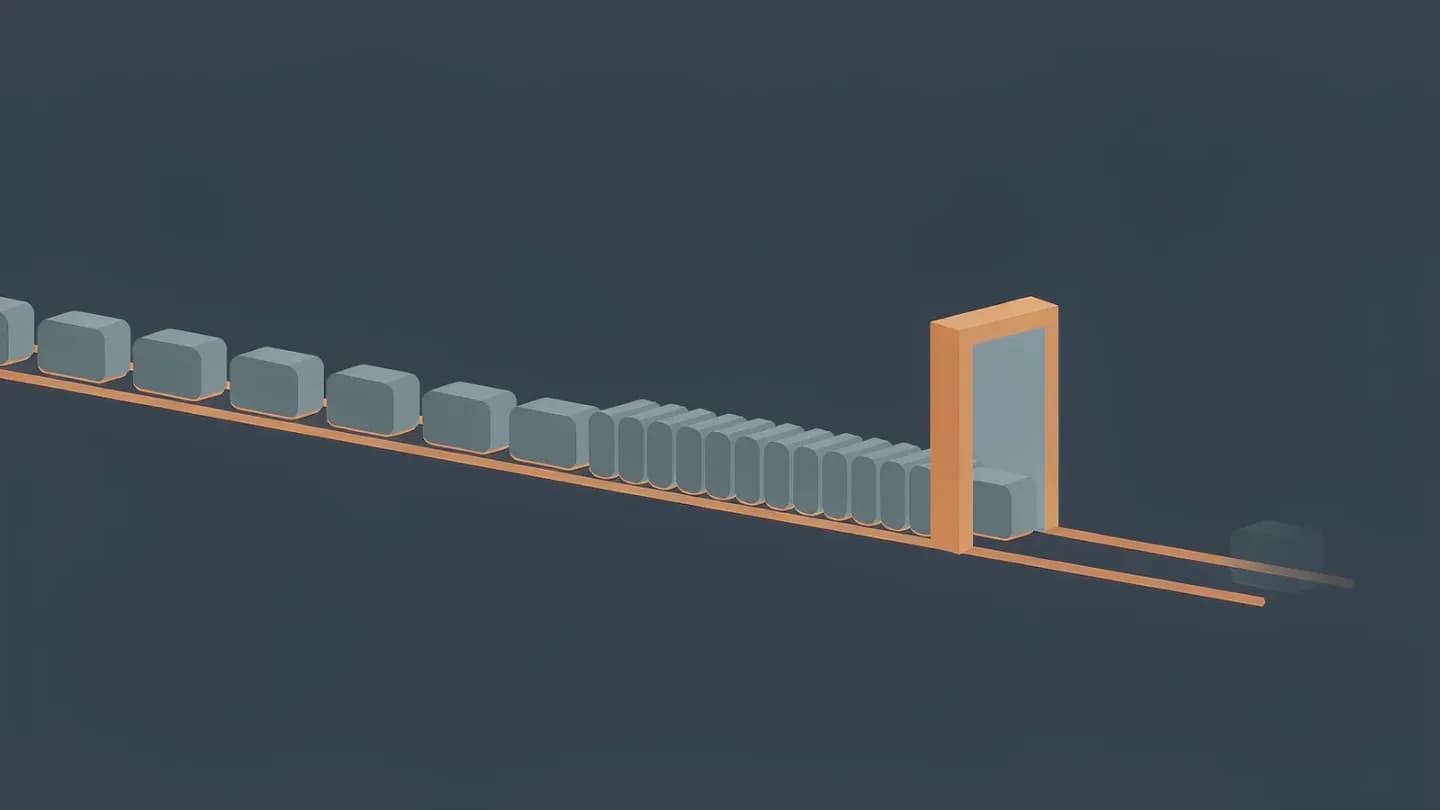
Every control in a commercial AI video workflow assumes a fixed artifact. A script is approved, a cut is reviewed, a disclosure is attached to a file, and a reviewer signs off on the thing that ships. A live full-duplex endpoint breaks that assumption at the root, because the words spoken in session 4,000 were not words anyone approved. The unit of approval stops being the film and becomes the session, and a session is not something you can review before it happens. If your quality process still ends at export, you have built a gate with nothing behind it.
It also changes what a review checklist can ask. Provenance, platform disclosure, aesthetic trust and accessibility all remain necessary, but they stop being line items you confirm once. Provenance now describes a live session rather than a rendered file, so your records must capture a rolling behaviour rather than a static property. Disclosure has to survive an unscripted exchange, so it cannot rely on a caption the model might paraphrase away. Accessibility stops being a subtitle pass at the end and becomes a constraint on how the model is allowed to speak. This is the same shift we described when {{link}} in the pipeline, except that the handoff no longer marks the end of the process.
This is the same shift we described when turning the editorial handoff into the last human gate in the pipeline, except that the handoff no longer marks the end of the process.
A runtime governance model you can actually run
The teams shipping these endpoints treat governance as a set of runtime controls rather than a document. First, a session-scoped disclosure channel that the model cannot turn off: the disclaimer is a property of the endpoint configuration, not a caption the model generates, so it cannot be paraphrased away. Second, a bounded topic envelope, the practical answer to unbounded output. You constrain what the endpoint will discuss and what it will commit to on a brand's behalf, and anything outside the envelope routes to a human instead of being answered. Third, an escalation path with a named owner, so a viewer who asks something the envelope cannot cover reaches a person rather than a confident improvisation. Fourth, transcript and event capture treated as a governed production artifact, because once you are making claims in a live session you need the record, the retention rule and the sampling rule written down before launch.
The rights stack sits on top of that model and is not optional. A model that generates an endless stream of unscripted speech is generating performance, and performance creates rights exposure that a one-off clip does not. The consent problem we mapped for {{link}} applies here with a longer fuse: a face and voice approved for one bounded piece of advertising is not obviously approved for answering whatever a stranger asks it at three in the morning. {{link}} adds a second layer here, because disclosure rules that currently live in ad review and platform policy will increasingly be checked against a live session rather than a creative submitted for approval. Budget accordingly. The cost of running a governed live endpoint is not the model licence, and it is not the credits. It is the specification work, the escalation staffing and the transcript retention, and none of those line items appear on a vendor price list.
platform-level enforcement of synthetic creative adds a second layer here, because disclosure rules that currently live in ad review and platform policy will increasingly be checked against a live session rather than a creative submitted for approval.
The consent problem we mapped for synthetic likeness and the consent gap applies here with a longer fuse: a face and voice approved for one bounded piece of advertising is not obviously approved for answering whatever a stranger asks it at three in the morning.

What to plan for through 2027
Plan for capability, not for availability. Griffin-Lite is a research preview for selected testers and Griffin is not on the Tavus platform yet, with the company stating it will only release once the safety questions are worked out and safe disclosure features are in place. That release gate is itself the most useful signal in the launch: a vendor whose model can pass a Turing test chose to withhold it precisely because the deception risk is real. Any roadmap that assumes a generally available full-duplex endpoint within two quarters is building on someone else's governance timetable.
The practical 2027 plan is unglamorous. Write the runtime governance specification before you commission the pilot, because the specification is what determines whether a pilot is worth running. Decide which use cases are genuinely conversational and which are a wrapped-up question-and-answer that should stay a finished film. Budget the human escalation staffing as a production cost rather than a support cost. And keep the finished-asset workflow intact, because for most commercial video work a reviewed file is still the right deliverable. The question for commercial teams is not whether the technology works, because it demonstrably does, but whether the asset is one you can still be accountable for.
Put the framework into production
These related pages connect the article’s planning advice to a specific commercial scope.
References
- Tavus Griffin: the first Human Interaction ModelTavus
Tavus announced Griffin on 1 October 2026 as its first Human Interaction Model, a single unified video-to-video system that listens while it talks and reads expressions and pauses rather than words alone, replacing the earlier relay of Phoenix 4.5, Sparrow-2 and Raven-1. In a live study run through an independent research platform, 48% of the 54 participants who had a one-minute video call on Griffin-Lite believed they had spoken with a real human, against 2.4% of 41 participants on the previous stack. Confidence averaged 79% among those who said real and 81% among those who said AI, and doubters tended to suspect within the first 20 seconds. Griffin-Lite is a research preview limited to selected testers, with the company stating that release requires additional safety work including safe disclosure features. NVIDIA scored these results in September 2026: Griffin-Lite reached 3.83 on VideoFDB generation against a human reference of 3.92 and 3.73 on perception against 4.20.
- VideoFDB - Evaluating Full-Duplex Vision-Speech Capabilities in Conversational AgentsNVIDIA Research
VideoFDB is the first benchmark for full-duplex audio-visual-to-audio-visual conversational agents, built on 237 expert-annotated dyadic clips from real two-person video calls spanning 11 nonverbal conversational dynamics, scored by an LM judge on a 0-5 scale. Human conversation scores 4.20 overall on perception at 90% takeover-rate alignment and 1400 ms median latency. Tavus Griffin Lite scores 3.73 at 73.8% and 2232 ms; Gemini 2.5 Flash Native scores 3.17 at 72% and 3160 ms; OpenAI gpt-realtime scores 2.75 at 72% and 5400 ms; MiniCPM-o 4.5 scores 3.40 at 73% and 720 ms. Cascaded speech-to-avatar pipelines fall from 3.18 to between 1.13 and 1.71 on nonverbal cue appropriateness, with latency 2.8 to 3.5 seconds behind human ground truth, because audio-driven avatars are effectively turn-based. The benchmark also reports that these models typically take video at 1 frame per second, and nonverbal interruption requires yielding within 1.5 seconds.
- VideoFDB: Evaluating Full-Duplex Vision-Speech Capabilities in Conversational Agents (arXiv:2605.30256)arXiv (Mazumdar, Park, Roy, Srihari, Wang, Zhou, Wang, Nagano, De Mello; NVIDIA and David AI)
The preprint of record for VideoFDB, published 28 May 2026, contributes 237 dyadic clips spanning 11 nonverbal conversational dynamics, a taxonomy separating perception from generation behaviour, and a rubric-based LM-as-judge framework with stable cross-judge agreement of 77 to 89% within one point. It reports systematic failure modes of captioning collapse and visual-stream ignorance, and finds that cascaded speech-to-avatar systems fundamentally preclude the production of full-duplex nonverbal cues, establishing VideoFDB as the first benchmark for full-duplex audiovisual interaction.