Synthetic Likeness in Video Ads Is Easy to Make and Hard to Clear
Synthetic likeness in video ads — a clip that shows a real person saying or doing something they never actually did — has gone from a Hollywood effect to a lunch-break task. A marketer can now feed a few reference frames into a text-to-video model and get back a believable cameo of a celebrity, an employee, or a customer in minutes, with no contract and no camera. The technology outran the paperwork.
That speed is exactly why the consent gap is widening. The same model that makes the clip does not ask who owns the face or the voice it is copying, and most brand workflows have no step that does either. A cut that would have required a signed endorsement deal a year ago now ships with a prompt and a hope. The result is a category of creative that is cheap to produce and expensive to defend.
The commercial pull is obvious: a synthetic cameo skips casting, travel, and usage fees, and it versions endlessly for new markets and AB tests. For a team under pressure to ship more cuts per week, that economics is hard to resist — which is exactly why the missing consent step gets skipped under deadline.
What Counts as a Synthetic Replica of a Person
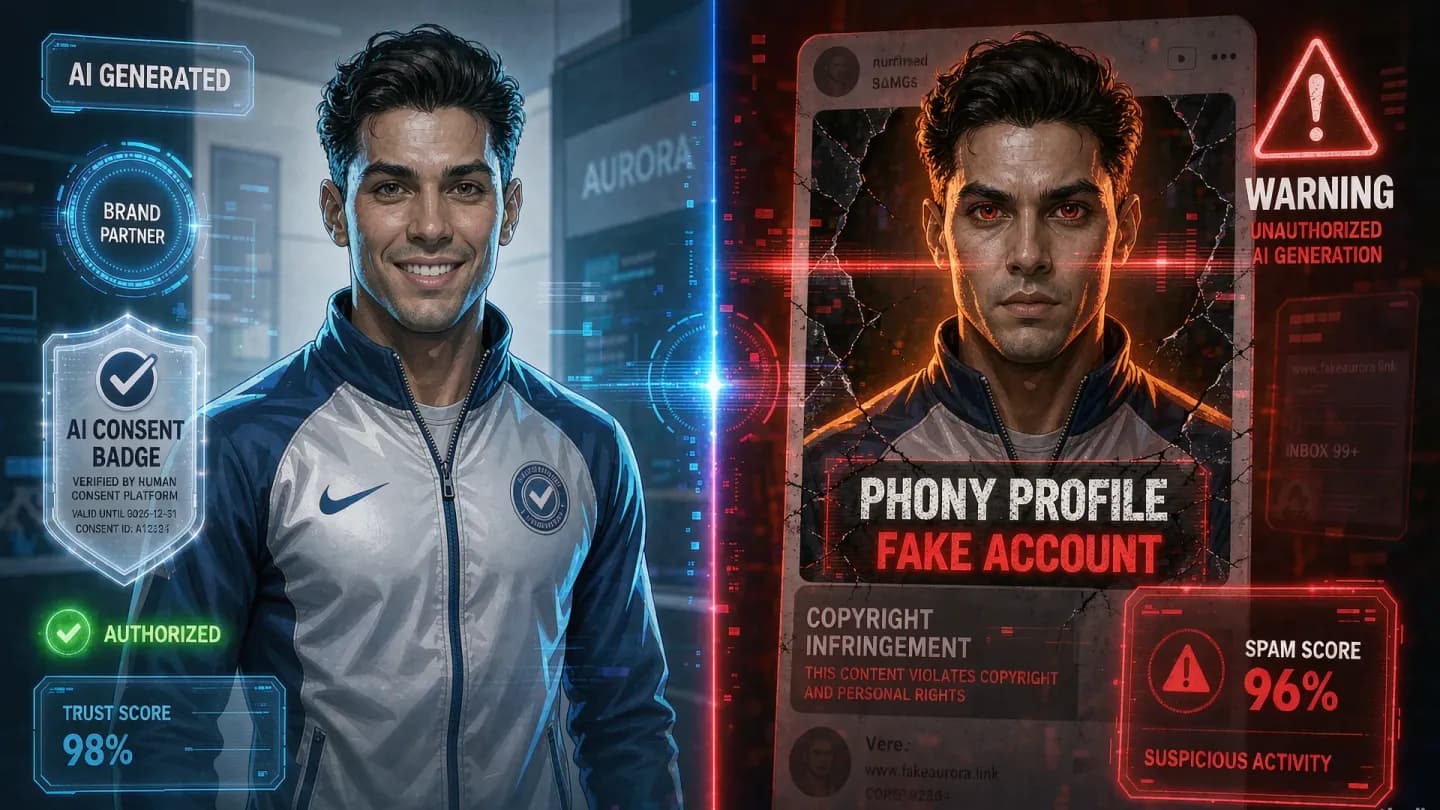
Not every AI-generated human triggers the problem. A clearly fictional character, or a labeled AI avatar built from scratch, sits in a different legal and ethical bucket from a replica that a viewer would reasonably take for a specific real person. The risk line is resemblance plus plausibility: if the output is identifiable as someone who exists, and it depicts them in a way they did not approve, the consent question is live whether or not the face is pixel-perfect.
The practical test teams are adopting is simple — if a viewer might mistake the synthetic person for the real one, treat it like casting. That is why many production pipelines now route any real-person replica through {{link}}, where a labeled, consented virtual presenter is the default and an unlabeled clone is the exception that needs sign-off.
Voice is the slept-on half of the problem. A cloned voice needs far less reference audio than a face and drops easily into an existing soundtrack, so a 'real person saying your tagline' can appear with no video of them at all. The same resemblance-plus-plausibility test applies: if a listener would recognize the voice, the consent duty travels with it.
That is why many production pipelines now route any real-person replica through labeled AI avatars, where a labeled, consented virtual presenter is the default and an unlabeled clone is the exception that needs sign-off.
The Right-of-Publicity Problem Brands Underestimate
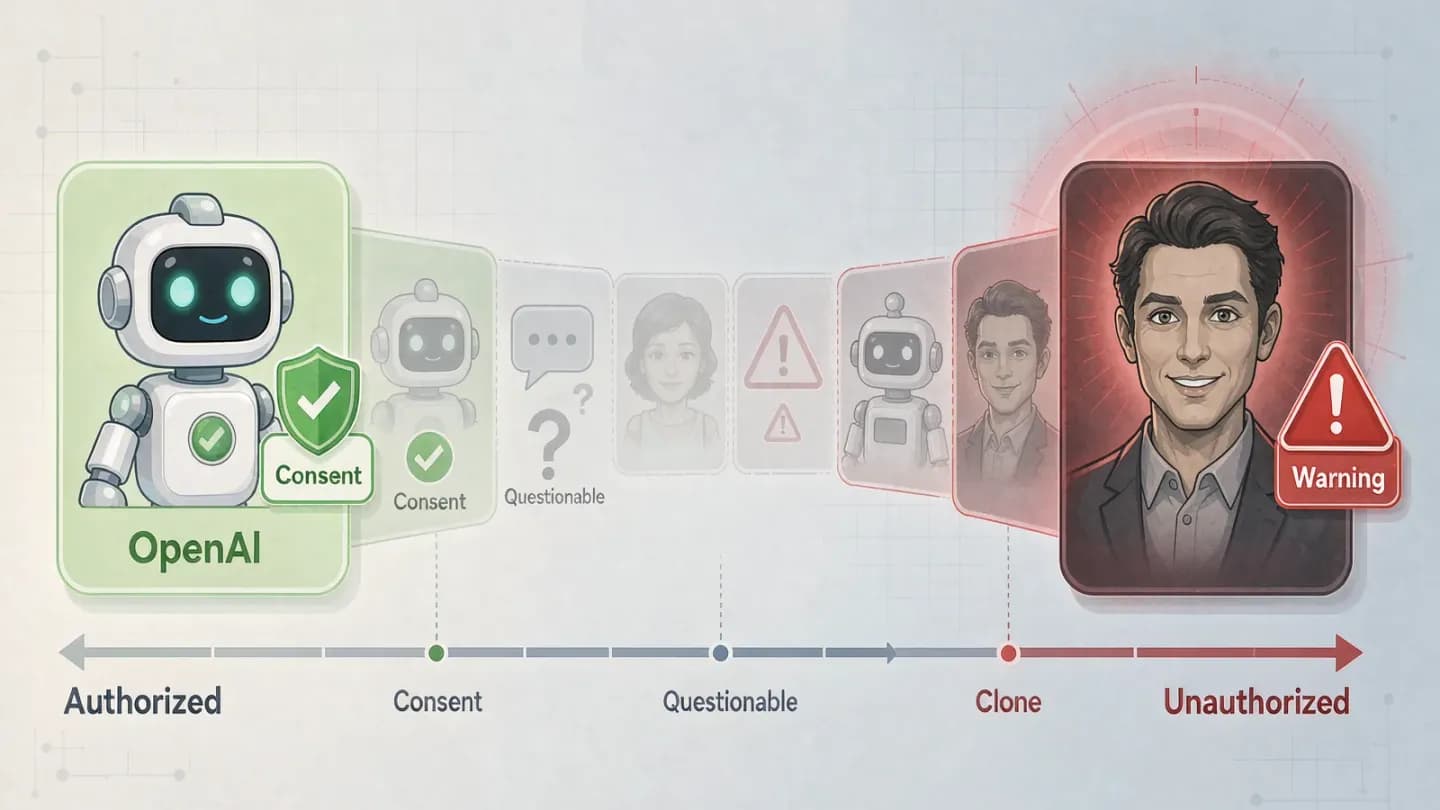
Right of publicity is the legal right of a person to control the commercial use of their name, image, voice, and likeness — and in 2026 it is expanding fast at the state level. Tennessee expanded its ELVIS Act to cover AI-generated voice and likeness, and other states are moving the same direction, turning 'we generated a cameo' from a creative choice into a potential unauthorized-advertising claim. The brand exposure is not hypothetical; it is a settlement waiting to happen.
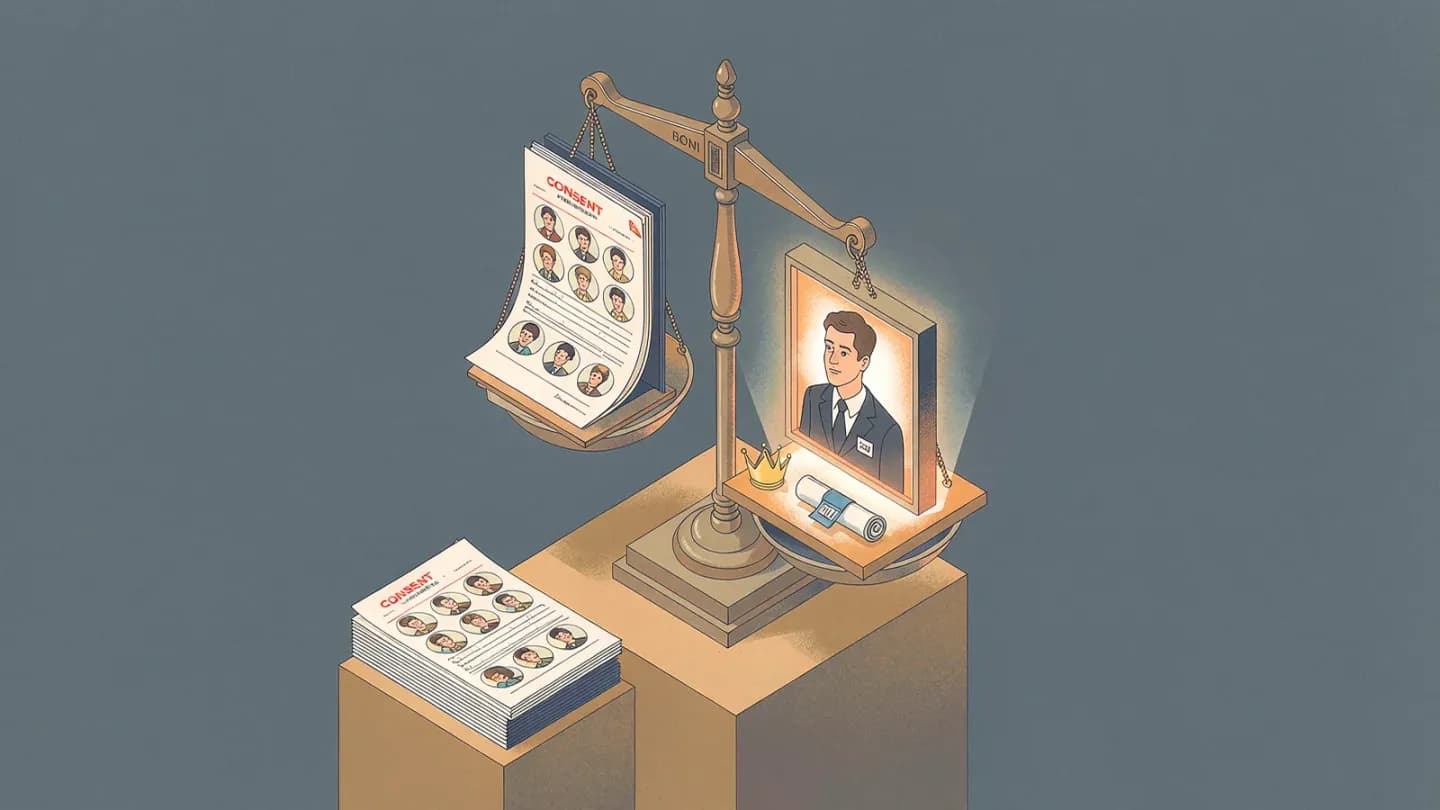
The defensive habit is to log every real-person replica as if it were a paid appearance, with the same paper trail a real endorsement requires. Teams that already keep {{link}} can extend that record to synthetic talent, so the who-consented-and-when question has a written answer the day a lawyer asks it.
The squeeze reaches creators brands pay legitimately, too. An influencer contract that covers posting rarely covers an AI clone of that person for a sister brand or a year after the deal ends, and courts increasingly read likeness broadly. The safe read is that any reuse of a person's synthetic image needs its own clearance, not a quiet extension of an old one.
Teams that already keep a compliance logging discipline can extend that record to synthetic talent, so the who-consented-and-when question has a written answer the day a lawyer asks it.
Deepfake-Disclosure Rules Are Now Law, Not Etiquette
Disclosure has moved from best practice to statute. The EU AI Act's transparency rules, effective in August 2026, require AI-generated content to be identifiable and deepfakes to be 'clearly and visibly labelled' — a mandate that reaches any video ad a European audience can see. What was once a trust nicety is now a compliance item with a regulator behind it, and platforms are building the labeling duty into their ad policies rather than leaving it to the creator.
The pattern is global: as synthetic content becomes routine, the platforms that distribute it are being pushed to police it. {{link}} already require creators and advertisers to mark altered or AI-generated material, which means an unlabeled likeness is not only a legal risk but a policy violation that can pull the ad entirely.
The US has no single federal deepfake-ad statute yet, but the FTC's deceptive-practices authority already reaches ads that imply an endorsement a person never gave, and several states now mandate labeled disclosure of synthetic media. The practical effect is a patchwork where the strictest rule wins — so a global campaign should default to the EU's visible-label standard everywhere.
Google's ad-label policies already require creators and advertisers to mark altered or AI-generated material, which means an unlabeled likeness is not only a legal risk but a policy violation that can pull the ad entirely.
Provenance Standards Make the Consent Gap Visible
The reason unlabeled replicas slip through is that nothing in the file says where the person came from. Provenance standards close that hole. C2PA's Content Credentials act like a nutrition label for media, recording who created or altered a file and how, so a synthetic clip carries its own origin story instead of relying on the viewer to guess. A buyer or a platform can read the credential and see whether a real person was involved and whether consent was logged.
Provenance only protects you if someone checks it before the ad goes live. A pre-ship {{link}} is what turns provenance from a nice-to-have into a gate that actually catches an unlabeled replica, the same way a trust check catches a misleading claim or a broken accessibility flag.
The real win with provenance is that it travels with the asset. Once a consent check is written into the credential at generation time, every downstream user — editor, media buyer, platform — can verify it without re-litigating the original permission. That turns consent from a one-time legal favor into a property of the file, the way a license travels with stock footage.
A pre-ship trust-QC gate is what turns provenance from a nice-to-have into a gate that actually catches an unlabeled replica, the same way a trust check catches a misleading claim or a broken accessibility flag.
How Video and Ad Teams Close the Consent Gap in 2026
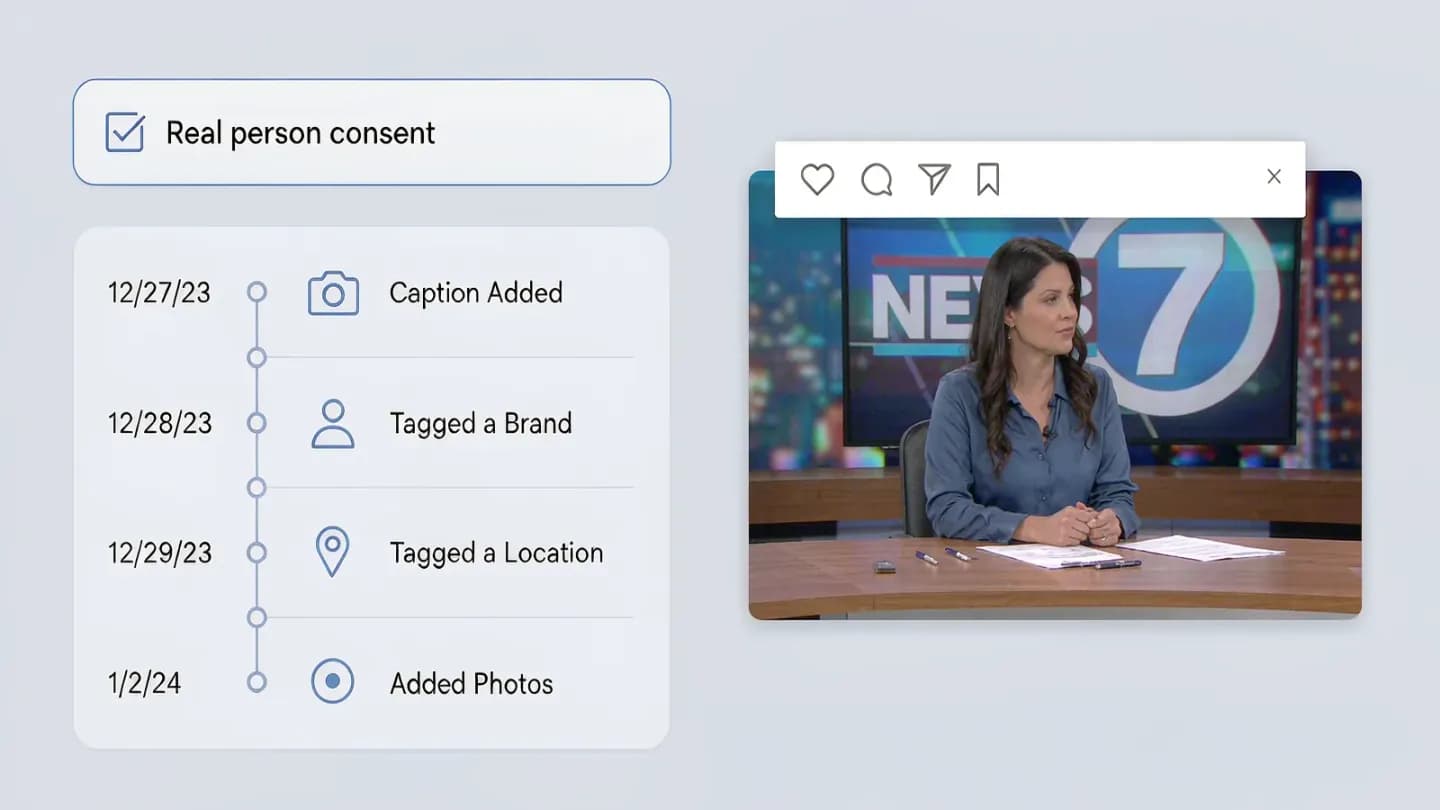
Closing the gap is less about new tools than new habits. The first is a consent step in the brief: any real-person replica gets the same clearance a real actor would, logged before generation starts rather than after the cut is finished. The second is a labeling step in the export: the synthetic person is marked wherever the ad runs, not just where the brand remembers to. Together they convert a legal gray area into a repeatable step.
The regulatory map is still patchy, but the direction is clear and one state is ahead of the curve. {{link}} walk through what a compliant disclosure looks like, and they are quickly becoming the template other states copy — so building to the strictest known rule is cheaper than retrofitting later.
The teams getting ahead are not the ones with the most advanced generators; they are the ones who made consent and labeling a checkbox in the same tool where they brief the creative. When the step lives in the workflow rather than in a policy doc nobody opens, the synthetic-person ad ships labeled by default and the consent gap quietly closes.
California's transparency rules walk through what a compliant disclosure looks like, and they are quickly becoming the template other states copy — so building to the strictest known rule is cheaper than retrofitting later.
Put the framework into production
These related pages connect the article’s planning advice to a specific commercial scope.
References
- C2PA — Content CredentialsCoalition for Content Provenance and Authenticity
Content Credentials are an open standard that records the origin and edit history of digital content like a 'nutrition label,' making synthetic or altered media identifiable rather than leaving viewers to guess.
- EU AI Act — Regulatory Framework on AIEuropean Commission
The AI Act's transparency rules, effective August 2026, require AI-generated content to be identifiable and deepfakes to be 'clearly and visibly labelled.'
- 2026 IAB Digital Video Ad Spend & Strategy ReportIAB
US digital video ad spend surpasses $80B in 2026; nearly all buyers see a role for agentic AI, but the industry lacks consensus on governance, explainability, and human oversight.
- 2026 Benchmark Study: Marketing's AI Inflection PointEpsilon
100% of surveyed marketers use AI, yet 71% use it mainly for productivity and only 9% tie it to revenue, while 46% measure AI by revenue.