
Platforms became the regulators in 2026
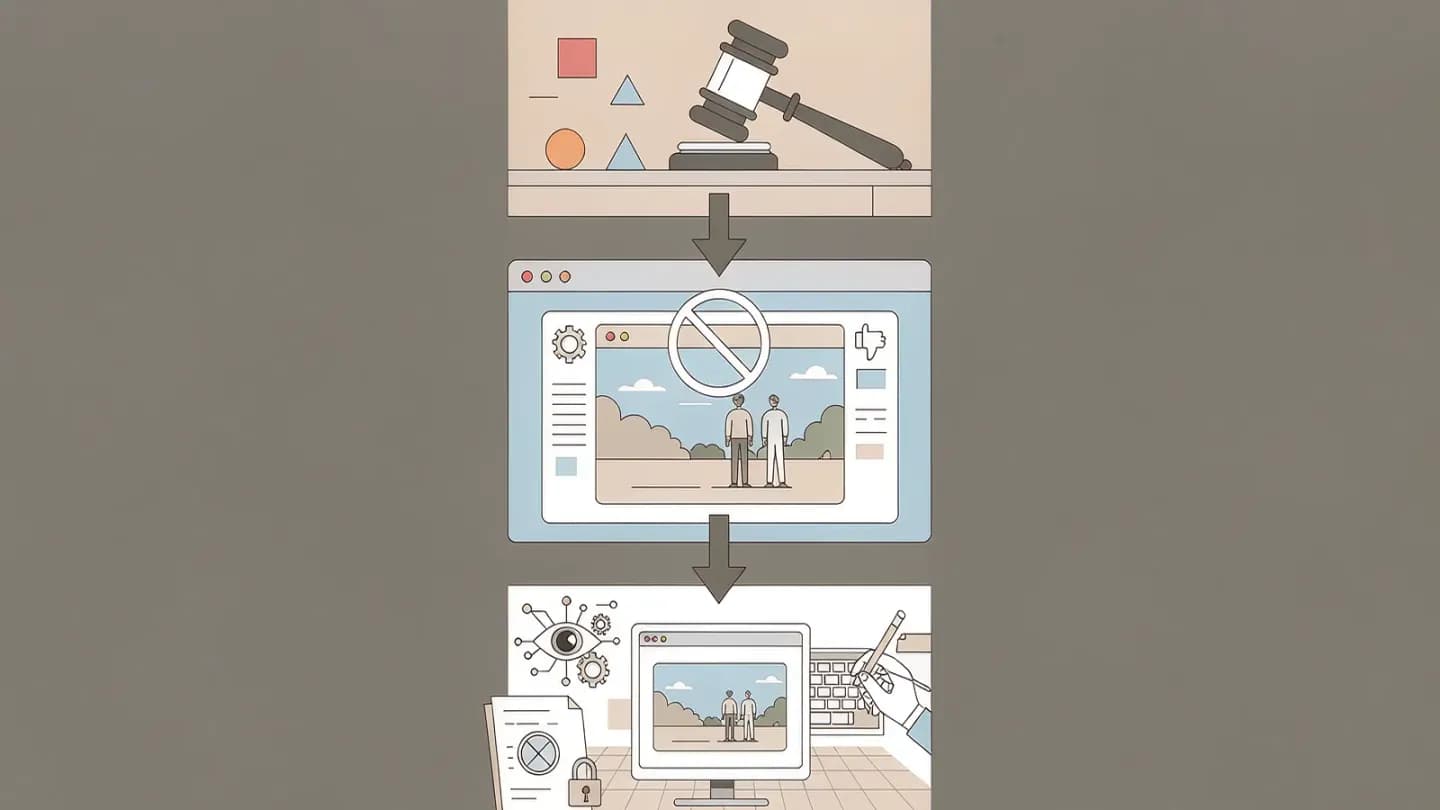
AI video ad enforcement in 2026 no longer waits for a regulator to file a complaint. The ad platforms themselves — Meta, TikTok, and the major exchanges — now police synthetic creative with algorithms and account bans, so commercial video teams have to treat disclosure and provenance as a pre-ship requirement rather than a legal footnote that someone adds at the end.
The shift arrived fast and with little warning for advertisers. In late August 2026, China's 巨量引擎 ad platform reported shutting down more than 50,000 accounts for AI-violation marketing, citing batches of synthetic clips that fabricated product efficacy or pushed misleading before-and-after demonstrations. The action was not a one-off cleanup; it was the operational expression of rules that had been tightening across the industry all year as platforms lost patience with low-quality generative creative flooding their inventories. The cuts shared a shape: promises a product could not keep, delivered through synthetic actors or scenes realistic enough to mislead a casual viewer.
At the same moment, the EU AI Act's transparency rules came into effect in August 2026, requiring providers of generative AI to make AI-generated content identifiable and to clearly label deep fakes and public-interest text. Meta and TikTok had already shipped AIGC disclosure toggles that flag realistic synthetic people and voices. As the data behind the {{link}} shows, generative-video usage among marketers slipped even as adoption stayed near universal, and platform risk is now a reason teams hesitate to ship synthetic creative at all. When a single non-compliant cut can trigger a ban rather than a warning, caution stops being a preference and becomes an operating constraint that shapes the whole production plan from the first storyboard.
As the data behind the CMO pullback on AI video shows, generative-video usage among marketers slipped even as adoption stayed near universal, and platform risk is now a reason teams hesitate to ship synthetic creative at all.
Why AI video ad enforcement is stricter than the law
A written disclosure and a compliant ad are not the same thing once the platform is the one judging you. Recommendation algorithms can demote wholly AI-generated video, and automated review systems can reject or remove unlabeled synthetic media regardless of what the statute technically permits. A small label in the corner does not automatically satisfy an ad reviewer who sees a fabricated product claim or a synthetic person presented as real, and the appeal process rarely moves as fast as the campaign calendar. Reach lost to a demotion is rarely recovered even after the label is fixed.
The practical standard sits above the legal minimum. Platforms want machine-readable signals they can act on at scale, not a sentence a human has to read and interpret. That pushes the real compliance work upstream, into how the asset is built, tagged, and exported long before it ever reaches an ad account. The team that treats enforcement as a pre-production concern spends far less time in appeal queues than the team that treats it as a legal footnote added at the end, when the media plan is already live and the spend is already committed.
Build disclosure into the export step
The cheapest place to disclose is at render time, not after the cut is finished. Baking a persistent on-screen notice or a metadata badge into the export means every variant, every aspect ratio, and every localized version carries the label automatically instead of relying on someone to remember it for each new file. It also survives the format conversions that happen between your studio and the ad server, and it stays consistent across the ten or twenty cuts a single master usually spawns in a paid-social flight.
Disclosure is one of four checks in a {{link}}, sitting alongside provenance, aesthetic trust, and accessibility. Teams that treat it as a gate rather than an afterthought ship far fewer clips that a platform will later flag, throttle, or pull, and they protect the brand from the expensive kind of backlash that comes from a synthetic ad that looked fine in the edit bay but failed review in the wild. Disclosure baked in at export is cheaper than disclosure argued for after a takedown, when the impressions are already lost.
Disclosure is one of four checks in a pre-ship trust-QC gate for AI video, sitting alongside provenance, aesthetic trust, and accessibility.

Attach provenance before the cut ships
Disclosure tells a viewer the content is synthetic. Provenance tells a platform how it was made. C2PA's Content Credentials are an open standard that attaches a machine-readable history of a file's origin and edits, effectively a nutrition label for digital content that anyone can inspect at any time, including the automated systems that screen uploads. The manifest travels with the file, so a reviewer or an algorithm sees the lineage without having to trust the caption.
For commercial video, that means embedding the manifest at the render or export step, so the asset leaves the pipeline already carrying its provenance instead of arriving at the platform as an untraceable black box. When an exchange screens uploads, a verifiable manifest is dramatically easier to clear than a clip with no traceable lineage, and it survives the format conversions that happen between your studio and the ad server without losing its history. A clip that can prove where it came from clears review faster than one that cannot.
As the playbook for {{link}} argues, answer engines and platform algorithms reward content they can verify and attribute, and a tagged, provenanced clip is exactly the kind they surface. Provenance is no longer only a compliance shield; it is becoming a discoverability advantage that compounds across every version of the asset you ship, because each derivative inherits the same verifiable origin instead of starting from zero trust with every new cut.
As the playbook for generative engine optimization for video argues, answer engines and platform algorithms reward content they can verify and attribute, and a tagged, provenanced clip is exactly the kind they surface.

When the platform is also the generator
Enforcement gets harder when the platform itself derives new creative from your upload. Google's video enhancements are turned on by default and use generative AI to flip or extend your original video into new aspect ratios, so a single 16:9 master can spawn 1:1 and 9:16 versions you never explicitly reviewed or labeled by hand. The derivative is yours to answer for even though you never saw it rendered, and the review burden lands on your account the moment it enters an ad auction.
Those auto-generated derivatives inherit the same disclosure and rights questions as anything you produce manually, which is why the case for {{link}} rests on clear provenance and predictable licensing from the first frame. If you cannot trace or license what the platform generated on your behalf, you have outsourced the most regulated part of the workflow to a system that does not answer to your brand guidelines, and a ban on the derivative still lands on your account regardless of who rendered it.
Those auto-generated derivatives inherit the same disclosure and rights questions as anything you produce manually, which is why the case for licensable AI video rests on clear provenance and predictable licensing from the first frame.
The production checklist for 2026
Treat platform enforcement as a build constraint, not a legal review at the end. Before any AI video ad ships: label synthetic content at export, attach a C2PA provenance manifest, keep every claim substantiated and human-reviewed, and confirm that every auto-generated derivative carries the same tags and licenses as the master. These four steps turn a vague risk into a repeatable routine that a junior editor can run without escalating to legal.
Teams that wire these steps into the pipeline stop dreading the next enforcement wave because compliance is already the default output. The platforms are not going to loosen their rules, and the algorithms are only getting better at spotting synthetic creative, so the durable advantage goes to whoever makes provenanced, disclosed, review-ready video the thing the pipeline produces without thinking about it. The teams that win in 2026 are the ones for whom compliant synthetic creative is the path of least resistance, not the exception that needs sign-off.
Put the framework into production
These related pages connect the article’s planning advice to a specific commercial scope.
References
- AI Act — Regulatory framework on AIEuropean Commission
Providers of generative AI must ensure AI-generated content is identifiable; deep fakes and public-interest text must be clearly and visibly labelled; the AI Act transparency rules take effect in August 2026.
- 2026 IAB Digital Video Ad Spend & Strategy ReportIAB
US digital video ad spend surpasses $80B in 2026; targeting and audience reach now rank alongside business outcomes as top video buy criteria; nearly all buyers see a role for agentic AI.
- C2PA — Content CredentialsC2PA
Content Credentials are an open standard giving digital content a machine-readable history of origin and edits, like a nutrition label accessible to anyone at any time.
- About video enhancements (Google Ads Help)Google
Video enhancements are on by default and Google AI flips or extends video into new aspect ratios; Model 2 uses generative AI to extend the original video; the PMax toggle is under Asset optimization > Video > Enhancement.