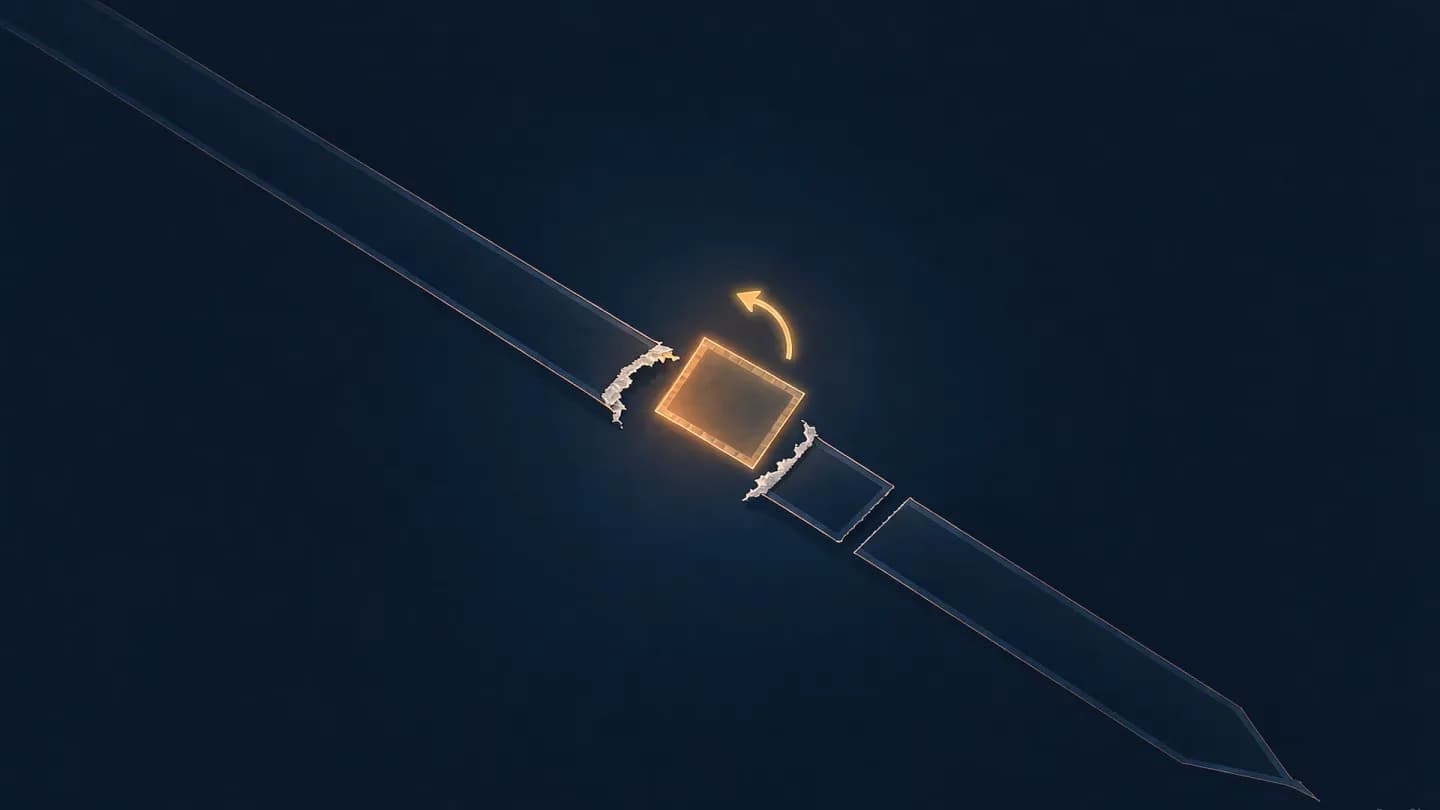
Region-level editing is the edit that changed the unit of work
For most of the generative video era, a flawed take was a dead take: you re-rolled the entire clip and paid for every second again. In 2026 the default flipped. Region-level editing lets a production team keep the shot and repair only the broken region, and the models that shipped it are quietly redefining what a generated video asset is worth.
The unit of work in AI video production used to be the generation attempt. You paid per second generated, reviewed the whole clip, and discarded it if one detail failed — a label, a hand, a background element. Two 2026 releases attack that structure directly. ByteDance's Seedance 2.5, available through the company's official Lumina platform and API, adds region-level editing on top of 30-second single-pass generation. Netflix's research team open-sourced VOID, a video object removal model that repairs the physical consequences of an edit, not just the pixels.
That shift matters because everything else in the 2026 stack still assumes volume: cheap generation, many attempts, ruthless selection. The whole volume play described in {{link}} depends on discard being cheap and normal. Repair changes the ratio on both sides — fewer full re-rolls, and a second chance for takes that used to die on a single defect.
The whole volume play described in the variant economics of AI video depends on discard being cheap and normal.
What the models actually shipped
Seedance 2.5 does three things at once. It generates up to 30 seconds of video in a native single pass, which removes the stitching seams and camera jumps that multi-clip workflows produced. It accepts up to 50 multimodal reference inputs — images, video, and audio — to lock characters, products, scenes, and style across the clip. And it supports region-level editing: describe the exact region to change while the subject, background, camera, and timing details stay fixed.
ByteDance's own production framing describes the workflow as three steps: organize the reference assets, generate the 30-second clip in one pass, then apply region-level editing only to the areas that need correction. The company positions the edit as narrowing the revision scope — fixing a product angle, a background element, or a local detail without regenerating the entire clip — so that the existing shots and pacing survive the fix.
VOID, released by Netflix researchers in April 2026, attacks a harder version of the same problem. Built on a CogVideoX 5B transformer, it removes an object from a video along with everything that object was doing to the scene. Its conditioning mask is deliberately unusual: a four-value quadmask that encodes the primary object to remove, overlap regions, affected regions such as falling objects and displaced items, and the background to keep.
The repair benchmark: what VOID's preference study proved
The paper's human study is the clearest evidence yet that physics-aware repair is practical. Twenty-five participants each evaluated five real-world scenarios, choosing the most plausible result after an object was removed. VOID was selected 64.8 percent of the time; Runway, the strongest baseline and a closed-source model that needed extra text guidance, received 18.4 percent. Traditional inpainting baselines such as ProPainter scored zero.
The reason those baselines collapsed is definitional. Object removal was never a pixel problem; it was a consequences problem. Previous methods handled shadows and reflections but failed when the removed object had been colliding with, supporting, or blocking something else. VOID generates a physically consistent counterfactual — remove the person holding the guitar, and the guitar falls.
The release is open source under Apache 2.0, with weights published on Hugging Face and a hardware requirement of 40GB or more of VRAM. That places it in studio territory for now, but the signal is the same one every production tool sends at this stage of its curve: the capability exists, it is documented, and it is reproducible by anyone with the hardware.

The re-roll economy this replaces
The commercial model of AI video in 2025 and early 2026 was built on re-rolling. Both Google and OpenAI bill generated video per second, with tiers for resolution and audio. Industry analysis of the testing playbook describes generating 20 variants of a 10-second clip to find performance signal, then producing only the winner at full cost — and enterprise clients running large creative testing programmes now generate thousands of seconds of video monthly, a cost structure that functions as a production retainer rather than a per-asset spend.
Every re-roll re-bills every second. Region-level editing severs that link: the cost of fixing a label in one region of a 30-second clip stops being proportional to the cost of regenerating 30 seconds. Cost per shipped second and cost per generated second, which moved together until now, become separately managed numbers.
Repair slots into the same shape as {{link}}: generate cheap, spend money only on the version that ships. The resolution pipeline taught teams to draft at low cost and upscale the keeper; the repair pass extends that discipline from the pixel dimension to the defect dimension.
There was also a bill that never reached the invoice. Each discarded take consumed compute that somebody eventually pays for in energy terms, the accounting documented in {{link}}. Repairing one region instead of re-rolling the full clip shrinks that footprint at the same time as it shrinks the spend.
Repair slots into the same shape as the draft-cheap, upscale-smart resolution pipeline: generate cheap, spend money only on the version that ships.
Each discarded take consumed compute that somebody eventually pays for in energy terms, the accounting documented in AI video's carbon footprint.
How the production workflow changes
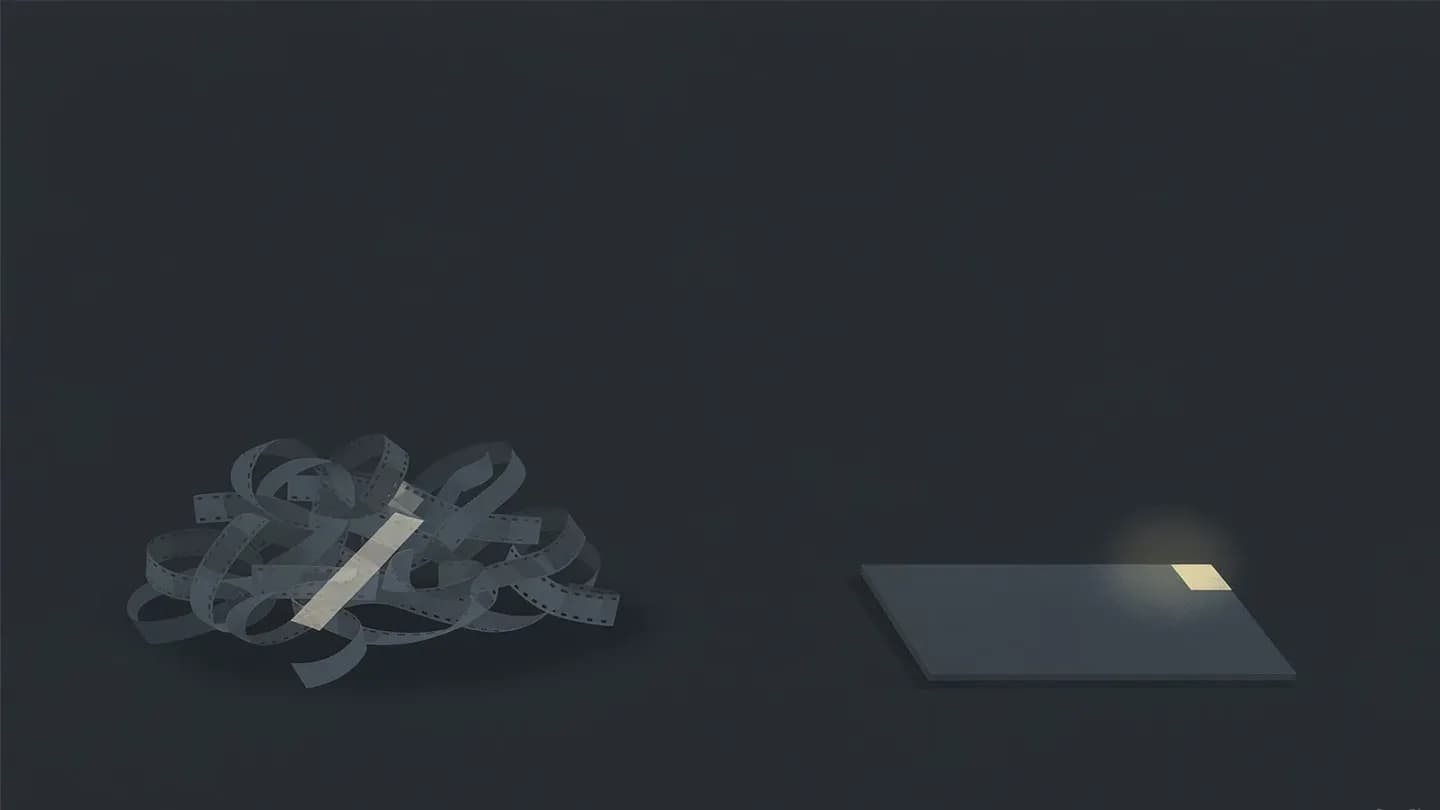
The review gate moves. When re-rolling was the only option, review asked one question: is this take usable? With repair in the toolkit, review becomes triage with three outcomes instead of two — ship it, regenerate it, or repair it. The third option did not exist at commercial quality before 2026, which is why the keep-or-kill habit hardened so deeply into AI video workflows.
Triage needs a rule, and the natural one follows the defect's footprint. Defects isolated in space — a label, a logo, one background element, a hand — are repair candidates. Defects spread across the timeline — pacing, performance, camera rhythm — still justify a re-roll, because the take itself is wrong rather than one region of it.
Repair also concentrates its value where shipping is already realistic. Inside {{link}}, the shippable band is the short social ad with synced audio, and the defects that block delivery there are precisely the localized kind — a wrong label, an off-brand color, a stray artifact. A 60-second dialogue brand film still fails for structural reasons that no regional patch will fix.
The curation burden does not disappear. Analysis of agency deployment notes that generated assets bearing a brand's identity must meet the same standards as produced work, and the cost of ensuring compliance at scale is not trivial. Repair reduces the number of assets that die in review; it does not reduce the number that must be reviewed.
Inside the commercial quality threshold for AI video, the shippable band is the short social ad with synced audio, and the defects that block delivery there are precisely the localized kind — a wrong label, an off-brand color, a stray artifact.
What to measure when shots become editable
Three numbers replace the old usable-rate obsessions. First, repair rate: the share of shipped clips that contain at least one region-level edit, which tells you how often the keep-the-take path is actually exercised. Second, cost per shipped second measured against cost per generated second — the divergence between those two curves is the direct financial expression of the shift from re-roll to repair. Third, retries per final cut, which should fall steadily as triage matures.
There is a floor under the optimism. Region-level editing fixes localized defects; it cannot rescue a take whose idea, performance, or camera work is wrong, and a repair pass adds its own review step and its own failure modes. The teams that benefit will be the ones that treat generation as a draft and editing as the product step — not the ones that simply trade one form of waste for another.
The disposable take was always a symptom of immature tooling, not a law of the medium. In 2026, between ByteDance shipping regional edits inside a 30-second single-pass model and Netflix open-sourcing physics-aware removal, the tooling grew up. The shot you generated is now something you keep.
Put the framework into production
These related pages connect the article’s planning advice to a specific commercial scope.
References
- Bytedance Seedance 2.5: 30-second single-pass AI video generationBytePlus Lumina (ByteDance)
ByteDance's official Lumina platform describes Seedance 2.5 as supporting up to 30 seconds of native single-pass generation, up to 50 multimodal reference inputs, and region-level editing that allows targeted keyframe corrections without regenerating the whole clip. Its production framing recommends organizing reference assets, generating the 30-second clip in one pass, then applying region-level editing only to areas that need adjustment, preserving existing shots and pacing.
- VOID: Video Object and Interaction DeletionarXiv (Motamed et al., 2026)
The VOID paper, submitted April 2, 2026, reports a human preference study in which 25 participants each evaluated five real-world scenarios: VOID was selected 64.8 percent of the time, substantially outperforming all baselines including the closed-source Runway model at 18.4 percent, while traditional inpainting baselines such as ProPainter received zero selections. The abstract states prior object removal methods fail when the removed object has significant interactions such as collisions.
- netflix/void-model - Hugging Face model cardHugging Face (Netflix)
Netflix's VOID model card documents interaction-aware quadmask conditioning, a four-value mask encoding the primary object to remove (0), overlap regions (63), affected regions such as falling objects and displaced items (127), and background to keep (255). VOID is built on the CogVideoX 3D Transformer with 5B parameters, released under the Apache 2.0 license, and requires a GPU with 40GB or more of VRAM for inference.
- AI Video Generation Reaches Commercial Production ScaleVaaSBlock
VaaSBlock's analysis of commercial AI video states that a 15-second social ad at 1080p with synchronised audio is achievable with current models while a 60-second dialogue brand film is not, that both Google and OpenAI bill generated video per second with tiers for resolution and audio, and that enterprise clients running large-scale creative testing programmes generate thousands of seconds of video monthly, a cost structure that functions as a production retainer rather than a per-asset spend.