
Why Static Retail Digital Signage Lost to AI Video
Retail digital signage is changing faster in 2026 than at any point in its history: AI video is moving off the social feed and onto the in-store screen. At NRF 2026, Idomoo and Poppulo debuted a system that turns a simple prompt into a personalized, on-brand store video in minutes, adapting to shopper profiles and live inventory.
For two decades, in-store screens were static loops - a rotating playlist of brand films and price cards, updated by hand and planned weeks apart. That model broke the moment shoppers began expecting the same relevance online channels had delivered for years. AI video closes the distance by letting a store generate a fresh, on-brand clip for the exact moment it is shown, rather than the quarter it was commissioned. Even on a 65-inch display, a sharp {{link}} still decides whether a passing shopper stops, so the creative bar does not drop just because the screen happens to live in an aisle instead of a feed.
Part of what changed is simply the cost curve. Producing a broadcast-grade clip used to require a shoot, a studio, and a month of approvals; generating one now costs minutes and a fraction of the budget, which is why the creative that once only a national campaign could afford is showing up on aisle-end displays. The economics inverted, and store screens were the first surface to feel it - not because the technology is exotic, but because the old way of doing things finally stopped paying for itself.
Even on a 65-inch display, a sharp high-retention opening hook still decides whether a passing shopper stops, so the creative bar does not drop just because the screen happens to live in an aisle instead of a feed.
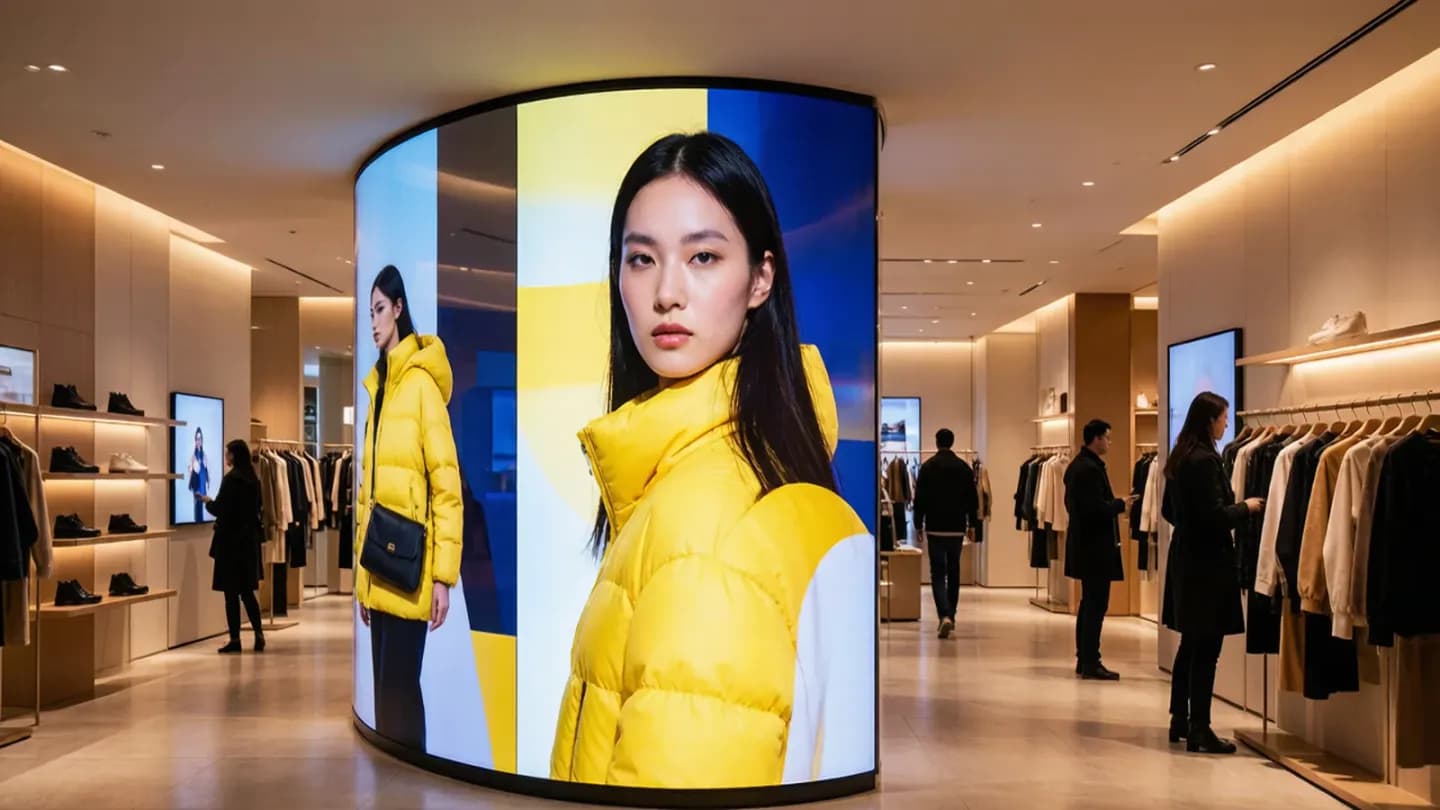
What Idomoo and Poppulo Showed at NRF 2026
On January 8, 2026, Idomoo and Poppulo announced a joint solution that brings real-time, AI-driven, hyper-personalized video to any in-store screen, built on Amazon Web Services. The system debuted live at NRF 2026 in New York City (January 11-13) inside the Amazon Web Services booth, and it pairs Idomoo's Lucas AI Video Creator with Poppulo's enterprise signage platform - the same platform that already runs close to 600,000 screens for more than 10,000 customers worldwide.
The idea is easy to describe and difficult to deliver without generative AI: write a text prompt, generate a tailored video, personalize it with approved store data, and publish it to the correct display without a studio or a long production cycle. The demonstrated use cases were concrete - greeting loyal shoppers with their preferred styles the instant they walk in, running promotions that shift with current inventory or time of day, and a virtual sales concierge that makes personalized recommendations on the sales floor.
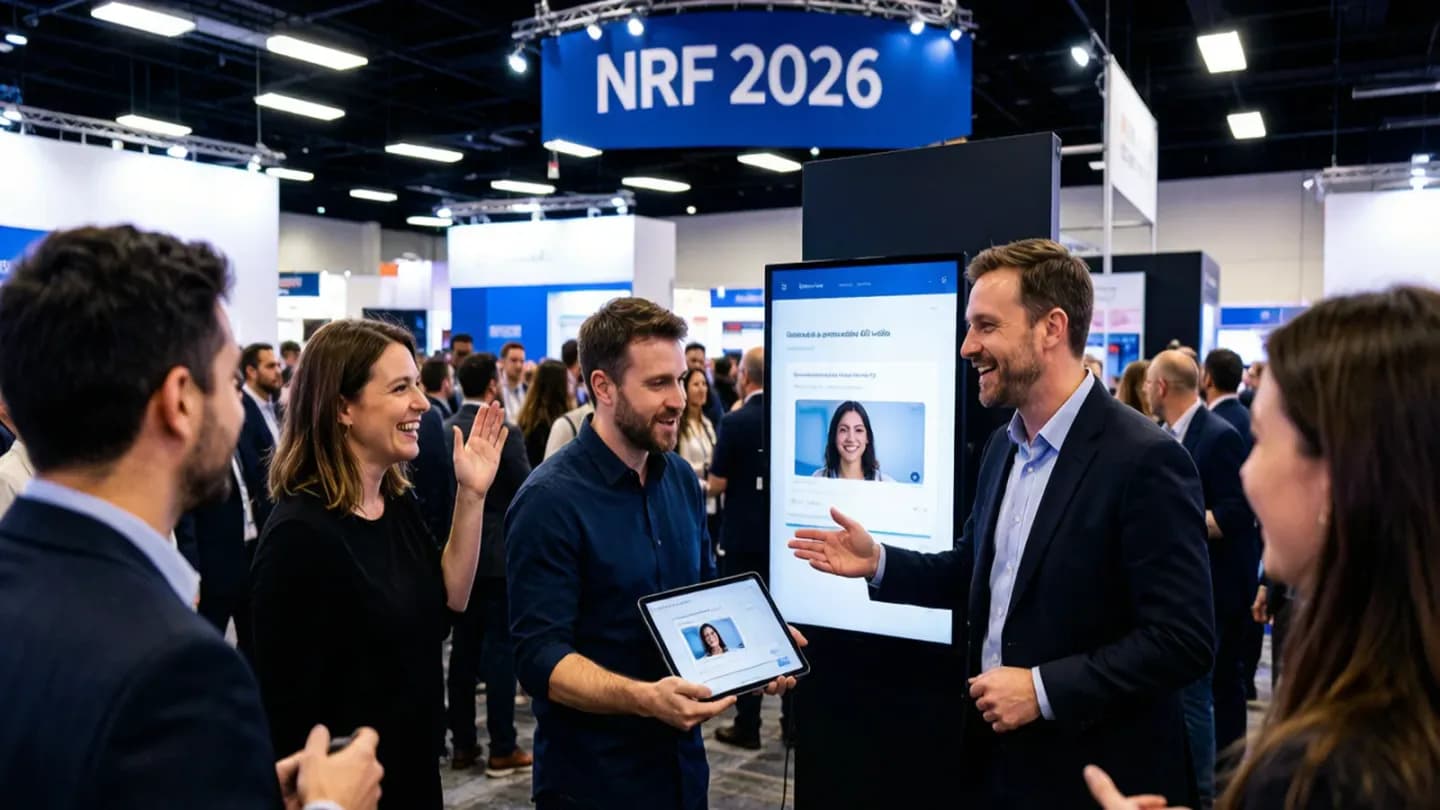
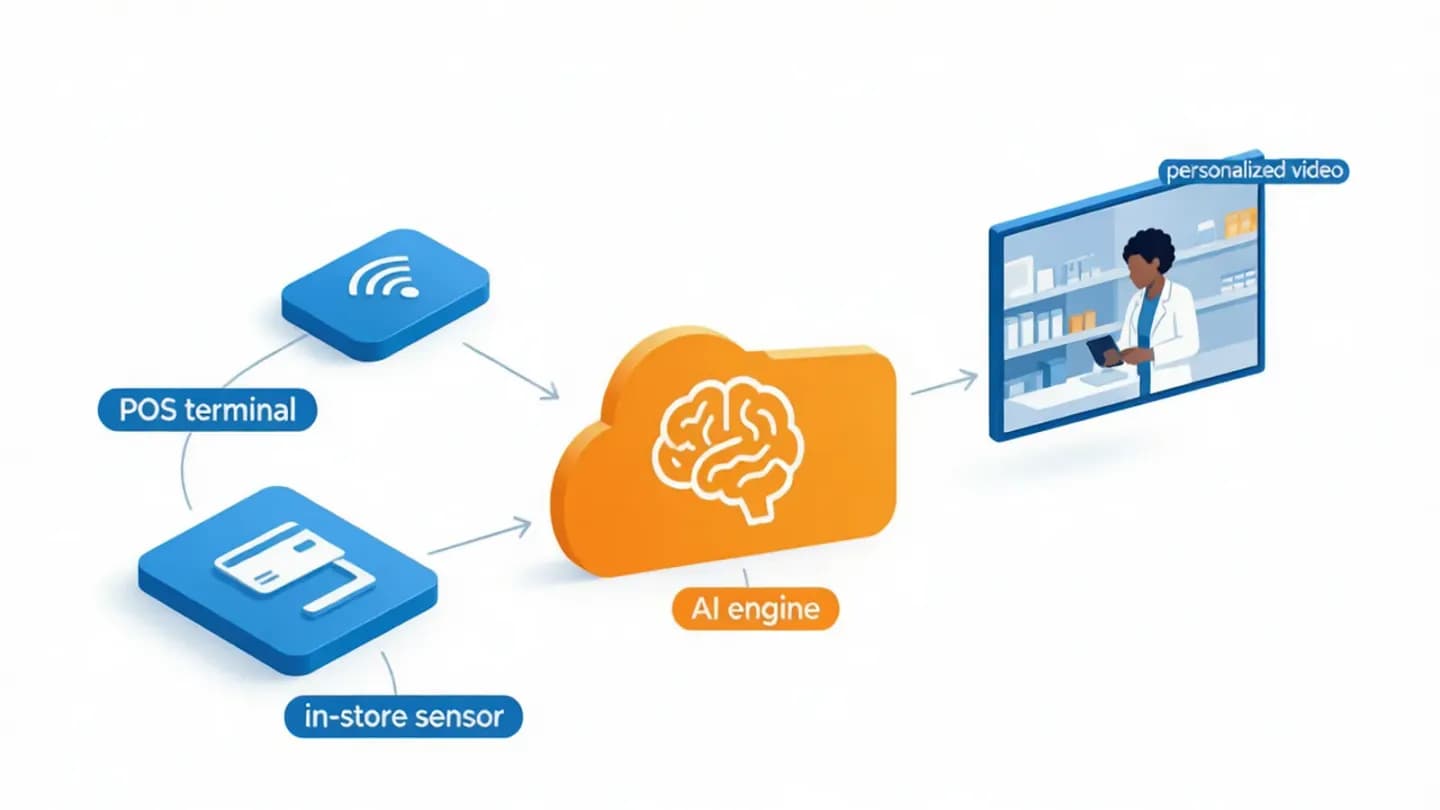
How Real-Time In-Store Video Personalization Works
Mechanically, Lucas generates on-brand video from a simple prompt on Idomoo's Next Generation Video Platform, then personalizes each clip in real time using approved data sources such as point-of-sale systems and in-store sensors. All personalization is handled securely, built to comply with ISO standards, and designed so that no personal data is stored. Poppulo connects to those same sources, feeds the insights into Lucas, and manages deployment across the signage network so the right message reaches the right screen at exactly the right time.
Retailers can stand up the full stack with the Amazon Signage Stick, an inexpensive media player that slots directly into Poppulo's platform and removes most of the hardware friction. Add computer vision, mobile geofencing, and Bluetooth beacons, and the system can recognize known shoppers, interpret in-store behavior, and serve a view that reflects a genuine 360-degree picture of the customer - converting a flat poster into a living, data-driven marketing surface that updates as the day does.
The workflow also matters for teams: the same brief that governs a paid-social cut can be reused for a store-screen variant, because the underlying asset library and brand system do not change with the placement. What changes is the data feed attached at render time, which is exactly why the system is designed around approved, governed data sources rather than raw creative freedom. Keep the creative locked and vary the data, and the store screen becomes a distribution channel instead of another production queue.
The Personalization Payoff: What the Numbers Say
The argument for in-store AI video is not only operational; it is also numerical. Idomoo points to a 2025 report finding that personalized video is three times more likely than generic video to drive customer acquisition and retention, and to a Nielsen study showing digital signage makes 68% of consumers more likely to buy the products advertised on it. A Harris Poll separately found that 84% of millennials and Gen Z value brands that blend technology with physical retail spaces.
The budgets follow the behavior. The retail media networks market is projected to reach $56.97 billion by 2030, and in-store screens are the fastest-growing slice as networks convert raw foot traffic into addressable, measurable inventory. Teams that can generate dozens of localized variants without watching them drain into the {{link}} will own the screen, because relevance at the precise point of decision is the whole game - and AI is what finally makes that relevance affordable at store scale.
Teams that can generate dozens of localized variants without watching them drain into the AI video creative yield gap will own the screen, because relevance at the precise point of decision is the whole game - and AI is what finally makes that relevance affordable at store scale.
The Provenance Problem Travels Into the Store
Every AI-generated frame now carries a disclosure obligation, and in-store video is no exception. C2PA Content Credentials bind the origin and edit history of a piece of media directly to the file, functioning like a nutrition label for digital content that anyone can inspect at any time. That standard applies as naturally to a display in a supermarket aisle as it does to a clip on a social feed, so brands generating in-aisle creative should treat provenance tagging as a built-in production step rather than a release-day afterthought.
Regulators and standards bodies are moving in step. IAB Europe published its In-Store Retail Media Definitions and Measurement Standards in January 2026, classifying store zones and standardizing how impressions are verified across networks. As in-store screens become tradable, measurable media, the same transparency and audit expectations that already govern online advertising will extend to the glass in the aisle - and AI-generated creative will be held to that same line, not a looser one.
Where AI Video Retail Screens Fit in the Production Stack
This is not a separate discipline from the rest of commercial AI video; it is the same pipeline extended to one more surface. The same force that pushed the {{link}} downstream to approvals and versioning has now reached the store screen, which means the governance, brand-safety, and QA discipline built for feed and CTV creative has to travel with the asset.
In practice, a store-screen clip needs the same creative brief, the same asset management, and the same approval gates as any other placement - the only real difference is latency. Where a social cut might refresh weekly, an in-store screen can refresh by the hour, which multiplies the number of variants a team must govern without lowering the quality bar. The production stack does not change; the tempo does, and the tempo is what breaks teams that are not ready for it.
Pilots are the right entry point: pick a single store or zone, wire one approved data source, and measure lift against the baseline for a fixed window. A narrow pilot keeps the governance surface small while the measurement discipline matures, and it gives the rest of the organization a working example of what the store screen can do. Once the pilot proves out, the same pipeline scales to the network instead of starting over for each new location.
The same force that pushed the AI video production bottleneck downstream to approvals and versioning has now reached the store screen, which means the governance, brand-safety, and QA discipline built for feed and CTV creative has to travel with the asset.
What Retail and Brand Teams Should Do Next
Start with a tight {{link}} that pins down data inputs and screen contexts before a single frame is generated, and decide up front which signals - inventory level, loyalty tier, time of day - are permitted to drive the creative. Lock brand blocks and a disclosure policy first so that every generated clip stays on-brand and fully traceable, whatever data it later consumes.
Then measure with honesty. Tie each placement to {{link}} instead of counting impressions on the glass, and prove incrementality against the basket data the retailer already controls. AI video for retail digital signage is no longer a conference demo - it is a production problem with real screens, real shoppers, and real measurement, and the teams that treat it like one will be the ones filling the displays.
Start with a tight creative brief for AI video that pins down data inputs and screen contexts before a single frame is generated, and decide up front which signals - inventory level, loyalty tier, time of day - are permitted to drive the creative.
Tie each placement to video metrics that predict revenue instead of counting impressions on the glass, and prove incrementality against the basket data the retailer already controls.
Put the framework into production
These related pages connect the article’s planning advice to a specific commercial scope.
References
- The Future of In-Store Video Is Here: Real-Time, Personalized, AI-DrivenIdomoo
Idomoo and Poppulo debuted an AWS-built solution at NRF 2026 that generates personalized in-store video from prompts in minutes; cites a 2025 report that personalized video is 3x more likely than generic to drive acquisition and retention, and a Nielsen study that digital signage makes 68% of consumers more likely to buy advertised products.
- Idomoo and Poppulo To Debut Dynamic AI-Driven In-Store Videos Powered by AWS at NRFPoppulo
January 8, 2026 announcement of a joint AWS-built solution pairing Idomoo's Lucas AI Video Creator with Poppulo's enterprise signage platform, which runs close to 600,000 screens for more than 10,000 customers worldwide; debuted at NRF 2026 in the AWS booth.
- C2PA Content Credentials: Verifying Media Content SourcesC2PA (Coalition for Content Provenance and Authenticity)
C2PA provides an open technical standard - Content Credentials - that binds the origin and edit history of digital media to the file itself, functioning as a transparency label; it is the relevant disclosure standard as AI-generated media spreads to new surfaces including in-store screens.
- IAB Europe and IAB: In-Store Retail Media Definitions and Measurement StandardsIAB Europe
IAB Europe released In-Store Retail Media Definitions and Measurement Standards in January 2026, classifying store zones and standardizing how impressions are verified across networks, as in-store screens become tradable, measurable media.