
Why Most AI Video Ads Never Get a Chance
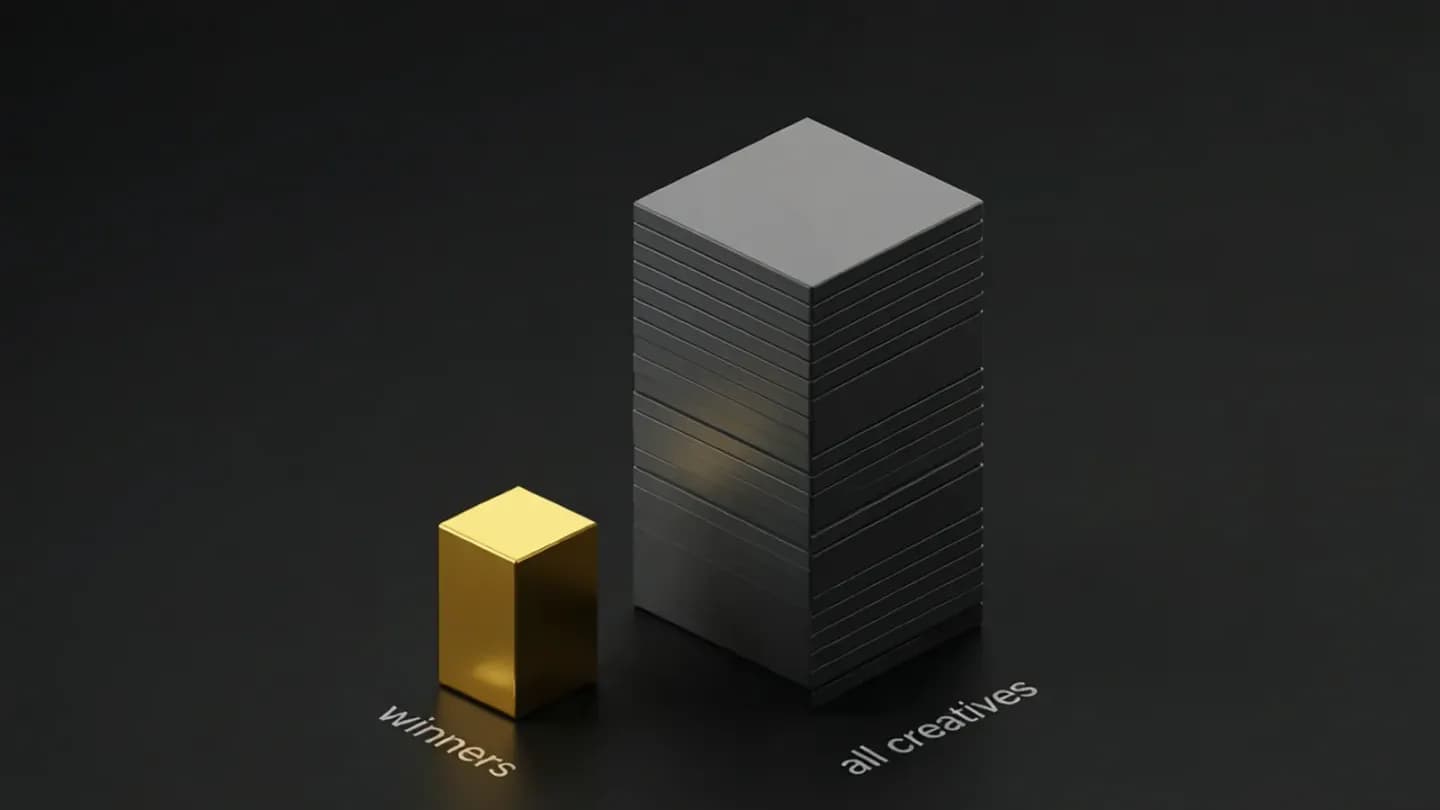
AI video creative testing succeeds or fails on a single uncomfortable number: only about 5% of paid-social creatives ever become winners. The 2026 benchmark data shows that winning is a volume game, and AI generation has made producing those variants nearly free, so the teams that test most now win most.
Motion analyzed $1.29 billion in realized Meta ad spend across 578,750 unique creatives and 6,015 advertiser accounts for its 2026 Creative Benchmarks. A winner was defined as a creative that spent at least 10 times the account median with a $500 floor. Only about 5% cleared that bar. The hit rate is not a quality verdict on any single ad; it is a statistical property of how auction systems allocate budget, and it means most of what you ship will barely be seen.
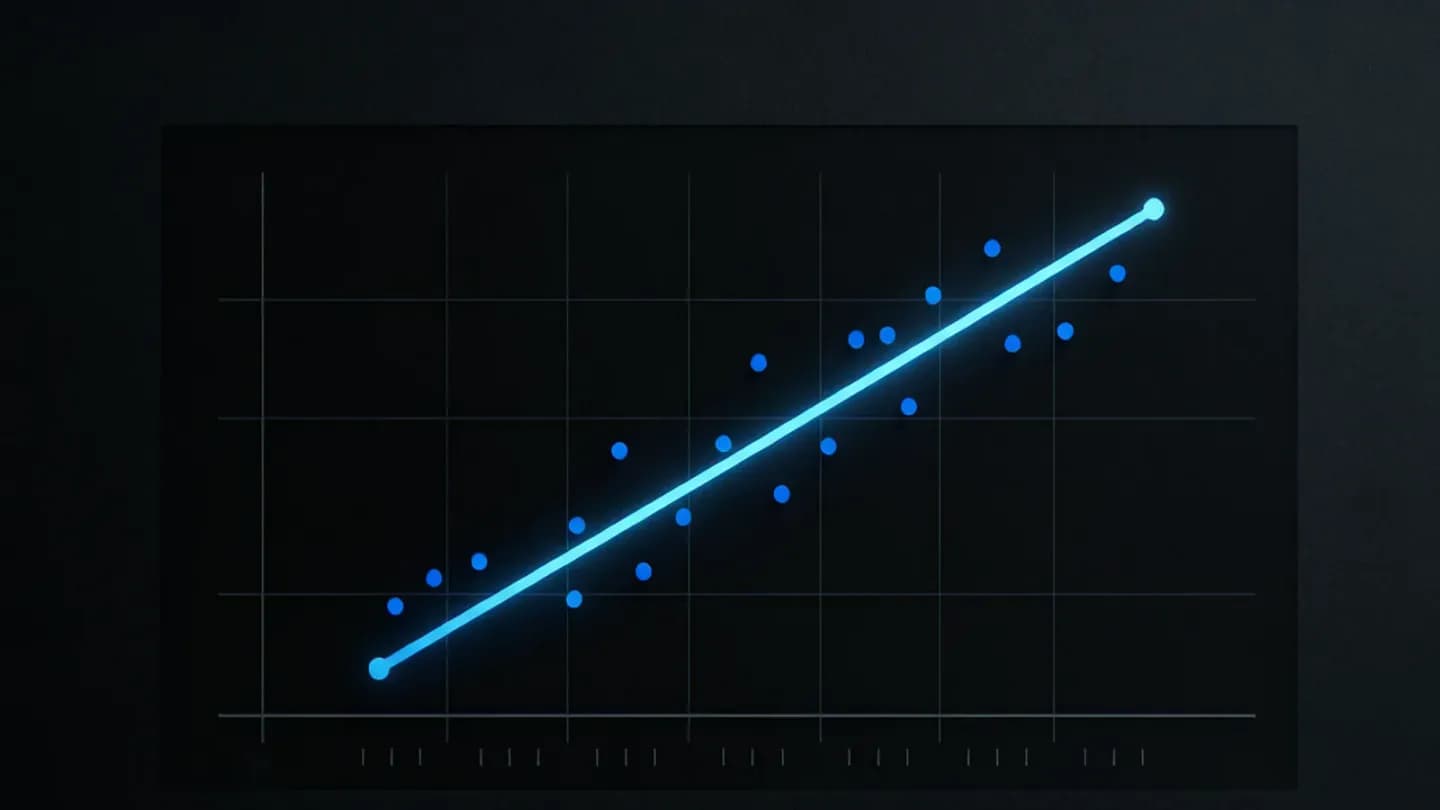
The useful part is what correlates with finding those rare winners. Advertisers that launched more creatives each week found more winners, not because their instincts improved but because they bought more lottery tickets in a game where the odds per ticket never change. Volume creates more chances to surface a standout, and that relationship holds from micro budgets to enterprise scale. For AI video teams this reframes the entire production question: the old constraint was that each extra cut cost real money, so testing was a luxury reserved for accounts with spare budget, while the new constraint is judgment, because you can generate fifty variants before lunch yet only a disciplined review loop turns that pile into winners.
The Benchmark Numbers Behind the 5% Rule
The threshold itself is brutal. The 10x winner bar sits at roughly the 92.3rd percentile of the spend-to-median ratio, so only about 7.7% of creatives even come close. Once a creative breaks through, the payoff is enormous: about 55% of all Meta ad spend in the dataset concentrated on winning creatives, and that share climbs from 23% at the micro tier to 64% at the enterprise tier.
The same accounts that win on spend concentration also win on retention, which is why {{link}} remain the clearest read on where a cut actually loses the viewer. Treating AI video as {{link}} shifts the conversation from output volume to measured business outcomes, which is the only frame where the 5% rule becomes an opportunity instead of a threat.
Context beats any universal format. Motion found the most popular ad formats are not always the highest-spending ones, and performance shifts with scale, industry, season, and saturation. A benchmark tells you the system you are playing in, not the single creative that will win next week, so the number to manage is your own weekly testing volume relative to your spend tier. Benchmarks also expose a dangerous habit: comparing your worst-performing variant to someone else's highlight reel. The 92.3rd percentile bar means even strong accounts ship a long tail of losers, so judge your program by winner count and spend concentration rather than by the absence of misses.
The same accounts that win on spend concentration also win on retention, which is why short-form retention benchmarks remain the clearest read on where a cut actually loses the viewer.
Treating AI video as accountable performance media shifts the conversation from output volume to measured business outcomes, which is the only frame where the 5% rule becomes an opportunity instead of a threat.
What Changed: Variants Are Now Nearly Free
For most of advertising history, the 5% rule favored big budgets because each variant carried real production cost. A traditional 15-second social cut could run three to eight thousand dollars, and a hero brand film tens of thousands, so only well-funded accounts could afford the volume the benchmark rewards. AI generation collapses that constraint to near zero at the margin.
When a new variant costs a prompt and a minute of compute rather than a shoot, the cost curve flattens. A small team can now launch the same number of weekly creative variations that previously required an enterprise testing budget, which is the structural change the 2026 benchmark was never designed to anticipate. The advantage no longer belongs to whoever has the biggest media account; it belongs to whoever has the most disciplined testing loop. The catch is that cheap does not mean effortless, because generation removes the cost of the asset but not the cost of the decision, and teams that treat near-free variants as permission to skip strategy simply produce a wider field of mediocre cuts rather than more winners.
This is why IAB's 2026 Digital Video Ad Spend report matters as context: U.S. digital video ad spend is projected to surpass $80 billion in 2026, growing 11% year over year and accounting for more than 60% of total TV and video ad spend for the first time. With two-thirds of digital video buyers already live, testing, or planning agentic AI for campaigns, the field is scaling testing volume exactly as the benchmark math rewards.
An AI Video Creative Testing System for Cheap Variants
Cheap variants are only an advantage if you have a system to use them. The failure mode is not too little volume but undisciplined volume, where teams generate endlessly without a decision maker or a kill rule. Build the loop around modular components: write three hooks for one body, test multiple calls to action against the same testimonial, and hold everything else constant so the variable you changed is the only one the auction can reward. Separate the hook from the body and the body from the call to action so each can be swapped independently, which means a single strong testimonial can seed six hook tests and a single body can seed four calls to action, multiplying test count without multiplying production effort.
A disciplined {{link}} tells you exactly when a losing variant should be retired rather than re-cut. Set explicit thresholds before launch, not at review: pause anything below a target hook rate after a fixed impression window, and promote only what clears the winner bar and survives a purchase-volume floor. Keep a watchlist for everything in between so the middle of the table never becomes a negotiation.
Cadence matters more than count. Weekly review works for active test groups, daily for the first 72 hours of a launch, and a hard verdict after roughly seven days or a hundred conversions per variant, whichever lands first. Because AI variants are cheap, you can hold a pipeline two to three weeks ahead of what is currently running, so fatigue never forces a gap in coverage. Document the loser list as the input to next week's brief, because the compounding mechanic is that every kill becomes a new concept and the system improves itself instead of publishing postmortems that nobody rereads.
A disciplined creative refresh cadence tells you exactly when a losing variant should be retired rather than re-cut.

Where AI Video Still Can't Replace the Human Read
Volume is not a license to flood the feed. Jasper's State of AI in Marketing 2026 survey of 1,400 marketers found 91% of teams now use AI, up from 63% a year earlier, yet governance has become the top scaling blocker with a 3.4x year-over-year increase in legal, compliance, and brand-review bottlenecks, and only 41% of marketers can confidently prove AI ROI, down from 49%. More variants amplify whatever judgment you bring, good or bad.
The data shows a persistent {{link}} that no amount of generation throughput closes on its own. Audience research points to a measurable drop in engagement when AI-only creative saturates a feed, and brand recall for synthetic-only work lags human-led work after sustained exposure. The fix is not less testing but sharper curation: use AI to multiply the variations worth testing, then let human review decide which few deserve to scale.
The practical takeaway for commercial video teams is simple. Treat the 5% rule as a mandate to test more, treat near-free AI variants as the means, and treat human judgment as the filter that turns volume into winners. The teams pulling ahead are not the ones generating the most; they are the ones reviewing the most with a clear standard, because volume without a human filter is noise while volume through a human filter is exactly how the 5% gets found.
The data shows a persistent CMO adoption versus execution gap that no amount of generation throughput closes on its own.
Put the framework into production
These related pages connect the article’s planning advice to a specific commercial scope.
References
- Motion Creative Benchmarks 2026Motion
Across $1.29B in Meta ad spend, 578,750 creatives and 6,015 accounts, only ~5% were winners (>=10x account median spend, >=$500); the 10x bar sits at the ~92.3rd percentile; ~55% of spend concentrated on winners; higher weekly testing volume correlated with more winners found.
- The State of AI in Marketing 2026Jasper
Survey of 1,400 marketers: 91% of teams now use AI (up from 63% a year earlier); governance is the top scaling blocker with a 3.4x year-over-year increase in legal, compliance, and brand-review bottlenecks; only 41% can confidently prove AI ROI (down from 49%).
- U.S. Digital Video Ad Spend to Surpass $80B in 2026IAB
IAB projects U.S. digital video ad spend to surpass $80B in 2026, up 11% year over year and more than 60% of total TV/video spend; two-thirds of digital video buyers are live, testing, or planning agentic AI, with smaller spenders leaning into AI for creative testing.