
The execution premium has collapsed
An AI video team in 2026 is not last year's crew with new software - it is a different org chart. With 88% of US advertisers already running AI somewhere in creative production, the scarce input is no longer rendering capacity but judgment: what to make, what ships and what gets killed. Teams that treat judgment as a staffed role win; teams that treat it as a leftover lose.
XR Extreme Reach's State of Ad Ops study of 400+ US and UK advertising professionals found 88% of US advertisers now use AI in creative production, and production companies lead every other seat at 79%. The capability ranking is just as telling: visual effects and compositing (45%), performance analysis and creative testing (44%), image creation (44%), video and motion generation (42%), scripting (41%) and ad versioning (38%). The tasks being automated are the tasks that used to define a production job.
Bain's 2026 Leaders and Laggards Survey quantifies what that does to staffing. Among 1,397 respondents, one CMO described five- to ten-person teams generating output equivalent to traditional forty- or fifty-person teams, and Nestle built a proprietary AI platform that compressed concept testing from six months to six weeks while generating nearly three times the ROI. Leaders also run 8.5 times more experiments per month than laggards - velocity that is only possible when iteration stops costing a crew day.
The buying side has already moved: one survey of enterprise buyers found that {{link}} in 2026, with Runway's $200M ARR as the proof point. When buyers restructure around AI output, suppliers who still price and staff by the hour are negotiating from the wrong baseline.
The cost structure inverts with it. When a shoot day cost five figures and a redo cost a week, judgment errors were expensive but rare; now that a redo costs an afternoon, the winning move is more attempts inside tighter gates - which is exactly the 8.5x experiment cadence Bain measured.
The buying side has already moved: one survey of enterprise buyers found that enterprise AI video demand has crossed from experiment to budget line in 2026, with Runway's $200M ARR as the proof point.

Leaders redesigned workflows, they did not just add tools
The Bain data separates leaders from laggards less by budget than by architecture. Leaders are 3.7 times more likely to fully redesign workflows around AI rather than layering tools onto existing processes, and twice as likely to restructure teams and job descriptions. More than 40% dedicate 11% or more of marketing budget to AI, and leaders are twice as likely to allocate over a quarter of their annual budget to AI use cases, licensing, data and research.
The sharpest signal is where the AI lives. Leading organizations are 2.4 times more likely to embed AI directly into their own marketing tools, and only 6% of leaders rely on general-purpose tools such as ChatGPT, Copilot or Gemini - against 16% of laggards. For a video team that means the prompt library, the character reference, the QC checklist and the version rules live inside the pipeline, not in one operator's head.
That is the difference between adoption and operating model. A team that adds a generative tab to its existing workflow gets faster at the old job; a team that redesigns the workflow gets a different job - and the Bain respondents show the second group is where revenue growth concentrates. The gap is visible in the results: leaders in the study achieved 11% annual revenue growth and seven-point market share growth, while laggards saw revenue and share flat or declining.
Judgment is now the scarcest line item
WFA's Humans, Marketing and Machines research, published in September 2026, asked the world's largest brand owners where their talent gap actually sits. Strategic thinking came out as the No.1 gap, named by 72% of respondents; data strategy and execution followed at 46%, insight development at 36% and marketing fundamentals at 34%. Fifty-nine percent say strategic judgement and prioritisation skills will matter more in the age of AI, and just 1% believe better tools and platforms will be the primary differentiator of organizations with strong marketing talent.
The market is pricing this scarcity faster than most job descriptions: {{link}} for the people who can direct it. A 34% hourly premium for AI video skill, the fastest-growing category on Upwork's marketplace at 329% year over year, is what a judgment shortage looks like in a rate card.
For production teams the judgment stack is concrete: translating a brief into a shot logic the model can hold, choosing which model gets which shot, deciding what a QC gate rejects, and knowing when a generated cut is cheaper to redo than to fix. None of those are rendering skills. All of them are directorial ones.
The market is pricing this scarcity faster than most job descriptions: the AI video talent market already pays a 34% hourly premium for the people who can direct it.
Upskill, do not hire your way out
The uncomfortable part is that most organizations are cutting the budget that would close the gap. WFA found 52% of respondents rank the inability to upskill existing talent fast enough among their top two talent risks for the next three years, with 56% identifying AI fluency as underdeveloped and 55% flagging data-driven decision making as a needed skill. Hiring cannot fix a skills gap that the whole market shares.
The CMO Survey's 35th edition puts numbers on the contradiction: training and development budgets have fallen to 3.8% of marketing budgets, down from 5.8% in 2019, while no marketing-technology activity rates above 5 on a 7-point performance scale and no rating has improved in two years. Nearly 60% of marketing leaders still build AI capability internally through hiring and training rather than partnering, and the CMO-CFO relationship scores just 4.5 out of 7 for building a credible business case.
The practical read for a video team: move spend from tool subscriptions to judgment reps. Directors need reps on shot logic, prompt architecture and QC arbitration - the same way an assistant editor learns pace by cutting, not by reading release notes.
WFA's own framing is blunt: brands need to upskill existing staff rather than trying to hire their way out of the problem, because the shortage is structural rather than cyclical.
Rewrite the AI video team around directors, not doers
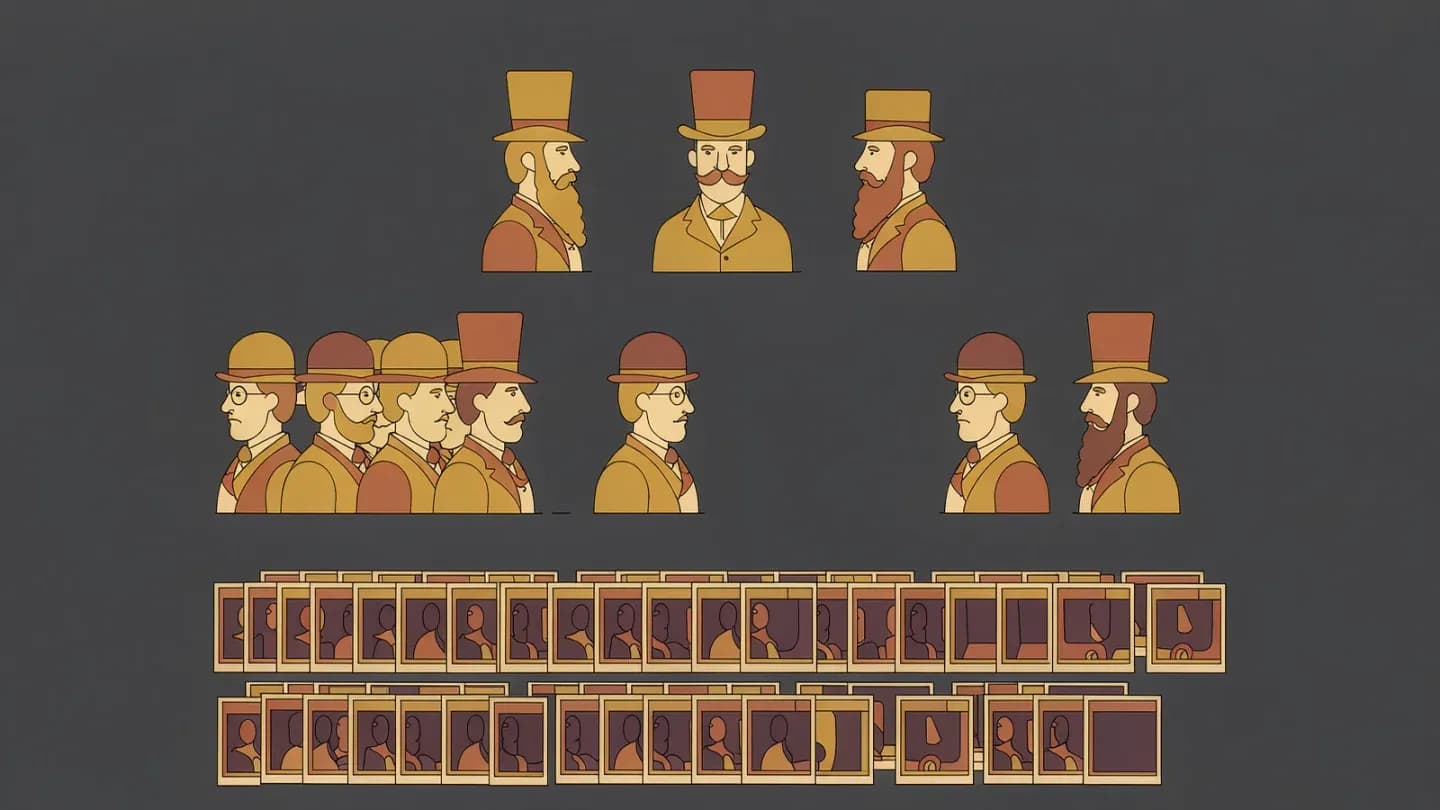
The org chart that is emerging has three tiers. A small director tier owns brief translation, model selection and the final ship call. An operator tier runs generation queues, variant production and version control. A QC gate - staffed, not automated - decides what reaches the client. The ratio inverts the traditional pyramid: judgment is scarce at the top, execution is abundant at the bottom.
Schedule, version and asset control stopped being overhead the moment {{link}}. Production management is now a product category, and it is where the operator tier's work gets standardized.
Autonomy is arriving whether teams are ready or not - {{link}} - so the approval gate is the job, not an optional extra. When a system can generate, approve, publish and learn in one loop, the human contribution is deciding what the loop is allowed to decide.
Delegation boundaries should be written down: what the pipeline may ship without review, what needs a director's sign-off, and what never leaves a human's hands. That document is the new job description.
Schedule, version and asset control stopped being overhead the moment production management became the layer that decides who ships. Production management is now a product category, and it is where the operator tier's work gets standardized.
Autonomy is arriving whether teams are ready or not - Runway Ads runs generate, approve, publish and learn in one system - so the approval gate is the job, not an optional extra. When a system can generate, approve, publish and learn in one loop, the human contribution is deciding what the loop is allowed to decide.

Bill for outputs, and price the judgment
Procurement is moving in the same direction. WFA's sourcing research with Agency Mania Solutions found labour-based payment models fell from 54% of multinationals in 2011 to 19% today, while fixed-fee and output-based models rose from 20% to 33%, and performance-based fees show the strongest forward momentum. Only 20% of brands have evolved their commercial models in response to AI so far, but 61% intend to.
For production companies this is the margin story. When output is priced per deliverable, every hour of judgment that removes a redo is billable, and every hour of manual execution is a discount. The teams that survive the transition are the ones whose pricing already reflects where the value sits - which is also why the talent premium in this market accrues to directors, not to operators.
None of this requires waiting for better models. The surveys agree on the sequence: fix the org chart, staff the judgment, embed the workflow, then let the tools scale what the team has already decided to make.
Put the framework into production
These related pages connect the article’s planning advice to a specific commercial scope.
References
- AI in Marketing: How Leaders Achieve Double the Revenue ImpactBain & Company
Bain's 2026 Leaders and Laggards Survey (n=1,397) found marketing leaders - companies with 11% annual revenue growth - are 3.7 times more likely than laggards to fully redesign workflows around AI and 8.5 times more likely to run 100 or more experiments per month; Nestle compressed concept testing from six months to six weeks with nearly three times the ROI, and one CMO reported five- to ten-person teams now output what forty- or fifty-person teams did.
- Strategic thinking is the biggest skills gap for marketing, WFA researchWorld Federation of Advertisers
WFA's Humans, Marketing and Machines research (September 2026) identifies strategic thinking as marketing's biggest talent gap, named by 72% of the world's largest brand owners; 59% say strategic judgement and prioritisation skills matter more in the age of AI, 52% rank the inability to upskill existing talent fast enough among their top two talent risks, and just 1% believe better tools will be the primary differentiator.
- Marketing Has an AI Problem, and It Has Nothing to Do with AIAmerican Marketing Association
The 35th edition of The CMO Survey (308 senior marketing leaders) reports training and development budgets have fallen to 3.8% of marketing budgets, down from 5.8% in 2019, and that no marketing-technology activity rates above 5 on a 7-point performance scale with no rating improving in two years; nearly 60% of leaders still build AI capability internally rather than partnering.
- 88% of US advertisers now use AI in creative production, led by VFX, motion graphics creation and script writingXR Extreme Reach
XR Extreme Reach's State of Ad Ops study of 400+ US and UK advertising professionals found 88% of US advertisers now use AI in creative production, with production companies furthest along at 79%; the leading capabilities are visual effects and compositing (45%), performance analysis and creative testing (44%), image creation (44%), video and motion generation (42%) and scripting (41%).