What Alibaba Wan 3.0 Actually Ships
Alibaba Wan 3.0 is Alibaba's third-generation AI video model, released at general availability on August 24, 2026 after a public beta that opened on August 6. For commercial teams it matters because a single prompt can now produce up to 30 seconds of continuous, 1080p video with sound generated in the same pass.
The headline upgrade is length. Wan 2.7 capped a single generation at 15 seconds; Wan 3.0 doubles that to 30 seconds in one pass, at 480p, 720p or 1080p and 30fps. Thirty seconds is the difference between a disconnected clip and a short narrative unit, a product demo with an opening, a beat and a close, or an ad with setup and payoff, without manual splicing.
Consistency is the other pillar. Alibaba positions Wan 3.0 to hold character identity, props, spatial layout, lighting and style across the full 30 seconds, with lip sync and multilingual voice as first-class claims. That stability is what lets a generated cut survive review: a brand film where the presenter, the product and the room do not quietly change between shots.
Audio is generated in the same pass rather than scored and dubbed afterwards, which keeps mouth movement and waveform consistent by construction. Wan 3.0 also carries forward the editing layer from Wan 2.7: you can change visuals, plot or dialogue without regenerating the whole concept, which shortens the review loop that makes AI video useful to real teams.
Document-to-Video Changes the Workflow
Wan 3.0 accepts documents as a primary input: DOC, XLS, PPT, PDF, TXT, KEY, Pages, Numbers and Markdown, plus a web link. A job takes one file or link, up to 100MB or 50 pages, and can reference up to 20 supporting materials, ten images, five videos and five audio clips. A product deck becomes a launch film; a training deck becomes courseware; a report becomes a narrated briefing.
This collapses the traditional path from enterprise document to finished video. Normally a team reviews the source, drafts a script, designs shots, generates iteratively and records voiceover. With document input, the model reads the structure and directs the video from it, so the human shifts from restating information to specifying audience, tone and camera behavior. The compression is largest for repetitive, template-driven output like quarterly reports and product overviews.
There is a catch the workflow has to absorb. Document input takes one file per job, so correcting a single figure means regenerating the entire video rather than editing a cell. Teams that change numbers often, finance, pricing, inventory, should keep a reusable text script as the source of truth and treat the document as a one-time render, not a living link to the data.
During its beta Wan 3.0 already entered production flows for short-form drama, advertising, tourism promotion and music videos, and within a day of general availability third-party platforms including Meitu, JD.com's Lingjing, iQiyi and Bilibili had integrated the API. That distribution velocity signals pre-negotiated enterprise deals more than organic uptake, and it puts Wan 3.0 inside tools teams may already use.
How Wan 3.0 Compares to Other 2026 Models
On raw length Wan 3.0 ties the current ceiling. ByteDance's Seedance 2.5 also reaches 30 seconds in one pass, though at 720p and with up to 50 reference inputs; Kling 3.0 runs around 10 seconds and is extendable; Google's Veo 3.1 sits at 8 seconds. Wan 3.0's differentiator is document input and transparent per-second pricing, not maximum fidelity, reviewers still rate Seedance 2.5 ahead on motion quality.
Wan 3.0 enters a crowded field, and the trade-offs against rival engines are laid out in our full comparison {{link}}.
Worth noting for procurement: unlike earlier Wan releases, which Alibaba open-sourced, Wan 3.0's weights are not published. Access is application-gated through Alibaba Cloud Model Studio and Qwen Cloud, with a consumer site planned as a members-only product. That matters less for a brand buying output by the second and more for teams that wanted to self-host or fine-tune the model.
Seedance 2.5 leads on reference surface, up to 50 references and native synchronized audio, and reviewers place it at the top of the 2026 quality tier, while Kling 3.0 is favored for physical motion accuracy at around 10 seconds. Wan 3.0's case is length plus document input plus a clear price, which is exactly the profile of a workhorse for high-volume, structured commercial output rather than a showcase reel.
Wan 3.0 enters a crowded field, and the trade-offs against rival engines are laid out in our full comparison 2026 text-to-video model comparison.
Pricing: Per-Second Billing, Calculated
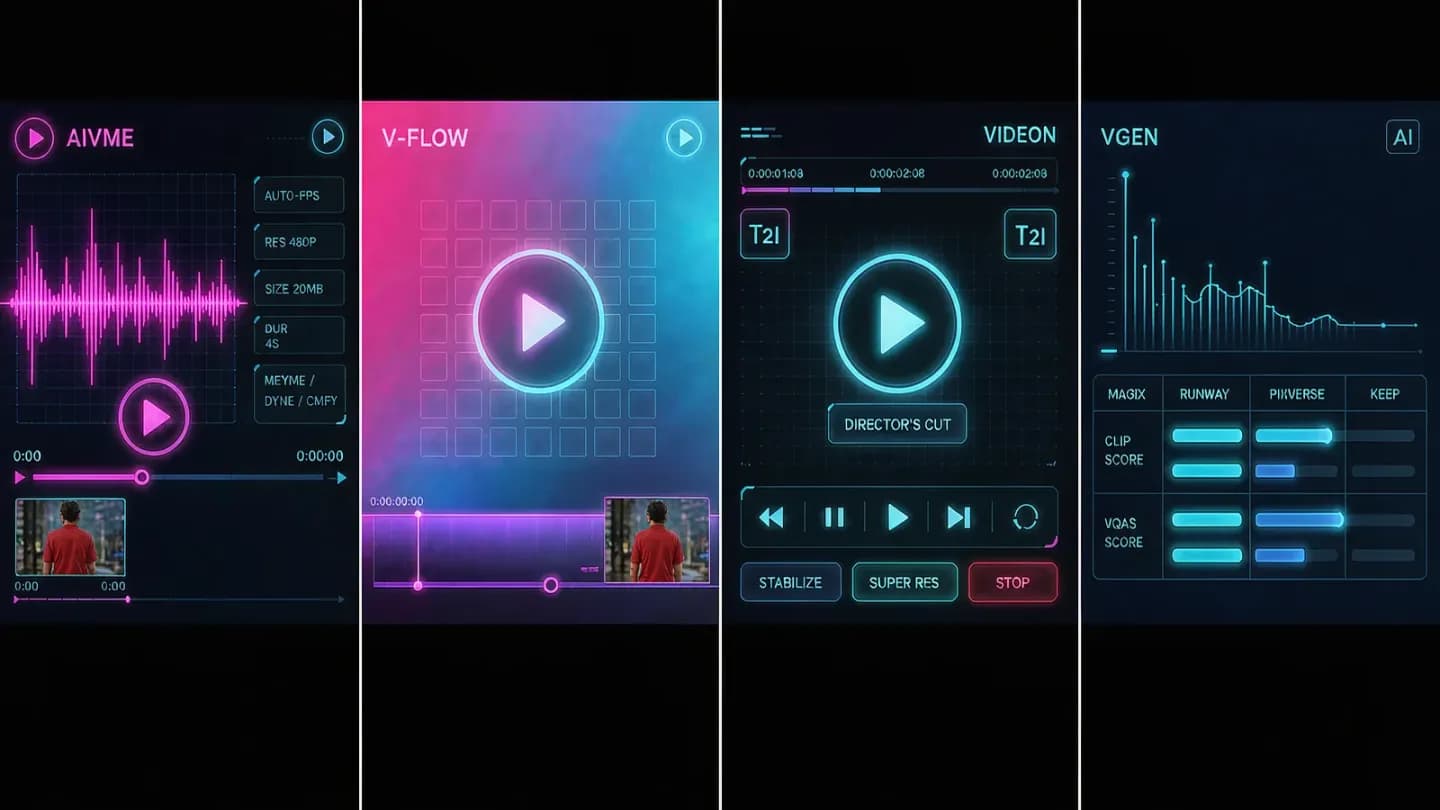
Wan 3.0 bills per generated second, by resolution: $0.05 at 480p, $0.10 at 720p and $0.20 at 1080p. A 30-second draft at 480p is about $1.50; a 30-second finish at 1080p is about $6.00 before any promotional discount. For comparison, Alibaba has cited Google's Veo 3.1 at roughly $0.40 per second for standard service, about double Wan 3.0's top tier.
Per-second billing is one of several models now in play, and we compare the options side by side {{link}}.
The rate is linear, so a longer video simply costs more with no volume discount at the long end. The practical pattern is to iterate at 480p for $1.50 a pass, then spend the $6.00 exactly once at 1080p. A launch offer ran 30% off from August 24 to September 23, 2026, but the real budget line is re-runs: because document input regenerates the whole clip, a fix costs a full render, not an edit.
In China the list rates are yen 0.3, 0.6 and 1.2 per second at 480p, 720p and 1080p, making a 30-second 1080p clip about yen 36, or yen 25.2 during the launch discount. Whichever currency you quote, the unit economics are now calculable per finished second, a real change from subscription seats or per-asset pricing that hid the true cost of a usable clip.
Per-second billing is one of several models now in play, and we compare the options side by side AI video pricing models.
Where It Fits in a Brand Video Stack
Wan 3.0 is strongest as a production engine for defined, document-backed jobs: product films from decks, recap videos from reports, localized variants from translated briefs. It is weaker as a freeform creative tool, open prompts still fight character drift and on-screen text accuracy, which Alibaba itself says are improving. For hero films that need frame-by-frame control, a specialist model or a human shoot still wins.
The larger shift is generation and editing converging inside one tool, and we track that move here {{link}}.
Wan 3.0 is API-only and application-gated, which matters when you choose where your pipeline should run {{link}}.
Document input also makes localization cheaper: a translated deck or brief becomes a per-locale video without reshooting, and the model keeps identity and product structure consistent across languages. That is where Wan 3.0's document grounding pays off most for commerce teams running the same campaign across many markets.
For most brand teams the sensible start is a single high-friction job: one deck that already exists, one clip that needs 20 to 30 seconds of continuity, one revision pass. Measure how much manual translation, stitching and regeneration remains after the model does its part. Wan 3.0 expands the surface area of what AI video can ship; the teams that win treat it as a workflow layer, not a magic button.
The larger shift is generation and editing converging inside one tool, and we track that move here AI video suite consolidation.
Wan 3.0 is API-only and application-gated, which matters when you choose where your pipeline should run self-hosted vs API AI video.
Limitations to Plan Around
Two quality dimensions are still maturing, and Alibaba says so plainly: audio texture and on-screen text rendering accuracy. Generated clips can drift in rendered captions, legends and axis labels, so any video that must show exact numbers should inject those figures as quoted literals and design charts and labels out of the brief. Treat Wan 3.0 as a drafter, not a typesetter, for data-heavy assets.
The other limit is structural, not a bug: 30 seconds is not a feature film. Full-length narrative still needs multi-segment generation, storyboarding and post-production assembly. Wan 3.0 solves single-shot productivity and cross-shot consistency; it does not replace directorial planning. Teams that brief it like a camera instead of a studio get the best return.
Put the framework into production
These related pages connect the article’s planning advice to a specific commercial scope.
References
- Alibaba Wan3.0 Launches: 30-Second AI Video Targets Enterprise MarketChinaBiz Insider
Wan3.0 reached general availability on Aug 24 2026 across Alibaba Cloud Bailian, the Qwen platform and Wanxiang, with transparent per-second API billing and third-party integration by Meitu and JD.com within 24 hours.
- Wan 3.0 Turns a PDF Into 30 Seconds of Film. No Weights This Time.AI Bacon
Wan 3.0 generates up to 30s video from documents at $0.20/s 1080p ($6 for 30s) with audio in the same pass, and Alibaba has not published weights above Wan 2.2.