Why AI Video Creation Suites Are Replacing Standalone Generators
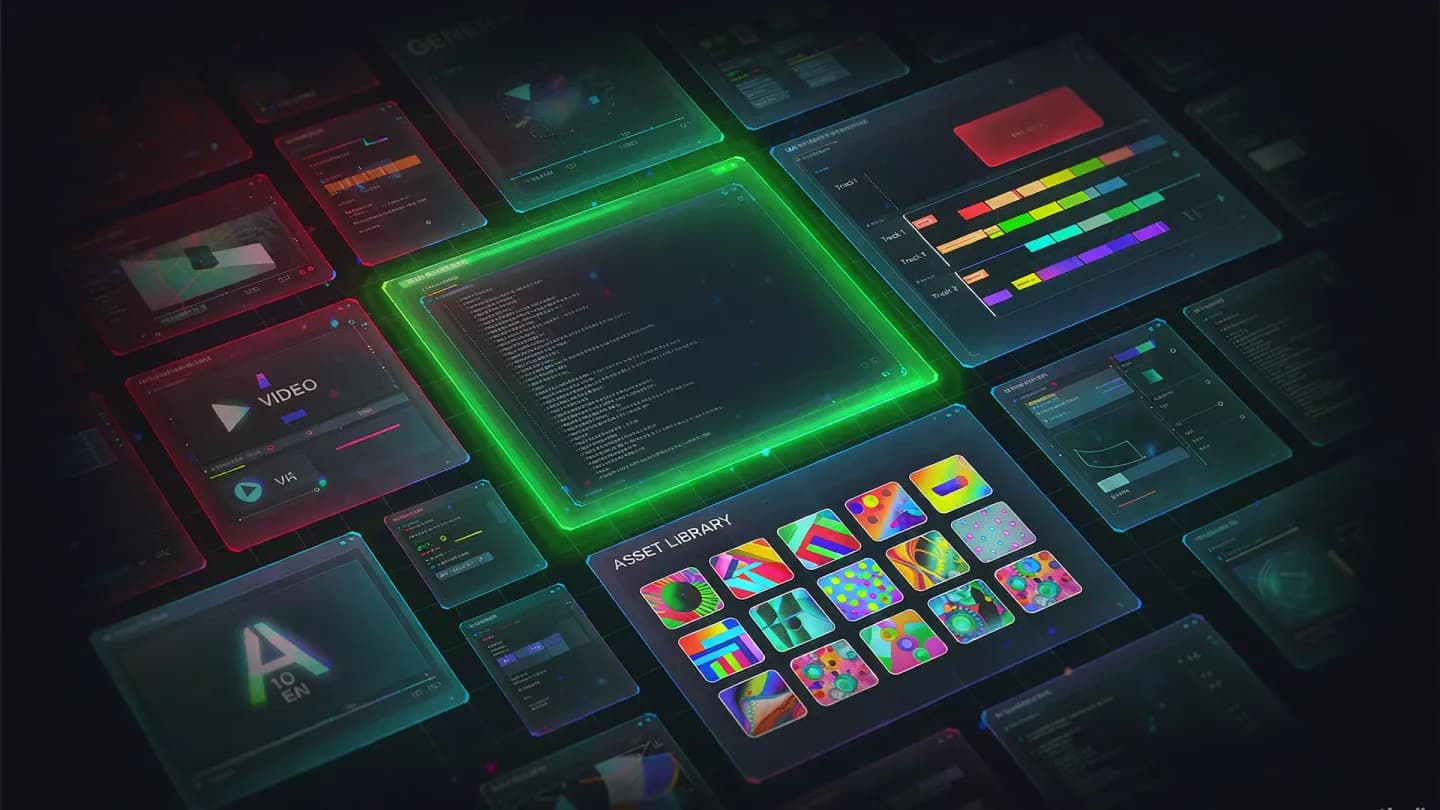
AI video creation suites are replacing the single-purpose text-to-video generator in 2026. Instead of generating a clip in one tool and finishing it in another, commercial teams now work inside one canvas that handles generation, editing, and asset management together. The shift matters because it collapses the handoffs that used to slow every AI video project.
For most of 2024 and 2025, the typical pipeline looked like a relay: prompt a model, export a clip, import it into an editor, fix artifacts, log the asset, then repeat. Each handoff was a place where context leaked. A character drifted, a style tag was lost, a clip went missing in a shared drive. Suites close that gap by keeping the generation step and the finishing step in the same workspace from the first prompt to the final export.
This is not just a UI change. When generation and post live in one place, the model's own outputs become editable objects rather than frozen files. A team can regenerate one shot, keep the rest, and see the change reflected immediately in the timeline. That feedback loop is what standalone generators never offered, and it is the difference between iterating on an idea and rerolling an entire export every time a single frame needs work. The standalone generator trained users to think in exports; the suite trains them to think in iterations, and that mental shift is harder to undo than any single feature on a roadmap.
Generation and Editing Merge Into One Canvas
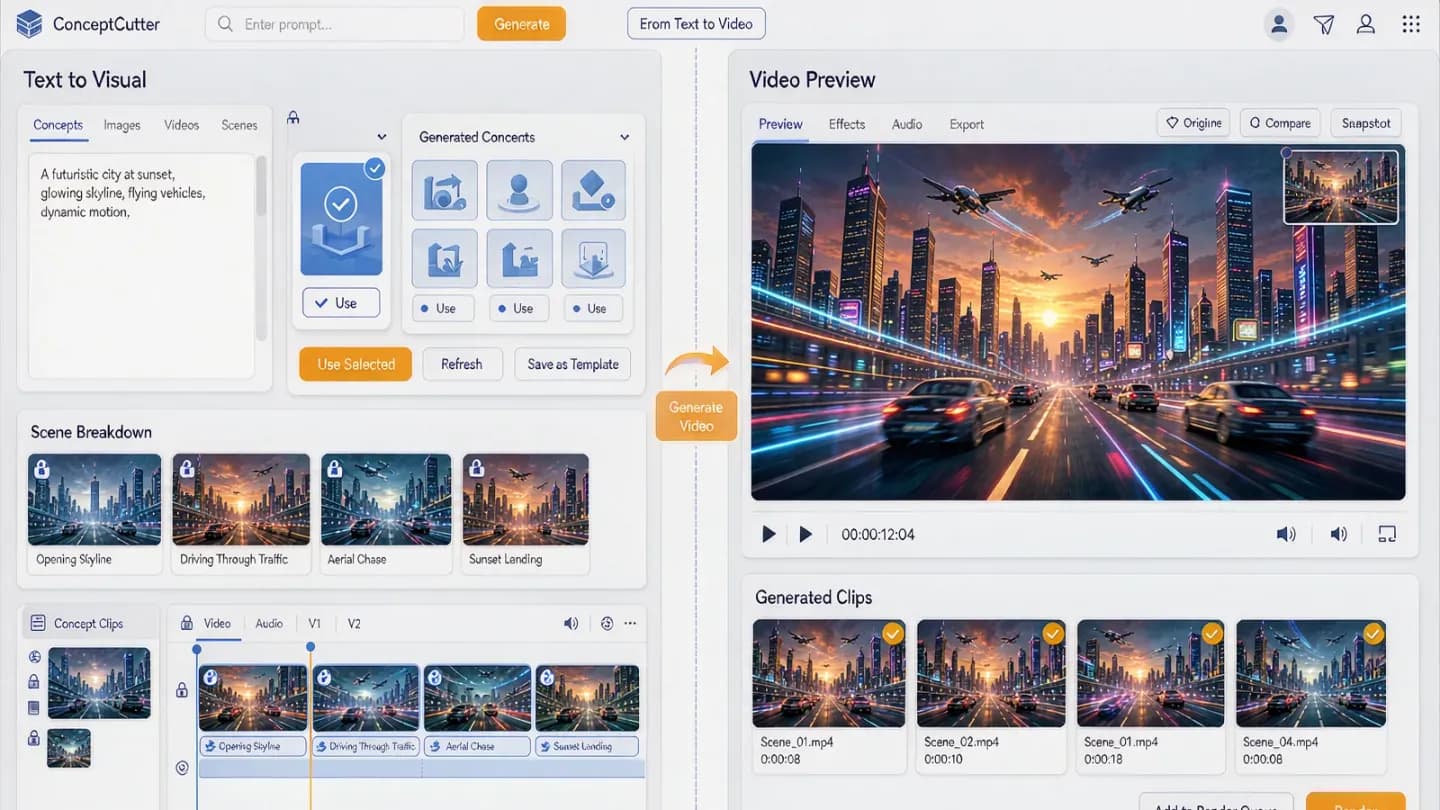
The clearest signal of convergence is the editing layer moving inside the generation tool. What used to be a one-way export from a model into Premiere or DaVinci is now a continuation of the same session. You trim, restructure, and re-prompt without leaving the canvas, and the model remembers the project context that a file transfer would otherwise discard.
The practical payoff is that {{link}} is no longer a separate post step but a continuation of the same session. When the edit and the generation share one document, a fix to one shot can propagate to every place that shot appears, which is exactly the workflow problem that loose AI clips used to create.
Tools built this way also tend to expose editing controls that map to production language, shot order, duration, aspect ratio, and caption tracks, rather than hiding them behind a single render button. That makes the output feel like a cut you can direct, not a clip you have to rescue. For commercial work, where legal supers and brand-safe framing are non-negotiable, having those controls adjacent to generation shortens the path from idea to a compliant cut.
The practical payoff is that editing AI-generated video is no longer a separate post step but a continuation of the same session.
Asset Management Becomes Part of the Tool
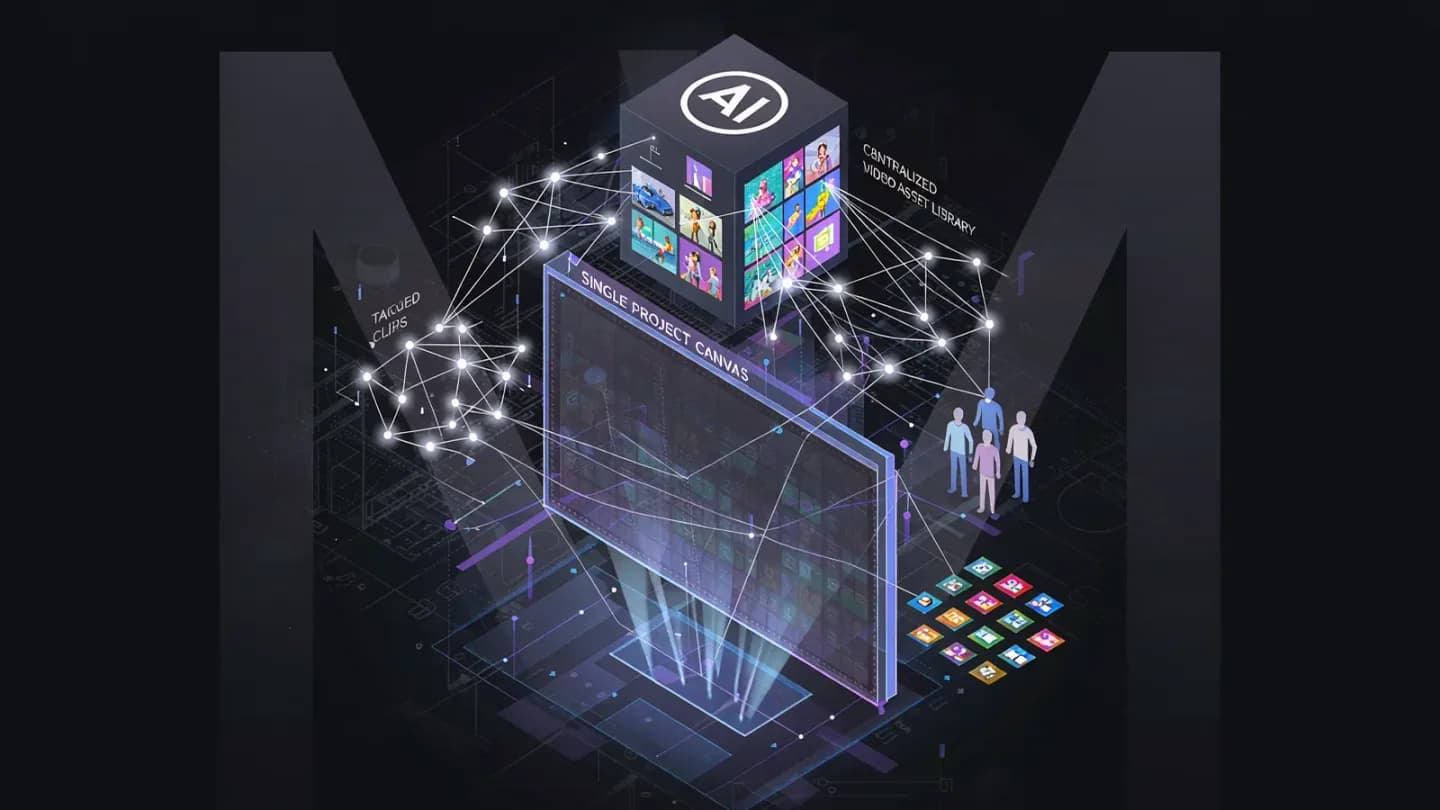
A second convergence is asset management. Generative pipelines produce far more material than they ship. A team might generate two hundred clips to keep three. Without a system, those clips pile up in shared drives with no provenance, and the next project starts from zero instead of building on what already worked.
Teams that treat {{link}} as a first-class feature stop losing clips between tools. When the library lives inside the suite, every generated asset carries its prompt, model version, and source references, so a winning variant from last month is one search away instead of one migration project away.
This matters more as models iterate. A clip tagged with its seed and model version can be reproduced after an engine update; an untagged clip cannot. Suites that enforce metadata at generation time turn a recurring forensic headache into a default setting, and they make the audit trail that buyers now request a natural byproduct of production rather than a separate compliance project bolted on at the end.
Teams that treat AI video asset management as a first-class feature stop losing clips between tools.
Multimodal Models Absorb Editing Steps
The third convergence happens inside the model itself. Newer systems accept text, image, audio, and video as inputs and return a single coherent scene, which removes steps that used to require separate tools. Character and product consistency, once a post-production fix, is now something the generator attempts in the first pass instead of after the fact.
Reporting from early 2026 bears this out. Creative AI News' March 2026 landscape analysis describes ComfyUI as having solidified its position as the default workflow tool for local video generation, and points to unified multimodal systems that hint at a future where video generation and video editing merge into one tool. Wan 2.6, released in December 2025, added multi-shot generation with character consistency across scenes and embedded text generation without post-processing.
Seedance 2.0, shipped in February 2026, pushed the same direction with four-modality input and director-level camera control. None of this means the editor disappears. It means the model is doing more of the assembly work that used to happen after generation, which is the practical definition of convergence. The editing skill does not vanish; it moves earlier in the pipeline, closer to the prompt where the intent is still fresh.

The Market Shift From Demos to Shippable Products
The consolidation is also a market story. For two years the headline was raw model quality; in 2026 the value moved to control, repeatability, and fit with existing workflows. A generator that produces a beautiful clip but breaks your pipeline is no longer good enough, because the bottleneck was never the model, it was the system around it.
The firms winning this phase are the ones already running {{link}} instead of ad-hoc prompts. They treat the suite as infrastructure, wired into brand libraries, review steps, and delivery formats, rather than a novelty they open when a brief calls for something flashy and abandon the rest of the week.
The numbers support the shift. Industry analysis projects the text-to-video model market growing from USD 420.0 million in 2025 to USD 3.43 billion by 2032 at a 35.06 percent compound annual growth rate, attributing momentum to products developers can actually ship rather than impressive demos. The same analysis notes that between 2024 and 2026 the field moved from impressive demos toward products that developers could actually ship, with control, repeatability, and user-facing outputs increasingly mattering for real workflows.
The firms winning this phase are the ones already running an AI-native creative pipeline instead of ad-hoc prompts.
What Composable Suites Mean for Creative Teams
For creative teams, the takeaway is not use fewer tools but use one coherent system. A composable suite lets a small team behave like a larger one. Generate, edit, tag, and ship without hiring a coordinator to move files between specialists, and without losing the context that makes a campaign feel like one body of work rather than a pile of disconnected clips.
When one generation runs thirty seconds, {{link}} moves out of the edit and into the prompt. Longer native generation windows mean shot planning becomes a prompting discipline, and the suite that supports both planning and generation keeps that discipline in one place instead of split across a notes app and a render queue.
The risk is lock-in. A suite that owns your generation, editing, and assets also owns your exit path. Mitigate it by keeping exports clean and provenance metadata portable, so the work survives a switch in tools. Convergence is worth adopting; dependency is worth designing around, and a good suite makes portability a setting rather than a fight. Document the export format and the metadata schema up front, and review them the way you would a delivery spec, because a suite that cannot hand your work to the next tool is only a prettier silo.
AI video creation suites are the 2026 answer to a problem the standalone generator created: too many handoffs, too little continuity. The teams that benefit most are the ones that treat the suite as a production system, not a toy, and hold it to the same standards they would any other part of the pipeline, from brand safety to delivery specs.
When one generation runs thirty seconds, AI video shot planning moves out of the edit and into the prompt.
Put the framework into production
These related pages connect the article’s planning advice to a specific commercial scope.
References
- AI Video Generation: The Complete Landscape in 2026Creative AI News
ComfyUI has solidified its position as the default workflow tool for local video generation, and unified multimodal systems hint at a future where video generation and video editing merge into one tool; Wan 2.6 (Dec 2025) added multi-shot generation with character consistency across scenes, and Seedance 2.0 (Feb 2026) shipped four-modality input with director-level camera control.
- Text-to-video Model MarketPMarketResearch
Between 2024 and 2026, text-to-video moved from impressive demos toward products developers could ship; model quality alone no longer carries the value proposition, control, repeatability, and user-facing outputs increasingly matter. The market is projected to grow from USD 420.0 million in 2025 to USD 3.43 billion by 2032 at a 35.06% CAGR.
- C2PA | Verifying Media Content SourcesC2PA
C2PA provides an open technical standard called Content Credentials that establishes the origin and edits of digital content, functioning like a nutrition label for digital media so creators and consumers can verify provenance.