
From Campaign Shoots to a Daily Content Engine
A DTC AI video content engine is what happens when generation stops being a campaign and becomes infrastructure. The old rule for brand video was simple: you shot a campaign, cut a few edits, and waited weeks for the next one. AI generation has broken that cadence — a brand can brief a model in the morning and have a dozen platform-ready videos by lunch, then do it again tomorrow. The shift mirrors a broader move documented in {{link}}, where 2026 displacement data shows AI-native teams running production as a continuous pipeline rather than a project. This article walks through how a DTC team actually builds that engine, and the controls that stop it from flooding channels with low-quality output.
Calling it an engine is deliberate. A campaign is a one-off; an engine is a system that runs every day, takes a feed of briefs, and emits a steady stream of finished creative. The brands winning here are not the ones generating the most clips — they are the ones that turned generation into a repeatable operating model with gates, owners, and metrics.
The shift mirrors a broader move documented in AI-native creative pipelines, where 2026 displacement data shows AI-native teams running production as a continuous pipeline rather than a project.
Why the Cadence Shift Happened
Falling generation costs are the obvious catalyst — {{link}} puts finished AI video at a fraction of a traditional shoot, removing the budget gate that forced monthly cadences. When a single product shot no longer requires a crew, a location, and a reshoot, the economic logic of batching flips. It becomes cheaper to make ten variants than to agonize over one.
The second driver is platform velocity. Social feeds reward fresh creative and punish fatigue, so the teams that ship daily simply out-test the teams that ship monthly. A DTC brand running a continuous engine treats every product, every angle, and every audience segment as a candidate for its own cut, and lets performance data pick the winners.
A third factor is organizational. As AI moved from experiment to operational, more brands built the in-house muscle to run generation themselves rather than briefing an agency and waiting. The 2026 CMO Barometer, surveying 805 marketing leaders across 15 countries, found AI is the dominant defining priority for the year — which means the capability is now a core competency, not a vendor dependency.
Falling generation costs are the obvious catalyst — 2026 production-cost data puts finished AI video at a fraction of a traditional shoot, removing the budget gate that forced monthly cadences.
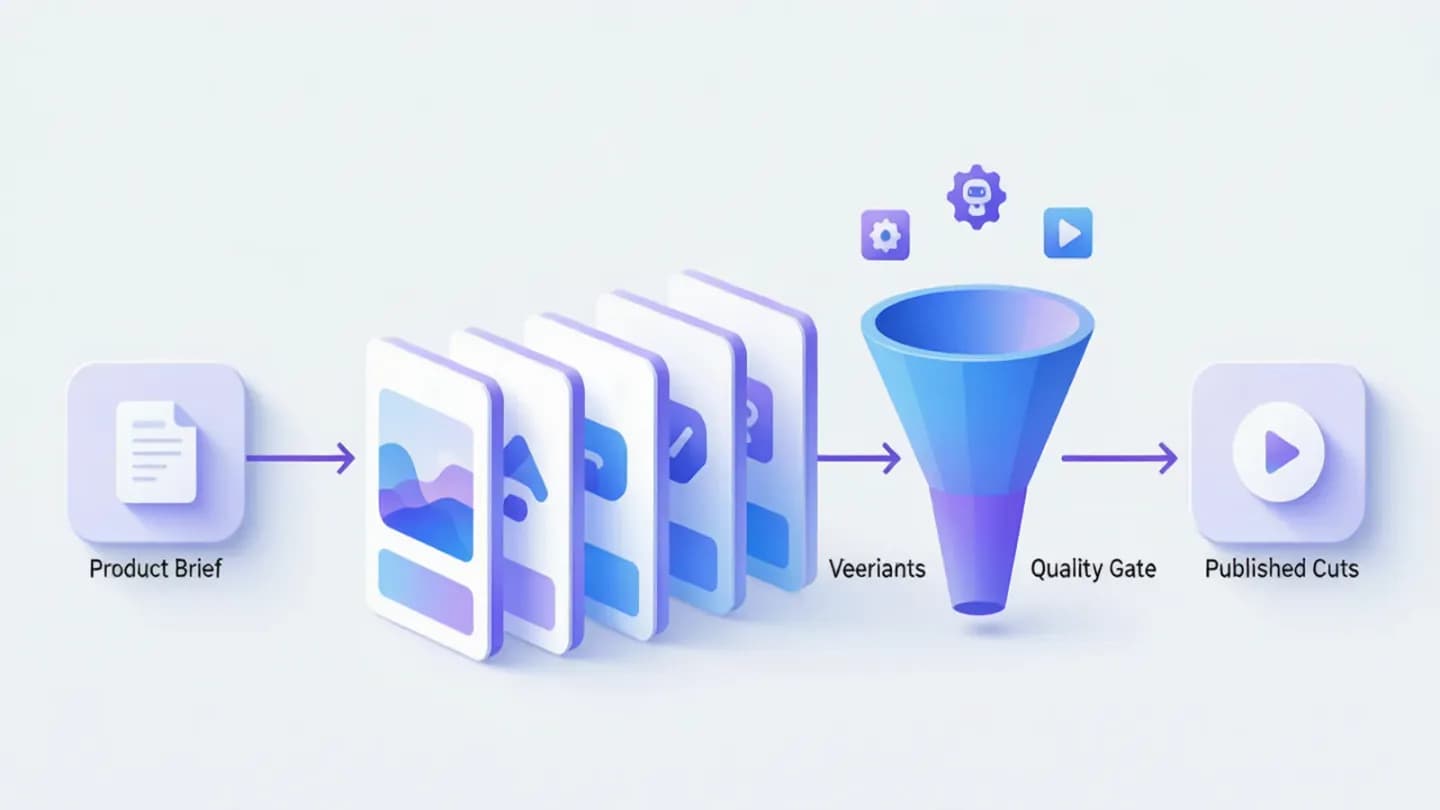
Building the AI Video Content Engine: Batch Generate, Then Gate
The model has two halves. The first is a generation window where volume is encouraged: brief a batch of variants from a single master asset, generate multiple hooks and lengths, and let the model propose cuts you would never have storyboarded. The second half is a gate that decides what actually ships. Commerce brands already prove the model works: {{link}} shows four 2026 cases where AI video passed a hard KPI test, not just a cheaper one. The gate is what converts cheap volume into measurable return.
Concretely, the generation window produces raw clips; the gate applies a structured brief, a brand-kit check, and a performance hypothesis before anything is published. Structured briefs matter more than they sound — PwC's AI adoption team found that adding a structured brief cut revision cycles by 73%, because most rework comes from ambiguous intent, not bad models.
The gate also enforces a human-in-the-loop step. At scale, the risk is not that AI makes a mistake — it is that a mistake ships to a thousand variants before anyone notices. A named reviewer signs off on the first cut of each batch, and only then does the engine fan out the approved direction across formats.
Commerce brands already prove the model works: four 2026 commerce cases shows four 2026 cases where AI video passed a hard KPI test, not just a cheaper one.
QA Controls That Keep Volume From Becoming Slop
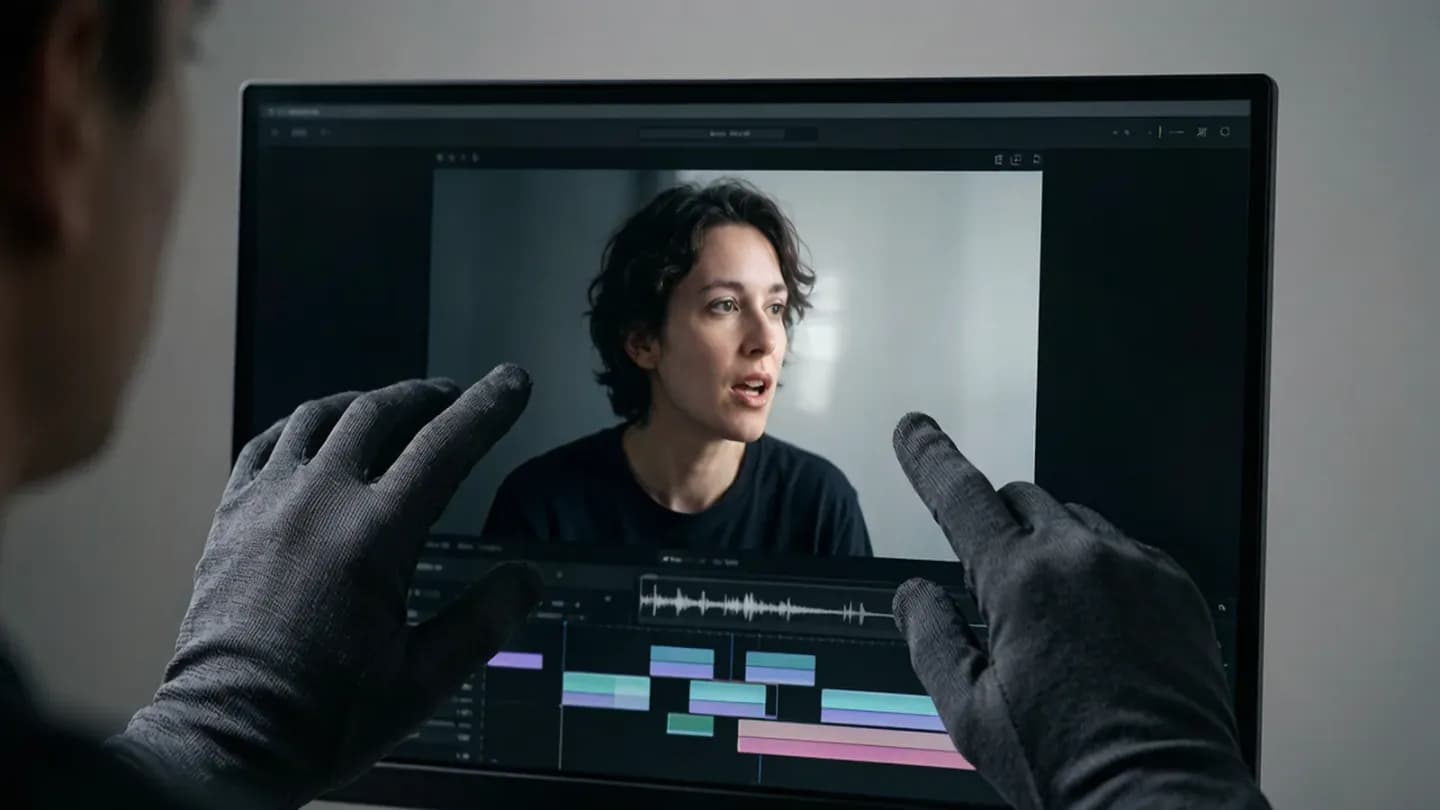
A pre-ship quality gate is non-negotiable at this volume — {{link}} lays out the five checks that decide whether a generated cut is allowed to ship. Those checks cover the failures that actually show up in production: inconsistent character appearance, broken lip-sync, flicker, and off-brand text. At daily cadence these are not edge cases; they are Tuesday.
The numbers make the case for automation. A 2026 IEEE study found lip-sync errors in 38% of AI talking-head videos, and Forbes reported that teams with editorial oversight caught 91% of significant errors before publication. The lesson is not generate less — it is inspect what you generate. Batch generation without batch QA is how a brand ends up in the headlines for the wrong reason.
The most efficient teams separate generation from grading. They generate at low resolution to confirm motion and composition, then upscale only the approved cuts. Google's AI optimization guidance recommends exactly this staged approach, which also cuts cloud cost by roughly 62% — a meaningful saving when you render dozens of clips a day.
A pre-ship quality gate is non-negotiable at this volume — the five-gate QC checklist lays out the five checks that decide whether a generated cut is allowed to ship.
Brand Safety at Scale
Volume multiplies every risk. A single off-message video is a footnote; a hundred of them is a pattern. The controls that matter at engine scale are provenance, disclosure, and rights clearance, applied once at the template level so they travel with every cut.
Provenance is the quiet hero here. The C2PA standard — Content Credentials — gives each asset a tamper-evident record of where it came from and what was done to it, like a nutrition label for digital content. When a brand generates thousands of clips, that manifest is what lets a reviewer prove an asset is original, licensed, and disclosed, instead of auditing each frame by hand.
Disclosure and rights checks should be baked into the brief, not bolted on after. A three-layer clearance — music and sound licensing, visual asset rights, and cultural sensitivity — catches the failures that cost brands the most: the sacred-symbol background, the unlicensed track, the claim that overreaches. At engine scale, the only sustainable version of this is a template the system enforces automatically.

What the Spend and Sentiment Data Say
The market is funding exactly this behavior. IAB projects U.S. digital video ad spend to surpass $80 billion in 2026, growing 11% year over year and exceeding 60% of total TV/video ad spend for the first time. Two in three buyers are already live, testing, or planning to use agentic AI for digital video campaigns in 2026 — meaning the buying side is automating just as fast as the creative side.
That convergence is the real story. When both creation and media buying run on AI, the brands that win are the ones with the discipline to gate their own output. An engine that generates daily but ships only what passes QA is a competitive moat; an engine with no gate is just a faster way to erode brand trust. The DTC teams pulling ahead this year are not the most prolific — they are the most governed.
Put the framework into production
These related pages connect the article’s planning advice to a specific commercial scope.
References
- U.S. Digital Video Ad Spend to Surpass $80B in 2026 (IAB)Interactive Advertising Bureau
U.S. digital video ad spend is projected to surpass $80B in 2026, growing 11% YoY and exceeding 60% of total TV/video ad spend for the first time; two in three buyers are live, testing, or planning agentic AI for digital video in 2026.
- C2PA — Content Credentials provenance standardCoalition for Content Provenance and Authenticity
C2PA provides an open technical standard (Content Credentials) that establishes the origin and edits of digital content — a tamper-evident provenance record described as a nutrition label for digital media.
- CMO Barometer 2026 (Serviceplan Group / University of St. Gallen / Heidrick & Struggles)House of Communication / Serviceplan Group
The 2026 CMO Barometer surveyed 805 marketing leaders across 15 countries and found AI is the dominant defining priority for marketing in 2026.
- Why AI Video Tools Fail and How to Fix Common Mistakes in 2026 (Digen AI)Digen AI
PwC found structured briefs cut revision cycles by 73%; a 2026 IEEE study found lip-sync errors in 38% of AI talking-head videos; Forbes found editorial oversight caught 91% of significant errors before publication.