
The Production Economics Shift
AI video in commerce has quietly crossed a line that vendor demos never show. For two years the pitch was speed and cost: generate a spot in minutes, skip the crew. In 2026 the interesting number is not how fast a brand made a video, but what happened after it shipped. Four commerce brands - Conair, LUQOM, WD-40 and ABOUT YOU - ran controlled tests and published the KPI deltas, and the deltas are large enough to change how a retail-media team should budget creative.
The throughline is production economics, not novelty. When a 15-second product video that used to take three to six months now takes four weeks, the bottleneck stops being creation and becomes decision-making. Creative turns into a variable you can test, not an asset you commission once and pray about. That shift is what makes the 2026 case data worth reading past the hype, because it reframes the question from 'can we make video cheaply' to 'what should we measure once we can make it endlessly'.
Conair: A Four-Week A/B Test on Amazon
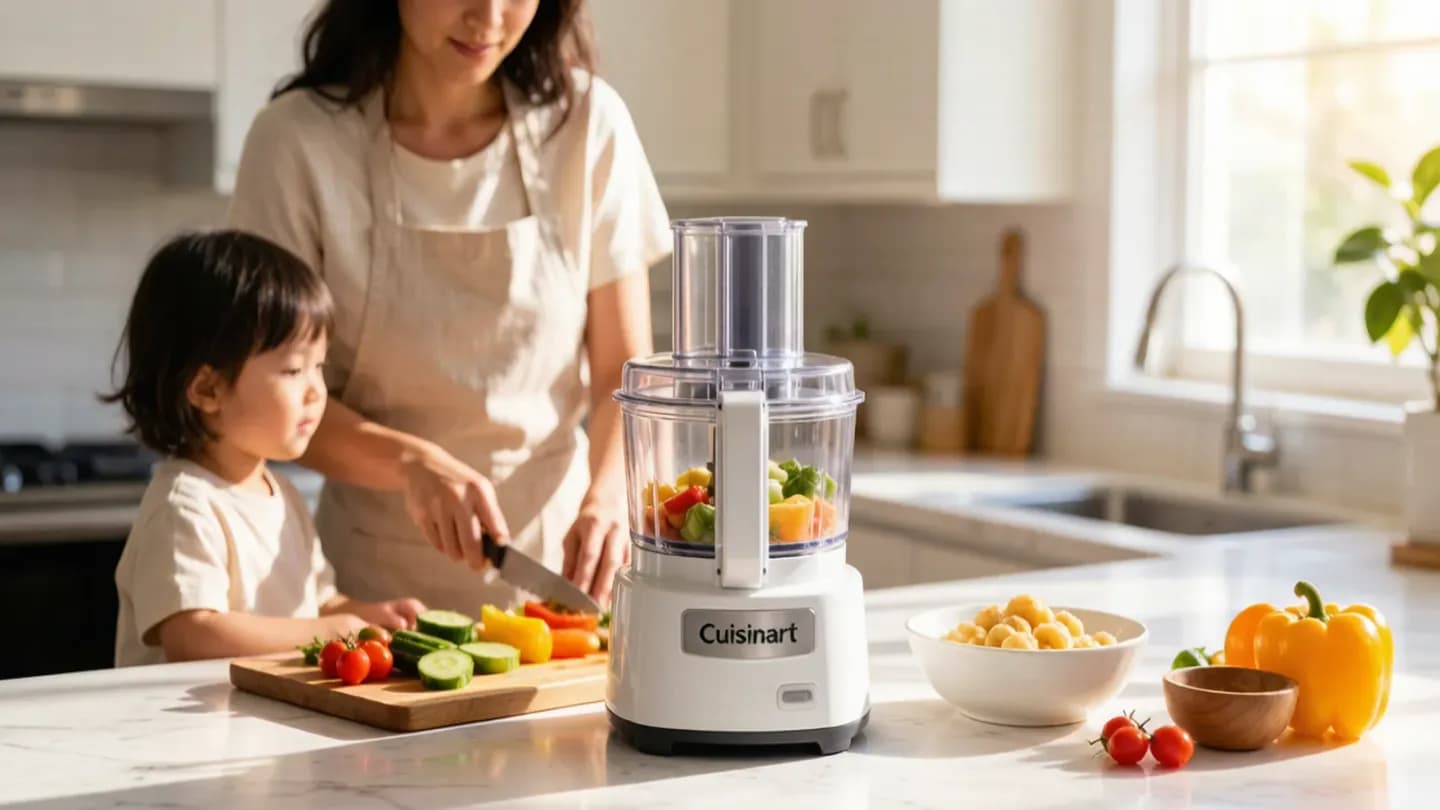
In May 2026, Conair's e-commerce team ran an A/B test of Amazon's Creative Agent on a Cuisinart food-processor video. The AI-assisted version was measured against a traditionally produced brand video over a 30-day window with agency Global Overview. The result: 18% higher detail page views and a 14% lower cost per detail page view, produced in about four weeks instead of the usual three to six months.
Conair's lift came on the product detail page itself, which is exactly where {{link}} tends to move shopper behavior. The test subject was a core SKU that lacked a video showing the product in action, so the AI concept filled a coverage gap rather than replacing a winning asset. Conair's SVP of e-commerce framed it plainly: the test put the brand 'in an advantageous position in the category.'
The split is the part worth copying. Creative Agent produced roughly 80% of the concept; humans handled the remaining 20% - logos, color correction, and the small errors generative video still makes with brand marks and numbers. The human step was not optional polish, it was the guardrail that kept the asset on brand while the machine absorbed the slow part of production.
Conair's lift came on the product detail page itself, which is exactly where scaling product-page video tends to move shopper behavior.
LUQOM: 80,000 Products, One Automated Pipeline
LUQOM Group sells lighting across an 80,000-SKU catalog where custom lifestyle shoots per product are economically impossible. With agency Digitl, it built a GenAI Media Asset Generator on Google Cloud that turns a single product photo into lifestyle visuals at scale, using Gemini for images and Veo for video, then pushes approved assets programmatically into Google Ads campaigns.
The measured outcome: a 40% increase in clicks and a 43% CTR uplift, with 90% of assets passing an automated quality check. The pipeline replaced a manual bottleneck with an event-driven architecture - generate, judge with an LLM, integrate, and activate - so tens of thousands of context-specific creatives now reach YouTube and Discovery feeds without a photocrew ever being booked.
What makes LUQOM different from a one-off spot is coverage. A brand with 80,000 products cannot A/B test video on more than a sliver of the catalog by hand. Automating generation and distribution is the only way the long tail gets visually rich creative at all, and the CTR lift suggests shoppers respond to atmosphere and context, not just sterile product cut-outs on white.

WD-40: A French Launch in Weeks, Not Quarters
WD-40 Company launched its Specialist Professional Degreaser in the competitive French market in early 2026 with no sales history and no time for a traditional shoot. With agency Bizon, it used Amazon's Video Generator to build video from existing product and lifestyle images, then ran a full-funnel Sponsored Brands video and Online Video strategy around the launch.
Both brands leaned on {{link}}, where the model sits inside the ad console rather than a separate studio. The before-versus-after measurement around the activation date isolated the video effect: average daily sales rose more than 50%, daily unit volume tripled, and 88% of purchases came from new-to-brand customers who had never bought the line before.
Engagement cleared the usual bar too - close to 90% video completion and a 45% higher CTR than category benchmarks. The campaign's real lesson is sequencing: capture high-intent shoppers in search with Sponsored Brands video, then extend reach with Online Video, then re-engage lower in the funnel. The AI step bought the speed to run that sequence at launch instead of three months later.
Both brands leaned on platform-native AI video ads, where the model sits inside the ad console rather than a separate studio.
What AI Video in Commerce Actually Measures
Stack the four cases and a pattern emerges in what they chose to report. None led with views or reach. Conair reported detail page views and cost per view; LUQOM reported clicks and CTR; WD-40 reported daily sales, units, and new-to-brand rate; ABOUT YOU reported GMV and add-to-basket. These are commercial outcomes, not awareness vanity metrics that look good in a deck and disappear in a P&L.
The honest read is that {{link}} are completion, conversion assist, and trust - not raw view counts. A brand should be able to tie a generated video to a number a finance lead already tracks, because that is the only number that survives a budget review. The 2026 cases that got published are the ones that could defend themselves in front of a CFO, which is exactly the bar AI video now has to clear.
ABOUT YOU's numbers make the point sharply. Inside the ABOUT YOU Group, about 90% of e-commerce productions now run on AI workflows, cutting production cost roughly 90% and time-to-market by more than 95%, saving over EUR 8 million a year. In A/B testing, AI-generated content delivered a 9.2% GMV uplift and a 5.1% add-to-basket uplift versus traditional studio work. That is revenue, not efficiency, and it is the metric that moves the conversation from 'cheaper' to 'better.'
The honest read is that video metrics that predict revenue are completion, conversion assist, and trust - not raw view counts.
The 80/20 Rule and What Comes Next
The shared operating model across all four is an 80/20 split: generative tools produce the bulk of the concept fast, and a small human step protects the brand. Conair's 80/20, ABOUT YOU's 90% automated with human art direction, LUQOM's LLM-judged pipeline with human approval gates - the numbers vary, but the shape is identical. Speed without the human check is how brands end up in the 'AI slop' backlash stories that circled trade press in 2026.
The pattern points to a {{link}}, where a human art director owns concept and AI scales execution. The 2026 data suggests the teams winning are not the ones that automated the most, but the ones that collapsed the production cycle enough to test, learn, and redeploy before the competition noticed the gap.
For a commerce video team, the takeaway is practical. Treat the next AI video not as a cost saving but as a hypothesis with a measurement plan: pick the commercial KPI up front, ship a version fast, read the delta, and feed the winner back into the next generation. The brands above did not prove AI video is magic. They proved that when production is cheap and fast, testing becomes the strategy - and testing is what compounds.
The pattern points to a human-core, AI-scaled creative model, where a human art director owns concept and AI scales execution.

Put the framework into production
These related pages connect the article’s planning advice to a specific commercial scope.
References
- Conair's AI video ad test points to faster Amazon creative cyclesContentGrip
Conair's AI-assisted Cuisinart video drove 18% higher detail page views and 14% lower cost per detail page view, produced in ~4 weeks vs 3-6 months, with an 80/20 AI/human split (Amazon Creative Agent, May 2026).
- GenAI in Commerce: How LUQOM Group Scaled Visual Inspiration for 80,000 ProductsDigitl
LUQOM's GenAI pipeline (Gemini + Veo on Google Cloud) delivered +40% clicks, +43% CTR uplift, 90% automated quality approval across an 80,000-product catalog.
- WD-40 Company triples daily unit volume with AI-powered videoAmazon Ads
WD-40's AI-generated video on Amazon France drove +50% average daily sales, 3x daily unit volume, 88% new-to-brand, +45% CTR vs category benchmark, ~90% completion (2026).
- In Minutes Instead of Weeks: ABOUT YOU Group Launches AI-Powered Photo Studio With SCAYLE STUDIOSNational Law Review (press release)
ABOUT YOU's SCAYLE STUDIOS runs ~90% of e-commerce production via AI, cutting cost ~90% and TTM >95% (EUR 8M saved), with +9.2% GMV and +5.1% add-to-basket in A/B testing.