
From playground to performance media
For most of the last three years, generative video lived in the proof-of-concept drawer. Brands commissioned a flashy AI clip, posted it once, and moved on. That phase is over. In 2026, generative video is being annexed into the same measurement stack as paid social and programmatic display, judged by cost per view, retention, and return on ad spend rather than by novelty.
Performance media is a simple idea with hard consequences. A channel earns the label only when every dollar in can be traced to a result out, and when the creative itself can be iterated as cheaply as a headline test. Generative video now meets both tests: generation costs a fraction of a shoot, and the output plugs into the same attribution and variant-testing tools marketers already run.
The shift is less about quality and more about accountability. When a video can be generated, variant-tested, and shipped in hours, its value stops being 'did this impress the CMO' and becomes 'did this convert'. This article walks through the signals that generative video has crossed into performance media, and what commerce teams should change to capture the upside.
The cost arithmetic is what converts skeptics. A traditional two-day shoot with crew, talent, and post can run five figures before a single cut is delivered. A generative variant costs pennies to render and minutes to revise, so the marginal cost of testing ten concepts instead of two collapses to near zero.
What changed in 2025 and 2026
Two things moved in parallel. First, the models got good enough to ship. Google's Veo 3.1, Adobe's Firefly video model, and ByteDance's Seedance family reached a quality bar where brands use them for flagship work, not just internal drafts. Native audio, coherent motion, and stable characters removed the tells that once marked a clip as synthetic.
Second, the holding companies committed real money to production-scale deployment. The model landscape is now crowded enough that picking a tool is a strategic decision, not a default. Our breakdown of the leading options helps teams weigh latency, rights, and output control before they commit {{link}}.
WPP's five-year, $400 million expansion of its Google partnership is the clearest signal of scale. The deal gives WPP early access to Veo and Imagen and lets it produce campaign-ready assets in days rather than weeks, with up to 70 percent efficiency gains and a 2.5x acceleration in asset utilisation. One retail client using WPP's AI agents hit 98 percent audience-targeting accuracy and an 80 percent lift in operational efficiency.
Google's own Veo page frames the model as built for high-fidelity, controllable output, and the production deals now treat that controllability as table stakes rather than a novelty. When a model can hold a brand's product, font, and spokesperson consistent across dozens of variants, it stops being a toy and becomes infrastructure.
Our breakdown of the leading options helps teams weigh latency, rights, and output control before they commit AI video model selection.
The T. rex test: an AI influencer that out-performed paid social
The most cited proof point is also the strangest. To launch the Natural History Museum Abu Dhabi, WPP's Ogilvy AI.Lab used that same early Veo 3.1 access to turn a 67-million-year-old Tyrannosaurus rex fossil into the world's first 'AI-ncient influencer' - a witty, meme-fluent character. The short-form episodes reached 50 million video views and 83.8K engagements, with 95.9 percent positive-or-neutral sentiment across online conversation. A museum exhibit became a must-follow creator.
What makes this a performance story rather than a creative one is the discipline behind it. The team ran social listening first, found an active dinosaur fandom, and designed the character to match existing behaviour instead of inventing one. That is the same audience-first logic performance marketers apply to paid social, except the asset was generated rather than filmed.
The format mattered as much as the model. Episodic, platform-native shorts let the character build a following the way a creator would, post by post, instead of dropping a single hero film. Each episode was cheap to produce, so the team could respond to what resonated and double down, the same test-and-learn loop performance teams run on paid social.

Short-form is where generative video pays for itself
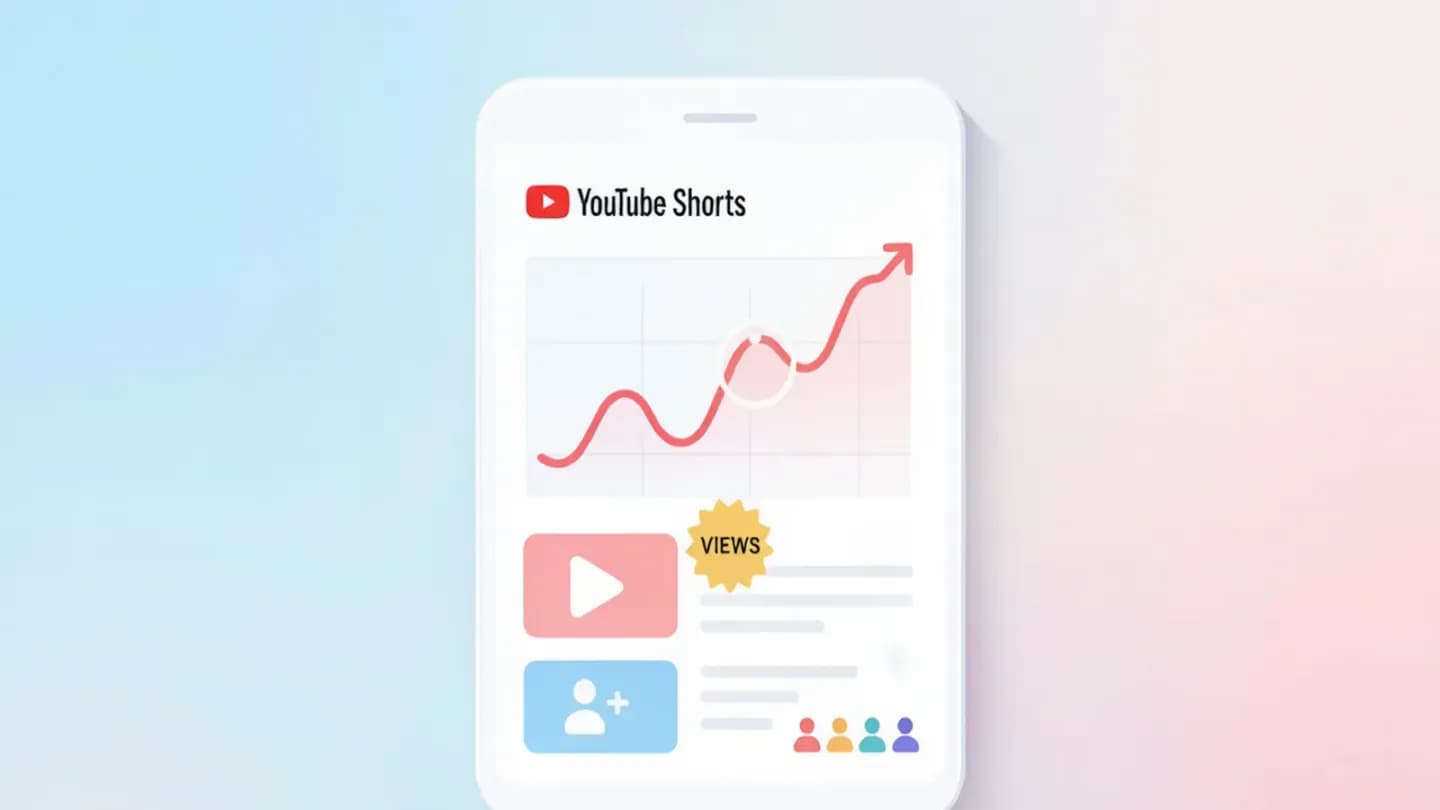
Generative video's economics are strongest in short-form, where volume and velocity matter more than production polish. YouTube Shorts now carries a 5.91 percent median engagement rate, the highest of the three major short-form platforms and 1.4x the engagement of long-form YouTube. For brands, that means a generated clip can out-engage an expensively produced one on the same channel.
The catch is yield, not reach. Many teams generate plenty of video but capture only a fraction of its potential performance, which is why the gap between volume and realised value deserves a closer look {{link}}.
Algorithmic distribution rewards freshness, which hands generative video a structural edge. Short-form feeds promote new clips in the first 48 hours, and completion rates climb for videos in the 40-to-60-second range. Because AI can refill that pipeline daily at near-zero marginal cost, brands can stay in the window consistently instead of rationing a handful of produced assets.
The pattern is clearest in retail and consumer packaged goods, where entire catalogs of products each need their own short video. Generative pipelines turn a thousand-SKU catalog into a thousand variants without a thousand shoots, and the engagement data tells the team which products deserve a produced hero film.
The catch is yield, not reach. Many teams generate plenty of video but capture only a fraction of its potential performance, which is why the gap between volume and realised value deserves a closer look creative yield gap.
Building the production pipeline brands actually run
A one-off AI clip is a toy; a pipeline is a system. Adobe's Firefly Services packaged more than 20 generative and creative APIs so teams can resize, localise, and assemble variations inside existing workflows, with custom models trained on a brand's own IP to keep output on-brand. Adobe's own line, that brands are shifting generative AI 'from playgrounds to production', captures the moment precisely.
Running this at scale means understanding what each generation actually costs, because per-clip pricing quietly dictates whether a test-and-learn programme is affordable {{link}}.
Agencies are already operating as the pipeline. Adcore's creative studio, among others, produces AI-generated brand videos for retail and consumer clients at volume, treating generative output as a repeatable production line rather than a bespoke project. The differentiator is process: brief, generate, variant-test, ship, the same loop performance teams already run for static creative.
Brand safety is where the pipeline earns its budget. Custom models trained on approved assets keep colours, logos, and claims consistent, and guardrails catch off-brand frames before they publish. Without that layer, a high-volume generative programme trades one risk (production cost) for another (reputation), which is why governance is treated as part of the system, not a final check.
Localisation is the quiet multiplier. A single generated master can be re-voiced, re-skinned, and re-captioned for a dozen markets in an afternoon, something a filmed asset can rarely match without a reshoot. For commerce brands with regional catalogs, that alone justifies the pipeline.
Running this at scale means understanding what each generation actually costs, because per-clip pricing quietly dictates whether a test-and-learn programme is affordable AI video pricing models.

How to measure generative video as media
The teams winning here treat generative video like any other media buy. They set a cost-per-result target, run controlled variants, and read the results against commerce outcomes, a discipline documented in real brand cases {{link}}.
Concretely: tag every generated asset, route variants through the same landing pages and promo codes you use for paid social, and attribute view-through and click-through to revenue. When the cost to generate a winning clip drops below the media saving from not reshooting it, generative video stops being a cost centre and becomes a margin lever.
Most teams stall on cadence, not capability. They generate a burst of videos, see mixed results, and conclude the model underperforms, when the real problem is sample size and inconsistent tagging. Treat each week as a small controlled experiment: five variants, one placement, one message, one clear conversion event. Let the data, not the demo reel, decide what to scale.
Start with one funnel and one format. Pick a single short-form placement, generate five variants of one message, and let engagement and ROAS decide the winner. Scale the loop, not the ambition. Generative video rewards teams that treat it as a measurable media channel, not those that treat it as a creative experiment.
Organisationally, the change is smaller than teams fear. The same strategist who briefs a paid-social test can brief a generative video test; the same analyst who reads ROAS can read video ROAS. The new skill is writing prompt and variant plans, not learning a brand-new discipline.
The teams winning here treat generative video like any other media buy. They set a cost-per-result target, run controlled variants, and read the results against commerce outcomes, a discipline documented in real brand cases commerce AI video KPI cases.
Put the framework into production
These related pages connect the article’s planning advice to a specific commercial scope.
References
- WPP and Google forge groundbreaking partnership to redefine marketing with AIWPP
WPP committed $400M to Google technology, gaining early Veo/Imagen access with up to 70% efficiency gains and a 2.5x acceleration in asset utilisation; a retail client reached 98% targeting accuracy and 80% operational efficiency.
- Social Media Benchmark Report 2026: Rates, Reach, and Growth by PlatformPostEverywhere
YouTube Shorts carry a 5.91% median engagement rate, the highest of the major short-form platforms and 1.4x the engagement of long-form YouTube.
- Adobe Introduces Firefly Services and Custom Models to Accelerate Enterprise Content CreationAdobe
Adobe Firefly Services package 20+ generative and creative APIs so teams can resize, localise, and assemble variations in-workflow, with custom models trained on brand IP; Adobe frames the shift as 'from playgrounds to production'.
- Veo by Google DeepMindGoogle DeepMind
Google positions Veo for high-fidelity, controllable video generation; production deals now treat that controllability as table stakes for brand-scale work.