
Short-form video shelf life is about ten days
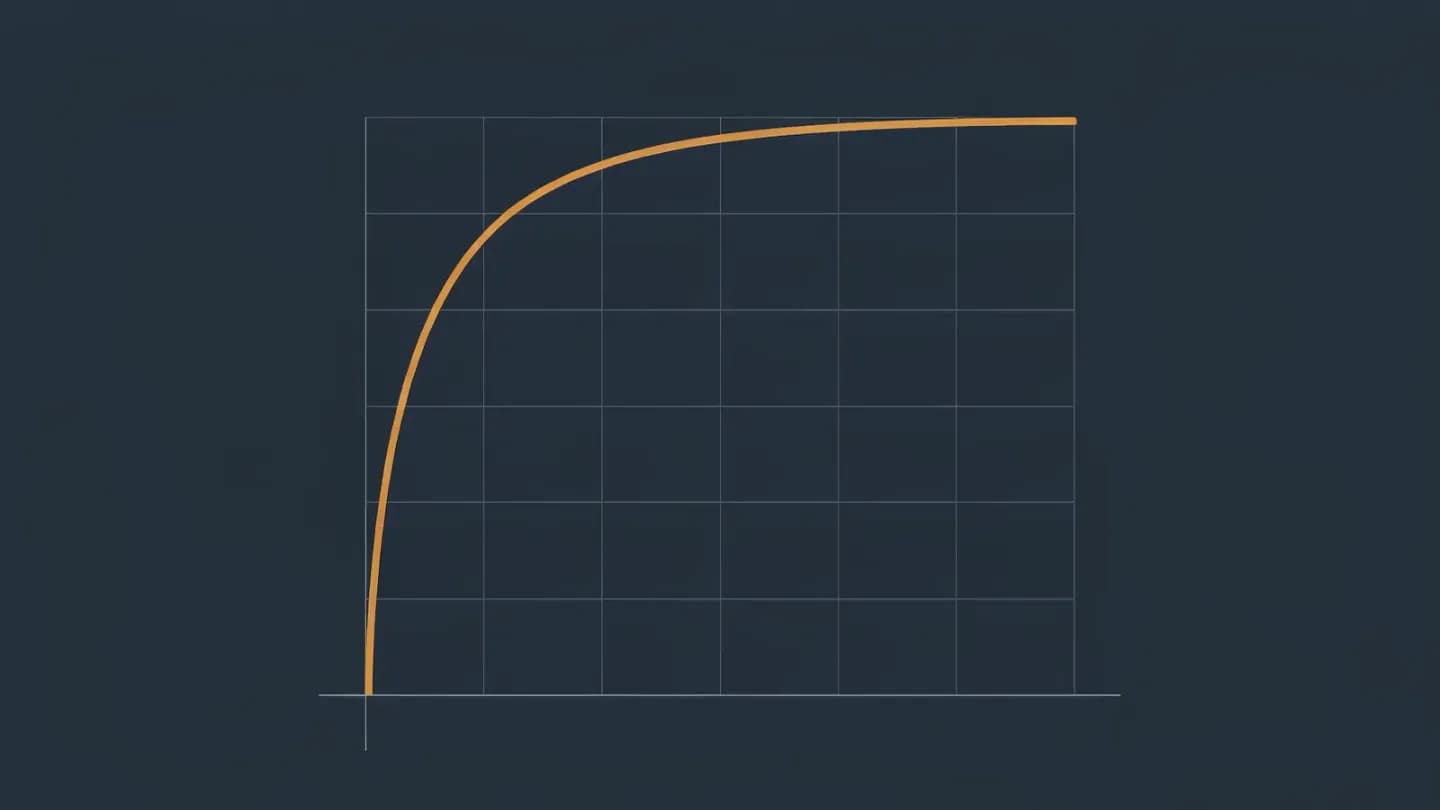
Short-form video shelf life is roughly ten days. Metricool's 2026 TikTok study found that a post collects 96% of its total reach and nearly 98% of its total interactions inside the first 10 days, which means a short-form video is not an asset that accrues value over time. It is a perishable unit that spends almost all of its value on arrival.
That is not a decay curve a team can flatten with better promotion. It is how distribution works. The same study found the For You Page drives 72.70% of video views, so discovery is algorithmic rather than subscribed. A post gets one allocation of attention, spends it, and stops. Teams that plan short-form as a library that will be discovered later are planning for a mechanic the platform does not offer.
The practical consequences show up in the details. Video still beats static formats decisively, generating 5x more reach and 6x more interactions than images or carousels. Hashtag use more than doubled year over year, and posts carrying at least one hashtag earned nearly 5% more views and more than 9% more interactions. Posts that ask a question pull 26.19% more comments. The strongest posting window sits between 6 p.m. and 9 p.m., with 8 p.m. as the peak hour. None of these levers extend the window. They only decide how much of it you capture.
More posts, less reach: the supply side moved first
Metricool analysed 2,314,756 TikTok posts from more than 92,000 accounts worldwide, comparing January and February 2026 against the same two months of 2025. Publishing volume rose sharply while per-post performance fell across every headline metric. Videos published increased 72.10% and image or carousel posts rose nearly 140%, while video views fell 31.30%, reach dropped 28.73% and interactions declined 31.17%.
Read together, those numbers describe a supply shock rather than a demand collapse. The audience did not shrink by a third. The same audience was divided across roughly twice as much inventory, and the platform's allocation per post fell accordingly. Metricool describes the platform as entering a phase of saturation and is careful not to claim the volume increase caused the per-post decline. The two moved together across the same window, and for a planning team the correlation is enough to act on.
Volume alone is no longer a strategy, but the opportunity has not disappeared. Metricool found that 16.47% of TikTok accounts grew enough to move into a higher follower category over the year, outpacing Instagram, LinkedIn, YouTube, Facebook, X and Pinterest. Juan Pablo Tejela, CEO and Co-Founder of Metricool, framed it directly: the platform is more competitive, which means brands need to be more intentional about how they structure content, and they can no longer rely on volume alone. What replaces volume is precision about which concepts earn a slot at all.

A perishable asset measured with a perishable metric
The measurement stack most teams run makes the shelf-life problem invisible. Wyzowl's 2026 survey of 266 marketing professionals and consumers found that 67% of video marketers quantify ROI through video views, with 63% using engagement, 52% using leads or clicks, and only 32% tying video to bottom-line sales. If two thirds of teams judge video by views, and 96% of those views arrive inside ten days, then the measurement horizon has quietly collapsed to the same ten-day window as the asset itself.
That produces a reporting artefact rather than a strategy. A post looks like a clean win or a clean loss within a fortnight, so the team optimises the only variable it can see inside that fortnight, which is output volume. Meanwhile the share of marketers reporting good ROI from video fell from an all-time high of 93% to 82%, even as 91% of businesses use video and 69% of video marketers produce social video. Adoption is near universal, reported return is slipping, and the metric most teams steer by is the one that expires fastest.
The platform split tells the same story. In the Wyzowl data, 40% of video marketers use TikTok, but only 29% rate it effective, making it the least effective channel in the report. High effort, high volume, shortest asset life, weakest reported return. Understanding where the attention actually goes inside that short window starts with the {{link}}, because retention shape, not view count, is what distinguishes a post that earned its allocation from one that simply spent it.
Understanding where the attention actually goes inside that short window starts with the short-form video retention benchmarks, because retention shape, not view count, is what distinguishes a post that earned its allocation from one that simply spent it.
The other video economy still compounds
Short-form is not the only video economy, and treating it as such is where budgets go wrong. Wistia's 2026 State of Video report analysed more than 13 million videos and 79 million hours of viewing data and surveyed close to 1,000 marketers. Its most important finding for planning purposes is the mirror image of the ten-day window: on-demand webinars are still pulling views six months after the live event, and replays longer than 30 minutes saw twice the engagement of shorter ones.
The owned-property side of the ledger behaves differently in every respect. Homepage videos see a 24% play rate, higher than product, contact or thank-you pages. Videos over 60 minutes hold a 52% play rate. Almost 20% of viewers who see a lead generation form inside a video fill it out, which is an action a social post cannot ask for in the same way. While 83% of companies share video on social, fewer than a quarter post to TikTok at all, and 88% repurpose webinar content into other assets, with 60% publishing replays on landing pages and another 60% cutting social clips from them.
Production capacity is shifting to feed both economies at once. Wistia found the share of companies with in-house video teams jumped from 36% to 54% in two years, and 62% of teams are either using AI in their video workflows or plan to start soon. That combination is exactly why the shelf-life distinction matters. Generative tooling makes it cheap to produce more perishable units, but cheap production does not convert a ten-day asset into a compounding one. It only changes how quickly you can learn which concepts deserve the durable treatment.
Plan the depreciation, not the cadence
Once the shelf life is explicit, the operating model changes in three specific ways. First, move the review gate. Judging a post at 24 hours measures the allocation, not the outcome; the honest read is at day ten, when 96% of the reach has landed. Second, change the unit of account from the post to the concept. If every post exhausts its reach in ten days, the post cannot be the asset. The compounding asset is the concept library and the accumulated evidence about which concepts earn a slot.
Third, price the output correctly. Near-zero marginal generation cost makes it tempting to flood the window, so teams need a kill rule expressed in cost per usable outcome rather than cost per render. That is the difference between running a {{link}} and simply publishing more often, because near-zero marginal generation cost only pays when each variant is priced against the outcome it produces. The same discipline applies to a {{link}}, where the library is what survives and any single cut is expendable.
The budget question follows directly. A line item that buys reach which expires in ten days is a rental. A line item that buys an indexed, owned, searchable cut is a purchase. Both belong in a 2026 video plan, but they should not be funded from the same pool, measured by the same metric, or defended with the same argument. Teams that split them stop having to explain why a 72% increase in output produced a 31% decrease in views per post.
That is the difference between running a variant economics that price each concept and simply publishing more often, because near-zero marginal generation cost only pays when each variant is priced against the outcome it produces.
The same discipline applies to a creative refresh cadence built on a variant library, where the library is what survives and any single cut is expendable.
Give the durable cut a durable address
Making the owned cut compound is largely a metadata job. Google's video structured data documentation specifies three required properties for VideoObject: name, thumbnailUrl and uploadDate, with uploadDate in ISO 8601 format. Duration is recommended but must also be ISO 8601, and Google recommends supplying contentUrl or embedUrl because that is the most reliable way for it to retrieve the video file. Missing a required property means the video may return nothing to search at all.
The part most teams skip is the key-moment layer. Nesting Clip objects under hasPart lets a team declare exact start points and labels, and Google states plainly that moments declared this way take priority over what it would detect automatically. Each Clip needs a name, a startOffset in seconds and a url that deep-links to that timestamp, with endOffset recommended. The page must be deep-linkable, the video must run at least 30 seconds, and no two clips on the same page may share a startOffset.
That is the structural answer to a ten-day shelf life. A social cut spends its reach and is finished. An owned cut with valid VideoObject markup, declared clips and a working deep link can keep being found long after the social allocation is gone, It is the same machine-readable discipline that {{link}} depends on when answer engines decide which video to cite. Production should ship both from one master, with the metadata written before the upload rather than after it.
It is the same machine-readable discipline that generative engine optimization for video depends on when answer engines decide which video to cite.
Put the framework into production
These related pages connect the article’s planning advice to a specific commercial scope.
References
- Metricool's 2026 TikTok Study Reveals 31% Drop in Video Views Amid Content SaturationMetricool
Analysis of 2,314,756 TikTok posts from more than 92,000 accounts (Jan-Feb 2026 vs Jan-Feb 2025): video views per post fell 31.30%, reach 28.73% and interactions 31.17%, while videos published rose 72.10%. Posts reach 96% of total reach and nearly 98% of interactions within the first 10 days, and the For You Page drives 72.70% of video views.
- Video Marketing Statistics 2026 (12 Years of Data)Wyzowl
Survey of 266 respondents in late 2025: 67% of video marketers quantify ROI through video views, 52% through leads or clicks and 32% through bottom-line sales. Marketers reporting good ROI from video fell from 93% to 82%; 40% use TikTok but only 29% rate it effective.
- The Key Takeaways From Wistia's 2026 State of Video WebinarWistia
2026 State of Video analysed over 13 million videos and 79 million hours of viewing data and surveyed nearly 1,000 marketers. On-demand webinars still pull views six months after the live event, 30+ minute replays see twice the engagement of shorter ones, homepage videos see a 24% play rate, and almost 20% of viewers who see a lead gen form fill it out.
- Video (VideoObject, Clip, BroadcastEvent) structured dataGoogle Search Central
VideoObject requires name, thumbnailUrl and uploadDate in ISO 8601 format. Key moments declared with Clip under hasPart take priority over Google's automatic detection; each Clip needs name, startOffset and a deep-linkable url, the video must be at least 30 seconds, and no two clips may share a startOffset.