
Why model-portable AI video is now the baseline
OpenAI will shut down the Sora 2 models and the Videos API on September 24, 2026, naming no replacement. That makes model-portable AI video the new baseline for any team shipping generative clips: a single vendor deprecation should never take your pipeline offline. This guide shows how to architect video production so no one model is a point of failure.
For most of 2025, teams treated a flagship model as a permanent fixture. Sora 2 looked unassailable when it launched, yet OpenAI notified developers on March 24, 2026 that the entire Videos API and every Sora 2 snapshot would be removed by September 24. The replacement column in the deprecation table was left blank, which is the part that should worry production teams most.
A blank replacement field means there is no drop-in successor to wait for. You migrate by use case, not by model name, and you do it on a deadline you did not choose. The only structural defense is to stop binding your workflow to one vendor's API shape in the first place. Sora 2 is not an isolated event; it is the clearest example of a pattern that now touches every team relying on hosted generative video.
The cost of that binding shows up the moment a shutdown is announced. Roadmaps built around a single provider's duration limits, audio behavior, and response format suddenly need a rewrite, and the rewrite happens under time pressure. Model-portable AI video is the practice of refusing that dependency before it forms.
Why no single model is a drop-in replacement
Model behavior has diverged far enough that specs no longer line up. A current {{link}} shows how far capabilities have diverged across vendors, which is exactly why a like-for-like swap rarely works in practice.
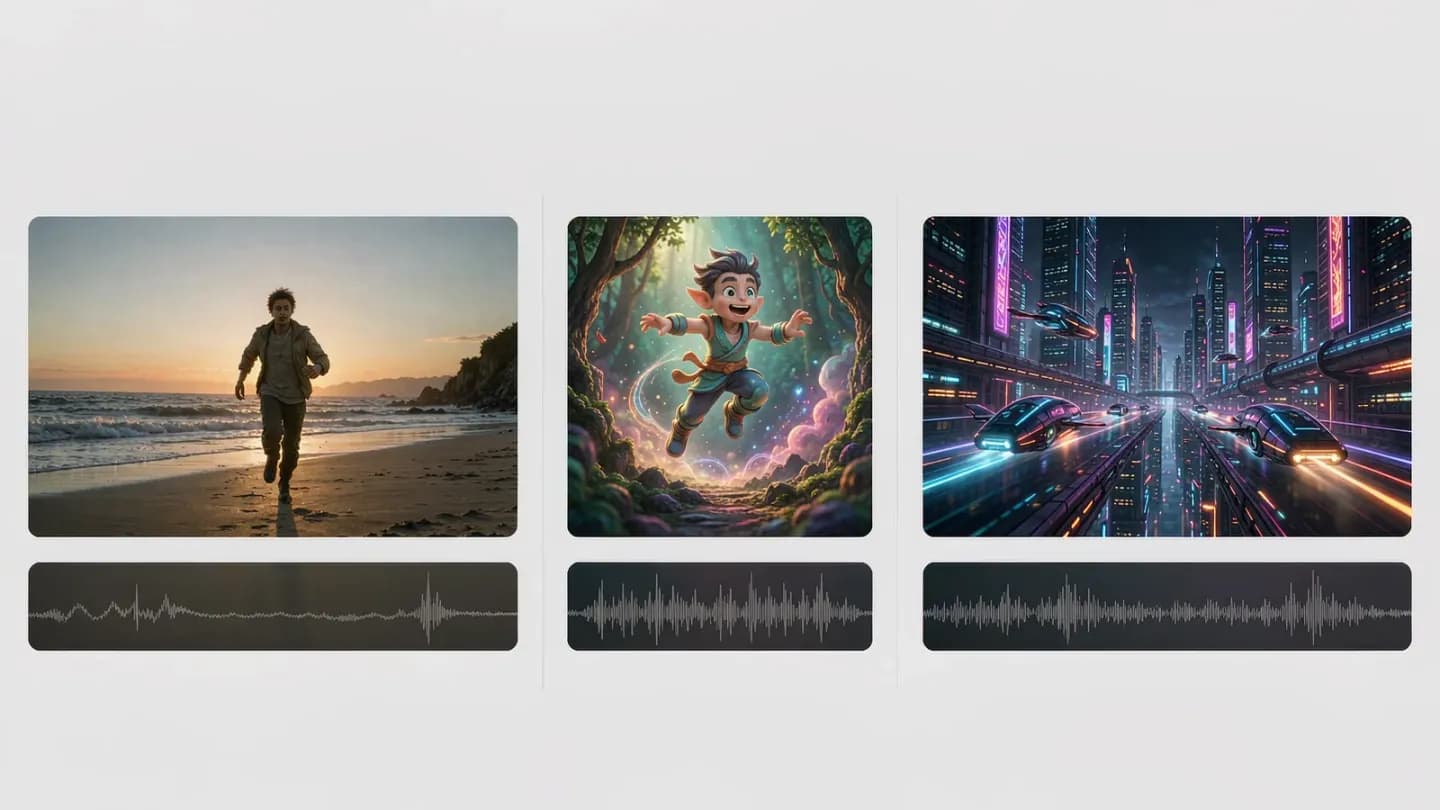
Duration is the first place migrations break. One provider generates at four, six, or eight seconds; another accepts any integer from three to fifteen; a third tops out at thirty. If your editing timeline, caption timing, or platform specs assume eight-second masters, a new model silently changes the math on every cut you produce.
Audio is the second trap. Some models generate sound in the same pass; others treat audio as an optional, separately priced add-on. A workflow that counted on synchronized dialogue or ambient sound suddenly needs a separate text-to-speech or sound-design step, which changes both unit cost and delivery latency in ways the original estimate never captured.
Pricing models differ just as sharply. One platform bills per clip, another per second, and a third bundles audio into a higher tier. The same creative output can cost three times as much on a replacement model, not because the quality is different but because the billing surface is. Comparing headline quality misses the operational cost that actually breaks a budget.
A current text-to-video model comparison shows how far capabilities have diverged across vendors, which is exactly why a like-for-like swap rarely works in practice.
Build an abstraction layer, not a hard dependency
The fix is architectural. The trade-off between {{link}} is no longer just about cost — it is about how much control you keep when a vendor pulls the plug.
An abstraction layer sits between your creative brief and the model. Your team writes prompts and asset specs in a neutral format; the layer maps them to each provider's request shape and parses each provider's response. When one vendor leaves, you re-point the mapping, not the entire pipeline, and the rest of your tooling keeps working unchanged.
Write prompts that travel. Anchor a scene on a reference image, a shot description, and a motion brief rather than on a vendor-specific trick, so the same creative intent renders acceptably across providers. Model-specific flourishes become optional plugins layered on top of a portable core, not the load-bearing structure of the output.
Treat model-specific features as plugins, not foundations. Reference-image consistency, inpainting, and video extension are useful, but if your core output depends on a proprietary capability, you have rebuilt the same lock-in one feature at a time. Keep the eighty percent path model-agnostic and isolate the twenty percent that is truly vendor-specific behind a clear interface.
The trade-off between self-hosted versus API AI video is no longer just about cost — it is about how much control you keep when a vendor pulls the plug.
Pin snapshots and test parity on every migration
Pinned snapshots are not a safe harbor. Teams that track {{link}} know that a pinned snapshot can still change behavior after a provider update, so you must test parity on every migration rather than trust a version string.
Map every call site before you move. The generation call is obvious, but anything that parses the response shape, stores a provider video ID, or assumes fixed duration options is part of your surface area. Most migrations fail on the hidden integration, not the render itself, because the second-order dependencies were never documented.
Test parity on two vendors, not one. The reason is blunt: a single provider deprecating a model with no successor is the exact failure you are living through. A second active path turns a crisis into a configuration change, and it forces you to keep the abstraction layer honest instead of letting it rot against a single provider.
Build a small regression suite of representative shots and run it against every candidate model before you cut over. Include your hardest cases: fast motion, on-screen text, skin tones, and audio sync. A model that wins on a demo reel can fail on the dull, high-volume work that actually fills your calendar, and you want to learn that in a test, not in production.
Pinned snapshots are not a safe harbor. Teams that track AI video model drift know that a pinned snapshot can still change behavior after a provider update, so you must test parity on every migration rather than trust a version string.
Keep assets portable with provenance metadata
Portable pipelines need portable assets. When a clip moves between models and vendors, its origin and edit history should travel with the file, not live in a system only one tool can read.
Open standards make this practical. C2PA's Content Credentials attach a tamper-evident record of a file's origin and edits, while IPTC's digitalSourceType field lets a file self-declare that it was created by a trained algorithmic model. Both ride on the asset, so provenance survives a vendor change instead of disappearing with the platform that wrote it.
Provenance is also a commercial requirement now, not a nice-to-have. Buyers and platforms increasingly ask for source metadata, and assets that carry it remain usable across more destinations. Treat provenance as part of the export, not an afterthought bolted on at delivery, because you cannot retrofit trust into a file after it has already shipped.
Format and codec choices matter for the same reason. Standard containers and widely supported codecs keep an asset readable wherever it lands, while exotic proprietary wrappers age badly the moment a tool vanishes. Portability is a property of the file itself, not of the software that last touched it.
Make vendor selection a recurring review
Treating vendor selection as a one-time decision is the mistake. A current {{link}} should be a recurring review because the field moves quarterly, and the model that fits today may be gone or outclassed by next spring.
Set a lightweight review cadence: re-score your shortlist against current capabilities, pricing, and deprecation risk every quarter. Watch for the early signals a shutdown is coming — empty replacement columns, slowing updates, or a vendor refocusing on other products — and keep a named fallback ready before you actually need it, not during the panic of an announcement.
Give one owner the recurring job of watching the deprecation horizon. When selection is everyone's responsibility it becomes no one's, and the first sign of trouble is a production failure rather than a planned migration. A single accountable reviewer turns vendor risk from a surprise into a managed line item on the roadmap.
The teams that weather the next deprecation will be the ones that never let a single API become load-bearing. Model-portable AI video is not a hedge against one vendor; it is the operating model for an industry where the only constant is that today's flagship will eventually be retired, often on someone else's schedule rather than your own.
Treating vendor selection as a one-time decision is the mistake. A current evaluating AI video tools for team adoption should be a recurring review because the field moves quarterly, and the model that fits today may be gone or outclassed by next spring.
Put the framework into production
These related pages connect the article’s planning advice to a specific commercial scope.
References
- OpenAI API DeprecationsOpenAI
OpenAI deprecated the Sora 2 video generation models and the Videos API on March 24, 2026, scheduling shutdown for September 24, 2026, and listed no recommended replacement model.
- 2026 IAB Digital Video Ad Spend & Strategy ReportIAB
IAB projects US digital video ad spend to surpass $80B in 2026 (+11% YoY, about 20% faster than the total ad market), exceed 60% of total TV/video spend, and reports two-thirds of video buyers are live, testing, or planning agentic AI for video campaigns.
- C2PA — Verifying Media Content SourcesC2PA
C2PA defines an open standard (Content Credentials) that records the origin and edit history of digital content, functioning like a nutrition label so provenance stays attached to the file.
- IPTC Digital Source TypeIPTC
IPTC's digitalSourceType vocabulary includes 'trainedAlgorithmicMedia' (media created by an AI model trained on captured content) and 'compositeWithTrainedAlgorithmicMedia' (edited with generative AI), letting files self-declare their AI source at the metadata level.