
The mandate in one line
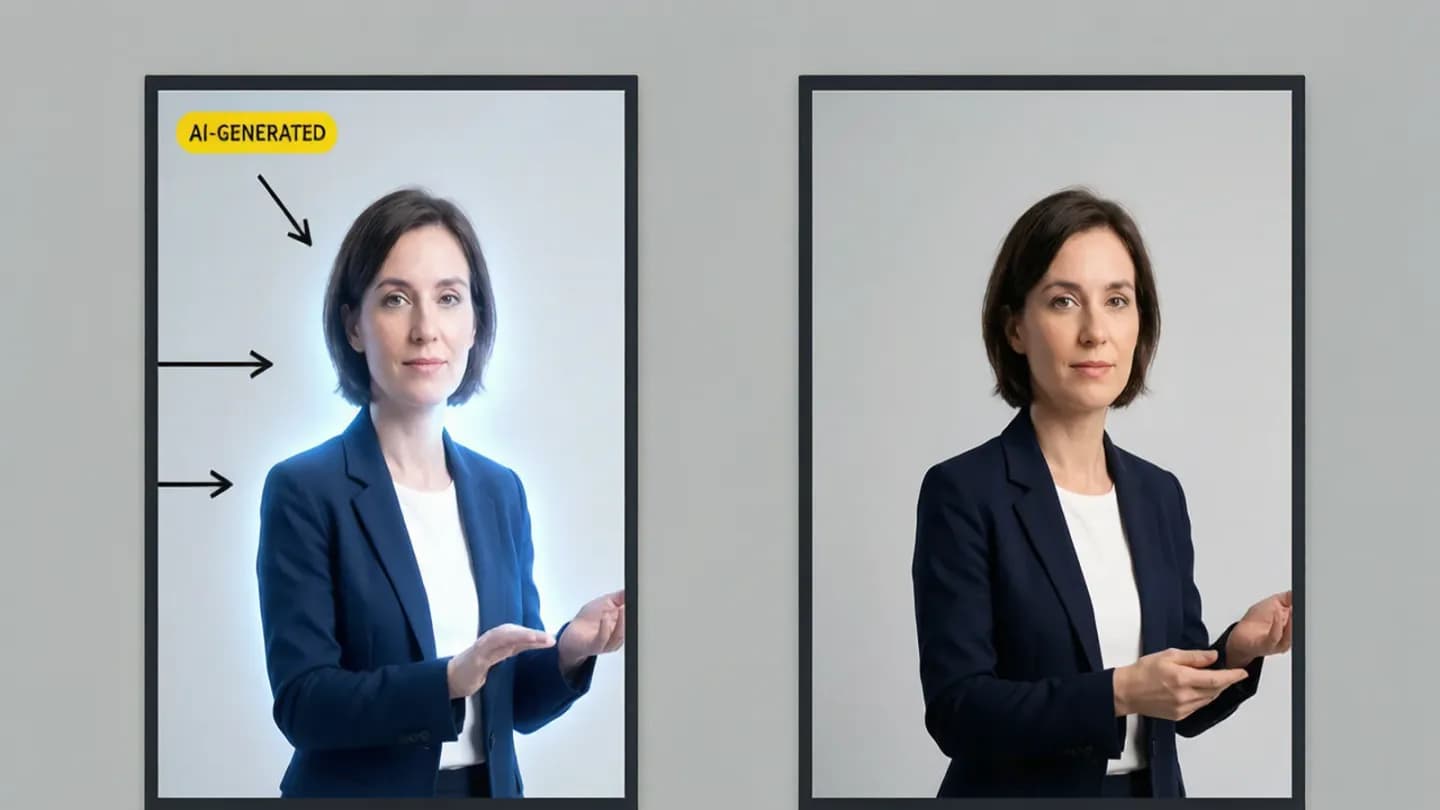
South Korea AI ad labeling mandate requires any commercial video made or edited with AI to carry a clear, visible 'AI-generated' mark, and it bars anyone from deleting or hiding that label before the ad ships.
The duty is statutory, not voluntary: it arrives through a Network Act amendment the government began rolling out in the first quarter of 2026, with further steps scheduled through the second half of the year. For a Korea-directed campaign, the label is now part of the legal spec, not a nice-to-have.
What South Korea AI ad labeling covers
The mandate covers any photo or video a person creates or edits with AI tools before posting it online. That includes fully synthetic clips, deepfake-style swaps, and AI-generated spokespeople or 'experts' layered into an otherwise real shoot. If a model produced the face, the voice, or the scene, the asset is in scope.
Routine postproduction is not the target. Color correction, noise reduction, and standard blemish removal stay outside the labeling duty, mirroring the risk-based carve-outs in the EU AI Act and the IAB framework. The line is authenticity: if AI could make a viewer believe a person, product, or result is real when it is not, the label applies.
The threshold tracks the AI Basic Act, which took effect in January 2026 and requires labels for synthetic content 'indistinguishable from reality.' The Ministry of Science and ICT is issuing detailed provider guidelines, so the practical test for commercial teams is whether the generated element could pass for genuine to a reasonably attentive viewer.
In practice the test is narrower than it sounds. A human actor filmed on a real set, then cleaned up with AI denoising, does not need a label; the same actor replaced by a generated double does. The mandate targets the representation, not the toolchain, which is why teams should document where generation actually changed what the viewer sees on screen.
Who is liable: creators, platforms, and the label ban
Liability runs across the whole content lifecycle. The person who generates or edits the asset must attach the label; the person who uploads it must keep it; and portal or platform operators must provide labeling methods and police compliance among their users. A label that exists but gets stripped on export fails the duty.
Teams that already run an EU, US, and India disclosure compliance checklist own most of the labeling plumbing Korea now mandates. {{link}} Removing or damaging a label is explicitly prohibited and can draw fines for both individuals and the platform. The Network Act amendment also opens the door to punitive damages of up to five times actual harm for malicious distribution of false or manipulated information.
The shift from the AI Act to the Network Act matters because the earlier law regulated AI business operators, while the new duties reach ordinary marketers and the platforms distributing their work. A brand that never trained a model can still owe the label, and a platform that ignored a known unlabeled deepfake can be fined alongside the uploader.
For agencies, the operational change is to bake the mark into the master file rather than bolt it on at the platform. A label carried in the source composition survives edits, localization, and re-export; a label added only in the final social cut is the one most likely to be lost or challenged.
Teams that already run an EU, US, and India disclosure compliance checklist own most of the labeling plumbing Korea now mandates. AI video disclosure compliance checklist
Undisclosed virtual-human endorsements are now deceptive
The Korea Fair Trade Commission and the Ministry of Food and Drug Safety now treat an AI 'expert' or 'doctor' recommending a product without saying it is virtual as deceptive advertising. For food and drug claims, an AI-generated specialist is presumed misleading outright, because the category carries the highest consumer risk.
A nearby market already forces synthetic spokespeople to carry dual disclosure labels, and Korea now follows the same logic. {{link}} The shared reasoning is simple: a face that sells must be honestly identified, whether the campaign runs in Seoul or Shanghai.
The policy meeting that announced the measures was prompted by exactly this failure mode: AI 'pediatricians' and celebrities pushing supplements and medicines on YouTube and Facebook, often aimed at older viewers who cannot easily tell a synthetic clip from a real one. Treating the omission as deception, not merely poor labeling, raises the stakes from a fixable slip to a substantive claim.
The enforcement signal is practical for production. Any scripted endorsement by a synthetic person now needs the disclosure written into the creative itself, and ideally into the on-screen supers, not left to a contract clause or a platform setting that may not render in every market.
A nearby market already forces synthetic spokespeople to carry dual disclosure labels, and Korea now follows the same logic. China's AI virtual influencer rules

The 24-hour takedown track for high-risk categories
The government organized the response as a three-tier framework: prevent before distribution, block fast during distribution, and sanction afterward. For the categories where fake experts do the most damage: food, drugs, cosmetics, over-the-counter medicine, and medical devices, the middle tier gets real teeth.
The Korea Communications Standards Commission can complete written review within 24 hours of a request, and the media commission can issue emergency takedown orders before a full review finishes. The Ministry of Food and Drug Safety extends its fast-track system from narcotics to these categories, so a flagged AI ad in a high-risk vertical can be blocked within a day.
The practical effect for advertisers is that post-hoc cleanup is expensive and slow relative to prevention. A non-compliant AI ad pulled inside 24 hours still burns the media already spent and interrupts a live campaign, so pre-clearance on claims and labels matters more than takedown speed.
The split between the two commissions is worth noting: the standards commission judges whether the ad breaks the rules, while the media commission holds the emergency takedown lever. Both can act on a single flagged creative, which compresses the window between a complaint and a removal.
South Korea inside the global disclosure stack
A Mediterranean market set a similar single-market disclosure bar that Korea now matches for video. {{link}} Each market writes its own list of triggers, but the direction is identical: synthetic representation must be flagged at the point of publication, not buried in a policy page.
A separate European market tightens the same duty for synthetic performers running its campaigns. {{link}} Where that market leans on existing advertising-standard councils, Korea built a statutory label plus a takedown clock, giving regulators a direct enforcement lever rather than guidance alone.
A buy-side industry framework gives brands a risk-based labeling standard that Korea's mandate effectively operationalizes. {{link}} Brands running multi-market video can treat the industry trigger list as the common denominator and layer per-market labels on top.
The convergence is the useful part for global teams. A master spot built to the strictest common trigger, AI-generated mark, and removal ban will clear Korea, the EU, and the buy-side frameworks at once, and only needs lighter local labels added per market before each launch.
A Mediterranean market set a similar single-market disclosure bar that Korea now matches for video. Turkey's 2026 AI advertising rules
A separate European market tightens the same duty for synthetic performers running its campaigns. UK AI advertising disclosure rules
A buy-side industry framework gives brands a risk-based labeling standard that Korea's mandate effectively operationalizes. IAB AI Transparency Framework v2

A pre-launch checklist for Korea-bound video
Before a Korea-directed spot ships, confirm four things. First, every AI-generated or AI-edited frame carries a visible, unremovable 'AI-generated' mark in the composition itself. Second, any synthetic spokesperson states it is virtual in the creative, not only in the brief or the contract.
Third, high-risk categories: food, drug, cosmetic, and medical, get legal pre-clearance on both the claim and the label, because the 24-hour takedown track makes post-hoc fixes costly. Fourth, keep the label in the master file so localized cuts and platform exports inherit it automatically.
Fifth, document the human review behind any AI-generated endorsement, since designated-escape routes in disclosure law generally protect content that went through genuine editorial control. A short compliance note attached to the campaign file turns a vague 'we labeled it' into an auditable record that survives a regulator's question.
Sixth, brief the platform and the localization vendor, because the label ban makes a silent strip by an export preset a compliance event, not a rendering glitch. The team that owns the master owns the mark end to end, from the first generation to the last localized cut.
Put the framework into production
These related pages connect the article’s planning advice to a specific commercial scope.
References
- Gov't cracks down as AI 'doctor' ads flood internetKorea JoongAng Daily
On Dec 10, 2025 the Korean government unveiled measures introducing mandatory AI-content labels, a ban on altering or removing the label, 24-hour review for food/drug/cosmetic ads, and punitive damages up to five times actual harm, rolling out via Network Act amendments from Q1 2026.
- Article 50 - Transparency Obligations for Providers and Deployers of Certain AI SystemsEU AI Act
EU AI Act Article 50 requires providers of systems generating synthetic image, audio, video or text to mark outputs in a machine-readable format detectable as artificially generated or manipulated.
- AI Transparency and Disclosure FrameworkIAB
IAB's AI Transparency and Disclosure Framework takes a risk-based, materiality-driven approach, requiring disclosure only when AI materially affects authenticity, identity, or representation rather than universal labeling.