Why UGC ads out-convert polished creative
UGC ads performance has become the default expectation in paid social, not an experiment. In 2026, short-form vertical UGC is the highest-performing ad creative format because it blends into the feed instead of interrupting it. Audiences scroll past obvious commercials, but a phone-shot clip that looks like something a real user posted earns the first three seconds.
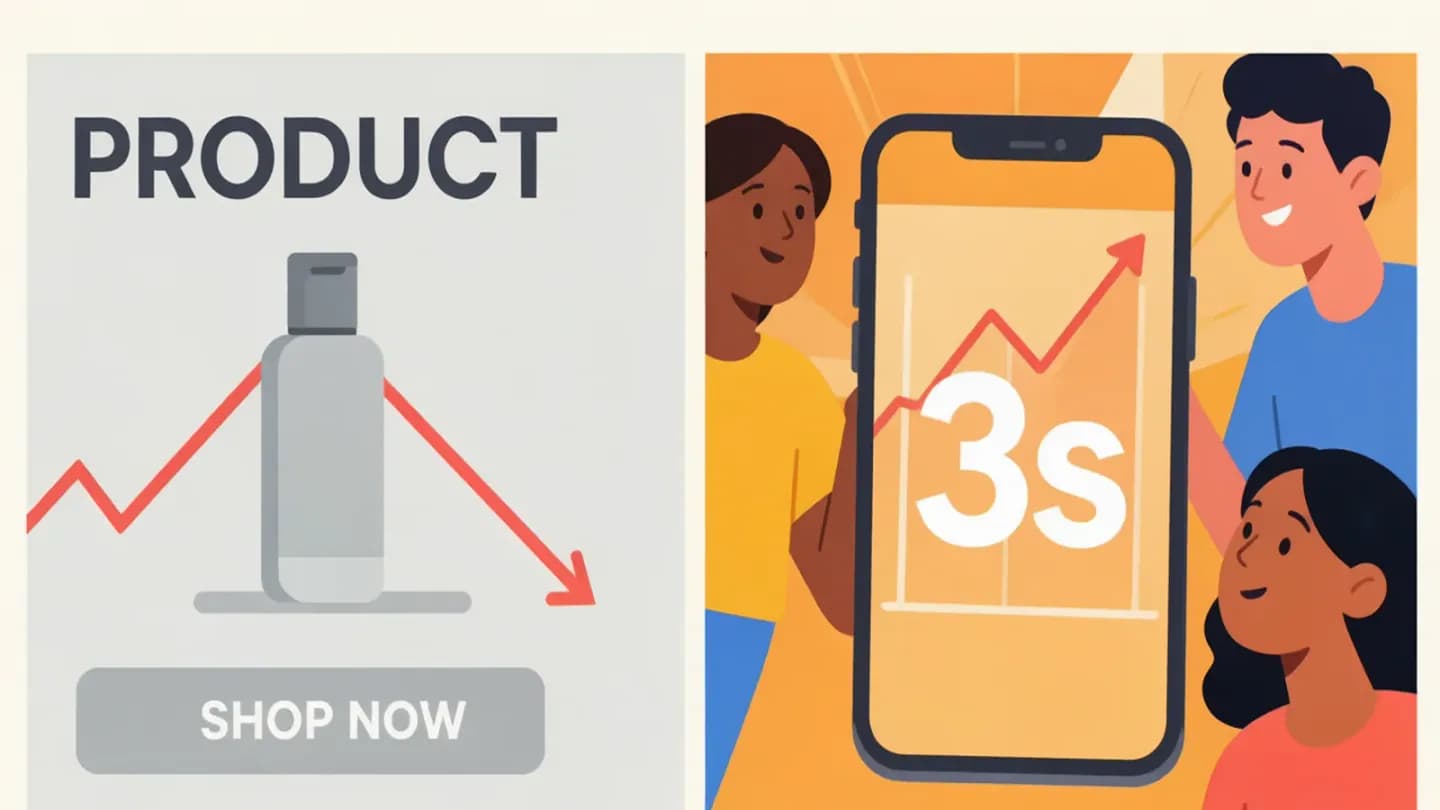
The gap is measurable. UGC ads convert at 3-6% against 1-3% for polished brand ads and generate two to four times the engagement, according to Hawky's 2026 UGC guide. The reason is psychological and mechanical: a real person recommending a product carries more weight than a branded graphic, and native-feeling creative earns the algorithm's favor, which lowers CPCs through higher relevance.
The format also dictates production habits. UGC performs best on TikTok, Instagram Reels, Facebook, and YouTube Shorts, where the feed is built for authentic, vertical content. Design every clip vertical (9:16) with captions, since a large share of social video is watched on mute and captions drive both comprehension and conversion.
But conversion rate is a property of the asset, not the strategy. A single winning UGC clip is luck; a stream of them is a system. The rest of this article is that system.
Build a modular UGC creative library
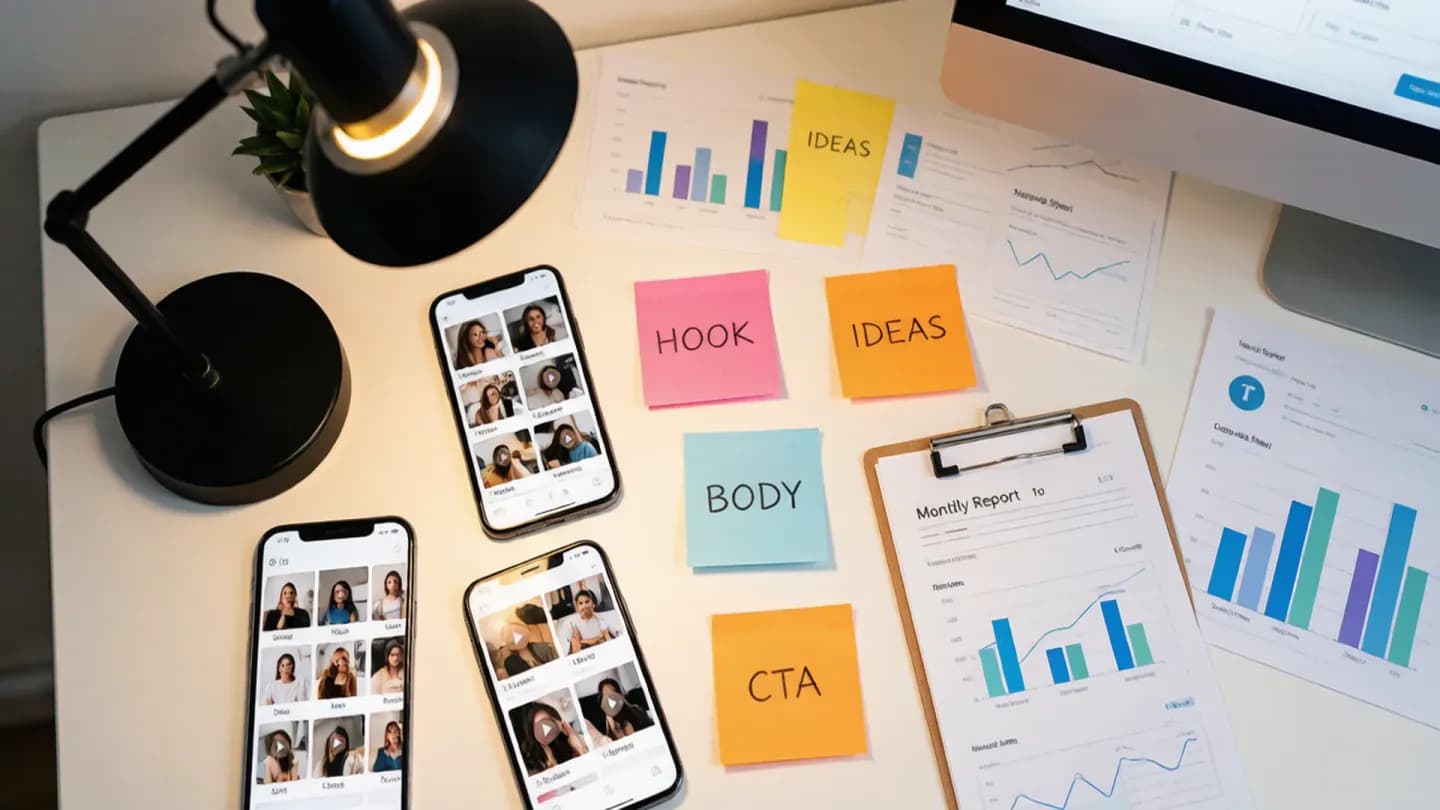
Most teams produce each UGC ad as a standalone asset, which caps how much they can test. The fix is modular structure: break every ad into interchangeable components - hooks, body segments, and calls to action - so you can mix and match without reshooting. Film three different hooks against the same body. Test multiple CTAs against the same testimonial. This multiplies testing volume without multiplying production cost.
A consistent structure also makes winners reusable. The high-converting UGC sequence runs hook (0-3s), problem (3-8s), solution (8-15s), product showcase (15-30s), social proof (30-40s), and CTA (40-45s). When every clip follows the same skeleton, you can isolate which component moved the number and port it to the next batch.
AI-assisted generation helps keep the library full. Many teams now source a few genuine creator videos for hero ads and use AI to spin variations for testing, since production volume is the constant bottleneck. The modular structure is what keeps those machine-made variants on-brand and comparable, so a human reviewer can still tell which component won.
Treat the library like a media system, not a folder of finals. Tag each variant by hook family, angle, and platform so the team can see what is testing where. The goal is a pipeline that stays full, not a hero video you hope lands.
UGC ads performance hinges on the hook
The first three seconds decide roughly 80% of an ad's performance, so the hook is the highest-leverage thing you can test. Run dedicated hook tests: hold the body constant and vary only the opening line or visual. Once you find a winning hook, pair it with different body formats and CTAs to optimize the full creative.
Because the first three seconds carry most of the performance, {{link}} is the cheapest place to start testing. You do not need a new product demo to learn what stops the scroll - you need three openings on the same footage.
Read the early signals in the right order. Start with hook rate (three-second view rate), then hold rate, then CTR, then cost per acquisition. If you wait for final conversion data to judge a hook, you keep paying for weak openings far longer than you should.
Because the first three seconds carry most of the performance, the anatomy of a high-retention opening hook is the cheapest place to start testing.
Set a kill threshold and a testing budget
Testing only works if you actually cut losers. Define a kill threshold up front: if a creative has not hit a minimum engagement bar - say a 2% CTR or a 25% hook rate - after $50-100 of spend, pause it and move the budget to the next variant. Top-performing accounts test 15-20 new UGC variants every month, according to ChatterBuzz's 2026 performance guide; accounts shipping fewer than ten per month are leaving performance on the table.
Budget for volume deliberately. A useful rule of thumb allocates 20-30% of total ad spend to testing new creative, with the remaining 70-80% scaling proven winners. Spread the test budget evenly across new variations and enforce the kill threshold without sentiment.
Read results by hook family, not by individual ad. The win usually comes from a type of opening - a confession, a price anchor, a relatable problem - not from one lucky clip. Log which hook family pulled the best early attention so it becomes the template for the next production run, not a one-off winner that nobody can repeat.
The cadence matters as much as the creative, and {{link}} show how often top teams ship new variants to surface winners. A winner found this week is worthless if you cannot ship the next ten before the current one fatigues.
The cadence matters as much as the creative, and creative testing benchmarks show how often top teams ship new variants to surface winners.
Watch for creative fatigue and stay ahead
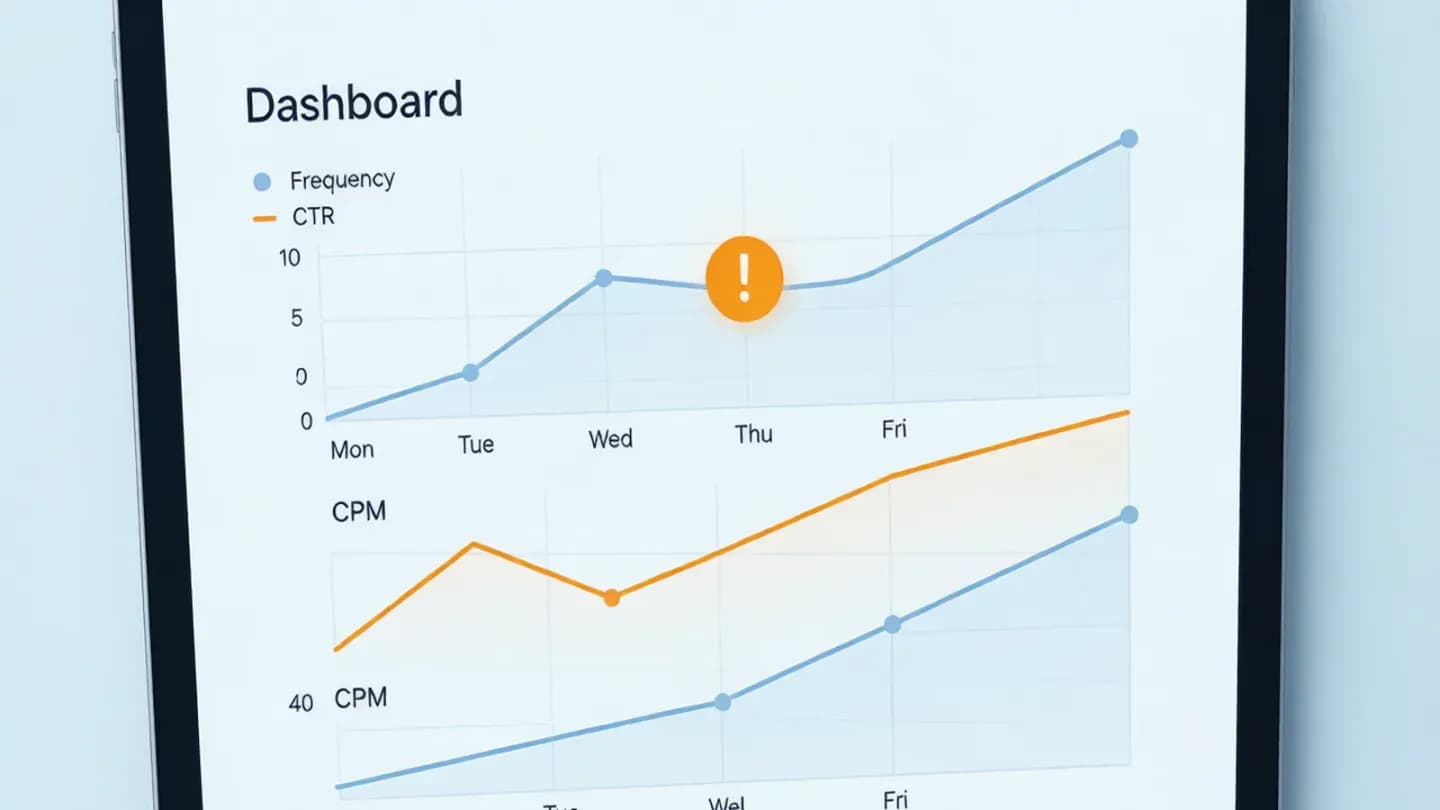
Every winning UGC ad has a shelf life. Monitor three signals together - rising frequency, declining CTR, and climbing CPM - because when they move in the same direction, fatigue is the reliable explanation. Most winning UGC clips live two to four weeks before performance decays.
When frequency climbs and CTR drops together, it is time to swap creative - exactly the moment {{link}} tells you to act. Keep a replacement pipeline two to three weeks ahead of what is currently running so you never scramble for a fill-in.
Instrument fatigue before it arrives. Tag every live variant with its launch date and its hook family so the dashboard can flag age automatically. A clip that is two weeks old and climbing in frequency deserves a scheduled replacement regardless of how well it performed last week, because the decay is already underway.
Treat fatigue as a planning input, not a surprise. If your testing cadence produces winners slower than your winners decay, you are net negative on creative - no matter how good any single clip was.
When frequency climbs and CTR drops together, it is time to swap creative - exactly the moment a creative refresh cadence built on leading indicators tells you to act.
Turn winners into a repeatable system
The point of all this is repeatability, not heroics. A testing system turns a handful of lucky clips into a predictable win rate by standardizing how you generate, test, and retire creative. The compound effect is real: teams that systematize creative testing consistently outperform teams that refresh occasionally.
A testing system is only as good as the clips it receives, which is why {{link}} matters as the supply side of the same loop. Production and testing are two halves of one engine; starve either and the whole thing sputters.
Instrumentation is the unglamorous half of repeatability. Name variants by hook family, angle, and date so results are comparable across runs, and keep the testing log in one shared place. Without that discipline, every post-mortem starts from zero and the win rate never compounds into an operating advantage.
As AI-generated and AI-assisted UGC floods the auction, the differentiator is no longer who can make the most clips - it is who can measure which ones work. IAB's 2026 research frames this as a shift from adoption to accountability: long-term success depends on measurement and a sustainable value exchange, not on volume alone. The teams that win are the ones that can name why a clip won and ship its successor on purpose.
A testing system is only as good as the clips it receives, which is why feeding the 2026 ad auction with UGC volume matters as the supply side of the same loop.
Put the framework into production
These related pages connect the article’s planning advice to a specific commercial scope.
References
- UGC Ads: The Complete Guide for 2026 (Hawky)Hawky
UGC ads convert at 3-6% versus 1-3% for polished brand ads and generate two to four times the engagement.
- UGC Ads That Convert: Performance Creative Guide 2026 (ChatterBuzz)ChatterBuzz Media
Top-performing accounts test 15-20 new UGC variants per month and allocate 20-30% of total ad spend to creative testing.
- Creative Benchmarks 2026 (Motion)Motion
In Motion's 2026 creative benchmark dataset, the highest hit-rate hook tactic was 'Newness' at 11.37% and the top visual format 'Letter' at 10.83%.
- The Next Phase of AI: From Adoption to Accountability (IAB)IAB
IAB's July 2026 research frames the next phase of AI in advertising as a shift from adoption to accountability, where long-term success depends on measurement and a sustainable value exchange.