
The hardest launch is the one with no history
Amazon Ads generative video let WD-40 launch a brand-new degreaser in France without a single production shoot. With no sales history to lean on, the brand fed existing product images into Amazon's Video Generator and let a human team steer the final cut. The payoff was a 50% lift in average daily sales and a tripling of daily unit volume, a clean test of what AI video can do when the usual cold-start disadvantages are in full effect.
Every new product enters the market with a handicap that paid media alone cannot fix. There is no conversion history for the algorithm to learn from, no organic ranking to borrow, and no customer reviews to reassure the first shopper. For a maintenance brand moving into a crowded French category, that gap is exactly where launches go to die.
Generative video did not just make the shoot cheaper. It removed the shoot from the critical path entirely. When the constraint on a launch is weeks of production, collapsing that to a day changes which products a brand is even willing to put in market, not only how it produces them.
The cold-start problem no budget can buy away
Nikhil Nanivadekar, principal engineer for generative AI at Amazon Ads, calls the absence of sales data one of the hardest problems in advertising. A product with no history has no algorithmic learning and no organic visibility, so building traction the traditional way is both slow and expensive. That is precisely why WD-40's French launch of Specialist Professional Degreaser became an interesting test case: could product-focused AI video jump-start attention and sales immediately, instead of waiting for the slow ramp-up?
The conventional answer is a production shoot, a treatment, a cast, a location, and a six-figure invoice, followed by weeks of post-production before a single frame is live. For a product that needs to move fast, that delay is its own form of risk. The brand either misses the seasonal window or ships late into a category that has already moved on.
That arithmetic is why the French degreaser mattered as a test. France is a mature, price-competitive market where a new maintenance product has to earn shelf and search attention against incumbents with years of review history. The product could not buy its way past the cold start, so the only open lever was whether creative speed could.

Building the campaign with Amazon Ads generative video
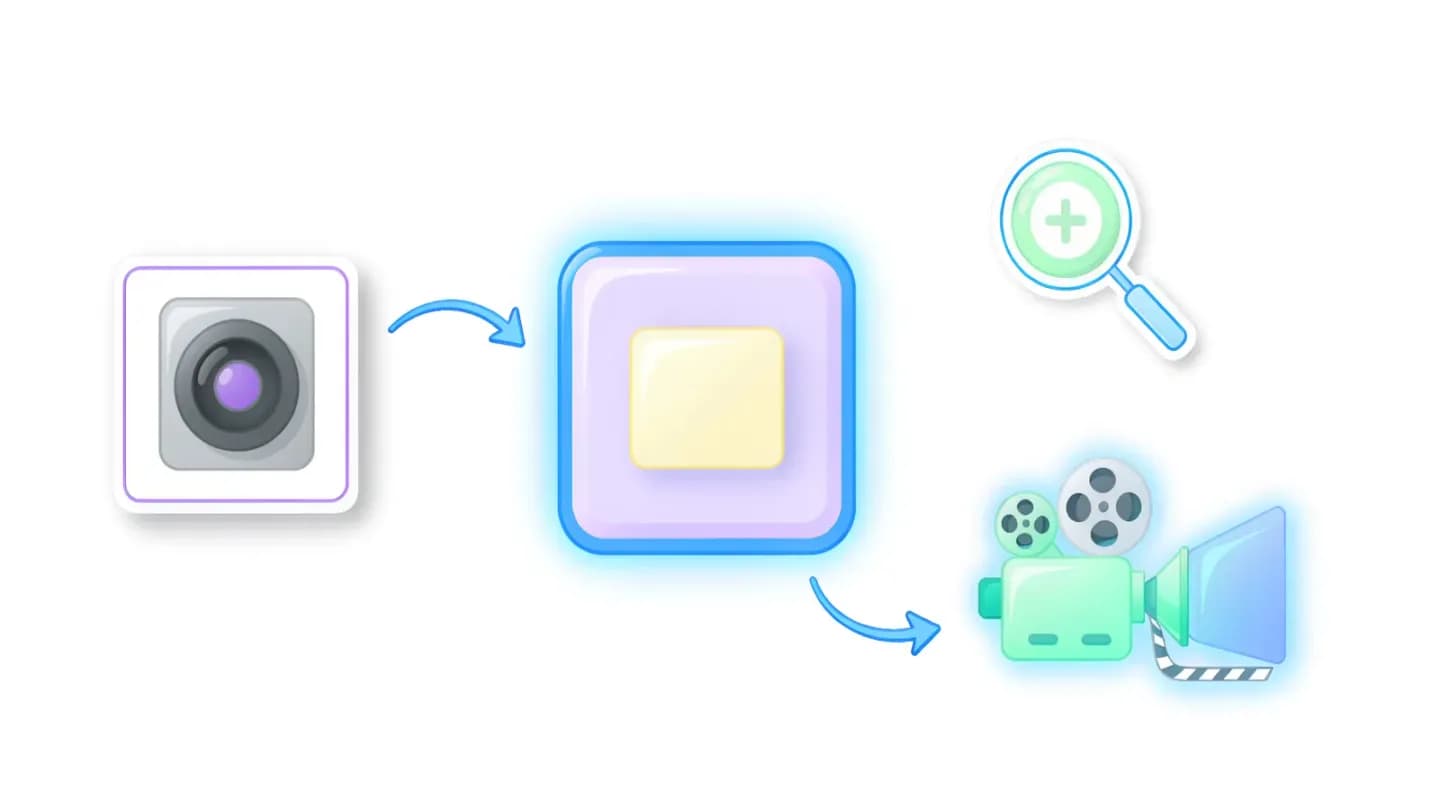
WD-40's agency, Bizon, started from assets the brand already owned: product photography and lifestyle imagery already optimized for Amazon. Those images went directly into Amazon Ads' generative creative system. From there the AI handled the heavy lifting, drafting the storyline, building the scenes, and adding motion, while keeping every output centred on the product.
The finished assets ran across two complementary placements. Sponsored Brands video appeared inside search results to catch high-intent shoppers already browsing the category. Online video through Amazon DSP extended reach beyond search and built upper-funnel awareness among audiences close to the category. The sequence was deliberate: meet shoppers with video at awareness and consideration, then re-engage them lower in the funnel through display and search.
The spots were built for shopping rather than borrowed from elsewhere. They were clear and fast-paced, showing the product in action so the benefit landed in the search results where the shopper already was. Automation then adjusted the creative in real time to shopper intent, keeping the ad relevant without a human rebuilding it for every audience shift.
The numbers that actually moved
After the video went live, average daily sales rose more than 50%, daily unit volume tripled, and 88% of purchases came from new-to-brand customers. Engagement held up too: the AI-generated creative posted a click-through rate 45% above category benchmarks and a completion rate approaching 90%.
Those are exactly the metrics a cold-start launch is built to chase, and they line up with a broader pattern. The same asset logic that powered this launch also drives {{link}}, where one approved master becomes thousands of shoppable clips without a reshoot. The difference in France was simply that the master was a single product image rather than a finished film.
Amazon measured the lift with a before-and-after comparison around the activation date rather than a test that isolated the creative from the wider media plan. That is an honest caveat: placement and creative always travel together, so the 50% figure reflects the combined activation, not a clean creative-only experiment.
Beyond the headline lift, the activation strengthened the rest of the funnel. Branded searches rose and add-to-cart behavior increased, signs that the video did more than convert the ready-to-buy; it seeded demand that later search and display activations could harvest.
The same asset logic that powered this launch also drives product-page video at catalog scale, where one approved master becomes thousands of shoppable clips without a reshoot.
Why a human stayed at the decision points
Generative video did not remove the need for judgment, it moved where judgment was applied. Bizon generated several versions, tested prompts, and fixed the glitches that AI still produces: awkward product positioning, unnatural movement, the small tells that break belief. A clean base was then polished by the agency's own design team before it ever reached the client.
Amazon's own model work, including {{link}}, points the same way: multi-shot consistency is becoming the baseline for retail creative, and a model that cannot hold a product steady still needs a human to catch the frame that slips.
WD-40's brand-provided-asset rule is the practical face of a {{link}}, where a locked reference keeps every generated frame on-brand. Amazon grounds its generation model in the supplied assets and refuses to cross-pollinate across brands, which is why the output read as WD-40 and not as generic synthetic footage.
The safety control, in Nanivadekar's framing, starts at the input: democratising creative can never come at the cost of brand safety, and the brand-provided asset is the deliberate gate. The AI amplifies human intent; it does not invent the brand.
The client approval step is where the model's limits became a feature. Because humans owned the final polish, the asset could ship into a regulated retail environment without a compliance fire drill. The AI produced volume; the team produced the standard.
Amazon's own model work, including Amazon's Nova Reel, points the same way: multi-shot consistency is becoming the baseline for retail creative, and a model that cannot hold a product steady still needs a human to catch the frame that slips.
WD-40's brand-provided-asset rule is the practical face of a reference-first consistency workflow, where a locked reference keeps every generated frame on-brand.

Where this helps, and where it doesn't
The clearest wins are the launches that traditional production makes slow or expensive. New products entering regions with no sales signals to lean on. Tight seasonal deadlines where a six-week shoot is a non-starter. Categories where the cost of a studio campaign dwarfs the expected return.
For teams with no sales history, a {{link}} step can rank AI drafts before they ever reach a cold audience, so the first impression is the strongest version rather than the raw output. That turns a cold start from a guessing game into a managed release.
This is not a blanket replacement for brand film. High-consideration categories, emotional storytelling, and work where the brief is still being discovered are poor fits for a tool that excels at producing clear, fast-paced, product-in-action spots built for the shopping environment rather than the cinema.
The honest boundary is the brief. When the strategy is still being discovered, a generator that remixes existing assets will remix the wrong thing. The tool compounds clarity; it does not manufacture it. Teams that brief the outcome, not just the format, get the better draft.
For teams with no sales history, a pre-launch creative scoring step can rank AI drafts before they ever reach a cold audience, so the first impression is the strongest version rather than the raw output.
The takeaway for commercial video teams
WD-40's France result is less a story about a miracle tool and more a story about matching the tool to the constraint. The constraint was time and a cold start; the tool was generative video pointed at a single product with a human at the controls. The combination beat a shoot on speed and beat the ramp-up on sales.
The operating lesson is simple. Treat generated video as a first draft, not a final asset. Ground the generation in brand-owned assets so the output stays on-brand. Keep a human at the critical decision points, the prompts, the glitch fixes, the final polish. And measure the lift honestly, as a combined activation, so the next launch inherits a real number instead of a hope.
For a publishing cadence that ships daily, the lesson compounds: every cold-start launch that ships faster frees the team to brief the next one better. The durable advantage is not the video itself; it is the speed at which a brand can test reality and learn from it.
Put the framework into production
These related pages connect the article’s planning advice to a specific commercial scope.
References
- WD-40 Company increases average daily sales by +50% using AI-powered video generationAmazon Ads
WD-40 Company and agency Bizon used Amazon Ads' generative Video Generator to launch WD-40 Specialist Professional Degreaser in France without a production shoot; average daily sales rose more than 50%, daily unit volume tripled, 88% of purchases were new-to-brand, CTR was 45% above category benchmarks, and video completion approached 90%.
- Why WD-40 Skipped a Traditional Shoot for AI-Generated Product CampaignLBB Online
LBB Online reports Amazon Ads principal engineer Nikhil Nanivadekar describing the cold-start challenge and the human-in-the-loop workflow: Bizon fed existing assets into Amazon Ads' gen AI system, the AI drafted storyline, scenes and motion, and humans fixed glitches before client approval; Amazon measured impact via before-and-after comparison around activation.