WPP's AI production hub is a supply-chain decision, not a tool purchase
WPP's new AI production hub in East London is not another tool purchase; it is a supply-chain decision. The holding company opened Devon's Point, a 34,000 sq ft facility that puts virtual production, creator studios and post-production under one roof, and it is the first site in a £600m global rollout. The question for brands is no longer whether to use AI video, but who owns the studio that makes it.
Most AI video coverage tracks models and features. The September opening of Devon's Point tracks something more structural: the world's largest agency group decided that the expensive part of advertising is not the idea or the edit, but the logistics of pointing a camera at reality. When the camera becomes optional, the location shoot becomes the first line item to cut.
The facility is the physical expression of a claim WPP's CEO has been making since she took over: that AI ushers in a golden age of marketing because content supply chains can finally move at the speed of the channels they feed. Whether that ages into craft or into commodity work is the argument the rest of this piece examines.
What Devon's Point actually puts under one roof
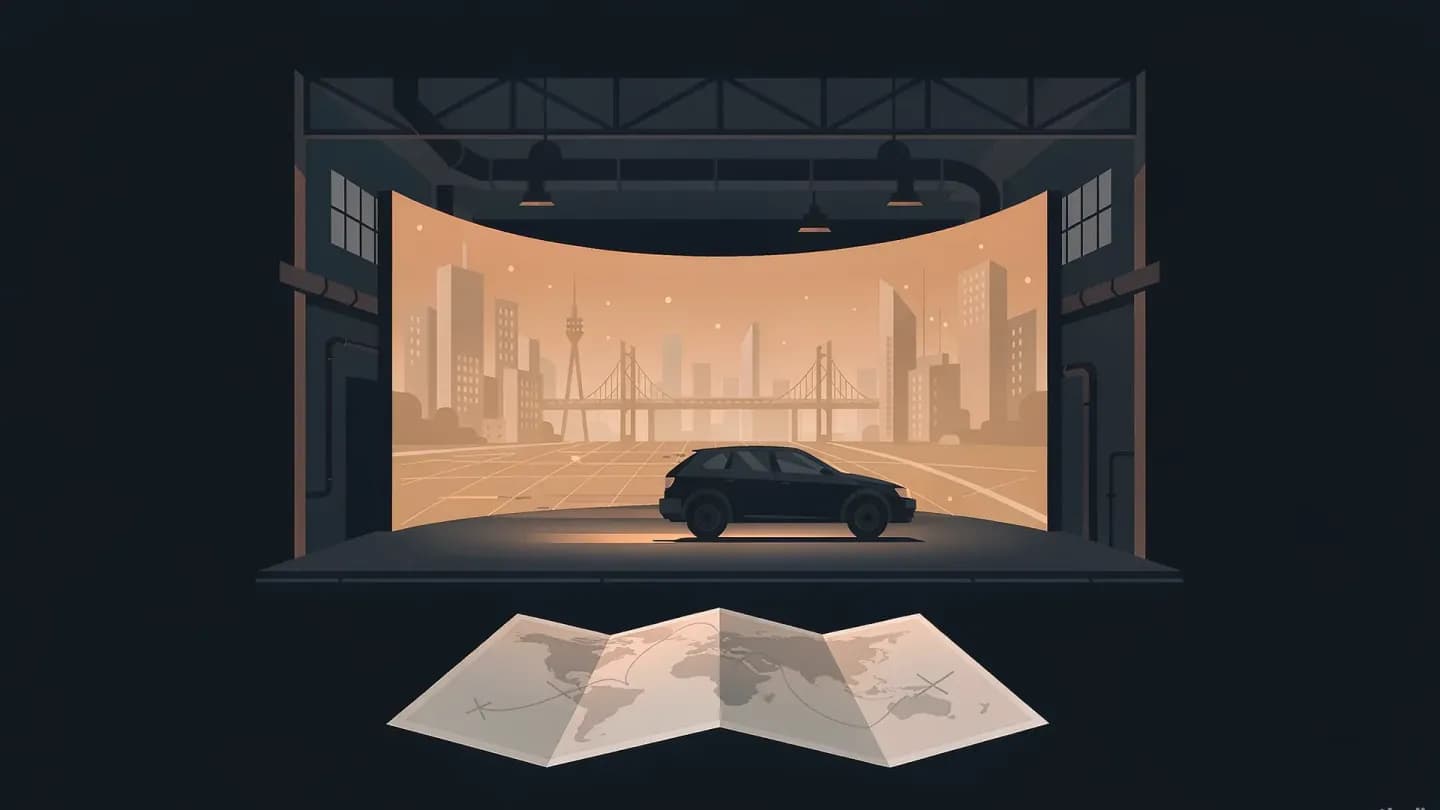
The official description is deliberately physical. Devon's Point spans 34,000 sq ft across a multi-floor industrial footprint in East London, and WPP calls it the first facility of its kind launched by a marketing services company in the UK. At its center sits a 7,000 sq ft virtual production stage carrying one of the UK's largest LED environments at 16m by 14m, with moveable wall sections and full sound treatment.
Around that stage the building reads like a production company that ate a creator studio: modular content stages with total lighting isolation, an infinity cove with motion tracking, four edit and colour-grading suites, commercial kitchen studios, live-streaming and rapid shoot-and-edit facilities, and climate-controlled client storage so global brands can keep product on site for same-day shoots. The facility is operated by WPP Production, a unit of nearly 10,000 craft experts, and hosts members of HEX Studio, the group's frontier creative technology team.
The connective tissue is WPP Open, the group's agentic marketing platform: production workflows plug directly into creative, media and enterprise solutions, which is the part competitors will find hardest to copy. The London launch is explicitly the first step in a rollout planned for every continent where WPP Production operates, under the Elevate28 growth strategy unveiled in February 2026.
China's production teams reached the same industrial conclusion from the opposite direction, as our {{link}} shows.
China's production teams reached the same industrial conclusion from the opposite direction, as our OPC AIGC studio report shows.

The economics: up to 60% cheaper at the speed of culture
The pitch is economic before it is creative. Cindy Rose, WPP's CEO, said at the opening that 'we no longer need to spend our clients' budgets on expensive shoots abroad. We can do it in the studio [and] completely change the economics of our content supply chain. We can deliver content at the speed of culture.' An industry source cited alongside that reporting put the saving at up to 60% on some ads, savings attractive enough that some clients now champion AI-led work to show finance directors they are making savings.
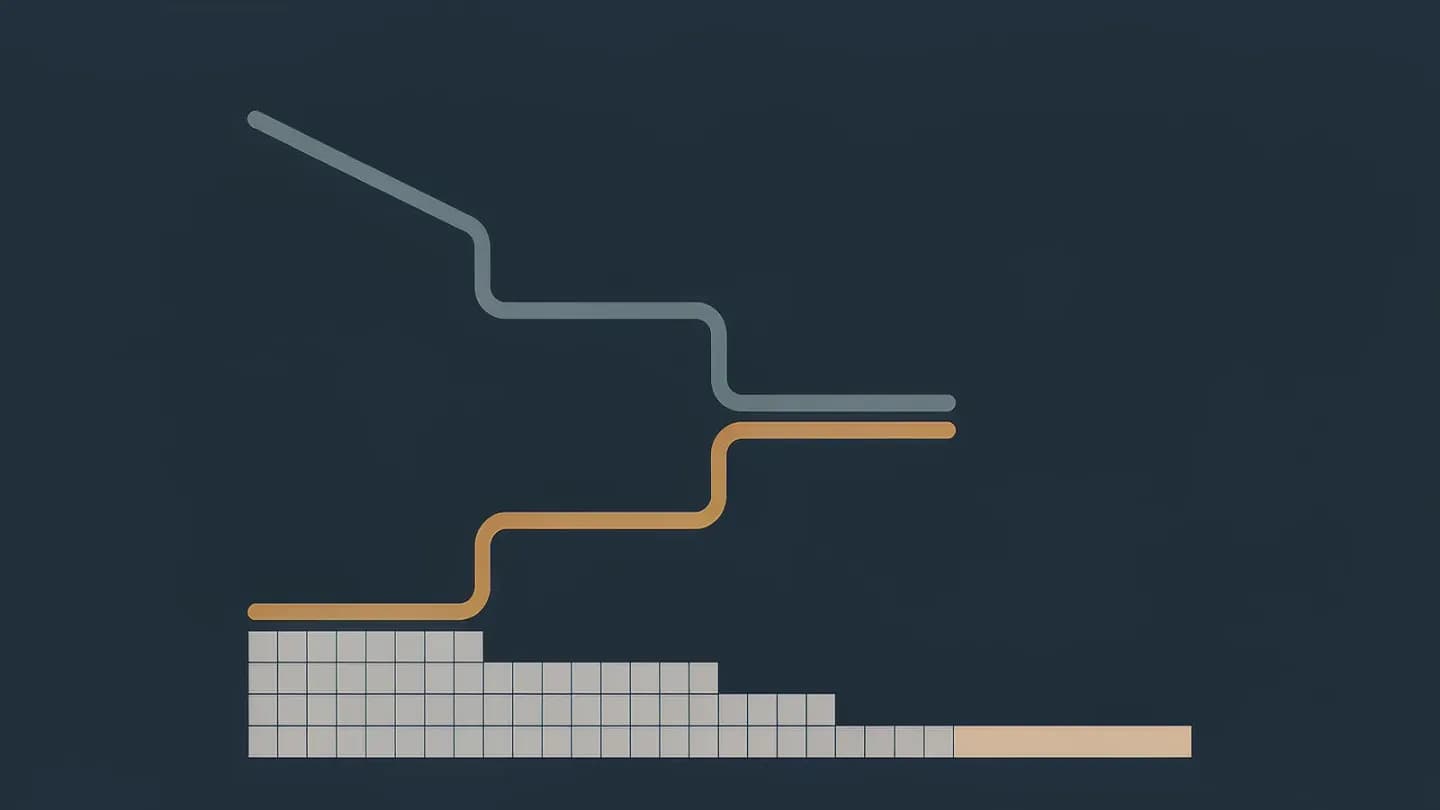
Those numbers rhyme with the wider production data. A 2026 World Federation of Advertisers benchmarking report found AI-assisted campaign development cut average production timelines from 23 days to 5.8 days, and 70% of ad agencies now draft campaign concepts in under 24 hours. The production calendar that holding companies spent decades building labor around is collapsing into an afternoon.
Richard Glasson, global CEO of WPP Production, frames the driver as volume rather than savings: 'All clients need a vastly greater amount of content... To win against the algorithms you have to be producing new content, not just repurposing one ad campaign for six months, those days are gone.' The hub is built for that churn: shoot, edit and publish platform-native material on site, from livestreams to short-form video.
Why the location shoot is the first thing to go
A location shoot buys three things: a real place, real light and real logistics. Virtual production replaces the first two and industrializes the third. Devon's Point's LED stage lets teams build digital backdrops and large-scale sets without leaving the building, and the press release is blunt that this reduces the need for carbon-intensive overseas shoots. At the opening event the demonstration was a Ford Capri cruising an AI-generated Paris: no flights, no permits, no weather.
Glasson's summary is the operating thesis: 'We can place a brand anywhere in the world in a single afternoon.' That is a direct attack on the most expensive assumption in advertising, that authenticity requires geography. The shoot is not abolished; it is reclassified as a premium option, the way digital photography reclassified film.
A French degreaser launch proved a brand can ship a full campaign without a shoot at all, the case behind our {{link}}.
A French degreaser launch proved a brand can ship a full campaign without a shoot at all, the case behind our WD-40 Amazon Ads case.
The monoculturalisation risk the numbers don't price
The counter-argument is not about cost; it is about what cheap production does to the pipeline of taste. The Guardian's reporting on the opening surfaced the industry's honest version of that worry: output often looks cookie cutter and suffers a creative erosion from the diminished role of a director. Luke Scott, who runs the group containing Ridley Scott Associates, went further: 'The grave danger is the monoculturalisation of everything... What do you do with that lost generation?'
The lost-generation argument is specific, not sentimental. Commercials were the film school that produced Ridley Scott, Guy Ritchie and a generation of British directors, and Tony Scott got Top Gun because producers saw his Saab ad of a car racing a fighter jet. Remove the apprenticeship layer of small, strange, physically demanding jobs and you remove the training ground, not just the jobs. The junior layer is already thinning: 23% of agencies cut junior copywriting roles in 2025 with 31% planning more, and junior design saw 19% reduced and 24% planned.
Dentsu's 2026 CMO Report documented a {{link}} across AI-generated advertising, and the hub model risks industrializing exactly that.
Delivery metrics can close while the frame still misses the culture, the gap our {{link}} analysis describes.
Dentsu's 2026 CMO Report documented a sea of sameness across AI-generated advertising, and the hub model risks industrializing exactly that.
Delivery metrics can close while the frame still misses the culture, the gap our cultural freshness analysis describes.
What brands should ask for before the hub opens near them
WPP says the tier above the hub is intact: 'We still make Super Bowl ads that take nine months, football World Cup campaigns and ads with celebrities in exotic locales... I see AI as an enabler of abundance.' Forrester and the 4As back the abundance claim, with nine in ten US agencies using generative AI and half running agentic AI, but Forrester also finds 61% of agencies still classify AI as a cost of doing business rather than a monetizable product. The savings are real; who keeps them is still being negotiated.
So the brand-side checklist is concrete. Ask which parts of your next campaign are shot, which are generated and which are hybrid, and make the answer a line in the brief rather than a surprise in the edit. Push quality control upstream to the source asset, the same gate Meta now forces on static-to-video. Insist on benchmarks with visible denominators before anyone quotes a hub-saved percentage.
Decide whether you want production consolidated inside a partner's platform, where output plugs straight into media buying the way {{link}} already does.
The deeper question is what you are buying when the studio is someone else's. Devon's Point also hosts WPP's Creative Technology Apprenticeship and dedicated creator collaboration spaces, and WPP's own research with Oxford University's Saïd Business School across 1.2 million consumer purchase journeys found plans that lead with earned influence convert nearly three times better than paid media alone. The hub is a bet that production and influence belong under one roof, and that the UK's creator economy, worth over £1.2 billion and growing 26% a year, needs industrial infrastructure. Brands that treat the hub as a cost line will get commodity work. Brands that treat it as a supply-chain partner will get speed. The ones who remember the Tony Scott lesson will keep a foot in the apprenticeship business.
Decide whether you want production consolidated inside a partner's platform, where output plugs straight into media buying the way Runway Ads closed loop already does.
Put the framework into production
These related pages connect the article’s planning advice to a specific commercial scope.
References
- Lost generation: the AI threat to Britain's next great directorsThe Guardian
WPP officially opened its flagship production facility in a converted warehouse in east London, the first in an international rollout of its £600m WPP Production business; CEO Cindy Rose said 'We no longer need to spend our clients' budgets on expensive shoots abroad. We can do it in the studio [and] completely change the economics of our content supply chain. We can deliver content at the speed of culture'; an industry source said some ads can be made up to 60% cheaper while output 'often looks cookie cutter' with creative 'erosion from the diminished role of a director'; Luke Scott of Ridley Scott Associates warned 'The grave danger is the monoculturalisation of everything'; Tony Scott was picked to direct Top Gun after producers saw his Saab ad of a car racing a fighter jet.
- WPP launches flagship production hub in East LondonWPP
WPP opened Devon's Point on 23 September 2026, a 34,000 sq ft flagship production facility in East London and the first of its kind launched by a marketing services company in the UK; it includes a 7,000 sq ft virtual production stage with one of the UK's largest LED environments (16m x 14m), is operated by WPP Production's nearly 10,000 craft experts, integrates with the WPP Open agentic platform, and forms part of the Elevate28 strategy with hubs planned on every continent; WPP's How Humans Decide research with Oxford University's Saïd Business School across 1.2 million purchase journeys found plans leading with earned influence nearly three times more effective than paid media alone, and IAB UK puts the UK creator economy at over £1.2 billion, growing 26% year on year.
- Ad Agencies Are Cutting Production Time in Half. The Junior Designer Is Paying the Bill.Traders Daily
A 2026 World Federation of Advertisers benchmarking report found AI-assisted campaign development reduced average production timelines from 23 days to 5.8 days, and 70% of ad agencies now draft campaign concepts in under 24 hours; 23% of agencies reduced junior copywriting roles in 2025 with 31% planning further cuts, while junior design roles saw 19% reduced and 24% more planned; Forrester and the 4As report nine in ten US marketing agencies use generative AI and half run agentic AI, but Forrester finds 61% of agencies still classify AI as a cost of doing business.