
Agentic media buying finally gets its missing handoff
Agentic media buying finally has a standard for its most manual step. On September 22, the IAB Tech Lab released AAMP 3.0, introducing OpenProposal, a specification that turns the RFP-to-buy handoff into an agent-to-agent exchange. The practical consequence for video sellers is blunt: inventory that buying agents cannot parse is inventory they will never see.
Standards already cover the auctions, the deals and the measurement. What they never covered is the stretch between a buyer's brief and a buy commitment, the RFP stage that still runs on media kits, spreadsheets, emails and meetings. AAMP 3.0 targets exactly that gap: OpenProposal lets sellers describe ad products and answer briefs in a standardized, agent-readable format. The specification is in public comment until October 22, 2026, and it is being built into the Buyer and Seller Agent SDK reference implementations while feedback arrives.
Adoption pressure is what makes this urgent. Two-thirds of digital-video buyers are already live, testing or planning {{link}}, and the survey behind that number shows small and large spenders using the same tools for opposite jobs. When planning agents multiply across that many organizations, an unstandardized proposal stage stops being an inefficiency and becomes a chokepoint.
Two-thirds of digital-video buyers are already live, testing or planning agentic AI video media buying, and the survey behind that number shows small and large spenders using the same tools for opposite jobs.
The seven-stage lifecycle from publish to report
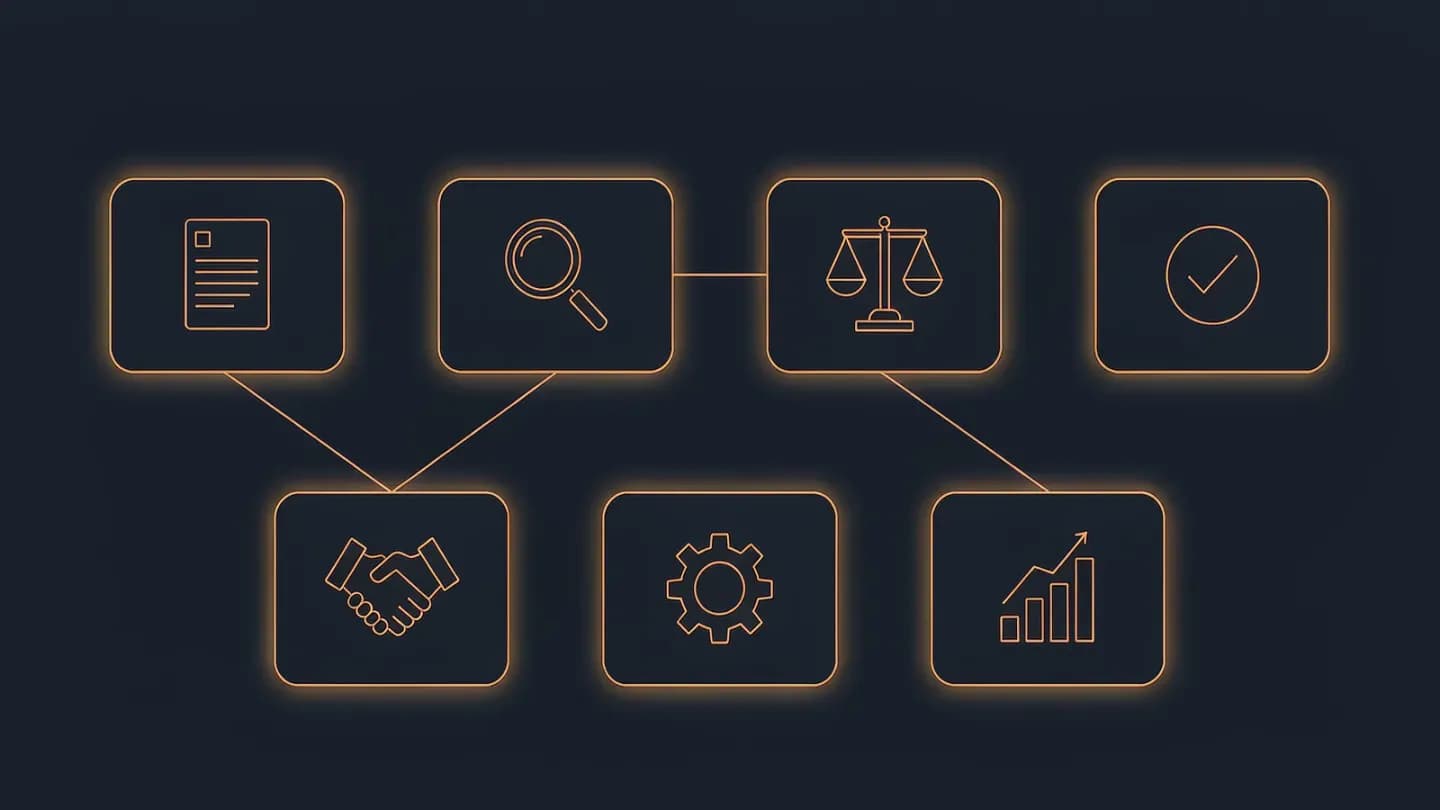
OpenProposal defines a complete lifecycle with seven stages: publish, discover, compare, qualify, negotiate, bind and execute, and report. Sellers publish catalogs of public packages that can be browsed while holding some products back for custom proposals. Buyer agents retrieve the available packages, or submit a full brief to request a custom response. The agents then evaluate and rank opportunities against the declared brief, a comparison job that spans far more publishers than a human planner could realistically work through.
Qualification checks availability and fit against a plan's audience, flight dates and requirements. Where terms need adjustment, buyer and seller agents can negotiate custom terms while keeping a reference to the original published offer. Approved transactions execute through infrastructure the industry already runs: OpenProposal complements OpenDirect, the Deals API and AdCOM, which supplies the common vocabulary so information stays consistent from discovery through planning, negotiation, execution and reporting. Performance then flows back through existing reporting standards, so results can be judged against the original objectives of the plan rather than re-litigated in a separate deck.
The publish stage deserves more attention than it usually gets, because it is where sellers make their first structural choice. A catalog of public packages invites discovery by every buying agent in the market, while custom proposals keep pricing flexibility for negotiated deals. Getting that split wrong cuts both ways: too much held back and the seller never appears in agent comparisons, too much published and the sales team loses the room to price scarcity and seasonality. The lifecycle treats these as deliberate design decisions rather than defaults, which is a quiet change in how video inventory is merchandised.
Agent-readable video inventory becomes the visibility gate
For video sellers, the strategic shift is visibility. A buying agent can only consider what it can parse. A video publisher whose packages, formats, audience rationale and terms live in PDFs and email threads is effectively invisible to an agent assembling a plan, no matter how strong the inventory is. The IAB's own framing makes the stakes explicit: structured proposals let agents process and compare information across more publishers than manual evaluation allows, which widens the consideration set that ultimately shapes a plan.
This does not require ripping out existing systems. The specification is designed so that programmatic implementations of OpenDirect, AdCOM and the Deals API keep operating as they do today, without forcing DSPs or SSPs to change their current use cases. The teams that change behavior are the sell-side planners: describing ad products in the standard format, deciding which packages stay public and which stay custom, and making sure what makes their video inventory distinctive survives the translation into structured data. The same logic that pushes buyers toward a {{link}} applies here, because what makes each package different has to be explicit or the agent cannot weigh it.
There is also a distribution-equality argument hiding in the mechanics. Agent comparison favors sellers whose products are legible, and legibility is a function of effort and standards compliance rather than market size. A mid-size video publisher that ships a complete, well-structured proposal competes for consideration alongside the biggest names in a way that a truncated media kit never allowed. Buyers benefit too, because plans assembled from a wider and more diverse consideration set are less likely to default to the same handful of incumbent packages quarter after quarter.
The same logic that pushes buyers toward a best-of-breed AI video stack applies here, because what makes each package different has to be explicit or the agent cannot weigh it.

The reasoning travels with the proposal
The detail that separates OpenProposal from a price feed is context. Mike Treon, Head of CTV Strategy at PMG, described the design intent in the announcement: the reasoning travels with the proposal, so a seller can explain not just what a package costs but why it fits the brief, the audience rationale, the formats, and the terms behind the price. For video advertising, that rationale is where craft meets commerce, the argument for why this show fits this audience, why this format suits this message, and why this flight matches this campaign.
Sellers who treat the proposal as structured data only will ship the numbers and lose the argument. The teams that win agent-mediated planning will package the same judgment a strong sales deck carries, the audience fit, the creative suitability and the scheduling logic, in a form planning models can actually read. That is a new deliverable, and it sits closer to the sales and packaging disciplines than to trafficking.
Ownership is the practical question. The rationale fields need someone who knows why a package performs: the planner who chose the audience, the strategist who picked the formats, the account lead who set the terms. Treating that as a form-filling task for whoever is free produces proposals that read like every other proposal, and an agent ranking a hundred of them will bury it. The organizations that benefit first will be the ones that already write down why their recommendations work, and simply move that writing into the format agents can weigh.

Guardrails: idempotency, deterministic pricing and agent identity
Handing transaction stages to software raises the cost of mundane failures, and AAMP 3.0 adds controls accordingly. Deterministic guardrails govern pricing, ad packages, orders and media-buy details. Authentication and authorization standards decide which agents are allowed to transact at all. Idempotency, in the IAB's own phrasing, means an instruction can be sent twice without happening twice: when an agent retries a request it never got an answer to, the result is a confirmation of the original order rather than a duplicate buy.
The release builds on AAMP 2.3, which shipped on July 30 with deployment, privacy and pricing controls. The IAB also released a Measurement Services Addendum v1.0, a contractual template for verification and attribution agreements in agentic buys. For teams connecting agents into the pipeline, the parallel discipline is the {{link}} that determines whether autonomous loops get clean inputs, because data-quality failures upstream surface downstream as proposals nobody can trust.
For teams connecting agents into the pipeline, the parallel discipline is the data readiness work that determines whether autonomous loops get clean inputs, because data-quality failures upstream surface downstream as proposals nobody can trust.
AdCP, adoption and the one-month comment window
OpenProposal is not the only protocol in this race. AdCP, an open protocol described by its stewards as a common language for agents to discover, plan, buy, sell and measure media, covers overlapping ground that includes proposals, inventory discovery and negotiation. IAB Tech Lab has acknowledged the overlap and argues that AAMP extends across the full campaign lifecycle rather than serving one layer alone. Which standard wins will be decided by adoption, not schema completeness, because a technically complete proposal format helps nobody if major publishers describe their inventory in a rival language.
The implementation evidence so far is a sandbox: IAB Australia has run the reference implementations in a lab for months and opened expressions of interest for a seller-side pilot before any live spend. That is the right calibration for video teams deciding how much to invest now. The concrete near-term actions are narrow and cheap: read the OpenProposal specification during the public comment window that closes October 22, 2026, inventory how your own packages would read to an agent, and decide which rationale belongs in structured form. Teams running a {{link}} already know the pattern: standardize the handoffs and keep the judgment.
Teams running a continuous, data-informed content engine already know the pattern: standardize the handoffs and keep the judgment.
Put the framework into production
These related pages connect the article’s planning advice to a specific commercial scope.
References
- IAB Tech Lab Introduces AAMP 3.0 to Standardize the RFP-to-Buy Process for Agentic AdvertisingIAB Tech Lab
IAB Tech Lab's official announcement of September 22, 2026 states that AAMP 3.0 introduces OpenProposal, a specification defining how sellers represent advertising products and respond to buyer briefs in a standardized agent-readable format; the specification is in Public Comment until October 22, 2026; AAMP 3.0 supports a lifecycle of publish, discover, compare, qualify, negotiate, bind and execute, and report; OpenProposal complements OpenDirect, AdCOM and the Deals API; it will be built into the Buyer and Seller Agent SDK reference implementations; and the AAMP SDKs harden deterministic guardrails on pricing, packages and orders and add idempotency, so an agent retrying a request gets confirmation of the original order rather than a duplicate.
- IAB Tech Lab proposes OpenProposal to automate the ad-buying RFP slogRuntimeWire
RuntimeWire's September 22, 2026 analysis reports that the RFP stage still runs on briefs, media kits, spreadsheets, emails and meetings; that the AAMP framework is an open-source collection of protocols, schemas and reference implementations with separate buyer-agent and seller-agent repositories; that IAB Tech Lab released AAMP 2.3 on July 30 with deployment, privacy and pricing controls; and that a competing open protocol, AdCP, covers overlapping ground including proposals, inventory discovery and negotiation, which makes adoption rather than schema completeness the deciding factor between the standards.
- IAB Tech Lab's OpenProposal makes ad inventory legible to buying agentsAI Agent Chronicle
AI Agent Chronicle's September 23, 2026 report states that inventory which is not structured for agent parsing is inventory that agentic planners will not see; that the specification ships with a Buyer and Seller Agent SDK as reference implementations; that the IAB released a Measurement Services Addendum v1.0 as a contractual layer for verification and attribution in agentic buys; and quotes IAB Australia technology lead Jonas Jaanimagi saying his team has run the reference implementations in a lab for months and opened expressions of interest for a seller-side sandbox pilot before any live spend.